
Yearly Archives: 2013

How to be a good doctor and ‘be good’

This is a presentation I gave to final year medical students at Guys and St Thomas’ hospital medical school on 27.02.2013

This blog is intended to start a debate, about what it means not merely to be a good doctor, but what it means to be a good doctor and a good person. Please feel free to comment, it’s intended to raise questions rather than provide answers. In part it is my response to the terrible treatment of patients at Mid Staffs.

The link to the prezi is here.

… but it is a basically a series of pictures, so the notes and references below will help you make sense of it. I would suggest opening the prezi in another window and taking your time … going too fast will be disorienting!

There are five themes:

1. Power and culture

2. Insight and self-awareness

3. Scepticism and scientific integrity

4. Advocacy

5. Kindness – it’s value and meaning in relation to health care.

Aspiration

Stairway. “Here you are at the beginning of your career, ever upwards and onwards ….”

Discussion: What do you think it means to be a good doctor and a good person? What kind of doctor do you aspire to be? Who has inspired you?

Can you be a good doctor and a bad person? Do personal morals matter?

Culture and Power

(Hospital) culture eats (moral) strategy for breakfast

The Circus. You are entering hospital culture, an extraordinary environment where you will work, eat, sleep, experience births and deaths, be moved to tears, perhaps fall ill or fall in or out of love. You will take on the robes and habits of the culture you inhabit. You will soon be acting your part – like a monkey in a circus.

The Gorilla. You will learn from day one that the culture is profoundly hierarchical and relationships of unequal power are everywhere. Deborah Lupton: Medicine as Culture

Culture and behaviour in the English National Health Service: overview of lessons from a large multimethod study: Conclusions: Our results highlight the importance of clear, challenging goals for high-quality care. Organisations need to put the patient at the centre of all they do, get smart intelligence, focus on improving organisational systems, and nurture caring cultures by ensuring that staff feel valued, respected, engaged and supported. Mary Dixon Woods et. al.

Discussion: French and Raven. What power will senior doctors, managers and other hospital workers have over you? What have you experienced as a medical student? What new powers will you have as a junior doctor? Over whom? See also, Doctors as Victims by John Launer and Medical Power

“My contention is that the imbalance of power between managers and doctors, which Griffiths set in train, is harming patients.” Prof Brian Jarman, Imperial College, When Managers Rule

How to fix the NHS’ crisis of moral leadership HSJ Mike Roddis

Time for truth and reconcilliation in the NHS. Dr Kim Holt, Patients First HSJ

Doctor bashing and confronting physicians in the media. Good piece arguing for more sophisticated methods than exposing bullies in the media by Kevin Pho, follow up to this piece, “The hierarchical culture that perpetuates bullying goes back as far as medical school, when as students, future doctors are trained in a pecking order not unlike the military. It’s no wonder that some carry that attitude into the workplace”

Surgical complications and their implications for surgeon’s wellbeing

Insight and Self Awareness

“There is, I assure you, a medical art for the soul. It is philosophy, whose aid need not be sought, as in bodily diseases, from outside ourselves. We must endeavour with all our resources and all our strength to become capable of doctoring ourselves.” Cicero

The Cellar. What if instead of leading up the staircase leads downwards? (metaphor for our ‘dark side’) Nicolas Spice: Up From the Cellar. London Review of Books. We all have a dark side, and sometimes discovering our new power reveals it. It is essential that we understand our capacity to do bad things, our dark potential. Doctors who lack this capacity, lack insight and a lack of insight is associated with poor professional performance.

Breaking Bad. If any of you are familiar with Breaking Bad … here is a Walter, a massively overqualified high-school chemist who found out he had lung cancer. Without sufficient health insurance to cover his treatment costs, and faced with leaving his family bankrupt, he turned to cooking meth(amphetamines) to pay for his medical bills,

Bruce Alexander, professor of addiction studies (12.50-13.30):

“our predominant addiction in the world today is not to drugs, but to …. money [and power]”

Leading to cooking more meth …

… making more money and finding justification -his new baby- to keep cooking more meth …

… leading eventually to the abandonment of all moral principles … i.e. ‘breaking bad’

Ordinary Men – ‘Breaking bad’ isn’t the behaviour of an imaginary TV star, but of ‘ordinary men’ – Extraordinary situations and make people do extraordinary things, the killers of the Jews were ordinary men and very often medical professionals. Given a choice, only about 20% refused to join in. See also Milgram experiment.

Doctors are ordinary men and women too, and hospitals are extraordinary places. Menzies Lyth showed that hospital culture was designed to protect nurses from the burden of psychological involvement with patients, by separating their duties into their constituent parts, temperatures, blood pressures etc. rather than care of the whole patient.

Michael Balint wrote about the ‘collusion of anonymity’ in which specialists took care of their organs of interest, but nobody took care of the patient.

Providing healthcare can be extremely stressful:

How stress and sleeplessness make doctors self-centered and insensitive. Excellent blog by Dr Phil Berry Precious: A legacy of under-staffing in healthcare

Why managing emotion is such a crucial task. Excellent brief review of the literature. why_managing_emotion_is_such_a_crucial_task

Physician understand thyself, and develop your resilience BMJ careers April 2013

Resilience among doctors who work in challenging areas: a qualitative study British Journal of General Practice July 2011

More than a broken leg: When patients and NHS staff really count as people. Guardian

Threats cannot make healthcare workers more compassionate. Paul Gilbert et. al.

When Doctors are Bullies, Patients Suffer. Excellent USA Today article with good links.

Providing care can be extremely stressful: For Traumatized Caregivers, Therapy Helps NY Times

Empathy decline and its reasons: a systematic review of studies with medical students and residents.  Academic Medicine 2011

A study of empathy decline in students from five health disciplines during their first year of training  International Journal of Medical Education 2011

Mid Staffs: Does this introduction help explain what happened at Mid Staffs? Bullying and the abuse of power, the failure to take responsibility for the whole patient? Does empathy decline during medical training and practice?

“A consultant has a personal professional responsibility for the welfare of their patient, not just their liver and appendix or whatever, and if that consultant turns up [on the ward] and sees that the care being given to that patient is unsatisfactory then they have to do something about it. I suspect many do, but it’s a regrettable fact that some consultants at Stafford cannot have been doing that otherwise these things would have been spotted and stopped.”
“It’s vital that GPs remember that their responsibility to their patient doesn’t end when they go into hospital. They need to be more systematic about how they gather information because, after all, they are meant to advise patients on where is the best place to go for their treatment. The old fashioned way of phoning up their friend the consultant and having a word is just not good enough.”

Will prescriptions for cultural change improve the NHS? BMJ

Boston Hospital publishes regular newsletter called ‘Safety Matters’, detailing medical mistakes

The Whistlblower. Useful overview of how and when doctors should blow the whistle on dangerous care.

How mistakes can save lives: one man’s mission to revolutionise the NHS: After the death of his wife following a minor operation, airline pilot Martin Bromiley set out to change the way medicine is practised in the UK  – by using his knowledge of plane crashes. New Statesman June 4th 2014

Scepticism and Scientific Integrity

Do we question what we are told? Do we present evidence honestly to each other and our patients?

Lies, Damn Lies and Medical Evidence, The remarkable Dr John Ioannidis Atlantic Magazine Essay.

Five reasons why doctors don’t do right by you.

Advocacy

I believe that ‘professionalism is the basis of medicine’s contract with society’. Our training and our wages are almost entirely paid for out of taxation and so we have a duty to ensure a healthy society. Rudolf Virchow was only 27 years of age when he studied the Typhus epidemic and he spent the rest of his life fighting for social reforms. He is best remembered for saying,

Medicine is a social science, and politics is nothing else but medicine on a large scale. Medicine, as a social science, as the science of human beings, has the obligation to point out problems and to attempt their theoretical solution: the politician, the practical anthropologist, must find the means for their actual solution… The physicians are the natural attorneys of the poor, and social problems fall to a large extent within their jurisdiction.

The inspirational essay, To Isiah, by Donald Berwick is a call to doctors young and old to take on this role today,

And your voice—every one—can be loud, and forceful, and confident, and your voice will be trusted . . . please use it.

Can a Novel Med School Curriculum Improve Doctor-Patient Communication?

Promoting networks between evidence-based medicine and values-based medicine in continuing medical education

Patient Centered Care is greatly misunderstood. In practice it means listening carefully and seriously to what our patients are telling us, and working out, with them, what they mean. It is a skill that takes years of practice, immense patience, and reflection. Recently retired president of the Royal College of General Practitioners, Iona Heath has written beautifully about what it entails. See also, the End of the Disease Era

The importance of listening to patients cannot be overstated.

Narrative Medicine as a means of training medical students towards residency competencies.

Narrative Diagnosis. John Launer, postgraduate medical journal.

Kindness and Compassion

Exert from Do Doctors need to be Kind?

Iona Heath, in her review of Intelligent Kindness for the British Medical Journal writes,

… it is easy to forget the appalling nature of some of the jobs carried out by NHS staff day in, day out—the damage, the pain, the mess they encounter, the sheer stench of diseased human flesh and its waste products.” Of course, such forgetfulness is not at all easy for those actually doing this work, those struggling not to allow any hint of their physical revulsion to show, but these challenges seem hardly to register in the conscience or consciousness of those charged with the running of the NHS.

The NHS represents the last vestige of social inclusiveness and solidarity for frail, elderly people; for traumatised children; for people with intellectual disability, dementia, or severe mental health problems; and for people who repeatedly harm themselves, either directly, or persistently through the misuse of drugs and alcohol. And yet the staff who do the hard work of maintaining that solidarity are subject to a constant stream of criticism, efficiency savings, and instructions to do better. Exposed to precious little kindness themselves, they are nonetheless expected to provide it unstintingly. “There is a lack of understanding, a lack of thoughtful connection—a lack of kindness in the way the organisation as a whole is treated.”

After Mid-Staffs: the NHS must do more to care for the health of its staff. BMJ

“I found that healthcare workers were some 70% more likely to have developed work related stress, depression, or anxiety than was the general workforce” “NHS management seemed not to understand that it had a duty to protect its staff from the pressures under which they were working. This was a callous disregard for staff wellbeing.” “… the 2012 prevalence of work related mental health problems in health professionals was 110% higher than in the general workforce”

What can be done?

First of all we need to start talking about kindness. We need to talk about the value of kindness in healthcare and agree that it has been neglected and that we need to take action. Everyone involved in health leadership and policy should read Intelligent Kindness, in summing up her review of Iona Heath wrote, “If I ruled the world, I would arrange for everyone who wields any power in the NHS to be locked in a room until they had read it.”

Once we have agreed that it is important we need to do something to institutionalise kindness. We must focus on patients by improving continuity and a holistic approach to care. In order to be kind to patients, we must cultivate kindness between and towards ourselves. John Launer described an experiment at Indiana Medical school in which researchers recorded the positive narratives of students and staff, focusing on postive experiences and not the failures and critical incidents they were used to. They were then presented with the findings, “One participant is quoted as saying afterwards: “Now that I see how good we really are, I have to ask myself why we tolerate it when people aren’t as good as this. I can’t look on quietly any more when people are disrespectful or hurtful. It’s no longer okay to remain silent; this is too important.” Kindness improved quality of clinical care and was contageous, spreading and tranforming the organisation.

The relentless focus on efficiency and productivity in healthcare highlights the intrusion of market values into the NHS. There is an urgent need to to defend the values of social solidarity and rediscover an intellectual and emotional understanding that self-interest and the interests of others are bound together and acting upon that understanding. By committing ourselves to the values of kindness we may yet rescue the NHS.

Intelligent Kindness: Reforming the Culture of Healthcare. John Ballatt & Penelope Campling. RCPsych Publications.

Kindness in Healthcare, What goes around. Iona Heath review of Intelligent Kindness BMJ

Compassionate Care: The Theory and The Reality. J. Holistic Healthcare 2011

Compassion is the quality that should inform all healthcare

Medical students will be recruited on their compassion, says Health Education England Student BMJ (I’m very sceptical about this)

The last thing the NHS needs is a compassion pill. BMJ

The need for an NHS staff college. 


Final slide: The Circus

Medicine is a part of the culture we live in, one that is increasingly individualistic, self-interested, business-minded and in which we are all in too much of a rush to sit down and talk seriously with eachother and listen to eachother’s stories. We are all players in the circus of life.

But if we are to take something positive, it is perhaps that we are able to share our stories, our knowledge and insights in other ways. Thanks to social media, I have been inspired by a huge number of people from all around the world to think about what it means to be a good doctor and ‘be good’. It’s given me a lot to think about and some dizzying heights to aspire to.

I will add links and references as I discover them and keep the blog updated.

Other reading material:

‘A world of difference’: a qualitative study of medical students’ views on professionalism and the ‘good doctor’ BMC medical education. BMC Medical Education 2014, 14:77  “The ‘good’ doctor emerged as a complex and multifaceted construct; students provided long and articulate descriptions, and they often referred to the notions of ‘balance’ and ‘the art and science of medicine’ in their discussions. Three main themes emerged: competent doctor; good communicator; and good teacher.”
 

URGENT New threat to the NHS – 7 ways you can help!

UPDATED 03.03.1013

PLEASE ACT NOW TO SAVE THE NHS!

Right now, the government is trying to rush through secondary legislation (SI 257 under Section 75 of the Health & Social Care Act) to force virtually every part of the NHS to be opened up to *compulsory* competitive markets, open to the private sector.  There has been an outcry from the medical profession (see links below), who now see that the promises of ‘local clinical control’ are false. We have less than a month to stop these regulations becoming law, and we need to start straight away.

These regulations are likely to be the final straw for many of our NHS hospitals and clinics, already damaged by too much costly marketization, fragmentation and cuts.

Parliament does not normally even debate or vote on this type of regulation – but it is possible. Even those Lib Dems who supported the Health & Social Care Act should be very concerned as the regulations break the reassurances offered to parliament and to the local Clinical Commissioning Groups, that the Act allowed local choice about when to use competition.  For example Andrew Lansley promised doctors that “commissioners, not the Secretary of State and not regulators – should decide when and how competition should be used to serve… patients interests” (see briefing for other examples of the promises that were made).  But these new regulations do not allow local freedom to decide when to use competition, at all.

These regulations were laid down on 13th February and will become law on 1 April unless all MPs who care about the NHS first insist on a debate and vote, and then vote them down.

Please take time now to

a) urgently ask your local MP to sign Early Day Motion 1104 http://www.parliament.uk/edm/2012-13/1104 which is the only way the Commons can debate and vote on these regulations to be defeated.  Send them the Keep Our NHS Public briefing http://www.keepournhspublic.com/pdf/Section75parliamentarybriefingFeb%202013.pdf & use the bullet points in the briefing to help you explain to your MP why you are so concerned.  If you don’t have your MP’s email address, or know you your MP is, you can use either http://www.writetothem.com/ or http://action.goingtowork.org.uk/page/speakout/ask-your-mp-to-pray-against-jeremy-hunt-s-nhs-regulations to help.

b) Sign the 38 degrees petition calling for a debate and vote and defeat of these regulations in parliament https://secure.38degrees.org.uk/page/s/nhs-section-75#petition.  The petition has already passed the 200,000 signature mark in just a few days, along with 20,000 signatures on an earlier petition started by GP and Lib Dem candidate Charles West.

c) Ask others to do the same!  Please spread this message widely to friends, colleagues, any groups you are in, and write to the newspapers using the points in the attached briefing, along with your own experience.

d) If you ‘adopted a peer’ during the campaign against the Act itself, you could write to them again (especially Lib Dem and cross bench peers) raising the points from the Keep Our NHS Public briefing.

e) An unprecedented 2000 people (and over 1000 more via the TUC) contacted the clerk of the House of Lords Committee on statutory instruments which will be examining the regulations on 5th March.  The deadline to do that has now passed, but there will be a lobby outside parliament on that day, see www.keepournhspublic.com for details.

f) If you are in touch with your local clinical commissioning group (CCG) – and especially if they seem sympathetic – you could ask them if they share your concerns, if they will make a statement about the implication of these regulations, and if they will speak out against them. CCG leaders are already beginning to speak out, which is very significant, see for example http://www.pulsetoday.co.uk/news/commissioning-news/gps-will-walk-if-ministers-do-not-reword-competition-rules-says-commissioning-leader/20002076.article#.US9NfKLrGbA.

g) As your doctors to speak out in the strongest possible terms locally.  Nationally, the professional medical organisations are already beginning to do so, see for example http://www.rcm.org.uk/college/about/media-centre/press-releases/government-backtracks-on-nhs-privatisation-issue-25-02-13/ and http://www.guardian.co.uk/society/2013/mar/02/doctors-bemoan-nhs-privatisation-by-stealth

You can also read more background here

With a broken promise, the Government has handed he NHS ver to the market. Clive Peedell. Guardian

http://www.guardian.co.uk/commentisfree/2013/feb/22/lib-dems-not-stand-lies-nhs

http://www.hsj.co.uk/news/policy/government-tendering-rules-will-lead-to-big-shake-up-in-services-lawyers-warn/5055338.article?blocktitle=Latest-News&contentID=782 (subscriber only)

http://opendemocracy.net/ournhs/nicola-cutcher-lucy-reynolds/nhs-as-we-know-it-needs-prayer

http://www.unitetheunion.org/news/cameronsbignhslie/

http://www.nationalhealthaction.org.uk/press-release-anger-as-sneak-attack-regulations-push-nhs-privatisation/

http://www.sochealth.co.uk/2013/02/22/money-nhs-dragons-den/

And some more updated articles here

http://www.sochealth.co.uk/2013/02/27/a-coalition-of-nha-party-non-conservative-mps-the-bma-the-rcp-and-prof-steve-field-warn-about-the-section-75-nhs-regulations/

http://www.opendemocracy.net/ournhs/oliver-huitson/section-75-what-happened-next

http://www.bbc.co.uk/news/health-21625758

http://www.bbc.co.uk/news/health-21649307

Finally, if you are not already a member of Keep Our NHS Public (without whom this campaign would not have been possible) please consider joining today

http://www.keepournhspublic.com/joinus.php

Forgiveness, narratives and listening

Frank

“Forgive is a verb, not a noun. Every day I try to forgive and hopefully move a little further down the road”

Marian Partington has been on that road for a long time. In 1973 her younger sister Lucy disappeared. She wasn’t found until 1994, when her dismembered and decapitated remains were discovered in the basement of Fred and Rosemary West’s house. It was another year until Marian and Lucy were reunited because her remains were needed during that time as an exhibit at the West’s trial. When at last they were together, Marian cradled Lucy’s beautiful skull in a brown blanket and kissed her forehead, just as she had cradled and kissed her own children.

That same year, Marian went on a silent retreat trying to get to the roots of her own forgiveness. The first thing she experienced when she arrived home was not serenity or acceptance, but “murderous rage”. At that moment, she realised that this was an emotion that she shared with her sister’s murderers and this meant that she was not so unlike them. This was almost too much to bear. Not only does forgiveness not come easily, but it forces us to confront our own darkness, our desire for violent retribution, our own homicidal potential . In order to forgive we have to accept this darkness as our own without denying it or projecting it onto others. This is perhaps the hardest part of forgiveness. One reason it is so hard is because it is not a phase we go through just once, but one we have to return to time and again.

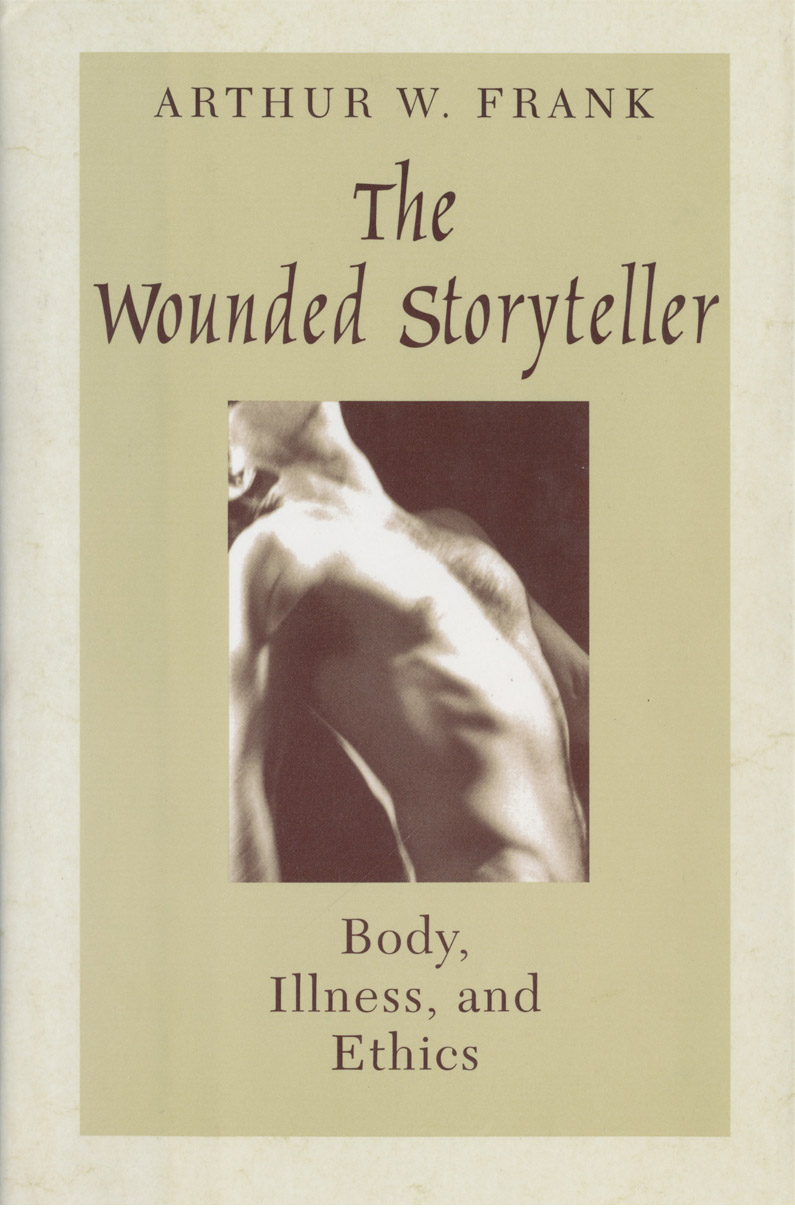
Marian describes forgiveness as a healing narrative.  When I listened to her a few days ago, it brought home for me more than ever before, the importance of not just listening to my patients, but of listening to their stories and learning from them. She is a ‘wounded storyteller’.

Healing narratives

The Restitution Narrative

Medical Sociologist Arthur Frank, who has done more than most to illuminate the stories our patients tell, proposes three basic types of narratives told by those who are suffering. In the restitution story, the healthy person is struck down with illness, treated and restored to health. The main players are the heroic clinicians, and disease is the enemy, to be conquered. This is the preferred narrative of TV dramas and medical journals with their triumphant optimism. It is also the preferred narrative of the recently diagnosed. In terms of forgiveness the desire for restitution is powerful. When Marian returned from her silent retreat she had decided that restitution, through forgiving the Wests, was what she wanted, but she was confronted with murderous rage. After ten years of reflection and spiritual practice, much of it on silent retreats, she wrote a letter to Rosemary West. It was another four years before she felt ready, because she was sure she had reached a position of unconditional compassion, with no expectation of response and she sent the letter. She received a reply from the prison security, ‘Ms West wishes you to be informed that she does not wish to receive any further correspondence from you’. When she tells this story, as I heard it, there is a pause, an awful silence, filled with the brutal reality that the desire for restitution can never truly be overcome, and that it has just been dealt a near mortal blow. You can watch Marian tell this story in the Forgiveness project video below. It is a ‘groundhog day’ moment, no matter how many times I have watched it, I hope upon hope that there will be some reciprocity, a glimmer of hope, the next time.

The Chaos Narrative

The second narrative Frank describes is the ‘chaos narrative’. When Marion first heard that Lucy’s remains had been found at the West’s house she “vowed to try to bring something positive out of this meaningless trauma”. The chaos narrative is meaningless trauma, deepest suffering and unremitting pain. According to Frank, ‘people live chaos, but chaos cannot in its purest form be told’. Marian described the 23 years between Lucy’s disappearance and her discovery as ‘frozen stillness’, a time when her story could not be told, a time of silence. The chaos narrative presents the greatest difficulties for those of us whose job it is to listen. These stories make us listeners feel helpless, but ‘paradoxically then, the chaos story that can be told is no longer total chaos, and in that paradox lies a therapeutic opening. The clinical problem is not to push toward this opening prematurely. The chaos narrative is already populated with others telling the ill person that “it can’t be that bad”, “there’s always someone worse off”, “don’t give up hope”; and other statements that ill people often hear as allowing those who have nothing to offer feel as if they have offered something”.’

“To deny the living truth of the chaos narrative is to intensify the suffering of whoever lives this narrative. The problem is how to honor the telling of chaos while leaving open a possibility of change; to accept the reality of what is told without accepting its fatalism.”

My role as a doctor is to listen, deeply and compassionately, to ‘be with’ the other person in their suffering. In my experience it is impossible to do this without sharing in the other person’s suffering.  The lessons I attempted to articulate in my recent post, Love, Hate and Commitment are about the great efforts and risks we take when we do this.

The Quest Narrative

The final narrative that Frank describes is ‘The Quest’. Through suffering we learn things that we might never otherwise have learned. To be clear, there is nothing intrinsically good about suffering, but it can nevertheless lead to a ‘wisdom that can only come from such harshness.’ This wisdom is a matter of being exactly where one is, yet grateful for that’. This came across very powerfully and clearly when I listened to Marion. She has a gift for language, and she has used words and stories to discover, through her suffering, what forgiveness means.

Anatole Broyard, when he was dying of prostate cancer, wrote that his “first instinct was to try to bring [cancer] under control by turning it into a narrative.” He describes stories as “antibodies against illness and pain”

‘Quest stories carry the unavoidable message that the restitution narrative will, one day, prove inadequate. Quest stories are about being forced to accept life unconditionally; finding a grateful life in conditions that the previously healthy self would have considered unacceptable.’

There is a need to testify, and ultimately the quest narrative is testimony. Marian’s testimony is through her book, her public speaking and her work with The Forgiveness Project and groups of prisoners.

The quest for forgiveness is a search for understanding and meaning and is very suited to spiritual practice and poetry. It is a journey with direction but without end, a struggle and an aspiration rather than a place of rest or something we leave behind. It is important to realise that the quest is a journey, not a destination, “The quest story fears being heard as a triumph over chaos; part of the lesson of deep illness is that victories are always provisional”.

In 2007 in the sermon at my wedding, the recently retired Rector of Hackney, John Pridmore told us about a series of books called ‘Great Journeys’, our marriage was an event in the great journeys of our lives. He joked that there would never be a series of books called, ‘Great Arrivals’, although there are those who believed in ‘great arrivals’, they are fundamentalists; finders, not seekers.

More than just listening.

I was struck, as I listened to Marian, that she is on a great journey, telling the story she needs to tell with elements of restitution, chaos and quest. In listening to her I realised that I was learning that as a doctor I need to listen much more carefully to my patient’s stories. I must be able to honour suffering without imposing my own desire for a restitution narrative. ‘Honouring suffering shapes the spirit of helping. The helper who honours suffering can accept the ‘dark night of the soul’ but also offers the immediate, practical help others need.’ To listen to a patient’s story involves a conscious repression of the desire to take a medical history, an un-learning of what we have practiced all our professional lives. This puts us in an uneasy position, are we (as professionals) fulfilling a different role if we listen to stories instead of taking histories?

The dichotomy between listener as professional or friend is one from which Frank wishes to ‘rescue clinicians’. The experience of suffering is often one in which old friends disappear, in which others may be lost for words or uncomfortable hearing about sickness. Some of my sickest patients tell me that they have become isolated and alone because their illnesses have become so overwhelming that they have nothing left to talk about and they don’t want to burden their friends, ‘who have troubles enough of their own’. Friends may be poor listeners because ‘they want to steer the person back to being the person they were before’ rather than the new person they become, transformed through suffering’. As a doctor to patients who have lost their friends, I need to be able to play the role of a friend if I am to listen seriously.

The second lesson is that listening has a nurturing role, and part of that nurturing is to help the person telling the story to hear exactly what story they are telling. Although one type of narrative may dominate, through shared reflection it may be possible to show that a story already contains elements of other narratives in the background. We need the patience to accept that our patients may struggle to articulate their stories time and again before they find a narrative. In the pressure of a ten minute consultation it is extraordinarily difficult, but not impossible – especially if we take narrative seriously.

When I first wrote this blog, I realised that I was being taught an extraordinary lesson about forgiveness, which I have summarised below, but I now know that even more profoundly, she has taught me a lesson about listening.

Forgiveness

We cannot wait for tragedy before we practice forgiveness
We need to think about forgiveness every day, what it means to us personally, professionally and culturally.
Denial, rage and the desire for retribution are natural stages in a cycle that can, if we choose, lead towards forgiveness
In order to be able to forgive we need to be accept our own vulnerability, our shame and our capacity for violence
We need to be able to share our stories and we need to be able to listen

Forgiveness is a quest, in which the desire for restitution is overwhelming and chaos a state to which we have to return from time to time.

Forgiveness is as hard as it is important.

These are my thoughts, still fresh in my mind from this listening to Marian on Sunday. I’m worried I’ve done her a disservice by attempting to summarise forgiveness in a list like this, so I will start reading her book, If You Sit Very Still, and strongly recommend you read it too.

You can read more about Marian, restorative justice and The Forgiveness Project here: http://theforgivenessproject.com/stories/marian-partington-england/

Quotations from Arthur Frank taken from Just Listening: Narrative and Deep Illness.

Listening and measuring

GP income (via QoF) is to depend more than ever on increasingly tighter control of our patients’ blood pressure, diabetes and health-related bahaviour and the collection of ever-increasing amounts of data of little or no relevance to patient care.

GPs in deprived areas will be adversely affected, since most chronic disease management depends not on GP behaviour, but on patient self-motivation. According to the hierarchy of needs of patients where I work, finances, employment, housing, freedom from violence, relief from anxiety and depression and social opportunities to help alleviate boredom, isolation and loneliness, all come above managing hypertension, cholesterol, medication or exercise regimes.

Pertinent to GPs wherever we work is the impact on the doctor-patient relationship of the electronic templates that dominate our patients’ medical record, rather than our patients’ agenda. This paper by Swinglehurst and Greenhalgh provides evidence to back up what many, if not all of us GPs and patients are experiencing: our ability to pay attention to our patients is being severely compromised. Electronic alerts pop up incessantly to remind us that the patient sat in front of us, trying to get our undivided attention needs to be weighed, offered smoking cessation advice, counseled about their alcohol intake, advised to exercise more, reduce their cholesterol and be screened for dementia. Without which we stand to lose money which ultimately means less doctors and even less appointments and time to hear our patients’ concerns.

Much of what is really important, the ability to listen seriously and have meaningful conversations with patients is being lost by the demand that every interaction is measured by data collected, diagnoses made, investigations ordered, treatments prescribed and the procedures undertaken rather than seriously paying attention to what our patients need to say to us.
I’m slowly bringing my next, long blog about loneliness to a conclusion, and it’s clear that if we don’t make time to listen properly to what our patients are telling us, we will treat every type of distress and every presentation as a disease to be coded, investigated and treated. If this happens we will have failed at our most important gatekeeper role, not the one between GP and specialist, but between suffering and disease.

See also

Computer templates in chronic disease management: ethnographic case study in general practice BMJOpen

Life for patients and their families is so much more than data. Kevin MD

Reflections on a Half a Century of Medical Practice: The art of listening to the elderly patient. Bernard Lown

Narrative-based medicine. BMJ series.

Medically Unexplained Stories. John Launer

Love’s Labour Lost, by Iona Heath

An epidemic of loneliness. Lancet.

When Computers Come between Doctors and Patients. NYTimes

Computer use must not affect doctor patient relationship BMJ

Computers take away doctor-patient relationship Murray Feingold

Half of doctors too busy using computers to look patients in the eye. Daily Mail

The Talking Cure for Health Care. Wall St Journal

Holistic vs Fragmented Health Care. Huff Post

The Doctor will see your electronic medical record now

Edit 05.03.2013

Data, data everywhere: The John Henry effect

by Greg Irving. Originally published by BMJ on 5th Feb 2013

The “Ballad of John Henry” tells of the legendary black American steel pin driver, John Henry, who swung a huge nine pound hammer driving railroad spikes on the Chesapeake and Ohio railway in the 1870’s.[1] John Henry was renowned for his strength amongst his fellow workers and could drive in a steel pin into a track with a single blow instead of the usual three. The ballad centers on a competition between John and a mechanical steam powered drill, a controversial innovation that threatened to replace thousands of his fellow laborers in a quest for greater efficiency. When John Henry heard that the output of his fellow laborers were being compared with that of a steam drill, he challenged the railroad company to a contest pitting his own skill and strength against that of the stream drill to see who could lay the track the quickest.

The steam drill was positioned on one side of the track and John Henry on the other. When the signal to start was given two thousand people came to watch the event. John Henry made more progress in a shorter time than the steam drill and when he reached the finish line the steam drill was no where in sight. He won the contests but worked so hard to outperform the machine he collapsed and died in the process. The John Henry is just one example of reactivity, the phenomenon whereby individuals alter their performance or behavior to the awareness that they are being observed. The term John Henry effect, also known as compensatory rivalry, was first suggested by Robert Heinich in 1970 then further developed by Gary Saretsky in 1972 to describe the behavior. [2]

If we were to cast this tale into the future then computers powered by big data would be represented by the steam drill and the doctor by John Henry. Perceiving the consequences of such an innovation as threatening to their jobs, status, or traditional patterns of working, doctors may go to extraordinary lengths to outperform the opposition. However, the increased work required for victory may prove unsustainable for some and come at considerable personal cost.

Such effects may confound evaluation outcomes unless controlled for by robust experimental design e.g. adequate blinding. When such evaluations ultimately take place (and they will) we should not forget that doctors do far more than just crunch data (or lay track). Indeed, the interpersonal warmth, trust and informality which characterise most clinical consultations is where we witness the real victory of human dignity, intuition, and lateral thinking over the politically driven degradations of the machine age.

References

1. Belafonte, H. John Henry. 1959


2. Saretsky G. The OEO PC experiment and the John Henry Effect. Phi Delta Kappa 1972; 53:579–581
3. Metcalfe D. Competence, administration and learning. London: MSD Foundation 1989.

Competing interests: None declared