Category Archives: Uncategorized

Confidence and trust in GPs.

Confidence and trust in GPs.

This weekend I went to a ‘nine-night’, a memorial for a Caribbean patient I had known for almost 20 years. I remember vividly the first time we met. She walked into my consulting room and stood right in front of me just as I sat down. Almost six-foot tall and considerably more than a hundred kilos, she leaned over me and banged her walking stick wrapped in silver lamé on the floor, “I don’t know you and I don’t like doctors, especially doctors I don’t know. What you need to know is that I need a doctor who can be comfortable in front of me,” I looked up to see her frowning down at me and I was about to say, “I think I can do that,” when she cracked into a grin and slapped me hard on my shoulder and said, “I’m only kidding! Dr Fuller said I should see you and I trust him! But he’s left. You had better not leave, because if you’re not staying, I’m going somewhere else.”  She wasn’t kidding, especially about needing a doctor that could remain comfortable in her considerable presence. Philosopher Julia Kristeva wrote ‘Powers of Horror: an essay on abjection’ in which she described abjection as having both visceral and symbolic powers. Visceral powers relate to its ability to disgust and repel, forcing people in its presence to recoil, repel or escape. The symbolic powers relate to the ways that abjection transgresses boundaries between life and death, clean and contaminated, what is permitted and what is not. Janet crossed a boundary by ignoring the patient seat in my room and leaning over me. Her body made huge by binge eating and scarred by surgical procedures and self-harm was a battleground where she was both victim and perpetrator, abject even to her. She had met too many doctors who recoiled in her presence, but having been assured by her previous GP that I would be up to the task she wasted no time before testing me. Looking back through her medical record I can see that it wasn’t long after our first meeting that she told me about some of the abject horror of her childhood that helped make sense of her present situation. In recent years when she was housebound she would insist on cooking for me when ever I came to visit. if she was unwell she might postpone the visit for a day or two until she had mustered the strength to prepare something. She bought a portable hob and electric wok so that she could sit on the side of her bed in the lounge and cook up Caribbean fusion dishes with meat, fish, chicken, rice, past and vegetables and always with hot pepper sauce on the side. She was impressed and amused by how much I enjoyed the spices. I would always be sure to skip breakfast and do a training session before work on days when I was due to visit because she would be disappointed if I didn’t eat A LOT. While I was eating, I couldn’t interrupt her and she had my full attention. My mouth was full and my ears were open. We would catch up on her hospital visits and her precarious health, and she would cry and try desperately to get me to understand how she felt, especially after her son died. Empathy came more from shared feeling than from words. I never saw her eat anything herself. After she died I looked through the dozens of consultations that I had recorded and wondered how many people knew as much as I did about her life.

“When you [a GP] are so poor that you cannot afford to refuse eighteenpence from a man who is too poor to pay you any more, it is useless to tell him that what he or his sick child needs is not medicine, but more leisure, better clothes, better food, and a better drained and ventilated house. It is kinder to give him a bottle of something almost as cheap as water, and tell him to come again with another eighteenpence if it does not cure him. When you have done that over and over again every day for a week, how much scientific conscience have you left? If you are weak-minded enough to cling desperately to your eighteenpence as denoting a certain social superiority to the sixpenny doctor, you will be miserably poor all your life; whilst the sixpenny doctor, with his low prices and quick turnover of patients, visibly makes much more than you do and kills no more people.

A doctor’s character can no more stand out against such conditions than the lungs of his patients can stand out against bad ventilation. The only way in which he can preserve his self-respect is by forgetting all he ever learnt of science, and clinging to such help as he can give without cost merely by being less ignorant and more accustomed to sick-beds than his patients. Finally, he acquires a certain skill at nursing cases under poverty-stricken domestic conditions.”

George Bernard Shaw, The Doctor’s Dilemma 1909

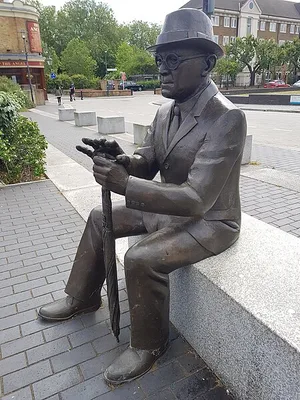
Dr Alfred Slater was a GP who worked in Bermondsey at that time and may have been an inspiration. He charged six pence for consultations if patients could afford it and nothing if they could not and in spite of this he was soon able to recruit four more doctors to the practice. He worked with his wife Ada all their lives to try to alleviate the effects of poverty in the area. He upset other doctors because of his low fees, and his popularity with patients. Unlike easily manipulated and faked Google reviews that are a proxy for GP popularity today, Dr Slater earned his status by the quality of his care, his political advocacy, and his physical presence. Unlike GPs today who rarely or never visit patients at home and consult remotely, he chose to live in the heart of the community where he practiced and was, and still is, held in high esteem by the community.

https://www.atlasobscura.com/places/dr-salters-daydream

I have worked for twenty-five years in a practice that actively supports continuity of care and doctors and nurses do home visits every week. Even as we have expanded from four to ten GPs and from seven thousand to seventeen thousand patients, we have kept the same philosophy of relationship centred care. Our social standing and the confidence and trust on which we and our patients depend, is sustained by this.

This is not just a philosophical or moral issue, but there is an abundance of research supporting my view that the more distant GPs are from their patients, the lower the confidence and trust patients will have in us. Our ability to contain anxiety, manage uncertainty, diagnose promptly, and take care of patients depends on the strength of our relationships with patients and the community.

The Royal College of GPs curriculum for GP training states that ‘Continuity of care, along with generalism is a fundamental feature of general practice,’ and yet continuity is vanishing and patients are increasingly viewing GPs as gatekeepers, shopkeepers, dealers and travel agents. And a lot of GPs are quietly slipping into these roles, some passively and some actively. The emphasis on work-life balance has come about because meaning and purpose is intrinsic to a working practice bound up in relationships with patients and community, but is entirely lacking from the transactional model which alienates GPs from their patients, their work and themselves.

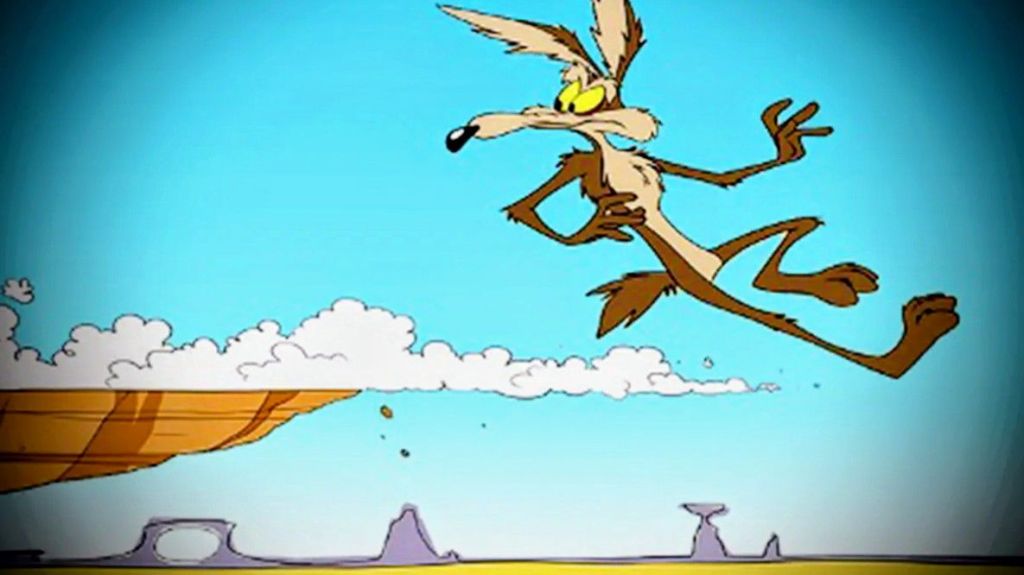
Just have my patients have taught me the value of continuity of care, my trainees have shown me that if they are given the chance to experience some of the satisfaction and pride that comes from investing in relationships with patients they will want more of it. This way we can build a better future for general practice. Where there is a will there is a way. I want to be proved wrong, and the 2025 GP patient survey suggests that I may be, But I think that the truth is that the status of our profession like Wile E. Coyte who has run off the edge of a cliff but doesn’t realise it and hangs briefly in the air before plummeting down to the canyon before. We only have ourselves to blame.

References:

List of Critically Endangered Crafts in which General Practice will soon be included: https://www.heritagecrafts.org.uk/skills/crafts/

The Doctor’s Dilemma, Preface on Doctors by George Bernard Shaw https://www.gutenberg.org/files/5069/5069-h/5069-h.htm#link2H_4_0008

Dr Alfred Slater, the man who created an NHS before the NHS was created https://stephenliddell.co.uk/2017/11/30/dr-alfred-salter-the-man-who-created-an-nhs-before-the-nhs-was-created/

Man in the Arena speech by Theodore Roosevelt https://www.worldfuturefund.org/Documents/maninarena.htm

Alienation and the Crisis of NHS Morale https://abetternhs.net/2023/08/28/alienation-and-the-crisis-of-nhs-staff-morale/

Factors influencing confidence and trust in health professionals: A cross-sectional study of English general practices https://bjgp.org/content/early/2025/10/03/BJGP.2025.0154

The GP Patient Survey 2025 https://www.bma.org.uk/news-and-opinion/the-results-are-in-gps-do-an-amazing-job

Medicine, Art and Abjection

Originally published in BHMA https://bhma.org/product/facing-the-shadow/

At his interview for a position at a law firm, a friend was asked what he would arrange for the partners’ away day. With barely a pause he said that he would take them to a mortuary, and they would look at dead bodies and afterwards they would gather to reflect on their confrontation with death. He persuaded them that our morality is constrained because we are too removed from death, and too fearful of our own mortality. He got the job, but never actually took them to the mortuary.

A few years later I happened to pass by St Pancras Public mortuary with my teenage sons and was reminded of my friend and suggested that we go inside. They recoiled at the idea and vehemently refused. The strength of their response surprised me, their disgust and their refusal. Teenagers are exposed to more horror than most parents can imagine. My sons tell me of a day this February when all the usual social media filters failed and their Instagram and Tiktck feeds were full of graphic videos of acts of extreme violence, far worse than the usual day to day horror that intrudes on their music, fashion and skate-boarding feeds. Younger children dare each-other to watch videos of extreme violence, but by the time they are twelve or thirteen (my sons tell me) some lose interest, and choose to avoid it, partly because of the human suffering, but also part because it’s intrusive and tedious.

Horror is tolerable when it is in its place and accompanied by rituals – in the mortuary, the dissecting room, the operating theatre, on the battlefield, in hospitals and nursing homes, in art, in religion, in therapy and in the consulting room. Even in the right places with the right rituals, there are limits to how much horror can be tolerated. Few people who are unmoved by dead bodies on the news or in movies would want to see a body in a mortuary or at the scene of an accident. Some doctors cannot stomach the sight of blood and choose specialties where tears are the bodily fluid more frequently encountered. Other doctors choose to practice in affluent areas or to do private medicine where they do not have to encounter the scents of poverty, so vividly described by Dr Jens Foell,

What exactly is this smell of poverty? It is so pervasive. I recognise it in an instant. This perfume should be called ‘Deep End’, and it gives every encounter with poverty a visceral olfactory dimension. It is described as the ‘smell of rotten fruit’ in the beginning of the Akira Kurosawa’s film, Red Beard, which features Toshirô Mifune as a doctor treating the poor.[i]

My recent round of home visits for long-term housebound patients included a psychotic woman who keeps dozens of birds in her flat that fly around everywhere. Every surface is covered in faeces and the whole has an overwhelming scent that is partly ammonia but otherwise wholly unfamiliar. Another patient stacks towels soaked in urine on the arm of her chair until the carers come in the evening, and the air in her flat is suffocating. Neiter patient ever opens their windows. My stomach tightens whenever I am asked to visit. I am glad that I have a shower and change of clothes at work.

Philosopher Julia Kristeva wrote about confrontations like this in Powers of Horror: an essay on abjection. The abject has symbolic and somatic effects. The somatic is sensory, anything that evokes disgust like foul smells, death, decay, infected wounds, skin diseases and infections, bodily fluids – mucous, pus and faeces. These provoke physiological sympathetic nervous system reflexes like nausea, sweating, palpitations, feeling faint, and desire to escape (flight), or defend oneself (fight), to recoil, to avoid and end the experience as soon as possible. Horror’s symbolic power comes from boundaries being broken, the symbolic order disrupted. Being too close to death, we are confronted with our own mortality, too close to madness we are confronted with the limits of our own sanity. When boundaries are intact, we can cope because there are clear lines separating us from what we are not. Philosopher and novelist John Berger wrote,

“The poor live with wind, with dampness, flying dust, silence, unbearable noise (sometimes with both, yes, that’s possible), with ants, with large animals, with smells coming from the earth, rats, smoke, rain, vibrations from elsewhere, rumours, nightfall, and with each other. Between the inhabitants and these presences there are no clear marking lines. Inexorably confounded, they together make up the place’s life.”  John Berger, Hold Everything Dear 2007

Confronted with abject patients, doctors may may to defend themselves by saying that it’s not their job, that they don’t have enough time, that they aren’t trained or suitably qualified, that these kinds of abject patients and these kinds of abject problems do not belong with them.

“The rich force the poor into abjectness and then complain that they are abject” Percy Shelly 1812

Doctors choose their profession because they believe that they can make a difference. For a trauma surgeon, confrontation with appalling injuries is made tolerable by their ability to act, to repair the damage. The symbolic order is preserved because they are performing their role and the patient as victim is performing theirs. The symbolic order is upset when the doctor is unable to perform in their accustomed role, and their identity is threatened.

A group of medical students were sent to visit a patient at home. Compared to many, his situation was not so abject, but a mix of animals, incontinence and smoking generated a familiar ‘Deep End’ scent that clung to their clothes. The students were unhappy, they protested that it was unreasonable and inappropriate, and they did not want to do any more visits. Their tutor, a GP with decades of ‘Deep End’ experience was shocked, she had hoped for empathy, compassion, and curiosity. The abject crossed the boundary between the students and the patient by finding a home in their clothes and in their noses, following them around even after the visit was over. It was revolting and out of place. Unlike me, they couldn’t change their clothes, and unlike the trauma-surgeon, they were powerless to intervene in any meaningful way.

In her essay, The Art of Doing NothingIona Heath explains that in medicine, “the art of doing nothing is active, considered, and deliberate. It is an antidote to the pressure to do and it takes many forms.” She quotes Arthur Kleinman, the American anthropologist and psychiatrist, who says:

… empathic witnessing … is the existential commitment to be with the sick person and to facilitate his or her building of an illness narrative that will make sense of and give value to the experience. … This I take to be the moral core of doctoring and of the experience of illness.

Many patients are exquisitely sensitive to their doctor’s actual or perceived judgement. It is very common for patients to refuse a visit or postpone an appointment so that they can clean their home or make themselves presentable so that they won’t be judged. They can see disgust in their doctor’s eyes. Whenever I ask patients questions about their lifestyle they are almost always drinking less, exercising more, eating less junk, getting out more. Far from exaggerating their symptoms, most patients hate to disappoint their doctors, and they reassure us that they are taking their tablets and that they are getting better even when they are not. As a GP with 25 years of continuity of care, I know my patients disclose the horror of their lives very slowly and frequently apologies for overburdening me. They know implicitly that there’s only so much that even a doctor can bear. This is most frequently the case when there are histories of abuse. Shame is intensified if the doctor recoils, refuses to listen and pushes them away into the purgatory of a waiting list for psychotherapy.

Abjection collapses the distinction between subject and object and leads to an intersubjectivity rooted in extremes of difference: life vs death, comfort vs squalor, privilege vs powerlessness, safe vs violated, flourishing vs decaying etc. Work with the abject is emotional labour because the intersubjectivity means that like the smells that linger, experiences linger after the work is done. It is easy to criticise the hours worked by junior doctors in the time before I qualified, but the benefits of camaraderie and down time in the doctors’ mess where experiences could be processed with peers have been all but forgotten [ii]. Soldiers returning from active service need the company of others who can relate to their experiences to help them transition back into family life just as survivors of natural and man-made disasters need the company of other survivors. Post Traumatic Stress Disorder (PTSD) is much more likely without this among fellow survivors. In the years since I qualified, almost all doctors have become more isolated and are seeking greater work-life balance, in other words, clearer boundaries. Without appreciating that any meaningful work worth doing is part of life, and that personal healing has to happen as part of work. We need liminal zones between work and leisure to process and reflect on our experiences.

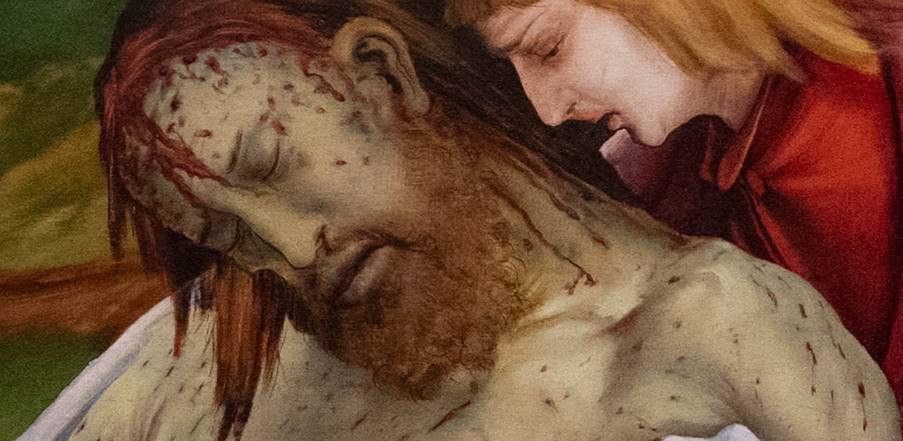
Doctors and other health professionals deal with the abject and as educators we can help them prepare for this, but few have even considered what it means or how to do this. Fortunately, since the abject is part of what it is to be human, we have evolved ways to cope. Kristeva believed we have always used art and religion, and I believe that that the more familiar doctors are with each of these, the better they can cope with the abject in their work. The Eisenheim Altarpiece from 1512 depicts Christ covered with open sores. It was painted for a monastery where monks cared for people afflicted by the plague and other awful skin diseases [iii] The symbolic power of Christ covered in sores, would have helped them see the body of Christ in those the cared for.

For Kristeva and GP Iona Heath, literature is the place where the abject is best explored and Iona’s writing tackles the places where meaning in medical practice and is examined with a rich tapestry of literary references. [iv] Her William Pickles Lecture from 1999 uses the poems of Zbigniew Herbert and Michael Frayn’s play ‘Copenhagen’ to explore uncertainty and hope,

Herbert requires us not to delude ourselves about the nature of the reality we inhabit and witness. Seamus Heaney describes Herbert’s: unblindable stare at the facts of pain, the recurrence of injustice and catastrophe.

She goes on to emphasize the need to invite intersubjectivity and frequent theme in her writing,

Without the ability to oscillate between the subjective and the objective, medicine is powerless: The first diagnostic step rests on intersubjectivity, and the second on a striving for objectivity.

Recent popular novels like A Little Life, Shuggie Bain, and Demon Copperhead have given medical readers a safe space for intersubjectivity, and with it, ways to think about and be more curious about the abject lives of their patients. Most patients, especially those dealing with abjection – pain, despair, death, shame, incontinence, and so on, don’t just (or even) want scientific explanations for their symptoms but for their doctors to have a better understanding and appreciation of what life is like for them. In Regarding the Pain of Others, philosopher Susan Sontag examined our relationship with images of suffering and was concerned by the ways in which ever more shocking photographs were used to attract attention and drive consumption without demanding understanding or action. Extreme abjection in art has been used to provoke and draw attention to political and historic horror that people have been unable or unwilling to deal with like complicity with Nazism. The Vienna Actionists – a group of artists active in the1960s gave obscene and shocking performances involving bodily fluids and violent sexual acts transgressing physical boundaries between artists and audiences including unsuspecting passers-by [v].

https://elephant.art/how-gunter-brus-self-painting-showed-me-lifes-psychotic-duality-06042021/

Abjection breaks moral and sometimes legal boundaries which has led to the artists being arrested [vi] American Artist Paul McCarthy working from the 1970s onwards used liquid food stuffs in lieu of bodily fluids in several works including Class Fool 1976 in which he covered himself in ketchup and thew himself around a classroom until dazed and then vomited several times and stuck a Barbie Doll up his arse [vii]. The show ended when the audience couldn’t stand it any longer. Although he distanced himself from the Vienna Actionists on the grounds that he didn’t share their cultural history, like them he wanted to confront audiences with their hypocrisy and complicity in mindless consumerism, violence and oppression. Movie directors have also used the abject to confront similar themes. Pier Paolo Pasolini’s1975 film Salo: 120 days of Sodom remains banned in several countries and was described by Time Out Magazine as the most controversial film of all time [viii]. He used themes of extreme sexual violence, coprophagia and torture to attack fascism and consumerism.

Zombie movies are a favourite trope for criticising consumerism and consumer culture, from George Romero’s 1868 classic Night of the Living Dead, to Peter Jackson’s 1996 Brainsead [ix]. Brain Dead remains banned in several countries and has a scene that echoes Kristeva’s idea that an infant develops a sense of self as separate from their mother at the point in their development when they experience abjection. Infants are not born with a sense of the abject; they are content to play with shit and are unperturbed by vomit. Near the end of Braindead a sixty-foot zombie woman shoves her adult son back into her womb shouting, “You will always be my little boy!” He then cuts himself out of her stomach and she collapses into a burning house. Zombies are a classic abject trope because their power lies in our not knowing whether they are alive or dead, our fear is the undead, the unknown, it is apprehension and uncertainty, themes that presently preoccupy medical educationalists, few (or even none) of whom refer to abjection.

An inability to tolerate uncertainty, especially moral uncertainty or ambiguity is associated with more conservative and extreme political views [x]. Clearly defined boundaries between right and wrong, good and bad, acceptable and unacceptable, are hallmarks of political intolerance, populism and nationalism, in short, fascism, which is why so much abject art and cinema are anti-fascist. My colleague’s medical students who were disgusted by what they encountered on their home visit were unable to see beyond the state of the patient and their home to the political and economic decisions that led to such an abject situation. For Susan Sontag, abject encounters have an ethical value, “Such images … [are] an invitation to pay attention, to reflect, to learn, to examine the rationalizations for mass suffering offered by established powers. Who caused what the picture shows? Who is responsible?” [xi] As Sontag noted, they are an invitation that may be ignored, rejected, or not noticed. In the fruit-machine meets TV world of social media, a surfeit of abject images streams past demanding consumption without reflection.

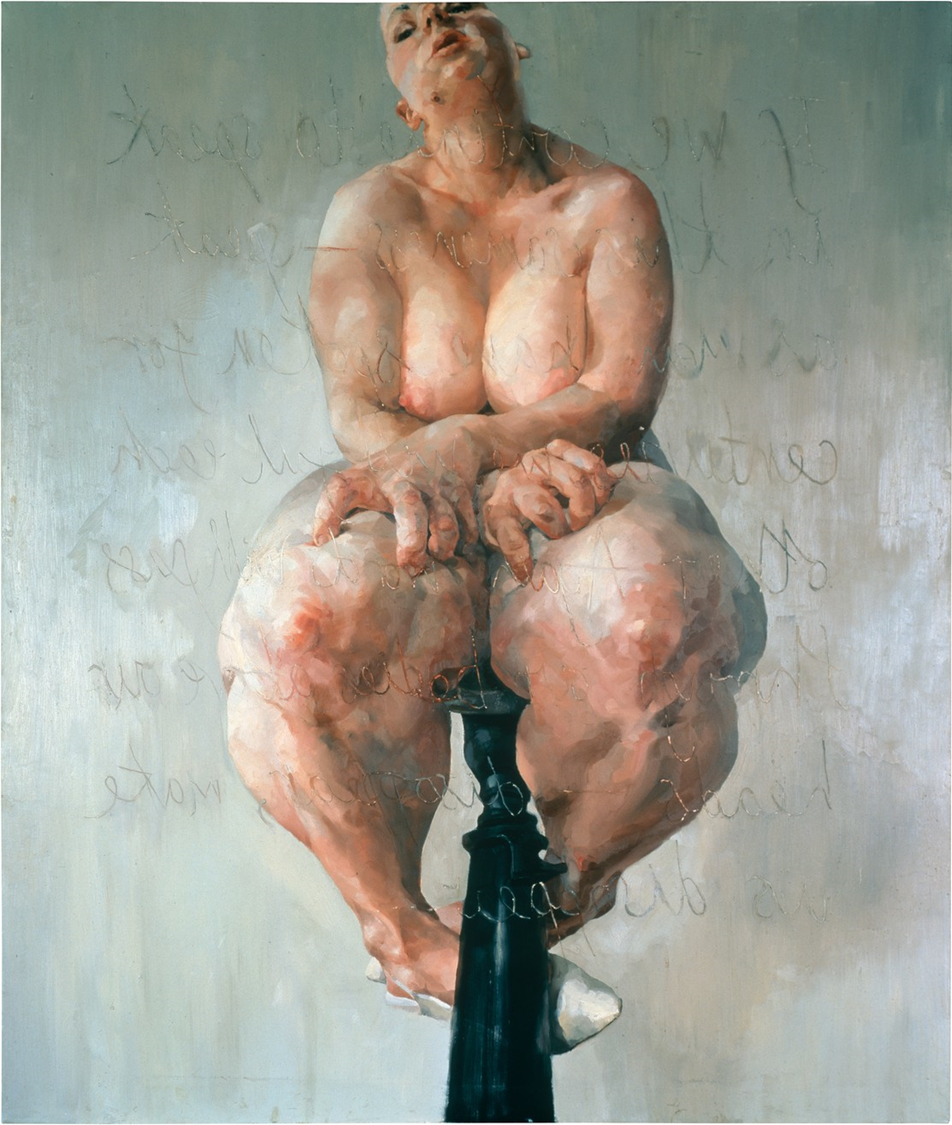
Artist Jenny Saville’s pictures, “..may be painful to see, while the painting of it, if not quite pleasurable to see, is so extremely compelling of our attention that we do not want to look away…”  She wrote her final college dissertation on Kristeva and her influence shows in works across her career which began with her final show in 1992.  Her most famous piece from that show, Propped is a huge self-portrait of a huge woman, sat naked on a stool, with her ankles and arms crossed and her fingers digging into her soft, fleshy thighs. The viewer’s perspective is from the level of her enormous knees, so that they must look up at her while she peers down at them over her nose with her head tilted back. She dominates the viewer.

Jenny Saville, Propped 1992

Etched into the painting are words by feminist author Luce Irirgaray, which translated reads, “If we speak to each other as men have been doing for centuries, as we have been taught to speak, we will fail each other. Again… Words will pass through our bodies, above our heads, disappear, make us disappear”. Saville paints women in ways men do not.

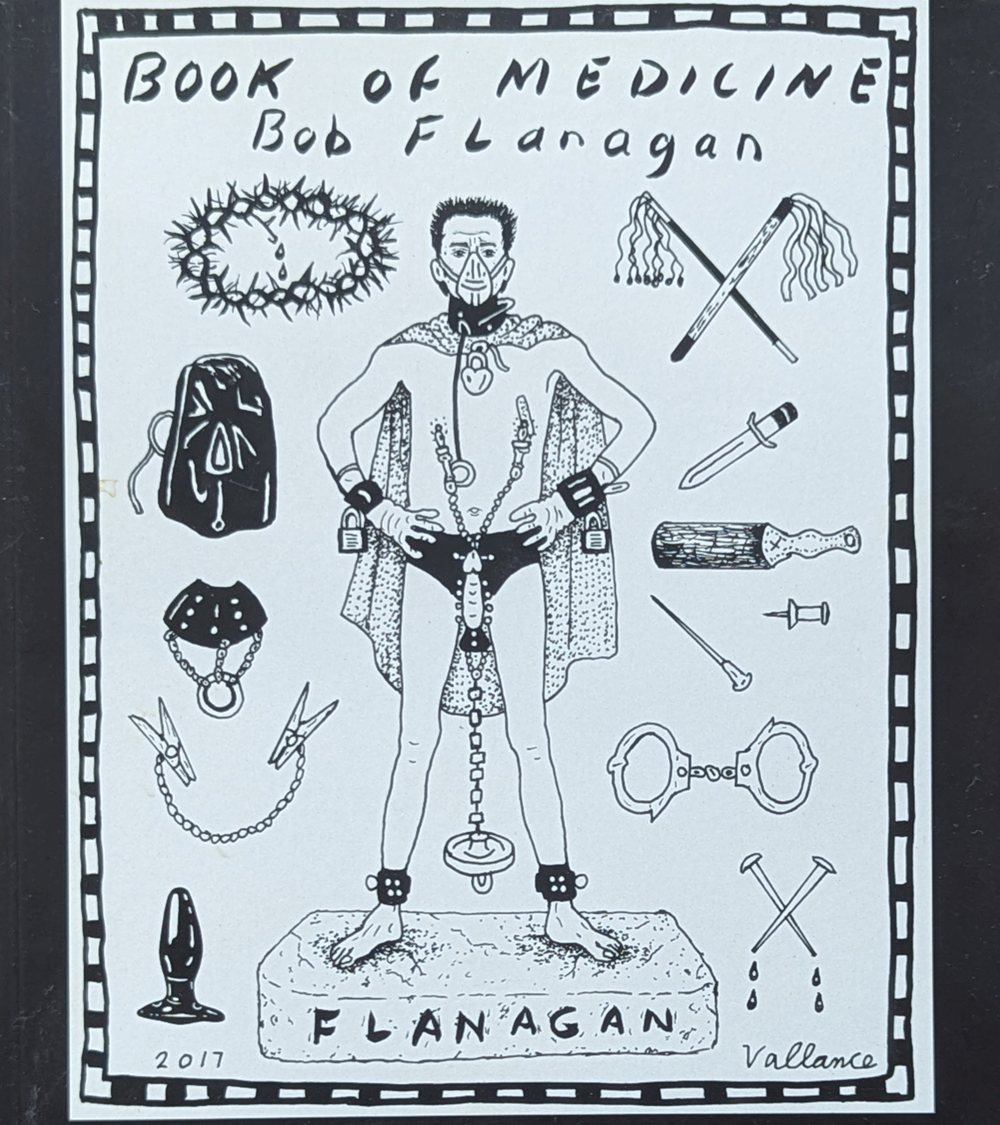
In later works she fills enormous canvases with flesh that cannot be contained by bodies but blends in with everything and everyone around it. The abject is matter out of place, and she paints the flesh of mothers mixed with their babies, lovers blended with one another and groups who seem to share limbs and torsos. Recent portraits are like mirages that appear out of big, bright abstract brush strokes, splashes, and lumps of paint. Artists who work with abject ideas are concerned with the many ways of being in the world and show us what is socially or psychologically taboo. Bob Flannagan was another artist who used himself as his abject art. He suffered with Cystic Fibrosis, a condition that caused his lungs to fill with pus, leading to frequent infections and hospitalizations, he had diarrhoea and frequent, foul, mucousy stools, chronic pain and depended on medication, nutritional supplements, oxygen therapy and physiotherapy. His art centred on his body, his disease and masochistic body mutilations, presented as visual art, performance poetry and physical theatre. The chosen pain of masochism and masochistic sex overwhelmed the pain he was forced to endure because of his illness.

Physical presence demands more and is one reason why in-person medical care is challenging to medical professionals who are retreating to do only virtual consulting. They are spared multisensory experiences and can escape a consultation that makes them feel uncomfortable almost as easily as they can swipe away an unpleasant image on their phone. For those of us who remain in consulting rooms and communities, home visits are where we have the most immersive experiences.

Clive speaks eloquently with a clipped English accent and assures me everything is fine at home which seems out of place given the sweet, soured milk smell that seeps out of several layers of dirty clothes. He has dreadlocks piled up and matted on his head and a huge woollen jumper in Jamaican colours unravelling in several places. A fistful of cuffs at wrists and ankles suggests that examining him might require a lot of undressing. His smell is so pungent that I am hoping that might not be necessary. Without this assault on my senses, I would not have sensed that behind his reassuring words, all was not ok. I asked whether he had hot water to bathe or shower at home, and he looked embarrassed and fiddled with loose threads. He finally admitted that his water and electricity had been cut off a couple years ago and he was going to a homeless centre every couple of weeks to wash and was a bit overdue. I examined him, conscious of the time in my youth when Princess Diana shook hands with people who were dying from AIDS while the nation looked on, astonished at her bravery and compassion, and I eschewed gloves. His smell lingered heavily in my room and my clothes, or at least my consciousness, for the rest of the day.

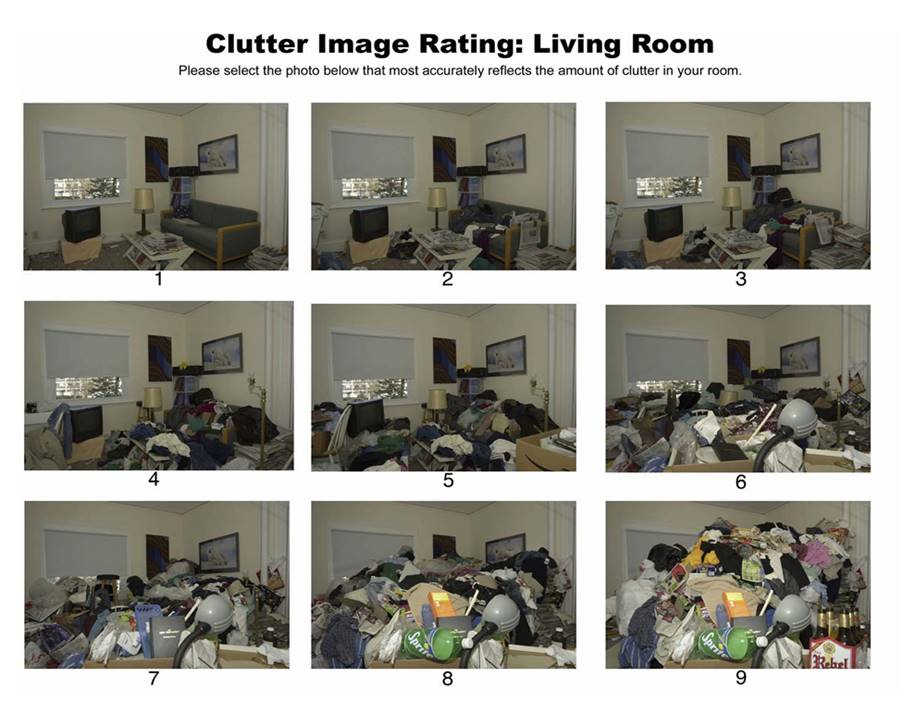
A few days later I visited him at home, he was a hoarder, level 9 on the Cluster Image Rating (2008) “This level of hoarding constitutes a Safeguarding alert due to the significant risk to health of the householders, surrounding properties and residents.” [xii] Boxes, bags and miscellaneous detritus were piled from floor to ceiling, with only narrow paths allowing access to his bed and a single seat in the living room. Without water or electricity, the bathroom and kitchen were redundant, and access was impossible. I wondered whether I would ever have known about his situation were it not for our first, face-to-face, multi-sensory encounter.[xiii]

The classic Kurosawa movie Redbeard is about a GP trainer and his trainee, set in 19th century Japan. When the outgoing trainee hands over to his replacement Yasumoto, he warns him, “the patients are slum-dwellers, flea and lice-ridden, they stink!” Yasumoto aspires to be physician to the Shogun, not a GP to impoverished villagers and is disgusted and reluctant to have anything to do with them. Abjection confronts the young doctor, and the movie has several abject themes including squalor, child abuse and suicide. Redbeard teaches by example and by giving Yasumoto responsibility for taking care of a girl he rescued from a brothel. Care-giving is the most profound and intimate way in which we can encounter the abject. In her review of Kindness in Healthcare, Iona Heath writes, “it is easy to forget the appalling nature of some of the jobs carried out by NHS staff day in, day out—the damage, the pain, the mess they encounter, the sheer stench of diseased human flesh and its waste products.”In Labours of Love, by Madeline Bunting, a book about the nature and crisis of caring she quotes a palliative care consultant who describes caring as, ‘the art of not running away, also the title of an essay I have written about care-giving’[xiv].

A better appreciation of abjection teaches us to be present with what instinctively repels us, whether by assaulting our senses or shocking us with narratives of trauma. Patients need doctors (and other healthcare professionals) who can remain present when the instinctive urge is to run away. We must learn how to suffer, and in so doing learn how to become more compassionate, because compassion means being with suffering and being moved to do something about it. Being fully present may be the most therapeutic gift a practitioner can offer and caring in situations of abjection may be the best way that we can do that[xv] [xvi]

This is the first in a series of essays about art, abjection, self-representation and medicine. Please contact me, Jonathon Tomlinson echothx at gmail dot com. I am available for teaching sessions and workshops for health and social care professionals and anyone working at the interfaces of medicine, culture and society. I work with FlyingChild to do side-by-side professional and survivor education for health professionals.


[i] https://bjgp.org/content/75/753/174.full

[ii] https://abetternhs.net/2013/11/23/burden/

[iii] Isenheim Altarpiece – Wikipedia

[iv] https://abetternhs.net/2012/09/19/iona-heath/

[v] https://www.dailyartmagazine.com/viennese-actionism/

[vi] https://momus.ca/abjection-without-splendor-gunter-brus-and-transgressions-diminishing-returns/

[vii] https://en.wikipedia.org/wiki/Paul_McCarthy

[viii] https://en.wikipedia.org/wiki/Sal%C3%B2,_or_the_120_Days_of_Sodom

[ix] https://en.wikipedia.org/wiki/Braindead_(film)

[x] Inbar, Y., Pizarro, D., Iyer, R., & Haidt, J. (2011). Disgust Sensitivity, Political Conservatism, and Voting. Social Psychological and Personality Science, 3(5), 537-544. https://doi.org/10.1177/1948550611429024 (Original work published 2012)

[xi] Sontag, Susan: Regarding the Pain of Others 2004 Penguin

[xii] Day, John. Hordiculture. London Review of Books Vol. 44 No. 17 · 8 September 2022

[xiii] Clutter Image Ratings – Hoarding Disorders UK

[xiv] https://abetternhs.net/2020/11/15/the-art-of-not-running-away/

[xv] https://bhma.org/emotions-are-contagious/

[xvi] Medical advocacy | A Better NHS

We need to talk about codependency

We need to talk about co-dependency

My name is Alice Kumari, I am a 49-year-old GP who works in West London. The following is an account of a day at work at the end of November 2023.

I arrived at work shortly after 6.30am, unlocked the practice and put on the coffee, before Anu, our head receptionist arrived a few minutes later. By 7, my first coffee was on my desk, and I was working through the results that had come in over the weekend. I checked the ‘Global Tasks’ to see which results had come in for other doctors – Dr Overton had 149 results in his inbox, results he was sitting on, unable or unwilling to do anything about them. I wasn’t sure if it was burnout, or the fact that he was nearing retirement or both. I really ought to speak to him I thought. As senior partner, this kind of thing usually came down to me, even though I suppose now at least, that it ought to have been a partnership issue. I cleared other doctors’ inboxes too, because we were under huge pressure as a practice, and I’d had two doctors in my room crying on Friday and a trainee had complained to her supervisor about the workload. After going through the results, I signed off the prescriptions and worked through most of the documents. Before starting on my emails, I got another cup of coffee and said hello to reception team and Dr Jain. “You’re early again, I thought I’d be the first one here!” he said cheerfully. He was due to go away on leave and had come in early to make sure his admin was clear before he left. “I’ve cleared your results and scripts for you, so it’s just the documents” I said. “You’re so kind Alice, I would have done it”. Yes, he would have done, but it was easy enough when I was on a roll. I noticed that my coffee cup was nearly empty, and hesitated wondering if it was too soon for more.

Sophie, my first patient arrived 30 minutes before my surgery was due to start. She was very anxious and was trying to escape an abusive relationship. She didn’t want her husband to know that she was coming to see me, so she would come in on her way to work, and I would let her in before the practice opened for appointments. Sometimes I would see her after my evening clinic or fit her in at lunchtimes. We had known each other for nearly twenty-four years, and I had even looked after her mother when she was pregnant with Sophie.  Not long before I started work, GPs would deliver their patients babies at home, and sometimes I wondered what it would have been like if I’d delivered Sophie too. I don’t remember her smelling of alcohol. I’d gone out of the room to get a third cup of coffee but when I came back, Charlie my trainee was waiting to start his tutorial and said that my room smelled like an espresso-martini. “Well, it  wasn’t me!” I exclaimed, perhaps a little too urgently and earnestly. Charlie, embarrassed apologised and I apologised for embarrassing him. I explained about Sophie and then used her story to illustrate the role of trauma and adverse childhood experiences in attachment difficulties and the recreation of violent relationships in adulthood. I realised suddenly that I had meant to have a formal case-based discussion for his educational portfolio and stopped myself just in time. “I don’t know how you do it” he said at the end of the tutorial, “I can’t believe you were here at six thirty and you’re going to do evening surgery as well today”. “Actually,” I said, smiling, “I’m finishing early today because it’s my 25th wedding anniversary and Stuart is taking me out for dinner”. My heart skipped a beat as I checked to make sure that my evening clinic had been moved – it had. Dinner was on.

As far as I can remember it was a typical Monday morning. In other words, Hellish. There must have been at least 200 patients on the triage list for me to work through, trying to allocate them to about 30 GP appointments on the day, perhaps as many somewhere in the coming weeks, and a scattering of nursing, trainee, student, physiotherapist, pharmacist and other options for allocation. It’s like Whack-a-mole. As fast as you allocate one patient, another two are added to the list. By 9.30 there were already a hundred. My future appointments were all booked up so any patients on the list that were mine, I added a note underneath to say I would call them later. I did two visits and skipped lunch and postponed (again) a meeting with the accountants and then debriefed Charlie before starting afternoon surgery. I’d added several extra patients from the morning’s duty, but today I felt relatively relaxed about it. Stuart hadn’t booked the table until 9 and I was planning to go straight from work anyway, so I’d have time. I messaged my mum about half-way through the afternoon surgery, “Are you still OK to baby-sit the girls this evening?” I didn’t hear back immediately which put me into a mild panic so the next couple of patients were a bit of blur. I called her and it went straight to answerphone. I tried to hide the worry / irritation behind my cheery, “Hi mum! Just me, just checking” message. One effect of our total triage system was that every obviously straightforward patient is filtered off to a student, a trainee, a nurse or someone/ anyone other than their usual GP. The only patients that can get through to us have reached a point of crisis or complexity that the person in charge of triage on the day they call has made the decision that only the patient’s usual doctor can deal with it. Our clinics are busier, more complex and more emotionally fraught than ever before. It’s important to say that when it goes well, as it quite often does (or rather, did), you feel like you’re doing the best job in the world, working at the top of your grade, using all your skills and experience to help people that really need you.  On other days, it sucks everything out of you and your family are left with an irritable husk of a human being. In the weeks running up to this day, most days seemed like that. It was easy to blame it on external factors – winter pressures, work being dumped from hospitals and every other public service you can think of. Everything seemed to end up ‘Back to GP and ‘Get al Letter from your GP’ seemed to be the answer to every problem humanity faced.

At around 6pm I got a screen message from reception, “Clarissa is on line 1, shall I put her through?” Clarissa is my mum, and there was a patient in the room with me, a young woman from Sierre Leone who was pregnant after being raped at home. She was living in a hostel, and I was speaking to her through a telephone interpreter. She was crying and the consultation was taking a long time, I messaged back, “Tell her I’ll call her back in 5”. I switched the screen off because I didn’t want to be interrupted any more or for my patient to think I wasn’t listening. But the truth was that after that I wasn’t really listening. I was worried about why my mum had called. I started catastrophising about her not being able to baby-sit and the possible reasons. It took a concerted effort to get back on track and the consultation drifted before I could reassemble a state of presence. My phone buzzed at least twice before the end of the consultation, and I checked it as soon as my patient’s back was turned to leave the room. My heart stopped. I knew it. I knew it! How could she?!

My mother is a (relatively) famous professor of public health. She rose to some fame during Covid with TV and radio interviews, but things really took off because at the same time she was diagnosed with breast cancer and then wrote a book about her experiences. It had just been published and she was going around doing events and interviews. She was messaging to say that celebrity / author/ podcaster GP Rangan Chatterjee was doing a live event in Cambridge this evening and at the last minute, possibly because someone else couldn’t make it, he had asked if he could interview her. I called her straight back. “Mum, seriously, not Rangan?” We had been at medical school together and had even dated briefly. I thought he was a dick, although I couldn’t quite discern my judgements from professional jealousy, the way he dumped me, his  constant virtue-signalling getting up at 4am to do naked yoga and meditate, self-care smugness’, fake vulnerability, trauma blah. And as for all the health product advertising crap. I fantasised about heckling him on stage in the middle of his interview with my mum. Neither of us were listening to each other. I didn’t care about Rangan, I didn’t give a damn about how much it mattered to her, I didn’t listen to her say she would pay for Stuart and me to go away for a weekend with her first royalty cheque. I wanted to argue with her when she said that it wasn’t as if we were doing anything that special by going to a local restaurant on a Monday night. Instead, I said, “Mum, seriously, that’s incredible, I don’t believe it, The. One. And. Only. Doctor Rangan Chatterjee. You’re basically up there with Bessel Van de Kolk and Gabor Mate now. Next thing you’ll be on the New York Times best seller list, and we’ll all be going to Dubai for Christmas!” We laughed at this because neither of us could imagine anything worse than Christmas in Dubai. “Seriously though, that’s fine. Really, you’re right, we weren’t doing anything all that special other than it being our 25th anniversary, but honestly, you’re probably doing us a favour, I’ll basically be completely shattered, and we’ll probably only talk about the kids and they’re probably at the age where we should be able to leave them alone anyway. You should go, it’ll be amazing, I’m so proud of you!”  I hung up a little too abruptly while she blathered on about how much she knew I’d understand and how much she loves me blah blah blah.  At least my patients give a shit I thought as I turned my screen back on and realised how late I was and what a selection of seriously troubled souls I’d lined up at the end of a long day.

I always teach students that patients like this are hidden in plain sight. They’re all around us, every second or third patient on a normal day of any GP in a deprived area. Survivor-victims hiding self-harm and suicidality, addiction, eating disorders, and more behind walls of shame and masks of coping. As a female GP working in the same practice for over 20 years, the walls were down and the masks were off as often as they were on and the trauma was not hidden, but plain to see and painfully apparent. Like Marley’s ghost in A Christmas Carol, Mankind was my business. And the more messed up they were, the more I drew them in. Finally at around 7.30, I got another sceen message from reception to say that Sophie wanted to see me. I went out to call her in, but she wasn’t there. I checked with the receptionists, but they said that they’d sent the message an hour ago, but Sophie said she couldn’t wait. The computers do that sometimes, losing or delaying messages at random. I vented at the software, the unaccountable ghost in the machine that disrupts my work innumerable times every day. “She looked really bad” the receptionist said, as I went back to my room. Suddenly I realised I’d forgotten to call Stuart to let him know that dinner was off. It was 7.45, not too late to cancel hopefully. Maybe I can call him after Sophie in that case, I thought. I called Sophie but her phone went straight to answerphone, and I left a voicemail. I sent a text in case that was easier for her, and then checked my admin – there was even more than there had been in the morning. I longed for a glass of wine. It was definitely wine-O-clock. No, I must finish this. So I got on with it. The next thing I knew my phone was ringing and it was 8.30 and Stuart was calling to say that he was just heading to the restaurant and would be a bit early if I wanted to join him for a cocktail. Oh no, no-no-no-no-no-no, Oh no-no-no-no, I don’t believe it. “Your mum said she be at ours by 9 and I left the girls finishing their homework, so they’ll be fine” he said cheerfully. It’s too awful to recall the rest of the conversation. It didn’t go well. I remember thinking I really, really need a glass of wine and then remembered that I actually had a bottle in my bottom drawer that a patient had given me the week before. Genius, you star.

Honestly I’d never done this before, even if I’d imagined it many times. I opened it and poured a little into my coffee mug to rinse it out. It would be a shame to waste it I thought and so drank it quicky before pouring a decent amount in and breathing a big sigh before turning back to my computer. Another screen message. “London Ambulance on line 1” “What?” I was incensed. I was just about to enjoy finishing my admin for the first time ever, it was 8.25 on a Monday evening, and I was the last doctor left in the practice, it was my wedding anniversary and I had wine. Why me, why now? Why is it always me? Why is it never in the middle of the day?” I picked up the phone. “Is that the GP of Sophie Wright?” “Yes”, I answered, ”Why, has something happened?”

I got home some time around 10pm. Somehow, I’d managed to finish the wine at work. I’d meant to tip the last mug-full down the sink, but disgusting though it was I couldn’t bare to waste it and I told myself that the only thing worse than a full bottle of wine in my work desk was half a bottle. Even without the wine, I was in a very ‘fuck-it’ frame of mind and so I drove home. Stuart was drunk when I got back watching Inside Out with the girls and half a bottle of whiskey in one hand. There were pizza boxes on the floor.  “Well, who’s this?” he said sarcastically when I walked in. “Aren’t we lucky?” I went straight to bed in the spare room, hissing at him to sort everything out, including himself. I got up at around 1.30 and went downstairs, Stuart was asleep on the sofa and the house was a mess. I tidied up in silence until I couldn’t keep my eyes open and then went back upstairs.

The next few weeks I described as my breakdown or n professional terms, burnout. I prefer not to think of them too much. Looking back, they were a tragic inevitability in a story that began long ago. My dad met my mum shortly after he came to London from Uganda, chased out by Idi Amin in 1974. He escaped after his family were murdered by soldiers, something I didn’t discover until very recently. I never knew him because he left us when we were very young. My mum bought my younger brother and me up with help from her mother, a severe Irish Catholic disciplinarian, and our childhood flipped between boarding school and home with my mother being mostly absent. Her work involved a lot of conferences and long working days, and she would always promise to make it up to us, but she never did, and we stopped believing she would to protect ourselves from the disappointment. They say that if you find a partner, chances are they’re as messed up as you are, and it was as true for my parents as it was for Stuart and me. In our 20s we felt invincible, and our lives revolved around parties and clubbing with the amazing powers of recovery that meant we could dance all night and study or work all day. It was ideal preparation for life as a junior doctor, and for Stuart who worked for City Bank. With time his work continued to encourage hedonism while mine required a calmer disposition and gradually our relationship, that was tied together with our states of mind, began to become more … difficult. Sorities paradox describes perfectly the impossibility of identifying when drinking alcohol becomes alcoholism. The myriad medical definitions of heavy/ hazardous/ problematic/ dependent alcohol use are of little use when the person you’re trying to apply them to is your partner. Like boiling a frog, you don’t notice until you’re out of your depth. Perhaps if I’d known that my own father who I never knew, was an alcoholic, or if I studied Greek tragedies alongside science, I would have been more alert to the possibility that subconsciously I’d find myself married to one.

 A few months later, thanks to support from my own GP and an excellent therapist, I found myself listening to an interview with Mellody Beattie, who described her marriage to an alcoholic who concealed his drinking until she discovered a bottle of vodka hidden in the toilet cistern the day her first child was born. Listening to the entire interview, I discovered for the first time, the concept of Co-dependency and I realised that it’s always been a defining feature of my life and the people around me. It took the pressures of work and marriage for co-dependency in my personal and professional relationships to reach breaking point, as it inevitably does. And like Rumpelstiltskin, I needed to name it to break its power over me. Co-dependency is a concept that originated in alcoholic treatment /AA communities where people realised that alcoholics were frequently in relationship with people who couldn’t find any reason to live beyond helping other people. Co-dependents become obsessed with or controlled by other people’s behaviour. Their Our identity becomes lost except in relation to the people with whom we are co-dependent, and we have no self-esteem except in taking care of others. We’re outwardly highly effective and popular because we’re always the first to volunteer, the first to arrive and the last to leave, we rarely ever say ‘no’, we’re extremely organised, and we’re outwardly cheerful and in control, but hide a seething resentment and perpetual anxiety.  Co-dependency begins in trauma, specifically in insecure attachment in childhood and is often intergenerational. I can see it all around me, especially because so many of my friends are other women who as children needed to care for parents or siblings because their own parents for whatever reason were unable to do it themselves. At work, we fall into the trap of believing that we’re the only one who can help the most vulnerable and needy patients and our boundaries, because we never learned about them when we were growing up, are all over the place. A good friend said, “we set fire to ourselves to keep our patients warm”.

I was out of work for nearly a year. I’m not ready to describe how bad things got during my absence, but it’s sobering to think how thin the veneer of coping was during the months before I had to stop. I recently started back at work, although strictly part time and I still see my therapist and my GP regularly. Stuart and I are both sober and we go to our own separate CoDA meetings. We went together very briefly, that was a bad decision. It’s not couples therapy.  We’ve introduced clinical supervision at work and every day we take turns to debrief, and we’ve invited a therapist to run monthly Balint groups. I still arrive early, run late, fit patients in all over the place, and specialise in looking after the people whose lives are full of intractable trauma. Actually, specialise is too grandiose a label, I don’t have any extra training or qualifications, I just see a lot of really damaged patients, but I do it with less resentment, more awareness, and more patience. I’m still a husk of a human being at the end of my long days, but they are only once or twice a week instead of every day. I’ve joined a bimonthly narrative supervision group, a gym and a book club. I wonder whether this is an excess of self-care and another aspect of co-dependency I need to work on, but it’s better than self-destruction. it seems normal among my friends. Perhaps we’re all a bit co-dependent. The Rumpelstiltskin effect didn’t break the spell, like in the fairy tale where naming him frees the princess. Knowing why you’re screwed up doesn’t stop you being screwed up, but it does help. I’m on my recovery journey and I want to say it feels good, but that’s hard. Honestly it feels precarious and provisional, and knowing how unwell I could become makes me apprehensive. Trauma and co-dependency are unavoidable aspects of being human, and this awareness enables empathy. Compassion for patients seems to come easily, but turning it inwards, that’s the hardest part.

References:

Mellody Beattie interview where she talks about her childhood and marriage

The Rumplestiltskin Effect

Co-dependency Anonymous

https://codauk.org/meetings/

The Balint Society

https://balintsociety.org.uk/balint-groups-and-balint-method

Further reading:

Mellody Beattie author of Beyond Co-dependency https://www.melodybeattie.com/

Pia Mellody author of Overcoming Co-dependency https://beyondtheorypodcast.com/pia-mellody-on-the-meadows-model/

Labour’s plans for the NHS: Ideas, Concerns and Expectations

In opposition Wes Streeting showed more interest, understanding, willingness to learn and commitment to the NHS than any of the Conservative Health Secretaries he faced. He has been given a hospital pass of an NHS in the worst state it has been in in my twenty eight year medical career. His enthusiasm, despite this, gives me hope and this blog outlines some of my ideas and concerns about his plans.

He has made no secret of his intention to open the NHS up to commercial/private healthcare companies to reduce waiting lists for surgery as well as providing other new technologies and services. NHS waiting times are longer than ever and public satisfaction with the NHS is lower than ever, so it’s probably safer than ever to propose greater private sector involvement in the NHS.

The founding principle of the NHS is that people get care according to need, rather than according to their ability to pay. We are accustomed to people paying to be seen sooner in the private healthcare sector but expect that NHS care will not put some people ahead of others for any reason other than clinical necessity. People in the most deprived areas have the illnesses of people many years older in the least deprived areas and spend more of their shorter lives living with these diseases which are further complicated by mental ill health and the stress of material poverty. Consequently, relative to wealthier people they are more complex to treat and take longer to recover. NHS funding has yet to match this disparity in need.

But what risks are there if private providers take on NHS work?

Cream skimming is where the most straightforward, least complicated work is contracted out to private providers, leaving the NHS with a more complex, higher risk caseload. Cataract surgery is a case in point and the subject of a recent report by CHPI. Cataract surgery is high-volume, low risk and has a clear and predictable profit margin. Where it still takes place in NHS hospitals it helps fund more complex, higher risk services. For the private sector treating the least complex patients guarantees better outcomes and fewer complications than would be expected from performing the same procedure on sicker patients. Their outcomes cannot be compared with the NHS unless you adjust for case mix.

Up-coding is where procedures are coded as more complex than is standard and are paid at a higher rate even though they are in fact, not more complex. CHPI found that the proportion of complex cataract surgical cases increased by over 144% over 5 years when they were outsourced to private providers, and while they did not find evidence of up-coding, NHS England have raised concerns that the increase in the numbers of complex cataracts cannot be explained by changes in patient complexity.

Staff training. Training healthcare professionals within the NHS is rarely profitable and providing safe levels of supervision within NHS services is vital, and extremely hard under the present constraints. Private providers do not offer this, so trainee surgeons miss out on opportunities to develop their skills by doing lots of relatively safe cataract operations. You want a surgeon who has done hundreds of straightforward procedures before they try something more complex. This same issue is a serious concern in almost every area of the NHS, not just because of private surgical providers, but because of the policy of using less qualified (cheaper) staff to do the more straightforward parts of almost every clinician’s work. NHS eye hospitals are left with little respite from their higher risk cases that remain and trainees require even greater levels of supervision. Increasing private sector capacity requires medical staff who have been trained and employed by the NHS and will leave if pay and conditions are sufficiently tempting.

Private providers are not required to publish patient safety data to the same standards as the NHS and despite this being raised as a concern by CHPI in 2017, it remains the case. Even though private providers leave the NHS to manage the most complex patients, there are many examples of patients treated in private hospitals which do not have costly intensive care departments who have to be transferred to NHS ICUs when they become sicker than anticipated.

Diagnostic clinics. Psychiatry, always the Cinderella service of the NHS, presently has waiting times of years for ADHD and autism diagnostic assessments. The private sector has been quick to respond and there are an enormous number of rapid, costly diagnostic services for people who suspect they have these conditions. This is high-volume, low risk, low complexity, profitable work. Psychiatry is full of diagnostic uncertainty and the cost and time of providing psychiatric care comes from looking after people who are suffering. The relationship-building, crisis-managing, medication monitoring, ongoing support is largely left for NHS psychiatry and GPs. Similarly diagnostic services that charge for scans and other tests, leave the time-consuming, anxiety containing work of taking responsibility for the results to GPs.

NHS England has a very poor record of getting good value from the private sector. CHPI showed that during the COVID epidemic the government covered all the private healthcare sectors operating costs, in the expectation that they would support the NHS, but in fact they continued to treat private patients while providing negligible support or capacity to the NHS.

The overall risk of outsourcing NHS work to the private sector is that the NHS will be left with more risk, less money, fewer training opportunities, and more stressful working conditions. Wealthier patients with less complex needs will disproportionately benefit from quicker access to private services while poorer patients will have longer waiting times for an increasingly beleaguered service.

What should Streeting do instead?

The NHS can be and is very often extremely good value with experienced staff working above and beyond their contacts every day. Inefficiencies come from an excessive dependence on documentation, data gathering, monitoring and inspections and IT systems that are constantly failing under the strain. The answer is not just better IT but less data-gathering and surveillance. Following his 2013 review into Patient safety in the NHS, Professor Don Berwick in 2016 recommended a 50% reduction in mandatory measurements over 3 years and 75% over 6 years. Since then, the amount of time spent on form filling, mandatory training, CQC and other inspections has increased year on year. Patients’ experience of NHS staff is that they are too busy documenting to listen. Streeting’s stated intention of inviting tech entrepreneurs to trial new diagnostic and treatment technologies misses the point that what doctors are trained very well to do is diagnose and treat patients, and what we want technology to do is free us up from our computers so that we can spend more time with patients and colleagues. Roughly 90% of most diagnoses comes down to a clinical history and examination and expensive diagnostic technologies will only improve that remaining 10%.

Overall I am concerned that the NHS is in danger of becoming a poorer service for poorer people, but I am optimistic about our new Health Secretary. In his recent interview about his plans for General Practice he showed an awareness of the essence of primary care and stated a commitment to increase funding and support measures to improve continuity of care which will benefit patients and clinicians.  He has shown that he listens to NHS staff and patients and genuinely cares about the NHS. The private sector will very likely be involved but it will need far better scrutiny for quality, safety, equity and value for money than in the past.

The Centre for Health and the Public Health was set up in 2012 in the wake of Conservative Health minister Andrew Lansley’s Health Act which set out to invite private companies to compete to provide healthcare while the NHS withdrew from provision of care to become a commissioning service. With the Inverse Care Law very much in mind we research instances where this has happened and publish reports with an emphasis on the values of Probity, Integrity, Transparency and Accountability (PITA) Value for Money and the founding principles of the NHS.. We depend on charitable grants and individual donations and you can support us at CHPI.org.uk

The availability of good medical care tends to vary inversely with the need for it in the population served. This inverse care law operates more completely where medical care is most exposed to market forces, and less so where such exposure is reduced. The market distribution of medical care is a primitive and historically outdated social form, and any return to it would further exaggerate the maldistribution of medical resources. Julian Tudor Hart. The Inverse Care Law 1971

How Labour will open the NHS up to private businesses (inews.co.uk)

Out of Sight – understanding the hidden impact of cataract outsourcing on NHS finances | CHPI

No safety without liability: reforming private hospitals in England after the Ian Paterson scandal | CHPI

For Whose Benefit? NHS England’s contract with the private hospital sector in the first year of the pandemic | CHPI

The Devil is in the Detail – NHS England’s Contracts with the Private Hospital Sector during COVID | CHPI

Berwick review into patient safety – GOV.UK (www.gov.uk)

Era 3 for Medicine and Health Care | Institute for Healthcare Improvement (ihi.org)

Julian Tudor Hart and the essence of primary care | CHPI

Epistemic justice and trauma

epistemology

noun

epis·​te·​mol·​o·​gy i-ˌpi-stə-ˈmä-lə-jē 

-the study or a theory of the nature and grounds of knowledge especially with reference to its limits and validity

Two weeks ago I went to dinner and drinks with members of the London ACEs (Adverse Childhood Experiences) Hub, it was a small group in which everyone came from very different backgrounds and professions including some with lived experience. You can see some of us here.

It struck me that the diversity of our group was evidence that expertise in Adverse Childhood Experiences and developmental trauma cannot be held by any specialty. Nobody can claim epistemic dominance. Like the blind men feeling an elephant and each being certain that the whole creature resembles the part they are feeling, in matters of trauma nobody can claim to be able to see the whole picture. Modern medicine is structured with specialists at the top and generalists (like GPs) at the bottom. The Telegraph newspaper has had a series of headlines recently pointing out that GPs don’t know enough about cancer or antidepressants or anything else. According to The Telegraph if people are sick, they ought to a specialist. These are easy accusations to make and have been news headlines for my entire career and will continue until journalists understand and value the fact that generalist knowledge about the ways different illness interact is not the same as the accumulation of number of different specialisms. There were two GPs at the LAH dinner and drinks, evidence perhaps that GPs more than any other specialty see the ways that biography and biology are constantly affecting each other leading to familiar pattens of physical, psychological, and social disruption. Nevertheless, our medical perspective only captures part of the picture which is why our group includes people working in criminal justice, racial justice, education, community activism, parenting support, and more. We depend on one another to see the whole picture.

A few days after the dinner, I attended an interdisciplinary workshop about trauma with philosopher Havi Carel and a range of speakers including philosophers, literary scholars, educators, and a music therapist. Once again, none of us could claim epistemic dominance. Professor Havi Carel is perhaps best known for her work on Epistemic justice in healthcare.

Epistemic injustice in healthcare happens when a professional assumes that because of certain characteristics their patient is an unreliable narrator and interpreter of their own experiences. Consequently they fail to listen to or take seriously what their patient has to say. The only story that counts is the medical history and the only interpretation that matters is the diagnostic formulation. Patients experience not being seen or heard, i.e. invalidation.   

People who are suffering the consequences of trauma, living with what I describe as the trauma world of hypervigilance, shut-down, toxic shame, dissociation and harmful coping strategies, are especially likely to have characteristics that professionals assume render them unreliable witnesses. These include being a child or female or trans, being black or other ethnic minority, being neuro-divergent or having a mental illness, having any kind of physical or mental disability, having an addiction past or present, being homeless, having low levels of literacy or educational attainment and so on. Intersectionality matters, so a Black woman with a mental illness and an addiction is subject to multiple assumptions and is especially vulnerable to Epistemic Injustice.

One of many valid definitions of trauma that I’ve heard from researchers including Bessel van de Kolk and Jacob Ham as well as survivors is,

“Trauma is not being seen or heard.”

Trauma happens under conditions of overwhelming stress where those affected are unable to talk about what’s happening because it is too dangerous or there is nobody who will listen. They learn to bottle it up and in so doing, increase the risk of the kinds of inflammatory and autoimmune disease that are hugely over-represented in people with traumatic life histories. A healthcare professional represents someone with power who may cause the patient to re-experience feelings of powerlessness, but also has the potential to provide a safe environment and attuned presence. If they feel safe enough, patients may want to talk about what has happened to them. If we refuse to listen or don’t listen carefully enough, then they may experience the traumatic invalidation that they have suffered before, and the potential harm is enormous. Patients with trauma are at greater risk of Epistemic Injustice and suffer greater harm from it.

My own Achilles heel as a doctor is explaining too much. I recently discovered a quote from Donald Winnacott, a child psychotherapist and paediatrician who worked near my practice over 50 years ago and it was reassuring to know that we have at least this in common:

“It appals me to think how much deep change I have prevented or delayed in patients in a certain classification category by my personal need to interpret. If only we can wait, the patient arrives at understanding creatively and with immense joy, and now I enjoy this joy more than I used to enjoy the sense of having been clever. I think I interpret mainly to let the patient know the limits of my understanding. The principle is that it is the patient and only the patient who has the answers. We may or may not enable him or her to encompass what is known or become aware of it with acceptance.” From Playing and Reality

In my teaching about trauma, I use a quote from Leslie Jamieson, The Empathy Exams:

“Empathy is asking the questions whose answers need listening to.”

I hope to persuade the doctors and students that I teach, as well as constantly reminding myself that you can demonstrate your expertise by the questions you ask. In so doing we can enable patients to tell their stories and come up with interpretations that help them make sense of their experiences. It’s important to remember that figuring why you are like you are doesn’t necessarily make things better, and may even make things worse, but it is a necessary part of a healing process. Making sense of painful lives through stories is not a radical departure from clinical medicine, but an essential and inseparable part of it. Stories are how medical knowledge is transmitted and  ‘how doctors think’ even if we’re unaware of it.

In summary, understanding epistemic (in)justice is essential for trauma-informed care because patients affected by trauma are more likely to not be listened to or taken seriously and are more likely to be harmed by invalidation. Because no specialty within medicine can claim epistemic dominance, they experience what Psychoanalyst Michael Balint described as the ‘collusion of anonymity,’ where “the patient is passed from one specialist to another with nobody taking responsibility for the whole person.”

The answer for me lies in creating a safe environment and continuity of care with well cared-for and respected generalist professionals who can truly listen.

Thanks to Flo, who has been helping me teach this and has inspired me to try to figure this out.

Diagnosis, identity, Power and transformation

On the psychological level recognition means support. As soon as we are ill we fear that our illness is unique. We argue with ourselves and rationalize, but a ghost of the fear remains. And it remains for a very good reason. The illness, as an undefined force, is a potential threat to our very being and we are bound to be highly conscious of the uniqueness of that being. The illness, in other words, shares in our own uniqueness. By fearing its threat, we embrace it and make it specially our own. That is why patients are inordinately relieved when doctors give their complaint a name. The name may mean very little to them; they may understand nothing of what it signifies; but because it has a name it has an independent existence from them. They can now struggle or complain against it. To have a complaint recognized, that is to say defined, limited and depersonalized is to be made stronger. John Berger

“Illness is what you have when you go to the doctor, disease is what you have when you leave” Iona Heath.

There is an interlocking Venn diagram of illness, disease, and sickness, first proposed by Andrew Twaddle in 1968. Illness is a subjective sense that there is something wrong, you don’t feel well. Disease is the physiological or biological dysfunction. You can have illness without disease – a headache or backache or fatigue for example, or disease without illness – cancer or kidney disease without any symptoms. Sickness is the social identity/ social life of the illness and/or disease. In the case of Diabetes for example, illness may be symptoms of fatigue and thirst, disease includes insulin depletion and insulin resistance, and sickness involves having to take medication, attend GP and hospital appointments, calorie counting and glucose monitoring.

Sociologist of diagnosis Annemarie Jutel describes diagnosis as a medical superpower because of its transformative potential. Citing examples from fiction, like Walter White in Breaking Bad who is transformed from High School chemistry teacher to murdering drug lord by his diagnosis of lung cancer, to a neurosurgeon disarming an assailant by the act of diagnosing him with the same terminal condition that affected his father in Ian McEwan’s book, ‘Saturday’. Because of its transformative power either to change or reveal a true identity underneath, a diagnosis is a common literary device.

Whereas most diagnoses follow illness and offer a medical explanation for symptoms that patients are suffering, there are some diagnoses that are given to people who hadn’t considered themselves to be ill. Danielle Spencer defines a ‘metagnosis’ as a diagnosis of a condition that has always been there, for example when neurodevelopmental conditions like autism or ADHD are diagnosed in adulthood. She describes this transformative power as a ruptured narrative because the story of your life must be rewritten in the light of the explanatory power of the diagnosis.

It is important to note here that illness is seamless, the borders between illness and wellness are fuzzy and indistinct. Diagnoses by contrast are categories with borders guarded by doctors who have the power and authority to give them and on occasion, to take them away. This is one of fundamental problems with the diagnostic project. It began in the 17th century based on natural classifications of animal and plant species, but diagnoses are not natural categories. With the exception of genetic disorders and some other inherited disorders, they are defined by committees of experts, frequently contested, occasionally revised, sometimes redacted, and can only be authorised by medical professionals. They are social categories, not facts of nature.

This is not to say that diagnoses lack any validity or reliability. Validity is the accuracy with which a diagnosis defines and differentiates a diagnosis from other disorders, reliability is the consistency with which a diagnosis is applied between different professionals and over time. A diagnosis needs to be both valid and reliable and professional judgement is relied upon to ensure that diagnoses are not applied arbitrarily so that validity and reliability are assured. Medical professionals are trained diagnosticians.

What are diagnoses for? Competing and conflicting functions.

One way of thinking about this is in terms of micro, meso, and meta functions.

At the micro level, there is the point at which your illness is diagnosed. As in the quote from John Berger at the beginning of this essay, to be diagnosed is to have your suffering validated. And I think it matters a lot that there is an imbalance of power between doctor and patient because validation from a doctor means being seen and heard and believed and taken seriously by someone in a position of authority. It serves as an explanation and serves a moral function – “It’s not me, it’s the illness”.  To be told that your results have all come back normal and your symptoms do not amount to a diagnosis may not result in relief, but may be perceived as disbelief, and experienced as invalidation. In these cases patients who feel ill and are suffering but not diagnosed say that they feel ‘fobbed off’. Disbelief and invalidation from a powerful figure may trigger memories of other times in a patient’s life when someone in power or authority over them didn’t take their concerns seriously. In some cases this transference can put the doctor in the symbolic role of an abusive partner or neglectful parent.

At a meso level diagnosis serves as a way of professional communication, shorthand to accurately describe a condition, ensuring that the right treatment is used, safely and appropriately for the condition that it was tested on before it was licensed and approved to be prescribed.  Researchers need to know that when they are testing a treatment for migraine in one study, they are treating the same condition that was being treated in other migraine studies. Clear, valid and reliable diagnostic categories enable epidemiological studies to track the numbers of people with different conditions and their rise and fall and response to social, environmental and other factors. A diagnosis can make the invisible visible, for example in my practice we have tried to identify and code everybody with chronic pain, so that we know what proportion of our patients have chronic pain and can be sure they are receiving appropriate treatment. If every practice did this we could lobby for more training more resources and more support for people with chronic pain and those who look after them. For research and epidemiological studies, tightly defined diagnostic categories are especially useful here, at the meso level, whereas at a micro level they are more loosely applied.

At a macro-level diagnosis serves social and administrative purposes. So instead of trying to describe symptoms you can simply say, “I’m having a migraine” or “it’s the menopause” or, “I’ve been diagnosed with lung cancer” and people will give you peace and quiet, empathy or sympathy accordingly. A diagnosis enables access to benefits, adjustments at school, in exams and at work, and sick leave. It allocates and rations treatment, so that services can focus on the people who really need their help and are likely to benefit from it. Treating people who are depressed but do not have a major depressive illness with psychotropic drugs is likely to do more harm than good. Treating people with all degrees of ADHD with the same medications and adjustments at work and college disadvantages those at the more severe end of the spectrum as well as those with similar difficulties who have not been diagnosed.

Self-diagnosis.

Self-diagnosis has become vastly more popular since I qualified as a doctor in 1996 for a number of reasons including, but probably not limited to, the internet, social media, politics and individualism, scientism, direct to consumer advertising, and the loss of belief in expertise. The internet enables everyone to look up their symptoms online and AI will even do that for you. Social media enables ‘influencers’ and advocacy groups to coalesce around shared identities to much greater extents than in the off-line world of shared interests, geographies, purposes or projects. Political neoliberalism over the course of my personal and professional lifetime has moved away from issues of class and justice towards individualism, identity and rights. Scientism which is the dogma that purports that science (and especially medical science) is the truest way of explaining the world, has meant that people increasingly describe social problems in medical / psychological language, so that social challenges get described in terms of individual anxiety, depression or complex trauma. Direct to consumer advertising of drugs and diseases creates demands for medication or diagnoses that confer a right to treatment (in many cases drugs). There are many ‘advocacy groups’ for diseases funded by drug companies for example. And the loss of belief in expertise, or perhaps the loss of epistemic authority has empowered patients to be their own diagnosticians. 

Self-diagnosis is concerned with the micro and macro level uses of diagnosis, but not so much with the meso level, where strictly controlled boundaries are more rigorously applied. As a GP I too have little to do with the meso level, but I am concerned to preserve the validity and reliability of diagnoses and ensure that my patients get the appropriate treatment and aren’t harmed by an inappropriate diagnosis or none where one is appropriate.

Like many doctors, I am confronted by increasing numbers of patients looking for me to confirm the diagnosis they have already diagnosed themselves, from parasitic infestations, to chronic Lyme disease, ADHD and autism, the andropause and more. There are apparently ‘affirmative diagnostic services’ operating privately, although it’s long been known that you can get almost any diagnosis if you pay the right doctor. The risk here is of a heuristic known as a ‘confirmation bias’, whereby alternative explanations are overlooked. One patient came in wanting a diagnosis of ADHD for no reason they could identify other than, “I want to know why I am like I am”. I thought that they should see a therapist, or travel or read (or take hallucinogenic drugs or whatever), but it wasn’t existential soul-searching they were looking for, it was a diagnosis. For some people a diagnosis gives them access to a group with the affiliation and validation that goes with membership. Loss of that group identity can be distressing. I have one patient whose psychiatrist revised her long-standing Bipolar diagnosis which meant that she could no longer go to her Bipolar support group that she had been going to for years and it was far more upsetting than liberating. I know a once prominent Chronic Pain patient advocate/campaigner who recovered and was ostracised from her group, and treated as a pariah. A diagnosis can be sticky especially when it’s taken on as an identity. The son of a friend who has moderately severe autism insists that he doesn’t want it to define him while there are others whose autism would be impossible to spot we’re it not for their out and proud self identification.

As an NHS GP, patients do not pay me for a diagnosis. I have to preserve my clinical integrity and protect my patients. I’m their doctor always and their ally when I need to be.

Psychiatrist philosopher Chloe Saunders gives 3 reasons for being concerned about self-diagnosis

  1. Epistemic authority of clinician necessary for meaningful diagnosis
  2. Diagnosis has many competing functions.
  3. Potential harms: “I have/ am X, therefore Y

If patients were able to diagnose themselves, they wouldn’t be upset so often as they are when a doctor doesn’t agree with them. There are quite frequent disagreements over psychiatric diagnoses like bipolar and ADHD, but also relating to male menopause and symptoms of chronic pain or fatigue which patients prefer to attribute to a diagnosis. Not infrequently, because I work in a deprived area where a lot of my patients depend on benefits, the social, bureaucratic function of diagnoses means that whether or not my patients’ symptoms can be described in terms of a diagnosis means the difference between getting enough benefits to be able to afford to eat or not. The pragmatic GP finds a way to label symptoms in a way that stops their patients from starving. This is the state of deprivation in England today.

A diagnosis can serve as bureaucratic shorthand, but it’s also shorthand for patients too. It can explain their difficulties more succinctly and with less self-examination than psychodynamic therapy. This is not to say that a diagnosis necessarily serves to close off other ways of thinking, but it’s certainly a risk, and ‘diagnostic overshadowing’ is something patients as well as clinicians are concerned about. A misdiagnosis, for example, if a patient diagnosed with ADHD instead of bipolar disorder might result in a manic psychosis being triggered by stimulant medication. 

The competing functions of diagnosis I’ve outlined above. There are overlaps between diagnosis and identity and when patients strongly identify with their diagnosis it shape who they are and who they become and serve to explain aspects of their personality and behaviour that may not be helpful. The mantras, “I am not my trauma” and “history is not destiny” are important ones in the area of Complex PTSD and developmental trauma, but can be applied in all aspects of mental health where nihilism can trap people inside the identity of their diagnosis. The mantras exist, because there is the tension between illness and identity is very hard to resolve. In his essays on the diagnostic classifications for the London Review of Books, Ian Hacking described ‘Looping Effects’ and ‘Making People Up’. The act of creating classifications of certain kinds of people changes these people and this is the ‘Looping effect’ “Sometimes our sciences create kinds of people that in a certain sense did not exist before. I call this ‘making up people’”.

He proposes two sentences, (I paraphrase slightly)

  1. There were no people with this disorder before it was defined and given a diagnosis.
  2. Before the diagnosis of this disorder, people did not experience themselves this way. It was not a way to interact with their friends, family, employers, but after the disorder was defined and given a diagnosis it was a way to be a person, to experience oneself, to live in society.

His argument is that disagreements over 1 don’t get us very far. Whether or not you think that ADHD exists or is a specious diagnosis, will likely never be resolved. What we can (hopefully) agree on is that it is now a way of existing in the world in ways it wasn’t before as a result of the creation of the diagnostic category. 2 is true.

The tension between illness and identity is very well described in this personal account of depression, Am I Blue? There is a tautological trap, or Mobius strip of circularity when she asks herself “why am I depressed?” and the answer circles around various possible causes before coming back to, “because you have depression”. Is depressed something you are or depression something you have? Is a question that’s very difficult to answer, because mental illness transforms identity.

Philosopher Havi Carel talks about existential and epistemic transformation of illness. Take Mary and Martha, women in their 60s who had heart attacks at the same time. Both were patients of mine and had lived pretty rough Hoxton lives which featured a lot of cigarettes, alcohol and violence. I visited both of them shortly after discharge from hospital. Mary told me that she had been meaning to sort her life out for some time, and surviving this heart attack convinced her that if she didn’t do it now, she would likely die. She left her husband, gave up alcohol and cigarettes, changed her diet and spent her days volunteering at her church. Martha said that she wasn’t going to let a heart attack change a thing and carried on with the same lifestyle as before. Both Mary and Martha were epistemically transformed because they had first person knowledge of a heart attack and heart disease that you cannot get without suffering it yourself. Perhaps only Mary was existentially transformed, however Martha, for all her insistence that a heart attack wouldn’t change her, experienced the world differently after her heart attack. She continued to get angina and this exacerbated her anxiety, she got breathless and these both restricted her physical activity and constrained her social life. She became increasingly withdrawn and died a couple of years later from another heart attack. Mary still comes to see me and reminds me of how much her life has changed.

Diagnoses and Identities are evolving all the time.

I think that many of the problems described above are because identities aren’t fixed, and as writer Rebecca Solnit says, “all categories are leaky and provisional”. I think the same about identities. I’m 52 and pretty comfortable these days accepting the ways that my injuries have shaped my body, my children have transformed me in ways I can’t begin to describe, work affects my mental health and self-esteem, my familial genes, traits and experiences continue to affect me, as much as ever, and the illnesses and life stories I’m exposed to infect me and affect me. The search for an authentic identity underneath it all is like peeling an onion, there are layers and layers and then nothing.

As a pragmatic GP hanging on to clinical integrity in the later years of my career, it’s still part of my job to help patients make sense of their experiences in the light of all the available evidence and to offer my clinical judgement rather than acquiesce to diagnostic affirmation. After all, diagnosis is a medical superpower, and as Spiderman’s uncle Ben says, “With great power, comes great responsibility”

More reading and watching

Narratives of Health and Illness: Danielle Spencer and Andrew Solomon

Danielle Spencer: Metagnosis

Havi Carel: Illness as Transformative experience

Chloe Saunders: Identity or diagnosis?

AnneMarie Jutel: Telling it like it is: Diagnostic Narratives and Medical Power

Alienation and the crisis of NHS staff morale

When I get sick, I want to be looked after by someone who enjoys their work, is motivated, up to date, and well supported. Someone whose work gives meaning and purpose to their life. I want someone who is driven by desire to look after me and make me better, who enjoys figuring out diagnostic dilemmas and sharing treatment options. I want someone who is interested in my illness and cares about me because healthcare is about people caring for people.

The biggest barrier to this kind of care, is demoralised, alienated healthcare staff.

The latest GMC (General Medical Council) State of Medical Education and Practice report published in June 2023 concluded that more doctors than ever are at risk of burnout, are considering leaving the profession, and have experienced compromised patient safety or care. I’m afraid that if I do get sick, I’ll be looked after by someone like this.

 While it’s tempting to believe that there was a ‘golden era’ where NHS staff were overwhelmingly enthusiastic and caring, the reality is that healthcare professionals have rarely, if ever been treated in ways that fully enable them to give the best possible care to their patients.

Long before the NHS began Karl Marx described four aspects of alienation that affected workers under industrial means of production: alienation from the process of labour; alienation from the products of labour; alienation from themselves and alienation from others. And in 1959 Isabel Menzies Lyth described attempts by managers and senior nurses to deal with burnout in nursing students that made the problems worse by further alienating the students in the ways that Marx described. In 2023 it seems clear to me that alienation is the problem affecting healthcare professionals in the NHS today, and attempts to deal with burnout and stress are making things worse in the same ways that Menzies Lyth observed over 60 years ago. I’ll focus on GPs for the reason that I’ve been a GP for over 20 years, but I think the problems apply to all doctors and many other healthcare professionals.  

Alienation from the process of labour

The basic process of labour for a GP is a clinical consultation where I want to offer my full attention and presence to someone who may be overwhelmed by illness and stress. I want the organisation and IT to support this, so that I have enough time and we are uninterrupted, I have all the information I need and the tools of production – equipment, as well as access to investigations and clinical colleagues are all available, and the IT works perfectly, or at least adequately.

For Marx, alienation from the process of production meant that workers feel they lack control over the conditions of their work, and they are pressured to prove that they are being productive, with rewards for success or punishment for failure despite them having little or no autonomy. The reality for most GPs is that very frequently lack the time they need with patients, are frequently interrupted, and lack access to the tools they need (especially support). Instead of supporting them to do their work, the IT demands data entry above all else and seizes up or slows down all the time. We are judged and therefore paid, above all else according to efficient data entry.

According to Marx,

“The worker “[d]oes not feel content but unhappy, does not develop freely his physical and mental energy but mortifies his body and ruins his mind. The worker therefore only feels himself outside his work, and in his work feels outside himself;” The production content, direction and form are imposed by the capitalist. The worker is being controlled and told what to do since they do not own the means of production, they have no say in production, “labour is external to the worker, i.e. it does not belong to his essential being.”

The recent Commonwealth Fund report into General Practice showed that job satisfaction was lowest in the UK of all countries surveyed, especially with regards to workload, administrative burdens and time available to spend with patients.

Lacking meaning, purpose and satisfaction in work, workers seek these things elsewhere. Many doctors are choosing ‘portfolio careers’ with only one role in the NHS and others in private medicine or other careers entirely. Doctors these days are told to consider their work-life balance as if work is not part of life, but something they are obliged to do in order to earn enough money to have a life elsewhere. I qualified as a doctor in 1996 and this is the rise in use of the term ‘work life balance’ according to Google.

When work has meaning and purpose and when workers have adequate degrees of autonomy, control and responsibility over their working conditions, then the issue of ‘work-life’ balance becomes less of an issue, because work is part of life.  

 Breaking down something complex and relational like a consultation into an opportunity for data entry is a form of ‘taskification’ described by Professor Alison Leary, in her excellent presentation for the Nuffield Trust (19.02). ‘Taskification’ is an aspect of industrialisation described by Taylor (1882-1911) Taylorism was a method for increasing the productivity of industrial work. Also known as scientific management Taylor broke work down into standardised tasks, with workers paid according to complexity, working at the top of their grade/ limit of their skills, with rewards for success and loss or punishment for failure. In healthcare jobs have been broken down into tasks which must be meticulously and repetitively documented. Tasks that are considered more straightforward are given to qualified, less well-paid people. There are now over 7000 different roles in the NHS forcing staff to spend more time working at the top of their grade while new roles take on work they used to do. When I started working as a GP, a ’pill check’ was a consultation where you met a woman to check her blood pressure and discuss how she was getting on with her contraceptive pill. ‘Pill check’ was shorthand for catching up in a clinic that was running late, recovering a little between consultations that were emotionally draining or clinically complex. Almost every consultation resembling a ‘pill check’ is now done by someone else, so we find ourselves doing more demanding work without respite.

Alongside our clinics full of complex patients GPs are responsible for everyone else that is seeing the patients that we used to see, like sick children. This is relatively simple in terms of clinical decision-making, but valuable and enjoyable work and gives GPs an opportunity to build relationships with young families. Often the supervision takes more time than it used to take when the GP saw the patient. As Spike Milligan joked in the 1990’s, “I’ve invented a machine that does the work of two men, but it takes three men to operate it!”

Taskification also describes the demands that the electronic medical record (EMR) places on clinical encounters. At one time a useful place to document my thoughts, the EMR has become a behemoth of dashboards and I have become a data-entry slave while my patients and colleagues are starved of my attention. Trying to find details about a patient’s life circumstances which are essential to make sense of symptoms and suffering is almost impossible among the pages of templates in which tasks are documented. Patients meet anonymous professionals who fill in checklists instead of caring professionals who can give their full attention.

In 1959, Isabel Menzies Lyth was asked to investigate a London teaching hospital where nearly 40% of student nurses were quitting before completing their training, a proportion not seen since, until very recently. She was writing at a time when professional knowledge was shrouded in secrecy, paternalism was unquestioned and external scrutiny was frowned upon. Sixty years later, Don Berwick, head of the Institute for Health Improvement, described this as Era1 for medicine. According to Berwick we have responded to this with Era 2- “A massive ravenous investment in tools of scrutiny and inspection and control, massive investment in contingency and massive under-investment in change and learning and innovation”

The collision of norms from these 2 eras—between the romance of professional autonomy on the one hand, and the various tools of external accountability on the other—leads to discomfort and self-protective reactions. Physicians, other clinicians, and many health care managers feel angry, misunderstood, and overcontrolled. Payers, governments, and consumer groups feel suspicious, resisted, and often helpless. Champions of era 1 circle the wagons to defend professional prerogatives. Champions of era 2 invest in more and more ravenous inspection and control.

https://qi.elft.nhs.uk/resource/era-3-for-medicine-and-healthcare/

There is little point telling health professionals, who are committed and conscientious, that they have nothing to fear from inspections. My own consulting room breaks all kinds of rules for having a hand-woven rug on the floor, plants on the shelves and edible products in the drawers. Nobody from CQC has ever inspected my patient interactions, my clinical supervision, or my open-door policy for students, trainees and colleagues.

Alienation from the products of labour

Alienation from the products of labour occurs when clinical staff are unable to relate to the results of their interventions on individual patients because their involvement is so brief, so partial, and they aren’t involved in follow up. For Marx, the worker should be able to see something of himself in the final product. An example of delayed gratification in this respect is a story told by a doctor in an episode of The Nocturnists podcast where Emergency Physician Mike Abernethy described the impact of meeting a patient whose life he saved thirty years before, while shopping in Walmart. Listening to it I sensed the alienation he felt from not knowing at the time of his involvement whether the child he had operated on had survived. Discovering that he had grown to be a healthy adult 30 years later, the emotional impact of feeling a sense of connection with the product of his labour is immense.

Having a relationship with the products of your labour – a patient who recovers or one who does less well is essential for learning as well as finding meaning and purpose in work. Being reduced to a cog in a machine is demoralising. GPs are paid for the quality and quantity of their data collection because this is easier to measure than the products of their labour – patients with healthier lives. Even surgeons whose relationship with the products of their labour is more straightforward are contractually sometimes unable to follow up their patients for long enough to know much if anything about the long-term impact of their work.

Alienation from ourselves

We are alienated from ourselves because the values that bought us into clinical practice and are part of our professional, caring identity are crushed or compromised by our experiences. Professor Jill Maben described the erosion of idealism among nursing students in 2007. Lacking the time or resources to make a difference or provide the care that we know their patients need, we suffer moral injury.

In 1959, Isabel Menzies Lyth described institutional ‘defences against anxiety’ which demoralised nurses in a London teaching hospital. They were given very little autonomy and not allowed to take responsibility even when they were capable. A risk averse culture meant that even trivial decisions had to be passed up to senior staff and everything had to be documented, often multiple times. The nurses came into their profession with ideals of caring and being cared for in a caring culture and discovered that this was almost impossible, and consequently they were overwhelmed and anxious. Management believed that their anxiety stemmed from having to deal with patients with serious illness who were sometimes dying and often in abject states – having to deal with the visceral reality of bodily fluids and infection and incurable disease. To ‘protect’ nurses from the emotional labour of their work, management and senior nurses broke up the relationships that developed from individual patient care so that nurses instead were responsible for tasks such as patient observations, medication rounds, admissions, discharges and so on. These decisions were misguided because emotionally demanding though the work was, it was what the student nurses had chosen to do. Rather than help them cope better with it by providing support, policies separated them from the meaningful aspects of their work. As a GP with interests in complex trauma and chronic pain, I know that, as Anatole Broyard wrote,

“Physicians have been taught in medical school that they must keep the patient at a distance because there isn’t time to accommodate his personality, or because if the doctor becomes involved in the patient’s predicament, the emotional burden will be too great. As I’ve suggested, it doesn’t take much time to make good contact, but beyond that the emotional burden of avoiding the patient may be much harder on the doctor than he imagines. It may be that this sometimes makes him complain of feeling harassed. A doctor’s job would be so much more interesting and satisfying if he simply let himself plunge into the patient, if he could lose his own fear of falling.”

One principle when helping patients cope with the aftermath of trauma is that attempts to escape the resulting hypervigilance, numbness and pain, shame and guilt, often through the use of alcohol or drugs, binge-eating or other addictive behaviour – does more harm than actually working with trauma’s physical and psychic wounds. Doctors who find themselves feeling overwhelmed by the impact of patient suffering need to be supported to lean in and have more effective therapeutic relationships rather than keeping their patients at arm’s length.

Alienation from others

In his latest book, The Distance Between Us, Darren McGarvey proposes that the major problem in Britain today is that the ruling class and the working classes are so alienated from one-another that they cannot possibly understand each other’s experiences, values, needs or motivations. Alienation from colleagues in healthcare also results from intensely busy shift work culture that makes it very difficult for colleagues to meet with each other to discuss their work or even get together and go out and relax after work. Shifts for junior doctors and GPs may be shorter than they used to be, but they are so pressured that there are very few opportunities to know what others are dealing with. We’re glued to our computers. Supervision becomes perfunctory and education becomes didact, “do this, don’t do that” rather than a thoughtful discussion. There’s no time for small talk, no checking in to see if colleagues are coping and few people have any capacity to lend a hand. People, specialties, departments and organisations defend their boundaries fiercely with referral protocols. Only half-jokingly do we say our patients are either too mad, not mad enough or the wrong kind of mad for any of the available mental health services. Online meetings have obliterated time spent travelling and eating together or sharing a coffee and catching up. Small talk, which has always been an invaluable way to share knowledge and support one’s colleagues is severely endangered.

Alienation is as much an issue today as it was when Marx described it in 1844 and when Menzies Lyth wrote about it in 1959.

In 1972, James Reid, rector of Glasgow university gave his inaugural address,

From alienation to connection.

The cure for alienation is connection, connection with the processes and outcomes of our work and connection with our colleagues and ourselves. We need the time, support and resources to do our work to the best of our ability, so we need to invest in more and better administrative support and IT that actually supports effective consultations. In Era 3 for medicine, Don Berwick calls for a 70% reduction in clinical admin over 5 years. This alone would improve retention of GPs above anything else. Connection with the outcomes of our labour requires organisations to focus on relational continuity and whole-person care so that GPs can learn alongside their patients about how illness interventions impact them over time. Connection with our colleagues needs to be valued and time for informal support as well as formal opportunities for supervision and education needs to be paid at the same rate as clinical duties. Connection with our ideals needs organisations and policy makers to understand what gives GPs meaning and purpose in their work and support this in every possible way or they will leave to work elsewhere or change career. In the immediate term, the biggest risk is that doctors will leave the most stressful work, which is, and has always been among patients experiencing the highest levels of deprivation. They will reduce their hours, or leave to work in less deprived areas, or overseas or to do private work. The Inverse Care Law states that the supply of healthcare is always inversely proportionate to the need for care, and more so wherever market forces influence the supply. As philosopher Michael Sandel warned, we have moved from a situation where market forces aren’t just used to shape the economy, but are used to influence everything in society, including healthcare.

Attention to alienation and connection could be the cure that the NHS needs.

In Pain’s Presence: how doctors respond to patients with chronic pain

In 1996 I was newly qualified. I had completed my training as a doctor without being taught anything about chronic pain. As a junior doctor, how to do medicine was my overwhelming concern and this mostly meant knowing the rules and the protocols and sticking to them. Samuel Shem’s book the House of God was our guide to when and how to break rules to protect ourselves from the toxic culture, our seniors and the patients. The House of God’s Golden Rule was ‘do as much nothing as possible’ which was an explicit acknowledgement that hospitals are dangerous places where all interventions are risky, but almost any intervention can be justified, meaning many patients would be better off if they were sent home, perhaps with some extra social care rather than risk medical interference. Patients were referred to as GOMERS which stands for Get out of my emergency room. Patients with chronic pain encountered in Emergency rooms or A&E departments were GOMERS and we did what we could to turf them. Turfing means sending them home or referring them to another specialty. This being the mid 90’s the department had a cupboard full of little boxes of Tramadol kindly provided by a pharma rep. and it was a quick and easy way to send someone home, with a new potent painkilling drug that we had been assured was more effective, safer and less addictive than pretty much anything else at that time. It made our lives easier and so we didn’t question it. Our involvement with patients with chronic pain was so transient that we had little sense of the chronicity of their pain and even less of their lives.

As I rotated through different hospital specialties there were a few occasions where I encountered patients with chronic pain. I remember a woman whose stomach was criss-crossed with surgical scars where surgeons had repeatedly explored her abdomen and pelvis looking for the cause of her pain, until eventually the internal scarring became a cause of pain in and of itself and they stopped looking.

Patients like this were frustrating to their surgeons, to put it mildly, but more bewildering than frustrating to me because I felt less responsibility for their recovery. I think that this is one reason why patients with chronic pain sometimes experience more empathy and sympathy from medical students and junior doctors than experienced clinicians. Once we start to feel more responsible for our patients’ recovery things get more complicated. People become doctors because they want to make a difference by relieving suffering. Writing in 1959 about doctor-patient and nurse-patient relationships, the psychoanalyst Thomas Main, noted that if this desire to relieve suffering is not satisfied, “they tend to become more passionate, to be reinforced with aggression and then to deteriorate in maturity, with sadism invading the situation.” I knew a gynaecologist whose attitude towards her outpatients – about 50% of whom have unexplained pelvic pain, verged on the vengeful. Writing about nurses caring for patients in pain Main noted that “[she] would only give a sedation at the moment when she had reached the limit of her human resources and was no longer able to stand the patients problems without impatience, anxiety, guilt, anger, or despair”. The use of sedatives went up, the more understaffed and stressed the nurses were. These days we know that GPs prescribe more opiates where there are fewer GPs, less continuity, and shorter appointments. In these situations, medications are more available and dependable than doctors.

For many doctors, especially those working in hospitals, or those in general practice without the long-view, favourite patients are often those who massage their ego, whose diagnosis or treatment is a bit of a challenge, who recover from serious illness, ideally after a bit of a battle, and are grateful for it. Patients with chronic pain are rarely like this because recovery is not in their repertoire  and they are usually as frustrated by their lack of progress as their doctors. On those rare occasions when they do recover, they are among doctors’ most favourite of all because the battle has been so long and hard-fought and also involves an interesting quest or journey.

Medical sociologist Arthur Frank described three kinds of illness narratives. The classic restitution narrative follows a satisfying illness-diagnosis-treatment-recovery trajectory. A quest narrative involves a coming-to-terms with a long-term condition and a journey of acceptance; “Quest stories carry the unavoidable message the restitution narrative will, one day, prove inadequate”. A doctor likes a patient on a quest because they’re no longer pestering them for a cure but sharing updates from their travels. The third kind of narrative, and the one that typifies chronic pain, is chaos. People live in chaos, but, says Frank, “chaos in its purest form cannot be told” Chaos tears up narrative. Listening to patients in chaos is hard to follow, there’s a very real sense of going nowhere. Philosopher John Berger wrote that patients who suffered without a diagnosis couldn’t separate their illness from themselves, but a diagnosis gave their illness an independent existence so that doctor and patient could struggle together against it. Chronic pain is a kind of diagnosis without diagnosis, there’s nothing to show on the scans or blood tests. In chaos, there is no thing to be treated, or cut away, there’s nothing like cancer to provide an explanation, attract sympathy or entitle benefits. Patients in chaos can be deeply frustrating for doctors because they’re repeatedly confronted by suffering and reminded of their failure to make a difference. Writer Hilary Mantel, who suffered with chronic pain wrote of her,

“concern with the doctors and nurses who have to deal with patients who are in pain, I think it must be a depressing and unsettling business unless you are well-trained and supported.”

And of course we are not well trained in chronic pain and we’re even less well supported. Like Thomas Main 50 years before, she experienced that frustrated medics can be callous.

A lot is made of studies that show that medical students lose their empathy as they go through medical education. This is because they learn to listen before they learn to diagnose and they learn to diagnose before they learn to treat. By the end of their training they listen selectively, if at all, mostly to make a diagnosis and set up the treatment protocol as quickly as possible. But as students, to begin with at least, they listen without judgement, without steering the conversation towards a diagnostic end point. Being under no pressure to make a diagnosis or relieve their patients’ symptoms, and given much more time than doctors, patients are often more at ease with students and in my experience, rate them highly for listening. The experience of being seen and heard is validation – and the importance of validation is the most consistent finding of all the studies looking at the experiences of patients with chronic pain in their interactions with medical professionals.

In the documentary, Cracked Up, Actor and comedian Darrell Hammond described trauma as ‘not being seen or heard’. Invalidation from healthcare professionals is traumatic, worsening the isolation, shame and self-doubt that so often accompany chronic pain. One question doctor and patient may have, but rarely admit is, ‘what role is trauma playing here?’ It’s not a question of root causes, but if I can stick to the analogy of actors depicting chronic pain, there will be many, and trauma will play their role, alongside a cast of others including the careless driver, the anxious mother, and the incident with the stepladder on the ice. Potent as a medical student’s validation may be, validation that comes from someone more powerful than the patient has an added potency, and where there has been childhood trauma the impact of validation from a powerful adult can be revolutionary. Clinical judgements are inescapably moral because some patients are found more worthy of medical care and concern than others. The fear of being labelled or treated as a fraudster or malingerer is ever present. Medical sociologist Daniel Goldberg found that chronic pain sufferers rate the alienation they experience from their physicians as qualitatively worse than alienation from loved ones.

If not being believed is one concern that patients have, another is that of being of little interest to their doctors. Anatole Broyard wrote of his duty to be an interesting patient,

“I would also like a doctor who enjoyed me. I want to be a good story for him, to give him some of my art in exchange for his. If a patient expects a doctor to be interested in him, he ought to try to be interesting. When he shows nothing but the coarser forms of anxiety, it’s only natural for the doctor to feel an aversion. There is an etiquette to being sick. I never act sick with my doctor.”

Broyard was a writer, a critic, an American who had enjoyed robust health until he got prostate cancer. He was an interesting guy, who played with language for a living. Imagine if you’re uneducated, female, dependent on others to interpret for you, and suffering from an illness that’s hard to describe, hard to diagnose and unsatisfactory to treat. Most of my white, English-speaking patients know of the importance of giving a little to their doctor to sustain my interest, and make me feel as if I’m making a difference. They give a little, but also remind me that they don’t dare tell me how bad it really is, they don’t like to disappoint me … too much. It’s not unusual for them to admit that they’ve been afraid to tell me just how awful it has been, what terrible things they’ve sunk to in order to cope, how acutely suicidal they’ve been. But my Turkish and Bengali patients appear to believe that the best way to keep me engaged is to insist, every time they see me, that everything hurts more and nothing works, apparently unaware of Thomas Main’s warning that a despondent, frustrated doctor will at best lose interest and at worst become mean and sadistic. A doctor wants at least a little bit of a quest in their patient’s chronic pain narrative to sustain their interest. Frank understood the challenge for doctors was how to honour the telling of chaos while leaving open a possibility of change; to accept the reality of what is told without accepting its fatalism”.

How I respond to patients with chronic pain has changed over the years. John Berger wrote about Doctor Sassall in his book, A Fortunate Man; “Thriving on medical emergencies, impatient with non-specific symptoms and the absence of clear-cut physical diagnoses and underlying pathology, he moves gradually towards and empathic listening and companionship with his patients and their families, striving to recognise who they are and the meaning of their illness to them. Physical and psychological intimacy is central to his relationship to his patients”.

These days I have consultations where patients come in with chronic pain and leave, after a time, with less pain that is a little easier to bear. This depends on my availability, or presence, which I would like to conclude this essay exploring.

Anatole Broyard wrote,

“I see no reason or need for my doctor to love me – nor would I expect him to suffer with me. I wouldn’t demand a lot of my doctor’s time; I just wish he would brood on my situation for perhaps five minutes, that he would give me his whole mind just once, be bonded with me for a brief space, survey my soul as well as my flesh, to get at my illness for each man is ill in his own way”

And American family doctor, David Loxterkamp writes,

“The barriers to ‘being there’ for our patients are not bound up in red tape … they lie in our presence of mind, our inclination to linger and listen, our rigour to pursue some grasp of the patient’s narrative and thereby catch a subtle signal for help”

There are subconscious barriers to presence. At a physiological level, openness in the presence of another involves neuroception – a neurological mirroring with hypervigilance, tingling, and hypersensitivity, raised blood pressure and heart rate, shallower breathing, tightening of skeletal muscle and slowing of digestion; all subtle changes, but enough in total to create an unease and a desire to bring the consultation to an end, perhaps with another referral, prescription or investigation, anything to buy some time before the patient can come back. Other strategies are for the doctor to stop listening and start pain-splaining, or offering advice. At a psychological level the doctor lacks confidence in his ability to negotiate the electrically charged boundaries around empathy; poised between gift and invasion – between seeing someone as they are and between cracking them open. Chronic pain is like a wound. You can’t change whatever it was that caused the wound, but to help it heal, you may need to cut away the scar tissue so that it heals from the bottom up. Historian of pain, Joanna Bourke, reflecting on her own painful experiences with doctors, observed that it wasn’t that pain was hard to talk about, so much as it pains others to listen to people talk about pain. Doctors have a tendency to dissociate when patients talk about pain, and Broyard feared that his doctor would lose interest and wrote of his need to be an interesting patient and not to act sick. But there is, at the same time, an unspoken need to be seen, beneath the demands for pain relief or another MRI scan there is panic and aloneness. I have on the wall of my consulting room a picture of ‘A woman with attitude’ – a reference to all the women I see who remind me of this whenever they come in. Empathy is an art where the doctor can acknowledge their patients’ capability, vulnerability, courage and terror at the same time as they appreciate the humour that so often accompanies serious illness.  

In concluding, doctors are poorly prepared to take care of patients with chronic pain, education is improving, but they are under-supported and there are few organisational or financial incentives for the long-term work care that patients with chronic pain need. If you find a good one, then commit to continuity and nurture the relationship. Find one that believes you but will challenge your shame and self-blame, and be interested enough to explore your stories with you rather than accept them at face value.  You will want one who can appreciate the dark and the light side of suffering. Your doctor needs to be accessible and boundaried – better five minutes of whole-hearted presence than a half-hearted half-hour. Above all find one that believes that things can get better, not with false hope or through futile interventions, but by perseverance and imagination.  

How to save NHS General Practice

What can be done right now to save NHS General Practice, in a form that is works for patients, practice staff and taxpayers? What should the new Health Secretary Therese Coffey do about GP access?

First of all she needs to understand what GPs do.

The motto of the Royal College of General Practitioners is Caritas cum Scientia

Professor Keiran Sweeny was a GP who wrote about his experiences of being a patient with cancer and said, Medicine is not solely a technical activity and pursuit, medicine is about understanding and being with people at the edge of the human predicament.

When politicians and journalists talk about general practice they give the impression that they think GPs see two kinds of patients; those with simple problems that they can fix and those with more complicated problems that need to see a specialist. They seem to think that someone else should be able to sort out the simple problems and perhaps patients should be able to go straight to a specialist. Sometimes I think they cannot quite see the point of GPs. The reality is that on average about 1 in 10 patients are referred, about 2 in 10 are straightforward and the rest are suffering with long-term, intractable problems like chronic pain and chronic anxiety and depression compounded by a range of complex social circumstances and physical illnesses.

More often than not GPs provide holding work, care and presence in the face of enduring, intolerable suffering. The relationships are where the medicine happens, the GPs are the theraputic agents

So what needs to happen to save NHS General Practice? What should the new Secretary for Health, Thérèse Coffey do now?

1.Access to GPs is best when the right person helps patients at the right time. This depends on excellent clinical and administrative triage from people who know the patients, the practice and the community. Since introducing this at my practice, we have continued to ensure continuity of care at the same time as enabling every patient who contacts the practice an appointment within 2-3 days.

2. Access to GPs is best where health needs are least because the wealthiest areas tend to have the healthiest people and more GPs. Access to GPs is worst where health needs are greatest because these are the most deprived and under-doctored areas. She needs to match funding to need.

3. Good access depends on good management. There’s no reason why the NHS shouldn’t have the best healthcare managers in the world. She should invest in primary care management including finance and HR, within practices and at scale.

4. Of all the new clinical roles in primary clinical pharmacists and pharmacy technicians based in practices are most valuable and these roles should be supported. There is little evidence to show that other new clinical staff can provide support at the scale needed. Undoubtedly there needs to be more investment in practice nurses and District nurses.

5. Continuity of care underpins every aspect of quality, safety and experience in primary are. She should support all measures being promoted by the Royal College of GPs to improve continuity including organisational incentives and public education.

6. She should do everything possible to retain GPs who already have long-term relationships with patients and practices because thousands of them are retiring early, reducing their hours or pursuing other work because the conditions they are working in are too stressful.

7. Satisfaction for patients and GPs is being undermined by a relentless focus on measurement, scrutiny and incentives, so that hours every day are spent collecting data that is of little use to patients or their GPs. She should reduce this as far as possible by following the advice of Don Berwick who the conservative government invited to review quality and safety in the NHS in 2013.

It’s tempting to set targets like seeing patients face to face within 2 weeks but if there are too few staff and the ones that remain are miserable and exhausted then targets like this will only worsen the problem of burnout and GPs leaving. General Practice can be and should be full of joy amidst the suffering and there are still GPs who love their job, but there could be many more, and the government can help with this today.

Expert Generalists

The Generalist

What too few people appreciate is that complexity is the rule and not the exception in general practice consultations. Few symptoms that patients present with fit with any diagnosis and few problems can be solved by following a protocol or treatment pathway.

Professor of Medicine and Sociology David Armstrong has studied the history of diagnosis and nosology (the classification of disease) “When it [Diagnostic classifications] came to be applied to primary care in the middle of the 20th century, however, it encountered major problems as general practice struggled to marry a classification of disease to the rawness of undifferentiated human illness and distress. Eventually a classification based on the reason the patient consulted emerged to replace that based on pathology defined disease.”

GP records have a ‘Problem list’ on the front page of each patient record, rather than a list of diagnoses. It can include things like, ‘Patient is a carer’ or ‘housebound’ or ‘at risk of diabetes’ as well as symptoms like ‘chronic low back pain’ or ‘fatigue’ alongside diagnostic labels like ‘hypertension’. In the list of past problems might be ‘bereavement, son aged 15, stabbing’, ‘homeless’ (1999-2014), ‘rape’ (2016) – and other significant life events. Problem lists need to be curated by the GP and are a record that depends on what is disclosed and documented. They are always incomplete but are usually better when the patient is cared for by the same clinicians for many years. For psychiatrist Linda Gask who has written memoirs about her near-lifelong depression, her GP was a ‘keeper of her stories’, someone who remembered how she could be, even as they cared for her when she was profoundly unwell.

Epistemologies of General Practice

Epistemologies are types of knowledge and GPs make use of the theory and practice of narrative medicine. In her role as psychiatrist Linda Gask wrote, “For me as a doctor it was the power of those stories and my ability over time to make a difference in how they ended that fulfilled me.” Knowledge of stories is tied up with chronological knowledge of a patient over time. A concept of time, Kairos, not as something linear but as a series of significant moments or episodes is another form of knowledge that comes with continuity of care. The significance of Kairos is that there arise critical moments when a patient may be able to engage with a diagnosis or treatment plan and others when all they need (and can cope with) is caring, kindness and validation. There may be episodes of serious illness when they see a lot of their GP, among occasional brief encounters of little significance.

Other epistemologies are shared by all medical specialties. Knowledge of clinical science (facts), technical and procedural knowledge (how to do things) and administrative /cultural knowledge (how to get things done) need to be integrated with a greater emphasis on technical aspects for surgeons and interventional radiologists for example.

Academic GP Joanna Reeve describes ‘interpretive knowledge and skills’ as being critical for so many of the problems that GPs face. Interpretive skills enable professionals to integrate biomedical, psychosocial, patient and professional accounts of illness in order to make sense of, and so take an active part in managing, their own health problems. They are particularly useful when dealing with chronic mental health problems which is a large part of most GPs work.

Epistemic hierarchies mean that specialist knowledge is valued above generalist knowledge. The specialist opinion trumps that of the generalist, no matter the problem. Generalism and generalist knowledge is low status. Ian McGilchrist has written about how over the last 200 years modern societies have rewarded and promoted specialist – single issue ways of thinking and people with specialist, rather than generalist ways of thinking. The generalist is concerned with the relationships between things while the specialist is more concerned with things themselves (the relata).

The Expert

In his book about the process of becoming an expert, Professor Roger Kneebone describes a journey from apprentice, via journeyman to expert. The expert can improvise with other people, recover when things go wrong, and act safely and confidently where there are no guidelines to follow. They can only do this because they have been learned as apprentice and journeyman to work on their own, to do predictable work, and to use guidelines. So much general practice demands the attributes of the expert because it is steeped in complexity. New GPs who are used to hospital medicine and may still be getting to grips with routine and predictable clinical work, can find the sudden exposure to problems without diagnoses, overwhelming.

Often quoted, Donald Schon advocated for knowledge and skills in reflection practices, so that professionals can appraise the many possible right courses of action that are a hallmark of complex problems.

“In the varied topography of professional practice, there is a high, hard ground where practitioners can make effective use of research-based theory and technique, and there is a swampy lowland where situations are confusing “messes” incapable of technical solution. The difficulty is that the problems of the high ground, however great their technical interest, are often relatively unimportant to clients or to the larger society, while in the swamp are the problems of greatest human concern.”

Education or disposition for complexity.

The rapid introduction of new roles in general practice, in particular Physician Associates (PAs) has raised the question of whether 3 years of training is long enough to develop the attributes of Roger Kneebone’s conception of ‘Expert’ and manage the complexity that typifies general practice. It typically takes 10 years to train a GP; 5 years as an undergraduate, and 5 years postgraduate training. In defending the length of time required to become expert, Kneebone says that “you cannot bake a cake any quicker by turning up the temperature”.  The Royal College of GPs which is responsible for postgraduate GP training thinks that it should be longer. The apprentice junior doctor must do repetitive tasks until they can do them in their sleep while being immersed in and becoming a member of the culture of the community they are joining. The journeyman must learn to find their own voice and then learn when to listen to others while embodying the skills they learned as an apprentice until more of their work comes naturally. Some GP trainees never seem to get very far towards his conception of the expert who is comfortable with uncertainty and complexity, while some seem to take to it naturally very quickly, as do some PAs. You may not be able to bake a cake quicker, but some ingredients are better suited to cakes than others. Education may be necessary, but is, at least in its present form, not sufficient for some people to become an Expert Generalist. For one thing, medicine is taught as though every symptom conceals a diagnosis and the job of the doctor is to diagnose the disease and prescribe the correct treatment. The failure to acknowledge that most symptoms are unrelated to any disease and may yet persist for life, is a clinical and moral failure of medical education. It is a major reason for dissatisfaction among patients and professionals. Clearly doctors need to know when their patients’ symptoms do signify a disease that needs treating. But its far from the only skill they need and especially so in General Practice. Education could be better, but even as it is, some people are much better at handling the ‘swampy lowlands’ of general practice than others.

Selecting for disposition

We hope that people with the right attitudes and attributes will find their way into the professions to which they are suited. There is some evidence that a low tolerance of uncertainty is more prevalent among orthopaedic and urological surgeons than among psychiatrists and GPs but we do no more than hope that people able to deal with complexity and uncertainty will find their way to general practice. You cannot be a generalist without being an expert, but expert generalists need disposition at least as much as education. They also need a community of practice, and organisations that recognise their expertise, with high levels of trust in which they are valued and can experiment and learn, in which relationships are encouraged and facilitated. This way they can work effectively with patients and the ‘rawness of undifferentiated illness and distress’.


[i] (PDF) Diagnosis and nosology in primary care | David Armstrong – Academia.edu

[ii] The keeping of stories – Patching the Soul (lindagask.com)

[iii] On Time and Tea Bags: Chronos, Kairos, and Teaching for Humanistic Practice – PubMed (nih.gov)

[iv] Realising the full potential of primary care: uniting the ‘two faces’ of generalism | British Journal of General Practice (bjgp.org)

[v] Expert by Roger Kneebone review – the value of expertise | Society books | The Guardian

[vi] (15) The Reflective Practitioner: How Professionals Think In Action (researchgate.net)

On being present: Emotions are contagious

How does a busy GP provide a safe presence for patients who are vulnerable, and afraid? Is it possible to train oneself to provide whole-hearted attention with good intention 30 times a day or more in the NHS?

In this essay, first published in the Jounal of the British Holistic Medical association, I define therapeutic presence and explain how I have been using the Wim Hof Method to help remain present and grounded in my clinical practice, in order to help patients feel safe and heard. https://bhma.org/

Sleeping Beauties: functional symptoms, ecology and trauma

See the source image

In The Sleeping Beauties, neurologist Suzanne O’Sullivan describes a fascinating, but rare phenomenon which she is perhaps best described as Mass Psychogenic Illness in which many people from a group with shared social experiences experience similar Functional Neurological symptoms at the same time. Lay, media and medical explanations come into conflict, in particular when doctors with vested interests get involved. In spite of how uncommon MPI is, functional neurological symptoms are among the commonest problems that patients present with to GPs and neurologists and there are some lessons, some questions and some problems raised by her account.

The broad spectrum of Functional Neurological Disorders (FND) ranging from dissociative disorders like depersonalisation and derealisation to non-epileptic seizures and the overlap with conditions like POTS, IBS, chronic fatigue, chronic pain and mood disorders, inflammatory and autoimmune disorders makes diagnosis difficult and it is frequently delayed or never made. O’Sullivan includes a case of a young woman who has this constellation of problems, the only non-MPI case in the book and one that she found particularly challenging since she was her doctor, unlike the MPI cases she investigated as a journalist. The hardest part about looking after patients with FND is the relationships between the patients and the doctors. This case will be familiar to most GPs and neurologists and in it lies the most important lesson: key to a good outcome is a therapeutic alliance in which there is sufficient shared understanding and trust for a basis on which healing can occur. Given the healing role of the community which might include a multidisciplinary team, family, friends, teachers, social workers, employers etc. sufficient shared understanding can be impossible to achieve, and the prognosis for FND can be very poor, especially in our modern, fragmented, individualistic society. And as she notes, but could have emphasised more, doctors hold most of the power, responsibility and blame for creating conflict by imposing their own ideas – what Fricker and Cavel call Epistemic Injustice – the imposition of a medical interpretation and refusal to respect any other. The confidence in Western Medicine’s ability to provide a cure for all ills, or our tendency to dismiss things as ‘untreatable’ or ‘treatment resistant’ is another symptom of our arrogance. It’s interesting by contrast that she discovers that shamanic treatments are ‘largely successful’ among the Nicaraguan patients she visits which suggests that a community approach to the understanding and healing of these kinds of disorders could point towards what ails us as a society and that Western Medicine is only one type of medicine among others and progress might require us to look at other traditions. It also points to the power and politics within Western medicine: we use the term biopsychosocial which implies a hierarchy in which the BIO overshadows the psychological and the social is the final consideration. It is also conceived as additive – Bio+psycho+social rather than ecological – an imbalance between constantly interacting parts of a biome which includes safety, security, human relationships, relationships with the natural world, clean air, nutritious food, healthy amounts of acute inflammation from regular exercise and more. The widening gaps between healthcare professionals and their patients due to specialisation and the collapse of relational continuity means we are less able than ever before to integrate historical and social perspectives.

Unfortunately we’re in a situation of catastrophic climate change, the collapse of biodiversity, alienation from the natural world, the Covid pandemic, worsening pollution, rising inequity, highly processed foods, rigid and competitive education systems and neoliberal corporate capitalism, so it is very hard to be well and it’s no surprise that the numbers of patients presenting with FNS and all the associated autoimmune/ inflammatory disorders are on the rise and doctors are overwhelmed.

On a final note, O’Sullivan is at pains to emphasise that MPI/ FNDisorders are NOT caused by trauma and on this I fundamentally disagree. Firstly FND may in some bars be the presenting symptoms of present and ongoing abuse, just as women who are being abused are more likely to come to tell their GP about pelvic pain than the violence they’re experiencing. I can see why she is at pains to do play down trauma almost too three point of dismissal because when asked about ACEs (Adverse Childhood Experiences) many people with MPI/FND will say that they didn’t have any. And also the experience of many people is that admitting to a history of Trauma leads to their problems being dismissed as psychological or even worse they are labelled as having a ‘personality disorder’ at which point they are repeatedly re-traumatised by medical systems and professionals. Bringing up ACEs risks parents or others being blamed and may lead to huge disruption to families. Trauma, especially in MPI occurs to communities, and Joy DeGruy had written about Post-traumatic Slave Syndrome. My experience is different from O’Sullivans because I’ve been in the same practice with high levels of continuity of care for over 20 years so my view is ecological – I see historical, intergenerational, cultural, community, environmental factors interacting and I see constellations of symptoms and diagnostic labels come and go – my patient encounters may be ultra-brief, but over decades they become ultra-long. I am also learning how to provide presence – a safe, holding space where we can acknowledge trauma – which often stems form never having been held in a safe space – not just the experience of abuse. Providing presence and a safe space means the doctor getting their ego, interpretations, ideas, assumptions, emotions and other baggage out of the way, being attuned to neuroception (recognising how their nervous system responds to the presence of another) and being open to the experience of being attuned and affiliated however painful that may be. And while I know many people who can do this naturally, we are a very long way from teaching or promoting it in Western Medicine. But very often we don’t know what happened and we should not go digging, after all, trauma – as Gabor Mate explains it, “is not what happens to your body, it’s what happens inside your body”

The Pain Free Mindset book review

Anyone suffering with chronic pain or treating or caring for someone with chronic pain will be relieved to discover that MINDSET isn’t a just a state of mind, but an acronym for 7 steps to help with recovery. It is the work of Dr Deepak Ravindran, a pain specialist whose journey alongside thousands of patients with chronic pain has given him the confidence to wrap what he has learned into a practical and largely accessible 7 steps for taking control and overcoming chronic pain.


MINDSET stands for: Medication, Interventions, Neuroscience (and stress response), Diet, Sleep, Exercise (and movement) and Therapies (of the mind and body).


The Pain-Free Mindset is a workbook filled with suggestions for making progress in every one of the 7 steps which can be DIY (Do It Yourself), DWY (Done With You aka ‘supported self-management’) or less frequently DFN (Done For You).  Reading the book isn’t going to relieve your pain, but returning to it over and again and working on the 7 steps will undoubtably help you make progress. Patients and clinicians frequently feel stuck when trying to cope with chronic pain and the beauty of this book is that you can either work at the area you’re stuck with or focus on another step that’s been overlooked or is more easily achievable.  Sceptical readers might quibble at the alternative therapies included but would do well to remember they’re included as part of an overall package of care and not promoted as cures. 


One thing that perpetuates chronic pain is inconsistent and unhelpful advice from professionals and this book includes several accounts of patients who were poorly advised by doctors promising a simple explanation or solution to their chronic pain. Much as we might want pain to be a simple matter or for a pill or a procedure to make our lives less painful, the truth is that coping with pain requires attention to every aspect of our lives – or all 7 MINDSET steps.


What stands out by omission is that pain is a social justice issue – social exclusion by poverty, gender, race, trauma, disability, imprisonment etc.  vastly increase your risk of suffering with chronic pain. The more ways in which people are disadvantaged the more likely they are to suffer pain and the harder it will be for them to follow the 7 steps. My own (White, middle-class, professional) lifestyle measures up pretty well to Dr Ravindran’s 7 steps, and I’m sure his does as well. It’s a healthy lifestyle for everyone to aspire to, not just people with chronic pain. You might as well say, ‘Don’t be poor, have supportive friends, have time to cook and live near safe, green spaces.’ I work in an urban practice with high levels of poor housing, airborne pollution, food-bank dependence and social isolation where chronic pain is as prevalent as asthma and diabetes. People’s choices are constrained by their circumstances.


I’m not nihilistic about chronic pain, far from it, and both Dr Ravindran and I have over 30 combined years of working with the same patients and have seen enough of them improve to know that people do get better, even in deprived areas. But very often what’s required is a change in circumstances beyond the control of the doctor or the patient – for example, a violent partner leaves or they start a satisfying job with a living wage. 


That said, if you’re feeling ‘stuck’ with chronic pain and want a better understanding of how mind and body interact to determine how we experience pain and what we can do about it, then this is a great book that is full of ideas for progress that I have no hesitation in recommending to patients and it will be their feedback that I’m especially interested to hear.

Trauma and Chronic Pain

What the Hulk can teach us about Trauma and Dissociation

I very rarely come across someone with chronic pain who isn’t suffering from trauma – not the catastrophic injury kind of trauma, but the kind of development under stress kind that leads to the trauma world in later life.

Making the link between chronic pain and trauma, as I often do, divides audience between those for whom it validates their experiences and those for whom it invalidates the all-too-visceral nature of their suffering.

The validation / invalidation divide is often so powerful that any attempt at paddling backwards to explain what I mean often further alienates people who have previously experienced the pain of invalidation.

Professor Paul Dieppe, a retired rheumatologist who has become increasingly interested in pain, suffering and healing, explained to me that invalidation is a more powerful force for harm than validation is a force for good and my experience has taught me that this is true. It is very hard to regain trust from someone who has experienced invalidation by your words or behaviour.

Trauma informed care is sometimes assumed to mean clinical practice in which past traumatic experiences are used to explain present symptoms. This is untrue and an unfortunate misrepresentation – unfortunate because recounting past experiences can be traumatic for patients and clinicians; unfortunate because the links are long and complex and far from being fully understood; unfortunate because it can lead to the assumption that people with a history of trauma need psychotherapy but not immunotherapy; unfortunate because of the profound shame and stigma associated with past trauma; unfortunate because trauma informed care can and already is, radically transforming care for the better.

A useful definition of Trauma Informed Care is the 4 Rs.

  1. Realises what we mean by complex trauma and toxic stress; how prevalent traumatic experiences are and who is most at risk (women, people living in poverty, people with disabilties, ethnic minorities and other marginalised and stigmatised groups)
  2. Recognises the signs and symptoms of the trauma world – the hyper/hypo arousal, toxic shame, dissociative symptoms and coping strategies used by those who are affected
  3. Responds in ways that prioritise safety and trust, show empathy and understanding and enhance the potential for healing
  4. Resists any ways of behaving that might re-traumatise people

It’s worth noting that trauma informed care is an organisational and an individual approach to working and not something that you do with certain patients. It’s a way of working with everyone.

So why bring up Chronic Pain?

I’ve recently looked through records of patients registered at my practice to identify those that are suffering with chronic pain. First I looked everyone diagnosed with chronic pain and associated problems like Fibromyalgia and Chronic Regional Pain Syndrome. Next I looked at all the notes belonging to patients prescribed opiates, Gabapentinoids and tricyclics – the most commonly used drugs for chronic pain. I went through the notes to see whether they were taking the medication for chronic pain. In total I identified nearly 550 patients accounting for about 4% of the practice – making Chronic Pain the fifth most prevalent long-term-condition after Hypertension, Depression, Asthma and Diabetes. On average patients with Chronic Pain contacted the practice 33 times per year, 3 times more than average. I asked patients and colleagues what to include in an annual review and I am trialling an annual review lasting 20-30 minutes with their usual GP.

The new NICE draft guidance for chronic pain has a definition of chronic primary pain as ‘characterised by disability or emotional distress not better accounted for by another diagnosis of chronic pain.’ In practice it seems to make little difference whether someone’s chronic low back pain can or cannot be explained by osteoarthritic changes on an X-ray or disc-degeneration on an MRI scan. Whether there is another diagnosis to account for the pain makes little difference to the degree to which the pain can be tolerated or is unbearable. A pragmatic definition that I used in defining Chronic Pain for my patients was, ‘Pain of any cause that is hard to bear and is the primary reason for repeated consultations’. Conditions like arthritis, fibromyalgia, chronic pelvic pain (including endometriosis) and irritable bowel syndrome may be included, so long as pain is the primary issue for repeated consultations.

Pain and the Trauma World

The Trauma World is a description of the problems people live with as a result of growing up under conditions in which their threat response, a set of protective, primitive reflexes is chronically, repeatedly or severely activated. Developing bodies and the biological systems within are remarkably resilient, but under sufficient stress, especially at certain critical times for example in utero or infancy, they are susceptible to lasting effects. If protective, buffering factors like maternal bonding and emotional intimacy are absent then less severe stressors may have lasting impacts. Immune/ autoimmune, neurological, gastrointestinal, cardiovascular and other symptoms are activated by the stress response – that results in symptoms including palpitations, rapid breathing, vasodilatation and sweating, fearfulness, dyspepsia, nausea, the urge to urinate and defecate, and if severe can lead to collapse or fainting, blackouts, seizures or other dissociative symptoms. Growing up in a situation of helplessness, where fight or flight is impossible and there is nowhere safe to go for comfort or protection leads to this biological over-activation being internalised, only to cause problems later on, sometimes decades later. The shame and stigma, disbelief and invalidation that often accompanies the these stressful situations, mean that even as time goes by it may very difficult to talk about what has happened, and this is as true for childhood neglect as it is for domestic violence. More often than not, it is sufficient to acknowledge that stuff happened without trying to catalogue the details.

It follows from this that everyone experiences some degree of stress growing up and some traumatic symptoms later on, but there is a dose-response whereby more severe threats and fewer protective factors lead to more problems in later life. This is why many patients present with multiple related symptoms, for example – chronic dyspepsia with irritable bowel syndrome, chronic anxiety, urinary incontinence, and autoimmune diseases like SLE or Psoriasis in addition to chronic pain. Patients with chronic pain alone may have been fortunate enough to have suffered less developmental adversity, but very few of our patients with chronic pain, suffer only from chronic pain.

To return to the 4Rs of trauma informed care in relation to patients with chronic pain.

we

  1. Recognise that the burden of chronic pain is unevenly distributed – women, people living in poverty, people with disabilties, ethnic minorities and other marginalised and stigmatised groups are disproportionately affected.
  2. Realise that chronic pain rarely occurs without other manifestations of the trauma world including autonomic dysfunction, chronic anxiety, gastrointestinal and urinary symptoms, autoimmune diseases, dissociative disorders and shame.
  3. Respond in ways that seek to provide kindness where there has been cruelty, validation where there has been disbelief, vindication where there has been blame and continuity of care where there has been rejection and a lack of commitment
  4. Resist re-traumatising patterns of behaviour including invalidation and blame

I have learned the hard way that patients don’t want me to explain pain or trauma. I tried and they told my in all sorts of ways to stop. It’s their pain and their trauma, my job is to understand it better. The desire to ‘painsplain’ is born out of insecurity and wanting to reassure them that I know what I’m talking about. I’ve learned the importance of ‘asking the questions whose answers need to be listened to’ and that ’empathy is always poised between gift and invasion’ (thank you Leslie Jamieson). I need to keep remembering that patients will forget most of what I say, but rarely ever forget how I make them feel.

Trauma Informed Care is a journey, not a destination. We’re trying our best, and although there are many inspiring pioneers, these are uncharted waters and only by working together will patients and clinicians find our way.

The Art of Not Running Away

The Art of Not Running Away

Inspired by Labours of Love by Madeleine Bunting

Social hierarchy in medicine dictates that doctors diagnose and treat while caring is delegated downwards as far as possible, from nurses to healthcare assistants, home carers and millions of unpaid family, friends and volunteers. Caring is low status work, no matter how high its moral status or how earnestly it is invoked in political rhetoric. We want to be seen as caring without having to do the actual work of caring, because actual, physical caring involves getting your hands dirty, and being exposed to things we would far rather avoid.

Madeleine Bunting quotes B.J.Miller a Californian Palliative care doctor, “Palliative care is that art of not running away” but in my experience, remaining present at the end of life is often easier than handling incontinence, or infected wounds, or caring for older people with severe dementia, or children with serious disabilities , caring for addicts or people affected by suicide and the aftermath of abuse, psychosis and more. Faced with foul smells, hostile behaviour and intolerable suffering the natural impulse is to run away and yet there are people who remain present and provide care.  

The social determinants of suffering mean that the more you are deprived of money, social networks, education and/or a nurturing environment at the start of life, the more likely you are to need care. The Inverse Care Law – first described by GP Dr Julian Tudor Hart in 1971 – shows that the provision of healthcare is inversely proportionate to the ned for it and these disparities are wider the more that market mechanisms are used to drive distribution. As we move from a recession bought on by the financial crash in 2008 to another bought on by Coronavirus in 2020 – we are experiencing ever-tightening public funding for care and even wider inequalities in the need for and receipt of care.

Labours of Love is a call to action. The Philosopher Michael Sandel argued that we have moved from a free-marked economy to a free-market society, bringing in the incentives and morals of free markets into the social world where they do not belong. We need to bring the incentives and morals of care and caregiving into society. To do this we need to learn the Art of Not Running Away.

When we have been able to afford it, we have paid for others to deal with work which bores, frightens or disgusts us. Different kinds of caring are more tolerable than others. In popular culture there are no shortages of images of healthcare professionals and others caring for people who are wounded or dying, but very few involving the care for people with skin diseases, neurological diseases, mental illnesses, or learning disabilities. There are few images that depict the horror. Care is depicted as something calm and kind. What is missing is the emotional labour, the moral agony of having to do too much for too many in too little time, without support while repeatedly suffering the guilt of having done too little in too much of a hurry.

The people who provide care and the people they care for are out of sight and out of mind. Many carers are so preoccupied with caring that they barely have time to spend with their colleagues. As Bunting shows, this isolation makes it almost impossible for them to associate and organise to do anything about the rights of carers. They are frequently exploited by employers and the state and right now are among those at highest risk of infection from coronavirus.

A lot of a general practitioner (GP) work involves caring. The motto of the Royal College of General Practitioners is ‘Cum Scientia Caritas’, which can be translated, ‘With science, caring’. Very little is written about the caring aspect of the job, compared to the science. I would estimate that over 50% of my consultations involve little more than caring. Over the course of the last 20 years as a GP I am confident in saying that caring is far from simple, ‘unskilled’ work. A friend (another GP) has recently given up his third partnership and admitted that for the first time in years he can sleep without worrying about patients at night. For years he had argued that GPs needed longer training to learn the breath of medical conditions they needed to manage, but in the end I think it is not the knowledge that GPs struggle with, but the relationships. The GP and author Ian Williams said that he had to move on every 5 years to escape the complex relationships with patients that inevitably developed and his graphic novels are creative, sometimes cathartic attempts to work through some of these relationships. In workshops that I have been running for GPs and GP trainees about Trauma Informed Care I say that without continuity of care it is impossible to provide effective care for patients who have experienced trauma – at which point, usually one or more GPs says that continuity is impossible where they work – and I can see, by the way they say this, that they are suffering. In 1959 Isabel Menzies Lyth was asked to carry out an investigation into an NHS teaching hospital in crisis. Senior nurses felt the service was at the point of breakdown and one third of nursing students were giving up their studies. She noted,

Nurses face the reality of suffering and death as few lay people do. Their work involves carrying out tasks, which, by ordinary standards, are distasteful, disgusting and frightening. The work arouses strong and conflicting feelings: pity, compassion and love; guilt and anxiety; hatred and resentment of the patients who arouse these feelings; envy of the care they receive. The intensity and complexity of the nurse’s anxieties are to be attributed primarily to the peculiar capacity of the objective features of the work to stimulate afresh these early situations and their accompanying emotions.

Recognising the fact that the emotional labour of care was so hard for the students, senior nurses and management decided to break apart possibilities for continuity of care. The consequence was that the students became more distressed. People who want to care, need to be given the opportunity to develop caring relationships and the resources to do their work properly.

Reciprocity

Reciprocity is a theme that recurs frequently in Labours of love. In caring, carers are constantly attentive to the different ways that the one they are caring for is responding, adjusting what they say, how they present themselves and how they touch. Care is a multi-sensory experience, which is why, even during a pandemic, the majority of my face to face consultations are for mental health. Caring is a creative act, improvising in harmony with those we’re caring for, getting into a caring groove. It’s enormously satisfying to accompany someone back from a panic attack or a psychotic or dissociative episode. Our natural propensity for empathy means we share in the pain and the relief. It feels good to care.

Care can quite frequently involve pain as well as pleasure. It can be the physical pain of dressing leg ulcers, or performing dental surgery, but in my work, it is often psychological or emotional pain. In providing care for people who have experienced trauma relating to abuse, trust is hard-won and consultations, at least to start with, are quite frequently challenging as patients and doctors push one another to work out where our limits lie and how much we can both be trusted and whether our care is genuine. The path of least resistance may be to whatever is necessary to keep consultations short. I have a picture on the wall of my consulting room, above where patients sit, that says, ‘Remain Kind’. I would like another that says, ‘Stay Present’. It is one of the most important things I can do when confronted by someone who is angry, anxious, paranoid, and frightened. Consultations and thank-you cards begin, ‘Thank you for putting up with me … ‘ an acknowledgement that caring relationships are hard at times.

Meaningful care work with patients like this delivers delayed gratification. There is pain before gain. As the possibility for continuity of care gradually fades away, I worry that General Practice will become less caring. For Arthur Frank, medical sociologist and anthropologist, ‘The structured  disruption of continuity of relational care is more than an organisational problem; it is a moral failure of health care, deforming who patients and clinicians can be to and for each other.’

Touch

Not long ago I was watching a GP trainee examine a woman to feel for a breast lump. The trainee put on a pair of surgical gloves before examining her. Afterwards I invited the women to give some feedback. I asked her what she thought about whether doctors should wear gloves during a physical examination like this. She said that she worried that the doctor would be less likely to feel a small lump. She said she would have been more reassured without the gloves. Touch can be both instrumental and affective at the same time. The instrumental touch is informed by knowledge of breast lumps and anatomy; the affective touch is confident, kind and reassuring. In another situation I was watching a medical student perform an abdominal examination. The patient took her hand and pressed it down on her abdomen instructing her – “You need to feel deeper than that”. This act of instruction was also instrumental and affective. If we are to find what we are looking for and at the same time reassure patients we need to be firm. I don’t tend to hug my patients and I’m not really comfortable with touching arms, hands or shoulders in acts of comfort. But patients in mental distress present with physical symptoms all the time, inviting a physical examination which is an act of communication. They invite a clinical examination by locating pain in their bodies. Bodies can give away what may be too painful to discuss while hands can provide reassurance that cannot be put into words. A colorectal nurse specialist recently told me that nearly 50% of her adult patients with chronic constipation were abused as children, “They are shut off from the waist down” she said. Many of them also complain of numbness and weakness below the waist. We need to be aware of how trauma affects patients – as one survivor of sexual abuse writes in an open letter to her doctor,

 You may be the first person we allow to touch our bodies after they have been desecrated by another’s hands. It is terrifying, shameful, and a very painful experience. In those moments, some of our most vulnerable, we need your patience. We need kind and honest words in a gentle tone, and we need a slow and understanding touch that is safe for us to say no to.

Caring requires disposition and labour. Our dispositions are shaped by our experiences of being cared for. Care is hard labour. Part of the high moral status of caring comes from a recognition that the work, and the conditions are harsh and risky. This hard work requires resources including time and support. People who are disposed to care but lack the resources will burn out because of the repeated experience of not being to care to the standards they have set themselves.

 Excellent, caring professionals are giving up caregiving roles every day. Burned out doctors and nurses are withdrawing from work that is tied up in caring relationships. They are moving to organisational, administrative, signposting roles, facilitated by the rapid shift away from face to face consulting. We risk squandering the good will and natural inclination of millions of caring people by expecting them to care with little more than their own kindness to sustain them. If we want to raise the status of care and create a more caring society, we need to acknowledge and materially support the Labour of Love.      

Further reading:

Labours of Love by Madeline Bunting https://www.theguardian.com/books/2020/oct/09/labours-of-love-by-madeleine-bunting-review-a-humbling-book-about-care

Emotional Labour of Care https://abetternhs.net/2013/11/23/burden/

Dear Doctor; a letter from a survivor of sexual trauma https://acestoohigh.com/2017/01/05/dear-doctor-a-letter-from-a-survivor-of-sexual-trauma-to-all-medical-professionals/

Courtesy of Hooksmith Press https://www.hooksmith.com/shop/remain-kind

The good-enough doctor

Consider the following statements: “Dr Brown is treating my depression” and “I am seeing Dr Brown for my depression”

Illness commodified becomes something separate from the person – this thing we call ‘my depression’ implies that it is not me that is depressed, but a thing apart from ‘me’. We (Dr Brown and I) can then work out a treatment plan for this thing we call depression – Sertraline, CBT, some graded exercise and less alcohol.

I’ve been wondering what it means to be seeing Dr Brown for my depression.

I have had therapists. And I wouldn’t say that she’s my therapist. I was intrigued to discover that Sigmund Freud did not consider himself a therapist. In fact he deliberately chose not describe his work as psycho-therapy. The one time he visited the United States, it was at the time that the American Medical Association ruled that only qualified doctors could practice psychoanalysis and he feared that instead of exploring patients’ psyche they would attempt to diagnose and cure them. He never visited the US again.

Let’s not pretend for a moment that I wouldn’t be glad of a cure and to be rid of the depression that’s ruining my life and my relationships (or what’s left of them). I’ve got nothing against cures. I’m not so sure that I’m so interested in being diagnosed any more. Being told that I’m suffering with ‘depression’ or ‘anxiety’ or ‘panic attacks’ or that I have ‘chronic pain’ or a ‘borderline personality disorder’ hasn’t been especially helpful. Most diagnoses are tautologies – I’m depressed and anxious so I’m suffering from depression and anxiety. Being told that I’ve got a personality disorder was helpful only in so far as it made me question the whole diagnostic process. Does a diagnosis help me make sense of how I feel? Does it help me access the help I need to get better? Are diagnoses objective truths or historical artifacts?

I’ve been depressed for so long now that I wonder what would be left without my depression, but perhaps I’d settle for there just being less of it. Freud said something about wanting to help people shift from having a pathological, debilitating depression to an ordinary depression. Perhaps that would do.

Depression isn’t something I can fight. I’ve heard of people with cancer object to fighting talk and war metaphors; war on cancer, fighting back, being strong, winning the fight or giving up the fight, or being defeated by cancer. I’ve seen people almost killed by friendly fire in battles against cancer – hairless, bruised and bleeding, sepsis, diarrhoea and vomiting, dehydration and renal failure. And I’ve seen the same damage done in battles against depression – rendered fat, impotent, diabetic and zombiefied by the drugs, re-traumatised by therapy, brutalised by confinement. I think the problems are inherent in all types of healthcare, not just mental health.

The more I think about it, I cannot separate my depression from me – how ever much I’d like to. Perhaps there was a time, at the beginning. Maybe there is another me: less antisocial, less self-loathing, more worthwhile underneath this fog of depression. Waiting to come up for air. But now I’m not so sure. The depression and me have become one.

Validation

I do remember at some point thinking, ‘she believes me, she actually believes me!’. I don’t remember exactly when that was, but it was sometime in the beginning of 2018. The hard part was trusting her enough to believe her when she said that she believed me. Practically my whole life I’ve trusted people; from when I was a kid or too naïve or too vulnerable and they’ve taken advantage of me, until I couldn’t trust anyone any more. And this is what it has been like with doctors. You’re vulnerable, afraid, trying to get help, and they expect you to trust them. And I’m thinking, ‘yeah, right, where have I heard that before?’ And I can tell you exactly where I heard it before. And I can tell by their body language and the way they say it whether or not they mean it. And nine times out of ten they don’t. They’re saying it to get you to take the pills or stay in hospital, or sign the form or whatever.

It wasn’t easy to trust Dr Brown to begin with. There wasn’t a particular moment when I went from not trusting to trusting, but there was a time when I went from not trusting to trusting her enough.

Even now I worry about how much I can say. How much she can handle. I have to make a judgement about how busy or stressed she seems, I worry that she’s going to get fed up with me calling or won’t be able to handle how messed up I am. I remember an online group where I was been warned not to tell her about my fits I was having. The other people in the group said that’s a sure way your doctor will think you’re mad because they’re not real epileptic seizures. I did tell her one time, but only when she asked if I ever had them and we talked about a film she’d seen about people who had been abused that suffered from dissociative seizures afterwards. She seemed genuinely curious and not at all judgmental.

Vindication

If there’s a key to our relationship, I think that it’s the fact that she’s not judgmental, or rather she is judgmental but not in the way I’m used to. What I’m used to is being blamed – for everything; for everything I do and for everything about me. That’s how it’s been my whole life. I was born wrong, a mistake from conception. I’ve got personality disorders to prove it. “you know what?” she says, “It’s not your fault”. If I’m in the right frame of mind I want to give her a hug when she says that, but mostly I want to scream, “How. Do. You. Know? What can you possibly know about me that I don’t know?” There are things I’ve done and said and thought that she’ll never know, even if there are things she already knows about me that nobody else knows. There are thoughts that terrorise me in my nightmares and flashbacks that I’ve spent years trying to blank out with sex and drugs and booze and cutting and bingeing and the rest.

Carl Rogers came up with this idea of Unconditional Positive Regard – which means seeing the good in the other person. It’s like not being judged, so that no matter what you say or do, like when you’ve fallen off the wagon and gone on a bender we can agree that wasn’t such a good thing to do, but it doesn’t change who I am. It doesn’t alter the fact that underneath she still thinks I’m worth looking after again, and again and every other time I screw up. That’s why it’s unconditional and it’s positive because she thinks I’m worth it, and the ‘regard’ bit? Well that’s like presence.

Presence

There are times when I have screamed at Dr Brown. Perhaps not at full volume, but I’ve lost it. I know what Hilary Mantel meant when she said, The sufferer is in a state of high alertness and of anger looking for a cause. What strikes me is that (in my case anyway) anger comes before the pain: a wash of strong, predictive, irritation emotion that I don’t feel at any other time. What I remember is how calm my GP was. I need a doctor who can handle my pain, my anger and my losing it from time to time. Someone who doesn’t recoil and try to get rid of me with another prescription or a referral. Someone who can bear the fact that they don’t know the answer and they can’t fix me. Someone who can bear to be with me when they don’t know what to say and not fiddle irritatingly with their computer or launch into a long unsolicited explanation or piece of advice. I think that asking your GP to be present shouldn’t be too much to ask, but God knows it’s a rare and beautiful thing, because presence is what I need when I’m unbearable. That’s when I’ve been sectioned, sedated and restrained. It doesn’t make so much sense at the time, but I can see it now, thanks to Dr Brown. The times when I’ve hated her most are when she’s failed at that. When presence is what I needed, and she wasn’t there for me. The point is that it’s when I’m hardest to be around that I need her to be present and that’s what brings me back to earth.

The Good Enough Doctor

Donald Winnacot wrote about the Good Enough Mother in 1953. He was a jobbing paediatrician who saw thousands of mothers and babies as well as being a psychoanalist. He came to realise that babies and young children benefit when their mothers failed them in manageable ways. By these small failures of care-giving, these cracks in their mothers’ carapace of infallibility they realised that they could cope without them after all but that it wasn’t a total catastrophe if sometimes she wasn’t there. I know a lot of Dr Brown’s other patients. I can imagine what it’s like listening to them all day. No wonder she’s sometimes not so present after twelve hours at work. It’s good too, to realise that she’s a normal person which gives me hope that you don’t need to be a saint to put up with me.

Perhaps more simply, what I get from my GP is acceptance and commitment. Put like that it sounds a bit like I’ve got to put up with how I feel and with what I’ve got. Which is a bit disappointing. After all most people go to the doctor to get a cure or at least a bit of symptom relief. When I started seeing her that’s definitely what I was looking for. All my friends were telling me to go back and demand that if she couldn’t tell me what was wrong or fix my pain she should refer me to someone who could. I was hearing all these stories about people who got sick or died because their GPs didn’t refer them in time. I’m pretty sure she was offended, her professional pride dented. I thought she was saying it must be in my head because the blood tests didn’t show up anything. She even used a phrase later on – something about changing role from ‘tour-guide’ to ‘travel agent’ from care-giver to care-navigator. But I didn’t see it like that. Why couldn’t she be both? Why give up on caring for someone just because you’re referring them to a specialist? Why stop being there for someone just because someone else is there as well? She’s in my life for maybe 10 minutes a month these days and even at the height of my troubles, barely 20 minutes a week. Sometimes I think she needs to remember that. “There are too many of us for the likes of you” I told her one day. ‘You might think it’s all down to you, but it’s not’.

I don’t know how she does it sometimes. Working around here there’s a lot of mental illness, lots of drugs and alcohol, lots of arguing and fighting. Lots of people worse off than me. I’ve seen the receptionists get it in the neck something terrible too. What they have to put up with, it’s a wonder they haven’t chucked half the patients off the list. But I hope they’re getting looked after too, all of them. You can’t look after other people if you’re not being looked after yourself. If there’s one thing she’s taught me it’s that. I’ve always found that the hardest thing. And I worry it’s the same for her too.

The Healing World and The Trauma World

Where are the Patient feedback ethics?

Every year millions of patients submit online feedback to the NHS via NHS Friends and Family, NHS Choices, Care Opinion, Google, Twitter, I Want Great Care etc. The vast majority is never read or replied to, let alone acted on. Most of it is a massive waste of time. There is no consensus on either how best to collect feedback or how it should be used. This problem probably stems from the fact that it is a ‘complex intervention’ which means that it is impossible to predetermine the outcomes. But we are where we are, which is a muddle caused by being stuck on trying to figure out what it’s for and how to do it.

The separation of means and ends is the subject of a useful paper on the ethics of healthcare improvement. Ethical ‘means’ require that feedback is representative, unbiased and confidential if those giving it wish it to be. The process of giving and administrating feedback should not be too costly or burdensome in time or resources. There should be consent before giving and being given feedback but patients are pressured into giving it and clinicians are forced to collect it, publish it and submit it in their appraisals. Rarely are these basic ethical principles satisfied.

Ethical ends or outcomes include avoiding harm. Negative feedback can prejudice future care for the patient and can be upsetting, even, in exceptional cases, to the point of suicide for the recipient. Every doctor I know has lost sleep over negative feedback, but few have ever celebrated or even slept better after positive feedback. It is impossible to measure the amount of positive feedback required to balance a single piece of negative feedback. Some feedback is moderated by NHS Choices and Care Opinion for example, but even defamatory feedback left on Google or other sites can be harmful, hurtful and impossible to remove. Another ethical outcome we would hope for is that feedback results in benefits for patients, clinicians or services. But there is no consensus on what patient feedback is for, never mind what it should achieve. Some people view it as a quality improvement tool – for which there is no compelling evidence. In this respect it is hampered by inappropriate means – it is usually unrepresentative and non-specific. Others view it as a recruitment tool – like a hotel or restaurant review; in these cases the means are often manipulated and providers solicit feedback from patients who have already expressed satisfaction.

But what do patients think it is for or want it to be for? In a small study of patients who used online feedback the general view was that they wanted a dialogue about their experiences with service providers – engagement with feedback was the outcome; the means were the ends.

In the last few years, I have been a patient on several occasions on account of being accident prone and breaking bones or knocking myself out. I almost always give feedback. I see giving feedback from the ethical perspective of duty. I have never had any useful engagement. I have had my concerns dismissed and ignored. Recently after a poor experience I gave my feedback by Twitter. I was upset and in pain. I called the people in the department ‘idiots’ which looking back from my present calm, well fed, less pained perspective, was inappropriate, but at the time was a fair measure of how I felt. As a healthcare provider, encouraging feedback by social media, you have got to expect people to vent their frustrations. What follows from that is that you have to be able to respond- promptly, with an apology. I wanted the same as the patients in the study referenced above. But I didn’t get it; they did not even say sorry.

There are some good people doing good things (thank you James Munro of Care Opinion and Lee Morgan of NHS Choices). But mostly the ethics, like the feedback, is missing. And feedback is failing patients and clinicians alike.

Further reading:

What does ‘quality’ add? Towards an ethics of healthcare improvement https://jme.bmj.com/content/46/2/118

Conversations about care: interview study with patients and their family members to explore their perspectives on and experiences with online feedback about NHS services https://www.ncbi.nlm.nih.gov/books/NBK549387/

Anonymity, veracity and power in online patient feedback: A quantitative and qualitative analysis of staff responses to patient comments on the ‘Care Opinion’ platform in Scotland https://journals.sagepub.com/doi/full/10.1177/2055207619899520

Implementing online patient feedback in a ‘special measures’ healthcare organisation https://www.pointofcarefoundation.org.uk/blog/implementing-online-patient-feedback-in-a-special-measures-healthcare-organisation/

Evidence-based practice—a double standard? https://blogs.bmj.com/bmj/2019/04/24/miles-sibley-evidence-based-practice-a-double-standard/

Empathy, Education and Respect: A Prescription for Racism in Medicine

What can we do about racism in medicine?

“Change means growth and growth can be painful. But we sharpen self-definition by exposing the self in work and struggle together with those we define as different from ourselves, although sharing the same goals.”

Audre Lorde

See the source image

I grew up in Kent, in South East England in the 1970s and 80s. I didn’t meet anyone who wasn’t white until I was about 12 or 13 years old. My only exposure to black people was in National Geographic magazines where they were an exotic curiosity or occasionally on television where I remember children’s TV Play School presenter Floella Benjamin and decathlete Daley Thompson. It was normal when I was growing up to hear adults refer to black people as ‘Wogs’ or ‘Coons’. I remember coming to London once with my dad to watch a Rugby match and seeing a Black man on the underground and remember pointing to his stereo and saying to my dad, “look at that man’s ‘wog-box’” and my dad being cross with me and pushing me back onto the train. I felt betrayed because this is what he used to say and now it seemed that there was something wrong with it. I also remember teasing a black boy at Judo club with racist names. I must have been about 6 or 7 years old. I remember him being upset and attacking me, but I don’t remember anyone telling me off or racism ever being mentioned. I don’t think I even thought about racism until I was a teenager.

The death of George Floyd was an inflection point, forcing many of us to confront the question, “What should we be doing about racism?”

Robin Di’Angelo’s answer to this question is, “What has enabled you, as a white person, to live your entire life without having to answer that question before? How were you able to ignore or avoid even having to think about it until now?”[1]

She argues that the problem is not one of racist people behaving badly in a tolerant culture, but a racist culture that conditions people to act and think in racist ways. You need to think and act counter-culturally to overcome racism. As Malcolm X put it, “You can either be racist or anti-racist, there is no space in-between where you can be ‘non-racist’”. Framing racism as a cultural issue makes us all complicit.

So, this month, I ran a session about racism and medicine at work[DG1] . It was set up as a tutorial for two physician associate students and two GP trainees. I also invited our reception manager (a Black man) and a patient (a woman with a Black Caribbean father and a White mother).

Little preparation was required. I told the people coming that the subject of the session (a trainee tutorial) was racism in medicine and that it would last 90 minutes. We found a room that was big enough and well ventilated enough to meet safely in a time of Coronavirus[DG2] . I chose to facilitate the session and explained that we were going to begin with a personal story. The only rule was that in responding to peoples’ stories [DG3] we were only allowed to ask questions about facts, feelings or interpretations, but we were not allowed to offer any opinions or interpretations of our own. While we had called the session ‘Racism in medicine’ we made little mention of medicine. Racism has similarities with illness and disease. Disease is defined by people in authority. You might consider yourself to be suffering, but it is not a disease unless a doctor says it is. Illness is what patients experience: the ways symptoms impact on functioning, relationships and social interactions. To understand a disease, for example Diabetes, you need to know about the pathology and the impact on people’s lives.[2] To understand racism you need to understand facts and figures as well as the everyday experiences of people affected by racism. At our session there were no experts deciding whether something counted as racism. We were there to understand racism as lived experience.

I had not consciously designed the session with the following in mind, but these are some of the things we achieved.

  1. No hierarchies. Nobody in the room claimed to have any greater expertise in racism than anybody else. We were bringing our stories and our skills as listeners.
  2. Epistemic justice. This combines narrative justice and hermeneutic justice. Narrative justice is when accounts that tend to be unheard, ignored or dismissed are invited, listened to, and taken seriously. Hermeneutic justice is when interpretations that tend to be unheard, ignored or dismissed are invited, listened to, and taken seriously.
  3. Bearing witness. Bearing witness to suffering is uncomfortable for the witness. Whenever we listen to stories of racism, we should expect to feel uncomfortable.
  4. No shame. This is not a place for White shame. My story concerned a young child who grew up ignorant. Once I found out what racism was, I changed my behaviour.
  5. Time to think. Tightly structured sessions that are full of activity can stop people thinking deeply because participants are focused on achieving tasks and keeping to time. I did not know where the session would go and wanted to leave time for discussion.

1970s Britain was a great deal more racist than it is today, but the stories the other people in the room shared, revealed that racism is still very present today; in schools, universities, GP surgeries (including our own), the streets of Hackney, medical school, online – everywhere. Di-Angelo was vindicated, racism is systemic. It was an experiential learning session – we acted with humility, curiosity and empathy. The stories are confidential, but one I can share.

For years, one of receptionists has received more complaints than any of the others. The complaints are about her attitude, about being given the wrong information, about being unhelpful, just about everything and anything. We have to apologies and respond to the written complaints and have supported her and given her additional training. In the middle of March this year, we had to close the doors of the practice and patients had to call before coming in. Overnight and without precedent patients stopped coming to the reception desk. Since then she has had no complaints. And she has taken more calls than any of the other receptionists. Since patients stopped seeing her as a Muslim woman with a headscarf they stopped complaining. The sudden cessation of face to face contact at the reception desk was a natural experiment that helped demonstrate one way that racism operates.

In response to the session, Andre our reception manager said,

“I’ve never been asked by a white person about my personal experiences as a black man

I quickly realised that I have supressed feelings about my past/present experiences.

I want to make you understand that we have been conditioned to think that nothing will be done about systemic racism so we just keep calm, carry on and play our position!

This session made me feel very empowered and gained my trust. This enabled me to share my stories with you (as a white man), without fear of judgement &consequence”

Sharon, who came to share a patient perspective said,

“Thank you Dr T for inviting me; some powerful thoughts & thank you Andre for maintaining my faith in my black brothers.

Of course anger, frustration & confusion is paramount when your voice, your history & culture is constantly ignored & ridiculed. Who put the chip on my shoulder…?

Education, Empathy & Respect are a pretty good prescription! Thank you, the more we discuss & learn the less pain to endure.

Years of having to stay quiet & ignore the horrid side of our British History very frustrating! I think our Society as well as the rest of the world finally accept that 400years of slavery simply won’t go away or be forgotten”. 

All the practice staff have been buzzing about the session. Other receptionists and clinicians have asked to come to the next session, and I have spoken to other patients about it. For years we have been trying to tackle overt racism – taking action when people are racially abusive, but now we have found a way to do something about systemic racism. The session cannot stand alone, and it must be repeated regularly. But it is an important start.


[1] DiAngeloo R. White Fragility: Why it’s so hard for White people to talk about race. Beacon Press 2018

[2] Mendenhall. E. Rethinking Diabetes: Entanglements with Trauma, Poverty and HIV. Cornell University Press 2019

Podcasts:

How to be an Anti-Racist: Ibram X Kendi: How to be an Anti-Racist https://podcasts.apple.com/gb/podcast/unlocking-us-with-bren%C3%A9-brown/id1494350511?i=1000476611079


Finding fairhealth podcast Episode 14

https://shows.acast.com/findingfairhealth/episodes/episode-14-jonathon-tomlinson

In this episode we catch up with Dr Jonathon Tomlinson, an amazing GP in Hackney. Jonathan fills us in with how he is getting on during the coronavirus crisis. He shares his experience working in a practice in one of the hardest hit areas for coronavirus in the UK (1min 40). He tells me how his team has acted quickly to manage the acute situation but also continues to support the long term conditions for many of his patients in the community. 

We talk about some of the many changes in primary care over the last few weeks (5min 40s). These include; phone and video consultations; losing the GP waiting room; sharing clinical decisions and talking more with colleagues. We discuss the effects of coronavirus on those people living in deprivation (10mins 10s) and Jonathon shares some experiences from his practice and his patients (11mins). Jonathan talks about the social determinants of health and the importance of prevention along with all the stuff we are seeing in the media at the moment like PPE (14mins 50s) . 

One of the things that GPs can do is advocacy and Jonathon was keen to discuss the work of Dr Rudolf Virchow 1821-1902 (19mins). Virchow is famous for saying that politics is nothing but medicine on a large scale and that our role as doctors is to show the link between social conditions and medical diseases (21mins). Jonathan explains why Virchow’s message is particularly relevant at the moment. We explore the role of a GP in advocacy and coordination of a response to support those who are most in need and vulnerable. We discuss how much our job in primary care should include advocacy on behalf of our patients (26mins) and Jonathon offers some ideas for some steps clinicians can take forward to achieve this. Jonathon mentions collaboration, networks (e.g. The Deep End Network), treating long term conditions. We finish our conversation talking about the importance of caring for our patients (28m 55s), Jonathon shares his favourite book (32m 10s), and he tells us what his magic genie wish would be (34m 40s). 

Jonathon’s recommended Book

Let Us Now Praise Famous Men by James Agee (photographs by photographer Walker Evans)

Other reading

“Caring Effects” Julian Tudor-Hart and Paul Dieppe (mentioned at 30mins 50s)

Jonathon’s excellent blog

My (Rachel’s) favourites

You can also find Jonathon on tweeting on being a GP and topics related our discussion @mellojonny

Consulting during Covid

Face to face.

We came dangerously close to touching one-another when we came through the door into my consulting room. I held it open for her so she would not have to touch the handle. She held it open with her left foot just as I let go with my outstretched right hand. I had placed our chairs three meters apart, and we sat down facing one another. I sat with my back to the window which meant that her face was lit by the sun while mine was masked by the shade. It wasn’t a deliberate ploy to expose and conceal, but we noticed it as soon as we looked up at one another. I apologised as she winced in the light and I moved my chair around 90 degrees. Fortunately my room is big enough but I’ve consulted in rooms where social distancing is impossible. Everything felt awkward. Consulting has barely changed in hundreds of years. Illustrations of doctors and patients show them sat down at a distance of two to three feet from one another, sat across a desk, or besides a bed. We barely have to leave our seats to inspect our patients. A stethoscope is the perfect length to stretch across the arms-length divide between us. We can inspect hands for signs of disease or reach over to hold them in comfort or pass a tissue to catch the tears. I have spent the last 20 years working at this distance, learning how to judge how much touch is appropriate, and how to ‘harvest the richness of multisensory exposure’ in order to unpack ‘heartaches’, ‘headaches’, ‘bellyaches’ and more.

I am working in uncharted territories without a map. There are technical guides in abundance, but nothing about the relational aspects of consultations where we are separated by physical distance and fear of contagion.

Henri Cartier-Bresson favoured a 50mm lens for his photography because it was the closest to the natural field of view of a human eye. At three meters distance this takes in a full seated figure from head to toe. At two to three feet apart, the way we used to consult, this field of view takes in only a face.

Seated three meters apart we were both aware of how our bodies were exposed to one-another and we wriggled around trying to find a comfortable position. It felt more like a film set than a clinical consultation. There was no desk or computer screen between us. My PPE: mask, gloves, goggles and apron make me feel ridiculous. I peeled off my gloves and apron and I was about to take off my mask, but the sink in which I needed to wash my hands was just behind my patient. We circled each other awkwardly like cowardly boxers in a ring, before taking turns to wash our hands. We sat down again and looked at each-other once more before removing our masks. I took mine off quickly, snapping the straps sharply while she struggled to tear the straps and ended up slipping it down around her neck.

We wanted to go back to the old ways.


Video


I gazed at myself on the computer screen. I moved backwards and forwards, turned my head slightly left and right, lifted my chin up a little, down a little, moved the webcam left and right. I moved the curtains behind me to one side and a picture on the wall across a few centimetres. I turned the lights down and opened the curtains to let in just the right amount of natural light. In the old days I could finish a surgery and then catch sight of some extravagant nostril hairs, a fuzzball of hair that had been blow-dried on the cycle-ride to work, or a stain on my shirt that a dozen or more patients had stared at all morning. These days I’m seeing what they’re seeing, And the critical self-regard is relentless.


My patients have refused a home visit when they were seriously sick because they hadn’t showered or tidied their flat. They want time to prepare themselves before the doctor lays his judgemental eyes upon them. The clinical gaze is full of moral judgement whether it is intended or not. Look too good and the doctor might not take your symptoms seriously enough, look too bad and they might look disgusted. This Goldilocks zone can be precariously small if you’ve been made to feel you got it wrong before. Using the video consultation software lets us see ourselves as others see us and if we don’t like what we see, we imagine they think the same.


Suddenly my patient appears on the screen besides me. I look at her and smile, but catch sight of my face … and my eyes are focused …. where exactly? If I look at her then I am gazing off to the left, if I look at the camera then it looks as if I am looking at her, but I’m not. If I look at myself (I can’t help it) then I’m looking somewhere else. The concentration required is unnatural and exhausting. She was sitting cross-legged on the floor with the phone placed in front of her. She wants to show me where it hurts and it is easier to do that this way. Yesterday someone wanted to show me a rash on their abdomen and they thrust their phone right up against it. It felt like they had grabbed me by the scruff of the neck and held my face inches away from their waist. I physically recoiled from the monitor, but the image stayed the same, wobbling around, in and out of focus.


She clutched her abdomen to show me where it hurt, could it be her liver she wanted to know, I wanted to answer the same way – by pointing to my own body, but my carefully curated head-shot meant I couldn’t get enough of my body in the field of view. She cocked her head trying to see what I was trying to show her as I fiddled with the camera and stood back and up on the tips of my toes and eventually climbed on my chair. In the old days it was much easier to show (and feel) where it hurt.


“Show me where it hurts”


I have felt uncomfortable asking patients to reveal their bodies on a video link. In the old days, patients could undress behind a screen and I would wait until they were ready, or I would lift their vest to feel their abdomen, or guide the patient into the correct position to examine an intimate part of their body. When I visited patients at home people knew that the doctor was there, and you weren’t afraid that someone might burst into the room. I am sure that the awkwardness of examining bodies by video is felt by doctors and patients.


We are amateurs – like clumsy teenage lovers trying to work out where to start. The technology wasn’t made for this; we weren’t made for this. I am a fan of professional Youtubers Contrapoints and Philosophy Tube and have watched them progress from badly lit monologues into set pieces of performance art. In the old days I liked to imagine good consultations like performance art with my consulting room as the backdrop to a drama performed by patient and doctor improvising with one another. Now I have been evicted from my room to make space for a Hot Hub to see patients with suspected Covid-19 and I am working in a minor surgery suite with a telephone and a webcam perched on top of my computer screen. I see only two or 3 patients a day, one by video, one in my new room and one home visit. My normal complex patients with chronic pain, chronic fatigue, chronic anxiety and complex trauma have largely disappeared from my appointment lists, but I have been calling them to see how they are. Paul Dieppe and Julian Tudor Hart wrote a paper in 1996 called Caring Effects showing how continuing interest and ‘caring about’ as well as ‘caring for’ for patients with chronic pain, reduced symptoms, disability, and analgesic medication use.


For some doctors and some patients I am sure that the new world is a welcome relief from the intensity of physical proximity. In interactions with people who present in existential distress/chronic pain most of the effort clinicians undertake is NOT to listen, not to get absorbed into this black hole of despair. Multi-sensory exposure at close proximity is the situation in which they want to press the button for the ejection seat, or for the trap door under the seat of the patient. When doctors give out these ‘not wanting to be there’ vibes, patients, who are often highly attuned to rejection, pick up on them acutely and the desire to escape is mutual.


Little is known about patients’ experiences of these new ways of consulting. Doubtless it’s good for some. But others have complained about the costs, especially people with pay as you go phone contracts. It isn’t suited to people without phones, people who don’t speak English, elderly patients, people without a quiet space to talk, people with sensory impairment, people who struggle to make themselves understood, people who don’t feel safe at home, people who like to be greeted by a friendly, familiar face, people who are isolated and need a reason to leave their homes.


In a face to face consultation spaces between doctor and patient are tacitly negotiated. Access to bodies by way of a physical examination; access to biology with scans and blood tests; and access to life stories; cannot (or at least should not) be taken for granted. Sometimes permission is given explicitly, for example consent to an intimate examination, but usually doctors explore and patients reveal only so far as they feel comfortable. Consent is gradually conceded (or withdrawn) according to how comfortable they feel, which in turn depends on body language – which is lost when we are not together.


A GP surgery and a doctor’s consulting room are physical spaces where secrets are confessed, mortality contemplated, bodies exposed and biographies unearthed. We call this clinical practice, but in many ways it resembles what happens in a church. People go to church or to the GP in order to think, say and do things they do not want to do or cannot do elsewhere. It is about a safe and symbolic space as well as the people in it. I do not think we can do without consulting rooms any more than we can do without churches.


In the old days, I would meet patients in the waiting room, watch them walk towards me and then accompany them to my room. At the end of the consultation I would sometimes walk them back again. Where they waited and how they walked were details that mattered. But nowadays they appear from nowhere and disappear in an instant. In the waiting room I would see other patients, other doctors and nurses and receptionists. I could sense the mood. Walking around the practice I would meet with colleagues and we would talk about patients we were worried about and stuff going on in our own lives. A lot of problems were solved and support given and received in these chance encounters. Now when we come out of our rooms we move as if surrounded by invisible Zorbs. We pass one another with our backs to the wall, holding our breath. We have more formal catch-ups, which is good for some problems but less suited to others. Patients frequently had chance encounters in the waiting room where gossip was shared and friendships rekindled.


Being with and being around people is as important as talking. When my dad died what my mum missed most of all was his presence. He hadn’t spoken much for a couple of years, but she missed his being more than his words. We all miss our patients being around. Many of our receptionists have been in the practice for years and have very fond relationships with our patients: the poppets and the pains in the arse. We’re doing well under the circumstances, but there is an air of sadness.
The loading of intimacy with fear fills me with sadness. 

Some things we can be sure about. We are novices but we are resourceful and we are learning fast and we will get better. We will be able to offer patients a choice of initial contact- online, by phone or by video or face to face. Many, quite likely most problems can be solved safely and satisfactorily without a face to face consultation. This way patients and clinicians will be free to spend more time with one another when they really need to. It will be especially valuable in hospitals saving patients the trouble of arduous travel, expensive parking and long waits. More clinicians will be able to work flexibly (from home if they want). There will be less waiting and waiting rooms can be requisitioned for social activities – a purpose they served before, even if it was not explicitly acknowledged. But no matter how long this lock-down and fear of contagion continues we will not lose our desire to be with one another.