Published by the Guardian today, written by Dr Paul Hobday.
One of the first articles I put on this blog, under ‘comprehensive guides to the NHS proposals’, was Dr Hobday’s comment on the BBC website here. You can see he has been watching this coming for a long time …
It’s been an amazing privilege working as a family doctor. I am trusted with the long-term care and health of sometimes four generations, and I have tried to help with their most intimate and complex problems, sometimes shared only with me. It’s the best job in medicine, and the NHS was the best place to practice.
So why am I retiring early? Because for several years I’ve fought the dismantling of the founding principles of Bevan’s NHS and on 1 April I lost. That was the day the main provisions of the Health and Social Care Act 2012 came into effect. On Wednesday night, a last-gasp attempt in the House of Lords to annul the part pushing competitive tendering sadly failed.
The democratic and legal basis of the English NHS and the secretary of state’s duty to provide comprehensive health services have now gone, and the framework that allows for wholesale privatisation of the planning, organisation, supply, finance and distribution of our health care is now in place. Since 1948, we GPs have been our patient’s advocate, championing the care we judge is needed clinically.
Everyone necessary for that care co-operated for the good of the patient – they didn’t compete for the benefit of shareholders. Sadly, patients are now right to be suspicious of motives concerning decisions made about them, which until recently, almost uniquely in the world, have been purely in their best clinical interest. Most politicians understand little about general practice, have no idea about the importance of continuity of care and blame GPs for a rise in hospital work, even though this is a direct result of their policies.
I believe patient choice is an illusion as I am restricted in terms of where I can refer and what treatments I can use. GPs are now expected tocollude with rationing, are sent incomprehensible financial spreadsheets telling us our “activity levels” are too high and in some areas areprevented from speaking out about this, despite the government’s weasel words about duty of candour after Mid Staffs. Practices are already being solicited by private companies touting for business, often connected to members of my own profession. But the lie that GPs are now in control of the money will soon be exposed. Most services are to go out to tender, which will paralyse decision-making.
Now your doctor, the hospital, your specialist or the employing company has a financial incentive built into the clinical decision-making – even whether or not you are seen at all. Your referral may be to a related company, with both profiting from your care – so was that operation, procedure or investigation really in your best clinical interest? Or you may be told a service is now no longer available. The jargon used is that “we are not commissioned for that”. But you can pay. The elephant in the consulting room is the ethical implication of private medicine. In my 30 years as an NHS GP, some of the most disastrously treated patients are those who elected for private care. Decisions were made about them for the wrong reasons, namely profit. Patients are rarely aware of this.
The politicians who drive this unnecessary revolution claim the NHS is not being privatised because it is still free at the point of use. This is duplicitous as the two are not connected. They are ignorant or dismissive of the founding principles of the NHS which include it being universal and comprehensive – both of which have gone. The NHS logo appears on all sorts of private company buildings and notepaper which is one reason patients haven’t noticed the change yet. Just leaving “free at the point of use” under an NHS kitemark doesn’t constitute a national health service. It’s now one small step to insurance companies picking up the bill (but obviously profiting from it) rather than the state. An Americanised system run by many US companies. The end of a “60-year-old mistake”, asJeremy Hunt once co-authored.
I am proud to have been an NHS GP. I believe the way a society delivers its healthcare defines the values and nature of that society. In the US, healthcare is not primarily about looking after the nation’s health but a huge multi-company, money-making machine which makes some people extremely rich but neglects millions of its citizens. We are being dragged into that machine and I want no part in it.
The politicians responsible for this must live with their consciences, as it is the greatest failure of democracy in my lifetime.
Here are links to some of the best pieces about section 75 being debated today in the Lords.
To quote Don Berwick, head of the Institute for Healthcare Improvement and the new NHS safety tsar:
please don’t put your faith in market forces. It’s a popular idea: that Adam Smith’s invisible hand would do a better job of designing care than leaders with plans can. I do not agree. I find little evidence anywhere that market forces, bluntly used, that is, consumer choice among an array of products with competitors’ fighting it out, leads to the health care system you want and need. In the US, competition has become toxic; it is a major reason for our duplicative, supply-driven, fragmented care system.
Update 7.47pm Section 75 is being debated late into the evening.
Instead of weeping (or rejoicing should your Virgin shares have just increased in value) watch this video of Chunky Mark, The Artist Taxi Driver who pushed a pig nearly five miles with his nose to 10 Downing Street in protest at the privatisation of the NHS
Guest post from Cameron Von St James about his experience of caring for his wife.
After my wife’s mesothelioma diagnosis, she often commented that she couldn’t imagine what I went through as her husband and caregiver. I realize now that my story can be of some benefit to those currently fighting cancer, and I wanted to share more of my perspective with them.
Our daughter, Lily, was born just three months before Heather’s diagnosis. Our lives were full of joy and excitement at the thought of what the future held for our new family. However, all of that happiness would be ripped away from us in an instant just three short months later. I remember how I felt after her diagnosis, filled with uncertainty and fear. Heather was crying, and I could not imagine how we would get through this.
I remember feeling so overwhelmed in the next few moments. I wanted to break down and cry. The only thing that brought me back to reality was the physician’s questions. Though I was overwhelmed, I realized that I still had to make life or death decisions with my wife.
Immediately after the diagnosis, I had a range of emotions including fear, anger and rage. Because I didn’t know how to manage my anger, I often used profanity and lashed out at others in an effort to vent my emotions. However, I quickly realized that my wife needed me to be strong, and that lashing out at others could only cause more harm. Eventually, I learned to control my emotions better and keep them in check. It was important for Heather to view me as a source of optimism and stability, and from that moment on that is all I tried to be.
After the diagnosis, there were many days when I had a long list of tasks to complete, and I was overwhelmed. I had to work, make travel arrangements for medical appointments, care for our daughter and pets, take care of the house – the list went on and on. I couldn’t see how I would ever get everything done. I had to learn to prioritize and create a routine. Most important, however, was learning to ask for help. We were so blessed to have a community of friends and family all willing and eager to help in any way that they could, but it took me a long time to accept their generous offers, thinking that I could do everything on my own. However, once I finally did accept their help, a weight was lifted off my shoulders. I will be forever grateful to each and every person who offered us a helping hand during this difficult time.
The hardest part by far, for me, was the two months following Heather’s surgery in Boston. Heather underwent a major surgery called an extrapleural pneumonectomy, and during the operation we sent Lily to South Dakota to stay with Heather’s parents. As soon as she was well enough to travel, Heather left Boston to join Lily at her parent’s house, while I returned home to continue working. Heather needed constant care during her recovery, and we both knew that I would be unable to care for her and Lily while working full time to support us. Therefore, we made the very difficult decision to be apart for the next two months while she recovered and prepared for chemotherapy and radiation treatments. During those two months, I was able to see my family only one time.
I missed them so much that one Friday night after work I drove 11 hours through a major snowstorm. I even had to pull over and sleep for a few hours on the side of the road while the plows did their best to clear a path. When I arrived, I made the most of the 24-hour period I had to spend with my family before driving back for work on Monday morning. It was a lot of grueling travel for a few precious hours with them, but it was worth every second.
I learned a lot during this time. I learned to control my emotions and accept help from other people. Finally, I learned to never regret or second guess the impossible decisions that cancer forces us to make. Rather, we learned to take comfort in those decisions, no matter how difficult, as they gave us some small amount of control over a situation that often seemed completely out of our control. I am happy to share that my wife is still healthy over six years later. I hope our experience will inspire others in their own battles with cancer.
I believe that there are two over-riding reasons why we are nostalgic, the first being that we are driven by a sense of fairness, that no matter whether you are a judge or journalist, baker or banker the NHS will provide comprehensive free healthcare. This was fought for against the interests of the rich (including rich doctors) right from the beginning. There is a clip on the Nightwaves website of an interview with Ken Loach about his film The Spirit of ’45 which looks at the roots of the welfare state. The first few seconds of the interview are a recording of GP, Julian Tudor Hart who is old enough to remember life before the NHS:
“I think the expectation was, we’re not going back to the Britain of the 1930s, it wasn’t just never again about war, it was never again about ‘that kind of peace’, where everything was run by rich people for rich people”
Ken Loach says,
There’s no nostalgia, people in the film say clearly what was wrong, … bureaucracy, there was no industrial democracy, there was no participation between workers and management, the old economic structures persisted, … but the greatest achievement was the NHS … and it’s at the point of destruction now.
Fairness is one nostalgic value that people value deeply. The second is captured by the dancing Matrons in the Olympic opening ceremony. This symbolises nurses and other healthcare professionals being free to take care of patients without the constant interference of government or management. The nostalgic view of the NHS is not so much a harking after a long-lost past, but very much a present day aspiration, in which healthcare professionals are free to act in partnership with their patients, in their best interests. We are in the middle of the biggest top-down re-disorganisation of the NHS in its history and are facing unprecedented drives to cut costs and meet targets with no confidence from patients or the vast majority of healthcare professionals that we will be given any more freedom to get on with providing care.
Ian Birrell’s accusation that I am an extremist is based on his belief that I believe that under no circumstances should the NHS fund private or third sector organisations – and so I would wish to deprive his severely disabled daughter of the care she needs.
I’d like to clarify that this is not my position. If the NHS is unable to provide the care my patients need, I think it should pay for another organisation to provide it. This week I have referred my own NHS patients to a rape crisis centre and a drug treatment service, privately provided, NHS funded.
There is no doubt that the NHS depends on a range of other providers, for example, in Hackney almost 100 different mental health organisations receive NHS funding. I don’t have any problems with this.
It doesn’t therefore follow that I believe a market in competing private providers is in the interests of my patients or the NHS. As Don Berwick – perhaps the most respected expert in healthcare safety in the world points out,
I find little evidence anywhere that market forces, bluntly used, that is, consumer choice among an array of products with competitors’ fighting it out, leads to the health care system you want and need. In the US, competition has become toxic; it is a major reason for our duplicative, supply-driven, fragmented care system.
On the issue of whether nostalgia is a hindrance to clear eyed debate or necessary reform, I believe, like Berwick that it is not nostalgia, but constant top-down reorganisation that is a barrier to the kind of progress the NHS needs,
“Stop restructuring.” In an echo of Francis, [Berwick] warns that it is destructive of time and confidence and leads to risk averse healthcare. Stability, he says, helps change “become easier and faster, as the good, smart, committed people of the NHS – the one million wonderful people who can carry you into the future – find the confidence to try improvements without fearing the next earthquake.
“Abuse occurs where an attempt is made to marry the incompatible principles of private acquisitiveness with a public service”
[the NHS] “is an act of collective goodwill and public enterprise and not a commodity privately bought and sold”
“Financial anxiety in a time of sickness is a serious hindrance to recovery, apart from its unnecessary cruelty”
“Preventive medicine: another way of saying health by collective action”
“Instead of rejoicing at the opportunity to practice a civilised principle, Torys have tried to exploit the most disreputable emotions”
“Without rational planning … we are left with a patchwork quilt of local paternalisms”
“A free health service is a triumphant example of the superiority of collective action and public initiative”
“the essence of a satisfactory health service is that poverty is not a disability and wealth is not advantaged”
“… new legislation on the NHS has been announced. It confirms our worst fears … it will mutilate the service” Bevan 1951, response to Churchill’s re-elected Tory government.
Don Berwick is a world authority on patient safety. For two decades he led the US Institute for Health Improvement and he led the US president’s “Obamacare” reforms. In 2011 was forced to resign that post, partly for referring to the NHS as an example for the US to follow.
In 2008 he was quietly commissioned to report on the culture of the NHS by the then Chief Medical Officer Liam Donaldson. He reported a climate of “fear” but this did not become public until the Francis Inquiry into the Mid Staffordshire scandal.
Last month David Cameron announced Don Berwick had been asked to become NHS Patient Safety Tsar to lead a panel “to make zero harm a reality in our NHS”. Don’t be surprised if their recommendations run counter to the government’s ‘reform’ agenda.
In July 2008 Don Berwick wrote a 60th birthday message to the NHS in the British Medical Journal. In it he made ten suggestions for improving the NHS. His advice was so good, and so prefigures the Francis Report, that I thought I’d share it.
“First, put the patient at the center – at the absolute center of your system of care”. Berwick argues for “the active presence of patients, families, and communities in the design, management, assessment, and improvement of care, itself” rather than any reliance on focus groups or surveys.
“Second, stop restructuring.” In an echo of Francis he warns that it is destructive of time and confidence and leads to risk averse healthcare. Stability, he says, helps change “become easier and faster, as the good, smart, committed people of the NHS – the one million wonderful people who can carry you into the future – find the confidence to try improvements without fearing the next earthquake.”
“Third, strengthen the local health care systems – community care systems – as a whole.” Health economies, not the fragmentation into individual elements like hospitals, clinics, surgeries, should become the “core of design”.
“Fourth, to help do that, reinvest in general practice and primary care”. Berwick describes general practice, not the hospital, as “the jewel in the crown of the NHS”.
“Fifth, please don’t put your faith in market forces.” I’m not sure David Cameron read this bit before appointing him. Berwick scathingly says: “It’s a popular idea: that Adam Smith’s invisible hand would do a better job of designing care than leaders with plans can. I do not agree. I find little evidence anywhere that market forces, bluntly used, that is, consumer choice among an array of products with competitors’ fighting it out, leads to the health care system you want and need. In the US, competition has become toxic; it is a major reason for our duplicative, supply-driven, fragmented care system. “
“Sixth, avoid supply-driven care like the plague.” He warns, rightly, that the pursuit of institutional self-interest has helped make healthcare unaffordable in the USA
“Seventh, develop an integrated approach to the assessment, assurance, and improvement of quality.” He warned we needed a coherent system of “aim-setting, oversight, and assistance.” As Francis also discovered.
“Eighth, heal the divide among the professions, the managers, and the government.” This was another theme of the Mid Staffs report, made much worse by the rise of “general management” after the Griffiths Report of 1983. Berwick warned, again echoed by Francis, that “the NHS and the people it serves can ill afford another decade of misunderstanding and suspicion between the professions, on the one hand, and the managers and public servants, on the other hand.”
“Ninth, train your health care workforce for the future, not the past.” The new skills we need are those in “patient safety, continual improvement, teamwork, measurement, and patient-centered care”.
“Tenth, and finally, aim for health.” He warns that “great health care, technically delimited, cannot alone produce great health”, and goes on: “Developed nations that forget that suffer the embarrassment of growing investments in health care with declining indices of health. The charismatic epidemics of SARS, mad cow, and influenza cannot hold a candle to the damage of the durable ones of obesity, violence, depression, substance abuse, and physical inactivity.”
Don Berwick concluded the article by writing: “The only sentiment that exceeds my admiration for the NHS is my hope for the NHS. I hope that you will never, never give up on what you have begun. I hope that you realize and reaffirm how badly you need, how badly the world needs, an example at scale of a health system that is universal, accessible, excellent, and free at the point of care – a health system that is, at its core, like the world we wish we had: generous, hopeful, confident, joyous, and just. Happy birthday!”
Don Berwick’s own publications are a joy to read. You can also hear him in these two short videos. The first, ironically, was posted by an American free market think tank aiming to discredit him as being too left wing: it is indeed a brilliant two-minute defence of the NHS. The second summarises some key themes for good healthcare.
Guide to the content of SI 257 which will enable the process of privatisation and make it irreversible (unless England leaves the EU and World Trade Organisation)
The entry into force of the Health and Social Care Act Clause 75 regulations on 1 April will impose competition law on all NHS spending through the National Commissioning Board or Clinical Commissioning Groups. The regulations can be found here:
1. Section 3: Commissioners are not permitted to discriminate between providers on the grounds of ownership (s3(2b)). Those CCGs that believe they can opt out of involving private sector providers are blocked by this: it will be illegal for them to do so, no matter what their constitution says.
Commissioners must offer patients a choice of provider (3(4c)), and the providers must be enabled to compete (3(4b)).
2. Section 5: Under s5, the only circumstances under which it will be legal to appoint a single provider instead of tendering the work out (or using AQP for low-value services) is when either:
“(a) for technical reasons, or for reasons connected with the protection of exclusive rights, the contract may be awarded only to that provider; or
(b) (only if it is strictly necessary) for reasons of extreme urgency brought about by events unforeseeable by, and not attributable to, the relevant body, it is not possible to award the contract to another provider within the time available to the relevant body for securing the provision of the services.”
These circumstances are clearly going to be rare; furthermore they are examples where competitive commissioning would anyway be impossible for legal or practical reasons. Hence overall the position is that the NCB and CCGs must always use competitive commissioning when the services it inherits need to be retendered or when the Secretary of State for Health requires new service areas to be put out to tender, as he has been doing periodically.
3. Under s7, where AQP (Choose and Book: http://www.chooseandbook.nhs.uk/ ) is used, commissioners are blocked from excluding would-be providers wanting to be included on the list, as long as the maximum number of suppliers has not yet been reached (so it’s first come first served for AQP providers).
Those ratings are easy to manipulate and it is striking that for some hospitals there seem to be two patient populations, one of overjoyed users who express themselves in clichés reminiscent of marketing department juniors, and another of highly dissatisfied people with detailed stories of poor service.
This NHS Choices website is the “AQP level playing field” on which the traditional NHS hospitals will be required to compete for their survival by winning patients through being chosen on NHS Choices by patients. The only way they can get money to pay for staff to provide services is by attracting sufficient patients to cover their costs through HRG payments (“health-related groups”, part of PBR copied from the US healthcare system). Since the private sector accepts only easy cases, the traditional NHS will make losses, which for the NHS budget as a whole, are the counterpart and consequence of the profits that cherry-picking “new providers” will be making.
Monitor has recently told the Health Select Committee of an arrangement they are making to allow such cherry-pickers to undercut the standard tariff on NHS services by agreement with CCGs/CSUs (commissioning support units, slated for privatisation soon, which will do most of the actual commissioning tasks on behalf of CCGs). This will enable the “new providers” to win tenders by competing on price. This option will not be available for traditional NHS hospitals, which are allowed to bid only at fixed tariff. Details here, Q104-108:
4. Section 10 bans “anti-competitive behaviour”, which is never defined in this regulation, but in this context can only mean behaviour which breaks competition law. That means any behaviour which distorts markets by favouring, discriminating against or excluding some suppliers from the markets for arranging care.
In s10(1), the ban on “anti-competitive behaviour” is caveated with “which is against the interests of people who use healthcare services”. This sounds as though it solves the problem, until you discover that the discipline of competition law is based on the assumption that choice of providers invariablybenefits patients.
This nebulous and unquantifiable “benefit” flows from the models of free market economics, itself based on assumptions never met in the real world. This advantage of competition to patients has never been demonstrated or measured; the recent attempts to do so cited by the government to support their statements that competition will benefit the NHS have been thoroughly debunked as poor science[1].
Because this “benefit” to patients from competition cannot be quantified, how much benefit to patients does it take to outweigh it? CCG commissioners will have to make an assessment on that position and then stake the future of the CCG on it. There is no relevant case law (none that has the status of legal precedent), and only past decisions of the Cooperation and Competition Panel to go guide us. The CCP, now brought within Monitor, cannot be expected to be neutral, even aside from the fact that the canon of competition law it enforces was designed by companies to bind governments and create rights for companies to make money. The CCP’s decisions are taken by economists and competition lawyers (no healthcare experience necessary), under the control of the chairman of a US health information systems corporation with NHS contracts: http://www.dailymail.co.uk/news/article-2109907/NHS-fairness-tsar-urged-quit-doctors-conflict-following-799-000-payment-U-S-private-health-giant.html
Note that the provision is asymmetric: commissioners are not permitted to refuse to use competitive markets for all their commissioning on the grounds that “it is against the interests of people who provide health care services”, although an excellent evidence-based argument could be made for commissioners taking such a position.
Section 10(2) says the same thing in a different way, just to be sure: there are no restrictions on competition allowed except where it can be established that they are necessary for patient health outcomes. This “necessary” sets a very high standard of proof.
Other provisions: integration of a 2012 competition law right
Section 12 covers the continuation of a 2012 rule allowing people on NHS waiting lists for elective treatment (typically non-emergency surgery such as hip replacement or cataract surgery) to opt to be treated at an alternative provider in order to speed their treatment up. As NHS hospitals are full and new private hospitals (and plenty of established ones) are relatively empty, this in practice seems likely to amount to a legal right to have NHS treatment in a private hospital in order to access it faster.
This may be very good news for individual patients stuck on lengthening waiting lists as NHS hospitals are closed down, but a far cheaper solution would be to have adequate capacity in the public sector so waiting lists could be cleared. That would necessitate spending the available budget on providing services not on setting up new market machinery, of course, and it has gradually emerged that the government’s priority is the latter not the former.
Running competitive markets is an expensive enterprise and there are far better uses for the scanty NHS budget, such as ensuring a sufficient staff of trained nurses to care for patients, or refusing NHS treatment to fewer patients: funds are already so tight some patients in the last year have been told that the NHS will pay for a cataract operation on only one eye.
Other provisions: Monitor’s role
1. Section 13 allows Monitor to launch investigations into commissioners’ possible anti-competitive behaviour (favouring one type of provider in some way, discriminating against the private sector, not commissioning according to the tendering (s5) or AQP (s7) rules as applicable, etc) on its own initiative – s13(2) – or in response to a complaint – s13(1).
2. CCGs are required to cooperate fully with Monitor’s investigations: s13(4)&(5).
3. Section 14 covers the penalties for “sufficiently serious” breaches of competition law; “sufficiently serious” is undefined. When it finds such breaches, Monitor can declare the conditions of “arrangements for the provisions of healthcare” void. It appears that this may mean that it can override the contracts that CCGs make, but it is unclear: the equivalence between “arrangements” and “contracts” is implied in these regulations but not spelt out. “Arrangements” aren’t defined, but it appears that agreements other than contracts, commissioning processes, and other matters could be covered here.
4. In s15, Monitor is given various powers to compel CCGs to reorganise their activities and their “arrangements” to comply with the competition law provisions of these regulations.
This is a presentation I gave to final year medical students at Guys and St Thomas’ hospital medical school on 27.02.2013
This blog is intended to start a debate, about what it means not merely to be a good doctor, but what it means to be a good doctor and a good person. Please feel free to comment, it’s intended to raise questions rather than provide answers. In part it is my response to the terrible treatment of patients at Mid Staffs.
… but it is a basically a series of pictures, so the notes and references below will help you make sense of it. I would suggest opening the prezi in another window and taking your time … going too fast will be disorienting!
There are five themes:
1. Power and culture
2. Insight and self-awareness
3. Scepticism and scientific integrity
4. Advocacy
5. Kindness – it’s value and meaning in relation to health care.
Aspiration
Stairway. “Here you are at the beginning of your career, ever upwards and onwards ….”
Discussion: What do you think it means to be a good doctor and a good person? What kind of doctor do you aspire to be? Who has inspired you?
Can you be a good doctor and a bad person? Do personal morals matter?
Culture and Power
(Hospital) culture eats (moral) strategy for breakfast
The Circus. You are entering hospital culture, an extraordinary environment where you will work, eat, sleep, experience births and deaths, be moved to tears, perhaps fall ill or fall in or out of love. You will take on the robes and habits of the culture you inhabit. You will soon be acting your part – like a monkey in a circus.
The Gorilla. You will learn from day one that the culture is profoundly hierarchical and relationships of unequal power are everywhere. Deborah Lupton: Medicine as Culture
Culture and behaviour in the English National Health Service: overview of lessons from a large multimethod study: Conclusions: Our results highlight the importance of clear, challenging goals for high-quality care. Organisations need to put the patient at the centre of all they do, get smart intelligence, focus on improving organisational systems, and nurture caring cultures by ensuring that staff feel valued, respected, engaged and supported. Mary Dixon Woods et. al.
Discussion: French and Raven. What power will senior doctors, managers and other hospital workers have over you? What have you experienced as a medical student? What new powers will you have as a junior doctor? Over whom? See also, Doctors as Victims by John Launer and Medical Power
“My contention is that the imbalance of power between managers and doctors, which Griffiths set in train, is harming patients.” Prof Brian Jarman, Imperial College, When Managers Rule
Doctor bashing and confronting physicians in the media. Good piece arguing for more sophisticated methods than exposing bullies in the media by Kevin Pho, follow up to this piece, “The hierarchical culture that perpetuates bullying goes back as far as medical school, when as students, future doctors are trained in a pecking order not unlike the military. It’s no wonder that some carry that attitude into the workplace”
“There is, I assure you, a medical art for the soul. It is philosophy, whose aid need not be sought, as in bodily diseases, from outside ourselves. We must endeavour with all our resources and all our strength to become capable of doctoring ourselves.” Cicero
Breaking Bad. If any of you are familiar with Breaking Bad … here is a Walter, a massively overqualified high-school chemist who found out he had lung cancer. Without sufficient health insurance to cover his treatment costs, and faced with leaving his family bankrupt, he turned to cooking meth(amphetamines) to pay for his medical bills,
“our predominant addiction in the world today is not to drugs, but to …. money [and power]”
Leading to cooking more meth …
… making more money and finding justification -his new baby- to keep cooking more meth …
… leading eventually to the abandonment of all moral principles … i.e. ‘breaking bad’
Ordinary Men – ‘Breaking bad’ isn’t the behaviour of an imaginary TV star, but of ‘ordinary men’ – Extraordinary situations and make people do extraordinary things, the killers of the Jews were ordinary men and very often medical professionals. Given a choice, only about 20% refused to join in. See also Milgram experiment.
Doctors are ordinary men and women too, and hospitals are extraordinary places. Menzies Lyth showed that hospital culture was designed to protect nurses from the burden of psychological involvement with patients, by separating their duties into their constituent parts, temperatures, blood pressures etc. rather than care of the whole patient.
Michael Balint wrote about the ‘collusion of anonymity’ in which specialists took care of their organs of interest, but nobody took care of the patient.
Mid Staffs: Does this introduction help explain what happened at Mid Staffs? Bullying and the abuse of power, the failure to take responsibility for the whole patient? Does empathy decline during medical training and practice?
“A consultant has a personal professional responsibility for the welfare of their patient, not just their liver and appendix or whatever, and if that consultant turns up [on the ward] and sees that the care being given to that patient is unsatisfactory then they have to do something about it. I suspect many do, but it’s a regrettable fact that some consultants at Stafford cannot have been doing that otherwise these things would have been spotted and stopped.”
“It’s vital that GPs remember that their responsibility to their patient doesn’t end when they go into hospital. They need to be more systematic about how they gather information because, after all, they are meant to advise patients on where is the best place to go for their treatment. The old fashioned way of phoning up their friend the consultant and having a word is just not good enough.”
The Whistlblower. Useful overview of how and when doctors should blow the whistle on dangerous care.
How mistakes can save lives: one man’s mission to revolutionise the NHS: After the death of his wife following a minor operation, airline pilot Martin Bromiley set out to change the way medicine is practised in the UK – by using his knowledge of plane crashes. New Statesman June 4th 2014
Scepticism andScientific Integrity
Do we question what we are told? Do we present evidence honestly to each other and our patients?
We are poor at explaining the risks of medications and screening, in particular breast and prostate screening is very controversial and thousands of people are misdiagnosed as having cancer every year. See The Patient Paradox, book and Private Screens website that explains both the benefits and the risks of screening, both by GP, Dr Margaret McCartney
The Political Economy of Healthcare,We should understand the Inverse Care Law which states: “The availability of good medical care tends to vary inversely with the need for it in the population served. This … operates more completely where medical care is most exposed to market forces, and less so where such exposure is reduced.”
“There are still plenty of honest doctors out there. But it’s getting harder all the time. Without actually intending it, we have created a medical system in which deception is not just tolerated, but actually rewarded”White Coat, Black Hat
I believe that ‘professionalism is the basis of medicine’s contract with society’. Our training and our wages are almost entirely paid for out of taxation and so we have a duty to ensure a healthy society. Rudolf Virchow was only 27 years of age when he studied the Typhus epidemic and he spent the rest of his life fighting for social reforms. He is best remembered for saying,
Medicine is a social science, and politics is nothing else but medicine on a large scale. Medicine, as a social science, as the science of human beings, has the obligation to point out problems and to attempt their theoretical solution: the politician, the practical anthropologist, must find the means for their actual solution… The physicians are the natural attorneys of the poor, and social problems fall to a large extent within their jurisdiction.
The inspirational essay, To Isiah, by Donald Berwick is a call to doctors young and old to take on this role today,
And your voice—every one—can be loud, and forceful, and confident, and your voice will be trusted . . . please use it.
Iona Heath, in her review of Intelligent Kindness for the British Medical Journal writes,
… it is easy to forget the appalling nature of some of the jobs carried out by NHS staff day in, day out—the damage, the pain, the mess they encounter, the sheer stench of diseased human flesh and its waste products.” Of course, such forgetfulness is not at all easy for those actually doing this work, those struggling not to allow any hint of their physical revulsion to show, but these challenges seem hardly to register in the conscience or consciousness of those charged with the running of the NHS.
The NHS represents the last vestige of social inclusiveness and solidarity for frail, elderly people; for traumatised children; for people with intellectual disability, dementia, or severe mental health problems; and for people who repeatedly harm themselves, either directly, or persistently through the misuse of drugs and alcohol. And yet the staff who do the hard work of maintaining that solidarity are subject to a constant stream of criticism, efficiency savings, and instructions to do better. Exposed to precious little kindness themselves, they are nonetheless expected to provide it unstintingly. “There is a lack of understanding, a lack of thoughtful connection—a lack of kindness in the way the organisation as a whole is treated.”
“I found that healthcare workers were some 70% more likely to have developed work related stress, depression, or anxiety than was the general workforce” “NHS management seemed not to understand that it had a duty to protect its staff from the pressures under which they were working. This was a callous disregard for staff wellbeing.” “… the 2012 prevalence of work related mental health problems in health professionals was 110% higher than in the general workforce”
What can be done?
First of all we need to start talking about kindness. We need to talk about the value of kindness in healthcare and agree that it has been neglected and that we need to take action. Everyone involved in health leadership and policy should read Intelligent Kindness, in summing up her review of Iona Heath wrote, “If I ruled the world, I would arrange for everyone who wields any power in the NHS to be locked in a room until they had read it.”
Once we have agreed that it is important we need to do something to institutionalise kindness. We must focus on patients by improving continuity and a holistic approach to care. In order to be kind to patients, we must cultivate kindness between and towards ourselves. John Launer described an experiment at Indiana Medical school in which researchers recorded the positive narratives of students and staff, focusing on postive experiences and not the failures and critical incidents they were used to. They were then presented with the findings, “One participant is quoted as saying afterwards: “Now that I see how good we really are, I have to ask myself why we tolerate it when people aren’t as good as this. I can’t look on quietly any more when people are disrespectful or hurtful. It’s no longer okay to remain silent; this is too important.” Kindness improved quality of clinical care and was contageous, spreading and tranforming the organisation.
The relentless focus on efficiency and productivity in healthcare highlights the intrusion of market values into the NHS. There is an urgent need to to defend the values of social solidarity and rediscover an intellectual and emotional understanding that self-interest and the interests of others are bound together and acting upon that understanding. By committing ourselves to the values of kindness we may yet rescue the NHS.
But if we are to take something positive, it is perhaps that we are able to share our stories, our knowledge and insights in other ways. Thanks to social media, I have been inspired by a huge number of people from all around the world to think about what it means to be a good doctor and ‘be good’. It’s given me a lot to think about and some dizzying heights to aspire to.
I will add links and references as I discover them and keep the blog updated.
Other reading material:
‘A world of difference’: a qualitative study of medical students’ views on professionalism and the ‘good doctor’ BMC medical education. BMC Medical Education 2014, 14:77 “The ‘good’ doctor emerged as a complex and multifaceted construct; students provided long and articulate descriptions, and they often referred to the notions of ‘balance’ and ‘the art and science of medicine’ in their discussions. Three main themes emerged: competent doctor; good communicator; and good teacher.”
Right now, the government is trying to rush through secondary legislation (SI 257 under Section 75 of the Health & Social Care Act) to force virtually every part of the NHS to be opened up to *compulsory* competitive markets, open to the private sector. There has been an outcry from the medical profession (see links below), who now see that the promises of ‘local clinical control’ are false. We have less than a month to stop these regulations becoming law, and we need to start straight away.
These regulations are likely to be the final straw for many of our NHS hospitals and clinics, already damaged by too much costly marketization, fragmentation and cuts.
Parliament does not normally even debate or vote on this type of regulation – but it is possible. Even those Lib Dems who supported the Health & Social Care Act should be very concerned as the regulations break the reassurances offered to parliament and to the local Clinical Commissioning Groups, that the Act allowed local choice about when to use competition. For example Andrew Lansley promised doctors that “commissioners, not the Secretary of State and not regulators – should decide when and how competition should be used to serve… patients interests” (see briefing for other examples of the promises that were made). But these new regulations do not allow local freedom to decide when to use competition, at all.
These regulations were laid down on 13th February and will become law on 1 April unless all MPs who care about the NHS first insist on a debate and vote, and then vote them down.
b) Sign the 38 degrees petition calling for a debate and vote and defeat of these regulations in parliament https://secure.38degrees.org.uk/page/s/nhs-section-75#petition. The petition has already passed the 200,000 signature mark in just a few days, along with 20,000 signatures on an earlier petition started by GP and Lib Dem candidate Charles West.
c) Ask others to do the same! Please spread this message widely to friends, colleagues, any groups you are in, and write to the newspapers using the points in the attached briefing, along with your own experience.
d) If you ‘adopted a peer’ during the campaign against the Act itself, you could write to them again (especially Lib Dem and cross bench peers) raising the points from the Keep Our NHS Public briefing.
e) An unprecedented 2000 people (and over 1000 more via the TUC) contacted the clerk of the House of Lords Committee on statutory instruments which will be examining the regulations on 5th March. The deadline to do that has now passed, but there will be a lobby outside parliament on that day, see www.keepournhspublic.com for details.
Finally, if you are not already a member of Keep Our NHS Public (without whom this campaign would not have been possible) please consider joining today
“Forgive is a verb, not a noun. Every day I try to forgive and hopefully move a little further down the road”
Marian Partington has been on that road for a long time. In 1973 her younger sister Lucy disappeared. She wasn’t found until 1994, when her dismembered and decapitated remains were discovered in the basement of Fred and Rosemary West’s house. It was another year until Marian and Lucy were reunited because her remains were needed during that time as an exhibit at the West’s trial. When at last they were together, Marian cradled Lucy’s beautiful skull in a brown blanket and kissed her forehead, just as she had cradled and kissed her own children.
That same year, Marian went on a silent retreat trying to get to the roots of her own forgiveness. The first thing she experienced when she arrived home was not serenity or acceptance, but “murderous rage”. At that moment, she realised that this was an emotion that she shared with her sister’s murderers and this meant that she was not so unlike them. This was almost too much to bear. Not only does forgiveness not come easily, but it forces us to confront our own darkness, our desire for violent retribution, our own homicidal potential . In order to forgive we have to accept this darkness as our own without denying it or projecting it onto others. This is perhaps the hardest part of forgiveness. One reason it is so hard is because it is not a phase we go through just once, but one we have to return to time and again.
Marian describes forgiveness as a healing narrative. When I listened to her a few days ago, it brought home for me more than ever before, the importance of not just listening to my patients, but of listening to their stories and learning from them. She is a ‘wounded storyteller’.
Healing narratives
The Restitution Narrative
Medical Sociologist Arthur Frank, who has done more than most to illuminate the stories our patients tell, proposes three basic types of narratives told by those who are suffering. In the restitution story, the healthy person is struck down with illness, treated and restored to health. The main players are the heroic clinicians, and disease is the enemy, to be conquered. This is the preferred narrative of TV dramas and medical journals with their triumphant optimism. It is also the preferred narrative of the recently diagnosed. In terms of forgiveness the desire for restitution is powerful. When Marian returned from her silent retreat she had decided that restitution, through forgiving the Wests, was what she wanted, but she was confronted with murderous rage. After ten years of reflection and spiritual practice, much of it on silent retreats, she wrote a letter to Rosemary West. It was another four years before she felt ready, because she was sure she had reached a position of unconditional compassion, with no expectation of response and she sent the letter. She received a reply from the prison security, ‘Ms West wishes you to be informed that she does not wish to receive any further correspondence from you’. When she tells this story, as I heard it, there is a pause, an awful silence, filled with the brutal reality that the desire for restitution can never truly be overcome, and that it has just been dealt a near mortal blow. You can watch Marian tell this story in the Forgiveness project video below. It is a ‘groundhog day’ moment, no matter how many times I have watched it, I hope upon hope that there will be some reciprocity, a glimmer of hope, the next time.
The Chaos Narrative
The second narrative Frank describes is the ‘chaos narrative’. When Marion first heard that Lucy’s remains had been found at the West’s house she “vowed to try to bring something positive out of this meaningless trauma”. The chaos narrative is meaningless trauma, deepest suffering and unremitting pain. According to Frank, ‘people live chaos, but chaos cannot in its purest form be told’. Marian described the 23 years between Lucy’s disappearance and her discovery as ‘frozen stillness’, a time when her story could not be told, a time of silence. The chaos narrative presents the greatest difficulties for those of us whose job it is to listen. These stories make us listeners feel helpless, but ‘paradoxically then, the chaos story that can be told is no longer total chaos, and in that paradox lies a therapeutic opening. The clinical problem is not to push toward this opening prematurely. The chaos narrative is already populated with others telling the ill person that “it can’t be that bad”, “there’s always someone worse off”, “don’t give up hope”; and other statements that ill people often hear as allowing those who have nothing to offer feel as if they have offered something”.’
“To deny the living truth of the chaos narrative is to intensify the suffering of whoever lives this narrative. The problem is how to honor the telling of chaos while leaving open a possibility of change; to accept the reality of what is told without accepting its fatalism.”
My role as a doctor is to listen, deeply and compassionately, to ‘be with’ the other person in their suffering. In my experience it is impossible to do this without sharing in the other person’s suffering. The lessons I attempted to articulate in my recent post, Love, Hate and Commitment are about the great efforts and risks we take when we do this.
The Quest Narrative
The final narrative that Frank describes is ‘The Quest’. Through suffering we learn things that we might never otherwise have learned. To be clear, there is nothing intrinsically good about suffering, but it can nevertheless lead to a ‘wisdom that can only come from such harshness.’ This wisdom is a matter of being exactly where one is, yet grateful for that’. This came across very powerfully and clearly when I listened to Marion. She has a gift for language, and she has used words and stories to discover, through her suffering, what forgiveness means.
Anatole Broyard, when he was dying of prostate cancer, wrote that his “first instinct was to try to bring [cancer] under control by turning it into a narrative.” He describes stories as “antibodies against illness and pain”
‘Quest stories carry the unavoidable message that the restitution narrative will, one day, prove inadequate. Quest stories are about being forced to accept life unconditionally; finding a grateful life in conditions that the previously healthy self would have considered unacceptable.’
There is a need to testify, and ultimately the quest narrative is testimony. Marian’s testimony is through her book, her public speaking and her work with The Forgiveness Project and groups of prisoners.
The quest for forgiveness is a search for understanding and meaning and is very suited to spiritual practice and poetry. It is a journey with direction but without end, a struggle and an aspiration rather than a place of rest or something we leave behind. It is important to realise that the quest is a journey, not a destination, “The quest story fears being heard as a triumph over chaos; part of the lesson of deep illness is that victories are always provisional”.
In 2007 in the sermon at my wedding, the recently retired Rector of Hackney, John Pridmore told us about a series of books called ‘Great Journeys’, our marriage was an event in the great journeys of our lives. He joked that there would never be a series of books called, ‘Great Arrivals’, although there are those who believed in ‘great arrivals’, they are fundamentalists; finders, not seekers.
More than just listening.
I was struck, as I listened to Marian, that she is on a great journey, telling the story she needs to tell with elements of restitution, chaos and quest. In listening to her I realised that I was learning that as a doctor I need to listen much more carefully to my patient’s stories. I must be able to honour suffering without imposing my own desire for a restitution narrative. ‘Honouring suffering shapes the spirit of helping. The helper who honours suffering can accept the ‘dark night of the soul’ but also offers the immediate, practical help others need.’ To listen to a patient’s story involves a conscious repression of the desire to take a medical history, an un-learning of what we have practiced all our professional lives. This puts us in an uneasy position, are we (as professionals) fulfilling a different role if we listen to stories instead of taking histories?
The dichotomy between listener as professional or friend is one from which Frank wishes to ‘rescue clinicians’. The experience of suffering is often one in which old friends disappear, in which others may be lost for words or uncomfortable hearing about sickness. Some of my sickest patients tell me that they have become isolated and alone because their illnesses have become so overwhelming that they have nothing left to talk about and they don’t want to burden their friends, ‘who have troubles enough of their own’. Friends may be poor listeners because ‘they want to steer the person back to being the person they were before’ rather than the new person they become, transformed through suffering’. As a doctor to patients who have lost their friends, I need to be able to play the role of a friend if I am to listen seriously.
The second lesson is that listening has a nurturing role, and part of that nurturing is to help the person telling the story to hear exactly what story they are telling. Although one type of narrative may dominate, through shared reflection it may be possible to show that a story already contains elements of other narratives in the background. We need the patience to accept that our patients may struggle to articulate their stories time and again before they find a narrative. In the pressure of a ten minute consultation it is extraordinarily difficult, but not impossible – especially if we take narrative seriously.
When I first wrote this blog, I realised that I was being taught an extraordinary lesson about forgiveness, which I have summarised below, but I now know that even more profoundly, she has taught me a lesson about listening.
Forgiveness
We cannot wait for tragedy before we practice forgiveness
We need to think about forgiveness every day, what it means to us personally, professionally and culturally.
Denial, rage and the desire for retribution are natural stages in a cycle that can, if we choose, lead towards forgiveness
In order to be able to forgive we need to be accept our own vulnerability, our shame and our capacity for violence
We need to be able to share our stories and we need to be able to listen
Forgiveness is a quest, in which the desire for restitution is overwhelming and chaos a state to which we have to return from time to time.
Forgiveness is as hard as it is important.
These are my thoughts, still fresh in my mind from this listening to Marian on Sunday. I’m worried I’ve done her a disservice by attempting to summarise forgiveness in a list like this, so I will start reading her book, If You Sit Very Still, and strongly recommend you read it too.
GP income (via QoF) is to depend more than ever on increasingly tighter control of our patients’ blood pressure, diabetes and health-related bahaviour and the collection of ever-increasing amounts of data of little or no relevance to patient care.
GPs in deprived areas will be adversely affected, since most chronic disease management depends not on GP behaviour, but on patient self-motivation. According to the hierarchy of needs of patients where I work, finances, employment, housing, freedom from violence, relief from anxiety and depression and social opportunities to help alleviate boredom, isolation and loneliness, all come above managing hypertension, cholesterol, medication or exercise regimes.
Pertinent to GPs wherever we work is the impact on the doctor-patient relationship of the electronic templates that dominate our patients’ medical record, rather than our patients’ agenda. This paper by Swinglehurst and Greenhalgh provides evidence to back up what many, if not all of us GPs and patients are experiencing: our ability to pay attention to our patients is being severely compromised. Electronic alerts pop up incessantly to remind us that the patient sat in front of us, trying to get our undivided attention needs to be weighed, offered smoking cessation advice, counseled about their alcohol intake, advised to exercise more, reduce their cholesterol and be screened for dementia. Without which we stand to lose money which ultimately means less doctors and even less appointments and time to hear our patients’ concerns.
Much of what is really important, the ability to listen seriously and have meaningful conversations with patients is being lost by the demand that every interaction is measured by data collected, diagnoses made, investigations ordered, treatments prescribed and the procedures undertaken rather than seriously paying attention to what our patients need to say to us.
I’m slowly bringing my next, long blog about loneliness to a conclusion, and it’s clear that if we don’t make time to listen properly to what our patients are telling us, we will treat every type of distress and every presentation as a disease to be coded, investigated and treated. If this happens we will have failed at our most important gatekeeper role, not the one between GP and specialist, but between suffering and disease.
The “Ballad of John Henry” tells of the legendary black American steel pin driver, John Henry, who swung a huge nine pound hammer driving railroad spikes on the Chesapeake and Ohio railway in the 1870’s.[1] John Henry was renowned for his strength amongst his fellow workers and could drive in a steel pin into a track with a single blow instead of the usual three. The ballad centers on a competition between John and a mechanical steam powered drill, a controversial innovation that threatened to replace thousands of his fellow laborers in a quest for greater efficiency. When John Henry heard that the output of his fellow laborers were being compared with that of a steam drill, he challenged the railroad company to a contest pitting his own skill and strength against that of the stream drill to see who could lay the track the quickest.
The steam drill was positioned on one side of the track and John Henry on the other. When the signal to start was given two thousand people came to watch the event. John Henry made more progress in a shorter time than the steam drill and when he reached the finish line the steam drill was no where in sight. He won the contests but worked so hard to outperform the machine he collapsed and died in the process. The John Henry is just one example of reactivity, the phenomenon whereby individuals alter their performance or behavior to the awareness that they are being observed. The term John Henry effect, also known as compensatory rivalry, was first suggested by Robert Heinich in 1970 then further developed by Gary Saretsky in 1972 to describe the behavior. [2]
If we were to cast this tale into the future then computers powered by big data would be represented by the steam drill and the doctor by John Henry. Perceiving the consequences of such an innovation as threatening to their jobs, status, or traditional patterns of working, doctors may go to extraordinary lengths to outperform the opposition. However, the increased work required for victory may prove unsustainable for some and come at considerable personal cost.
Such effects may confound evaluation outcomes unless controlled for by robust experimental design e.g. adequate blinding. When such evaluations ultimately take place (and they will) we should not forget that doctors do far more than just crunch data (or lay track). Indeed, the interpersonal warmth, trust and informality which characterise most clinical consultations is where we witness the real victory of human dignity, intuition, and lateral thinking over the politically driven degradations of the machine age.
References
1. Belafonte, H. John Henry. 1959
2. Saretsky G. The OEO PC experiment and the John Henry Effect. Phi Delta Kappa 1972; 53:579–581
3. Metcalfe D. Competence, administration and learning. London: MSD Foundation 1989.
“How do you feel about your patients, doctor Tomlinson?”
I was being intereviewed by a medical student about the resiliance of doctors working in challenging areas.When she introduced her project she talked about the effect that patients have on their doctors and how hard it can be for doctors to cope with patients who repeatedly present with problems the doctor cannot solve. The effects that patients have on their doctors has been examined most famously in detail by psychiatrist Michael Balint. The impact can be profound, provoking feelings not just of frustration, confusion and exhaustion, but even hate. The 1978 paper, Taking Care of the Hateful Patient examines this rarely acknowledged and often denied emotion. In seeking an explanation, the author divided patients into ‘dependent clingers’, ‘entitled demanders’, ‘manipulative help rejecters’ and ‘self-destructive deniers’.
Negative feelings about medical and surgical patients constitute important clinical data about the patient’s psychology. When the patient creates in the doctor feelings that are disowned or denied, errors in diagnosis and treatment are more likely to occur. Disavowal of hateful feelings requires less effort than bearing them. But such disavowal wastes clinical data that may be helpful in treating the “hateful patient.”
Since Balint’s time, many GPs have met in small Balint groups to discuss their most difficult patients. Eleven years since my GP training post I still meet every 3 weeks with members of the same group I attended as a trainee. As the years have passed, we have all become increasingly concerned with the relationships we have with our patients and we have all developed deep and enduring interests in what are sometimes called heartsink patients and heartsink problems like medically unexplained symptoms, chronic pain, fatigue, addiction, loneliness, and so on. This deep and serious engagement with the patients and conditions that challenge us most of all was beautifully described by John Berger in his book, A Fortunate Man, ‘still the most important book about general practice ever written’.
We were all like the central character, Dr Sassall,
… thriving on medical emergencies, impatient with non-specific symptoms and the absence of clear-cut physical diagnoses and underlying pathology. He moves gradually towards an empathic listening and companionship with his patients and their families, striving to recognise who they are and the meaning of their illness to them. Physical and psychological intimacy is central to his relationship to his patients.
We are trained in detachment and objectivity, and are afraid of intimacy. We are afraid of our patients being dependent on us, or becoming dependent ourselves on our patients. We are afraid of crossing professional boundaries, of becoming over-involved, of being paternalistic or meddling. Part of this fear is a fear of vulnerability and a denial that as social beings, we actually do depend on each other. If it is hard for us doctors to come to terms with actually hating our patients, it is even harder to admit that we need our patients to love, respect, care about and depend on us.
My reply to Rebecca, the medical student who asked how I felt about my patients was to say, “I love my patients”. We both paused, allowing a moment for this to sink in. “Really?” she asked.
I don’t think ‘love’ is too strong a word. Love entails risk; we need to be prepared to withhold judgement and care unconditionally, we care for our patients whether they take their medication, come to their appointments, drink, smoke, binge, self-harm, take drugs, disregard our advice and argue with us. This doesn’t mean that we are without any boundaries, indeed many of our most challenging patients have suffered from a lack of boundaries, or a wildly inconsistent enforcement of boundaries, particularly in childhood, but it does mean that we are committed to working with them. For these patients most of all, continuity of care matters.
Medicine reflects our ‘post-political, liberal-permissive society’ in which commitment is social deviance. This is why the NHS reforms force us to choose a good GP or hospital, because, we are told, through a steady media tide of bad NHS news stories, we can trust none of them. A sustained therapeutic relationship is counter-neoliberal-cultural, so long term NHS staff contracts are being torn up and GP surgeries are being franchised to Virgin and other multinationals, undermining the possibility of building up long-term relationships with care givers. The social determinants of health such as poverty, poor diet, smoking, addiction, lack of education, fresh air and exercise are being re-framed as ‘lifestyle choices’ and there are growing calls from think tanks and politicians for patients to take more responsibility and do more self care.
The relationship between doctors and patients is a challenge to this contemporary orthodoxy and fundamentally reflects how we all relate to eachother. To engage with the endless struggle that challenging relationships demand is harder than withdrawing and calling for patients to take more responsibility or giving up altogether. Without the insights of Balint and the support of our peers, the challenges of intimacy and care can be too much to bear. Dr Sassall, the central character in A Fortunate Man, eventually committed suicide. If we are to build the resilience necessary to care deeply, we need to come to terms with the emotions we are afraid of and put kindness, love and compassion at the heart of healthcare,
It is not the critic who counts; not the man who points out how the strong man stumbles, or where the doer of deeds could have done them better. The credit belongs to the man who is actually in the arena, whose face is marred by dust and sweat and blood; who strives valiantly; who errs, who comes short again and again, because there is no effort without error and shortcoming; but who does actually strive to do the deeds; who knows great enthusiasms, the great devotions; who spends himself in a worthy cause; who at the best knows in the end the triumph of high achievement, and who at the worst, if he fails, at least fails while daring greatly, so that his place shall never be with those cold and timid souls who neither know victory nor defeat. Theodore Roosevelt. Man in the Arena.
Through the concrete physicality of the two figures and the arid landscape around them, Masaccio makes believable the first dolorous steps of human beings on earth, in the solitude of the shame of sin and the dramatic experience of pain. Quoted from ‘Medicine in Art’ Getty Publications. p.292
One of my patients, June, was standing near the entrance of the surgery when I came back from a home visit. June and I had been through a lot together in the two years since she came to see me with a breast lump, her subsequent mastectomy and chemotherapy, her husband’s dementia and death, and her depression and redundancy, but in recent months she had been steadily recovering and rebuilding her life and her health. The last few times we met she had been really well and we had time to talk about her plans for the future.
I was surprised then, when she turned abruptly away when I approached. I could tell something was wrong as I put my hand on her shoulder and I tried to look at her. There were tears rolling down her cheeks,
“Please go away, I don’t want you to see me like this. I’m so ashamed”
I was shocked, a sudden painful lump in my throat stopped me replying. What could be so awful, after everything we had been through, that she would feel like this? What had happened to our relationship to make her respond so strongly?
My immediate reaction was also to feel ashamed, ashamed that despite our frequent appointments I had no idea that she felt like this. I was ashamed that she was too ashamed to say.
I could smell the alcohol before she turned to face me, and I realised then how disheveled she was. “I’m so sorry”, she said. All I could think to say was, “me too”
Shame, according to psychologist Brené Brown, who has made the study of shame her life’s work, is not just is feeling bad about something you have done, shame is feeling bad about who or what you are,
Shame is easily understood as the fear of disconnection, is there something about me that if other people know it or see it, that I won’t be worthy of connection? … Shame is feeling that I am not worthy of love, care and attention … Underpinning shame is excruciating vulnerability, the fear of being seen as we really are.
Brené Brown: The power of vulnerability
Medical Sociologist Graham Scrambler who has a special interest in stigma and others, including psychologist Paul Gilbert who has spent years researching shame, make a distinction between ‘felt or internal shame’ and ‘enacted or external shame’. Felt (internal) shame refers to how we feel about ourselves. Enacted (external) shame is how we are viewed by others or how we think we are viewed by others. It is possible for someone who is obese to be aware that obesity is ‘highly externally shamed’, because we live in a society that frequently accuses obese people of being greedy and lazy, but not feel personally, internally shamed, because they are happy with their appearance, but there is a high correlation between external and internal shame … that is if one thought of oneself as inadequate one expected others to see the self in the same way.
We try to hide shame from others. Adam in the painting by Masaccio above is trying to conceal his identity and character, we are allowed to see his body but his face is burried in his hands. Eve by gendered contrast is attempting to hide her body but is really only able to cover her sexuality. Hers is by far the more disturbing image, unable to cover her face, her head is thrown back in despair. I find it fascinating, that six hundred years after this was painted, for men, shame is still strongly identified with character and for women, the experience is still so visceral. Because of shame, in social and clinical encounters we avoid scrutiny, by literally hiding away and avoiding social contact. When we do go out we are excessively submissive or passive and avoid questions or tell people what we think they want to hear rather than revealing what we are ashamed of. We deny our fears, uncertainty and vulnerability. In attempting to dull or suppress shameful feelings, we may abuse drugs or alcohol, or respond with irritability, anger or violence. Shame is strongly associated with depression, but even more strongly associated with social anxiety; we fear revealing our shame and withdraw from the world.
Given this, in my role as a general practitioner, shame must be almost ever-present, but I am writing about it now because I am ashamed that until recently, I’ve barely even noticed.
The things we are ashamed of.
“I haven’t made this appointment for myself, it’s about Dawn”. Dawn’s mother sat in front of me, looking serious, making sure I was paying close attention. Her 36 year old daughter was due to see me the following day. “She hasn’t seen a doctor in years. But she’s coming to see you about getting pregnant. But you need to know she’s really worried about her weight, that’s the reason she hasn’t been here before, she’s been trying to loose weight for years, and she knows that she has to lose weight, but she’s so sensitive about it, you know … so ashamed … in fact it’s got so bad she doesn’t even like going out these days, but when she comes to the doctors it seems like it’s the only thing you want to talk about and she never has a chance to talk about what she’s really worried about.”
It seems self-evident that for many women, the shame of being overweight is both felt and enacted, but the problem with things that seem self-evident is that being embedded in a shaming culture, we tend not to notice shame until we start to think about it. Sociologist Deborah Lupton has just published a book, called simply, ‘Fat’ which explores this in detail. Few doctors, I am sure, have ever questioned what we mean when we use the word ‘obesity’, other than a Body Mass Index of more than 30, but as Lupton explains,
‘obesity’ in particular as an officious medical term which designates fatness as pathology by its very use. Thus, to describe someone as ‘obese’ immediately places that person within the purview of medicine as someone who has the disease of ‘obesity’ and is therefore considered abnormal, inevitably unhealthy or at high risk of disease and thus as requiring medical intervention to reduce his or her weight.
GP Dr Ellie Cannon, recently wrote in the Daily Mail, “Fat, truth be told, is neither a feminist nor a cosmetic issue. It is, quite simply, a health issue.” From my experience as a GP, ‘fat’ is anything but simple, as a previous blog about Doctors, patients and obesity makes clear. The pictures of scantily-clad young women published by the Mail that accompany Dr Cannon’s column online make it abundantly clear that fat is a very much a feminist and a cosmetic issue. Underpinning these different issues are the moral opprobrium and associated shame that accompany the experience of being fat and labelled obese.
The pressure on medical professionals to increase the emphasis on individual behaviour is evident in ‘Make Every Contact Count‘, a government attempt to get health professionals to discuss lifestyle habits whenever they meet a patient. Many GPs, aware of the myriad pressures on their patients, are uneasy about this and it has prompted one to respond with a blog titled, ‘The Right Not to be Lectured to’.
When an illness is viewed as resulting from carelessness, lack of self-discipline or licentious or illegal behaviour, the ill person becomes treated with moral opprobrium (see the essays in Brandt and Rozin 1997a; Lupton 1994, 1995, 2012). Obesity shares aspects of the moralizing discourses which give meaning to many medical conditions which are believed to be the result of ‘lifestyle choices’, such as lung conditions caused by smoking, liver conditions caused by excessive alcohol consumption, hepatitis spread through injecting drug use or sexually transmissible. (Lupton, ‘Fat’)
It is of little surprise then, that other habits like smoking and their associated diseases like cancer are also strongly associated with shame and stigma. The mainstream medical literature has surprisingly few papers on the subject of shame, but perhaps the best is about the stigma, shame and blame experienced by patients with associated with lung cancer.
Some patients said that family or friends had not been in touch since they heard about the diagnosis. One patient with mesothelioma said that his daughter had not telephoned because she felt “dirtied” by contact with cancer.
About 90% of lung cancer is associated with smoking, but it is not just the smoking that is the source of shame. Patients from around the world with different types of cancer report shame and stigma, as the two short films at the end of this blog show.
Other illnesses are even more strongly associated with shame, in particular mental illness and sexually transmitted diseases. Traumatic experiences, in particular child sexual abuse, rape and domestic violence are also strongly associated with feelings of shame. A considerable amount of my work as a GP involves caring for patients who attend very frequently, are addicted to drugs and alcohol, who repeatedly self-harm, who have eating disorders and who all share the experience of being sexually abused as children. According to a national crime survey, 13% of respondents who experience rape or sexual assault express shame. They make a significant impact on me as a GP. People who are abused perhaps blame themselves in an attempt to rationalise their experience, or as a consequence of how they are forced to act or appear. In 86% of abused women, the self blame tendencies disappeared after they left the abusive relationship; once the external shaming abuse has resolved, for most women the internal shame is resolved.
When something awful happens, it is natural to ask, “Why is this happening to me, what have I done to deserve this?” And in desperately seeking an answer, we are led to conclude, “I must have done something, therefore this must be my fault”. Once the horror of the abuse is over, we are able to see from a distance, that actually we didn’t do anything to deserve it, and we are not to blame.
One lesson from The Book of Job is that when faced with extraordinary personal suffering, the ability not to blame oneself is exceptional. Job suffered extraordinary misfortune including the loss of all his family, his wealth and then, dramatically and horrifically, his health. Over and over again, he asked God what he had done to deserve to suffer. His friends, the priests insisted that he must have done something wrong, even if he couldn’t think what it might be. Most of us would have given in, and in despair, found some reason to blame ourselves.
Shame and ageing.
Ageing is associated with dependency and loss. Dependency on family, friends, professionals and the state. Losses include memory, mobility, continence, status and youthful looks.
The signs of ageing have become so abhorrent and pathological that they are conceptualized as distorting and hiding the ‘real’, essentially youthful self behind the ‘mask’, and as a disease needful of cure. D.A.Lupton
There is a great shame associated with poverty and life on benefits, exacerbated by a contemporary political culture that views people without jobs as a burden on respectable taxpayers. Poorer patients present later to doctors with symptoms of lung, bowel, breast and other cancers. In the last few months two of my patients, one with anal cancer and one with breast cancer, presented after suffering distressing symptoms for months. Both said they felt ashamed; they were afraid and embarrassed, they blamed themselves for the cancer and they blamed themselves for leaving it so long before coming to see me.
This quote below is typical of what my poorer patients say to me every week,
“Every time someone tells someone on sickness benefits that they are scrounging, or that they are not contributing to society, their self-confidence – already low from the humiliation of the benefits system and the misery of poverty as well as their experiences and suffering from their actual condition that got them there in the first place – slips further beyond the point of retrieval, until they are in danger of being frightened to attempt to partake in the world any more, yet alone go out and get a job.” Stigma of being on benefits prevents recovery from depression
In his book, ‘Chavs’, Owen Jones charts the demonisation of the working class. When I asked him why he didn’t write about the impact of shame and stigma he replied, “To be honest the problem was there’s no lack of possible material – which sort of makes the point in of itself” via twitter
In a 2011 BritainThinks survey about class:
There was a strong feeling in the focus groups that the noble tradition of a respectable and diligent working class was over. For the first time, I saw the “working class” tag used as a slur, equated with other class-based insults such as “chav”. I asked focus group members to make collages using newspaper and magazine clippings to show what the working class was. Many chose deeply unattractive images: flashy excess, cosmetic surgery gone wrong, tacky designer clothes, booze, drugs and overeating. By contrast, being middle class is about being, well, a bit classy. Independent
I work in an area with high levels of poverty, abuse, anxiety, depression, substance abuse, smoking and obesity. All these factors are ‘co-morbidities’, factors that compound one-another, amounting to more than the sum of their parts and so there is a great deal of shame. But it doesn’t matter where you live or work, because people suffer shame everywhere.
Professional shame
I think doctors and other medical professionals are particularly prone to shame. Those of us whose work is – as Iona Heath, president of the Royal College of GPs recently described it, ‘A Labour of Love’ – may be at particular risk. Our work has two characteristics:
First, work undertaken from fondness for the work itself and/or secondly, work that benefits persons whom one loves.
Both of these characteristics are relevant to the work of public service professionals.
My attachment to my work is so strong that it is undoubtedly part of my personal identity. This makes it very difficult to separate the emotions of attachment such as happiness or even love when things go well, and anger or sadness when they go badly.
Whereas guilt is feeling bad about what we have done, shame is feeling bad about what we are.
Medicine, especially the personal, holistic care that characterises general practice depends so much on matters of personality like kindness, respect, and empathy, that to fail clinically can be experienced as a failure of personality.
In dealing with others vulnerability, we tend to suppress or deny our own. In dealing with uncertainty, we tend to over-estimate diagnostic and treatment certainty. We are poor at admitting our mistakes and saying sorry. We are prone to drug and alcohol abuse and depression. All of these things are symptoms and signs of shame. We need not experience cancer or depression to treat patients with these problems, but, as Brown says, “shame is universal, everyone has experienced it, the only people who don’t experience shame have no capacity for human empathy or connection.”
Shame nearly led to my death as a junior doctor, because I was ashamed at my inability to diagnose myself, and I feared humiliation more than death:
I had less than a month to go before the end of my second hospital job after qualification in 1996. I had been working as a surgical house officer for 5 months, and had taken off a weeks holiday to go walking in Scotland. I caught the train to Glasgow and the whole journey felt nauseous and feverish. When I arrived I met a friend and he could see I looked unwell. I joked that it was probably psychosomatic or Munchausen’s disease, because I imagined I might have appendicitis, one of the commonest conditions I dealt with as a junior surgeon. My stomach grumbled and I sweated uncomfortably for a few hours before catching the train on to Fort William. I prodded my stomach trying to elicit the clinical signs of appendicitis – rebound tenderness or guarding over McBurney’s point – without success.
At Fort William I figured that if I really had appendicitis I would be in far more pain, so I changed my working diagnosis to gastroenteritis and set off up the glen of Nevis. I made slow progress due to hopeless map-reading skills as much as deteriorating health, but eventually found a bothy before nightfall. Unfortunately a group of school children occupied it and I had to pitch my tent outside. I spent the night pouring with sweat and shivering with fevers, whilst insects feasted on my naked torso that hung outside the tent because the heat I was generating inside was unbearable. The following morning I felt worse than ever and I decided that I must have appendicitis. I asked the teacher supervising the group if I could use his phone -in those days a mobile phone weighed as much as a brick, had a battery-life of minutes, and cost a small fortune to use. He told me that he could only use it for emergencies for his group. I was in no state to argue, but in part I didn’t want to push it because of the nagging doubt that I might be wrong about my diagnosis. There was a rainbow in the sky before I left, and in the visitors book I wrote, that if I should die, then I’d like my friends and family to know that one of the last things I saw was a a beautiful rainbow.
It took me all day to walk back to Fort William even without getting lost. The last couple of miles into town were along a road. I was so tired and sick I really didn’t think I could make it, so I lay down in the road hoping someone would stop and pick me up. One car drove past, the driver swearing at me to get out of the fucking road, so I got up and staggered all the way to Fort William Hospital. I walked up to the main doors and stopped. I prodded my stomach again … and again. What if it wasn’t appendicitis? I could imagine the surgeon inside examining me sceptically, asking me where I trained and worked, and then asking me to list the signs and symptoms if appendicitis. I began to panic, I had come all this way, but I couldn’t go in to the hospital. Instead I turned around and headed into town to find a phone-box so that I could call a friend. I burst into tears as soon as Becky answered the phone and I blubbed my story. “What on earth are you waiting for? Go back to the hospital, of course it’s ok!” The relief was enormous, I went straight back and into the hospital. The surgeon couldn’t have been kinder, though when he told me that he thought I had a retro-peritoneal abscess and the last time they tried to treat one surgically they had ended up removing half the patient’s colon and this left them with a colostomy (or at least that’s how I remember it) I burst into tears again. Luckily for me, after 10 days of intravenous antibiotics and fluids I recovered without surgery.
Medical education has traditionally involved large amounts of shame and humiliation, with public interrogations of students on ward rounds in front of patients and peers. The fear of being unable to answer is so overwhelming that I was more afraid of mistaking something benign, like gastroenteritis for something potentially life threatening, with apparently classic signs and symptoms, like appendicitis, that I couldn’t present myself to hospital.
Professional shame and privilege.
I am extraordinary privileged. I am as secure as can be in a highly respected, well-paid profession, living and working in – and profiting from – an extremely unequal society. Simone De Beauvoir, reflecting on her shame of complicity in french Colonial domination, wrote:
I know that I am a profiteer, and that I am one primarily because of the education I received and the possibilities it opened up for me. I exploit no one directly; but the people who buy my books are all beneficiaries of an economy founded upon exploitation. I am an accomplice of the privileged classes and compromised by this connection … When one lives in an unjust world there is no use hoping by some means to purify oneself of that injustice; the only solution would be to change the whole world, and I don’t have the power. Quoted by Guenther
I know that I too am a profiteer. I cannot separate myself from the social and professional structures that protect me. I am associated not only with the good that is done in the name of my profession, but also with the careless, unethical, venal, self-serving, disrespectful, murderous behaviour that is carried out as well. I am ashamed that as my patients are being forced into deeper poverty and NHS services are under threat, I and other members of my profession not only failed to stop the appalling NHS bill, but many actively encouraged it and are profiting already from a system that rewards entrepreneurialism but not caring.
No profession is free of guilt and no man or woman is free of shame, except those who lack all capacity for human understanding. We cannot possibly care for others to our full potential without facing up to our own shame or admitting our own vulnerability.
Until we attend to the culture of shame that surrounds medical error, we will be only nipping at the edges of one of the greatest threats to our patients’ health. NYTimes
Shame and forgiveness.
In dealing with shame, we need to understand forgiveness, and to do this we need to be honest with ourselves. To be honest with ourselves we must acknowledge our weaknesses and to do this we must understand vulnerability. Whereas shame is characterised by fear of exposure, like Adam and Eve above, vulnerability is openness. We almost all make the mistake of treating our own and others’ vulnerability as weakness, but to do so is to retreat into shame, self-loathing and hatred. But vulnerability need not be weakness; vulnerability can also be understood as the courage to expose one’s emotions including shame, to admit that we don’t know or to admit that we made mistakes.
I’ve written about vulnerability in another blog post inspired by psychiatrist, David Bell,
Our relationship with awareness of our own vulnerability is far from comfortable – we have a natural tendency to locate it in other people – it is he, not me, who is in need, it is she, not me, who is vulnerable. David Bell
“If only it were all so simple! If only there were evil people somewhere insidiously committing evil deeds, and it were necessary only to separate them from the rest of us and destroy them. But the line dividing good and evil cuts through the heart of every human being. And who is willing to destroy a piece of his own heart?”
― Aleksandr I. Solzhenitsyn, The Gulag Archipelago 1918-1956
Forgiveness requires not only coming to terms with our own dark-side, but also with our own vulnerability. The first presentation in the lecture is from a forensic psychiatrist who works at Broadmoor high security psychiatric hospital. In attempting to define violence she says it has to involve intentional suffering inflicted on the vulnerable and contempt for the victim’s vulnerability.
For the perpetrator, it is about denying their own vulnerability, and yet each one of us has been vulnerable and will be vulnerable. It is not possible to have a long and happy human life without being vulnerable. The exploitation and attack on vulnerability is about a type of fear and distress and panic … and I see it in society, we have a ‘denigration of vulnerability’ … [and this] fatally undermines our bonds of human connectivity.
We are only able to forgive if we are able to come to terms with our own vulnerability and the vulnerability of others. Brown links this to shame:
[we need] courage to be imperfect, compassion to be kind to ourselves, connection as a result of authenticity, fully embraced vulnerability, [and to] believe that what made [us] vulnerable was necessary, unrequited …
Therapy for homicide offenders at Broadmoor aims to help them ‘rework their narratives of passivity into narratives of agency, so they take responsibility for their actions. They are encouraged to accept who they are, so that they can move on’. From a Christian perspective much of this is basic scripture. To confess our sins is to acknowledge our imperfection, vulnerability and weaknesses and be honest with ourselves. To pray for forgiveness is to pray also that we are able to forgive ourselves. To believe in a loving God who loves us in spite of our sins, is to believe that we are worthy of love. Forgiveness is about not engaging with hatred, it is about finding the capacity to have compassion for the parts of ourselves we loath.
For serious offenders, and others who experience deep shame, group support is vitally important. Because we hide shame, we hide ourselves and the greater the shame, the greater the disconnection and social isolation. The process of forgiveness and recovery has to involve reconnecting with others. The antidote to shame is empathy.
Shame matters.
Shame is a cause of unhealthy behaviour, not the solution.
The way our patients present, with depression or addiction, anxiety or isolation may be a symptom or a cause of shame. It may be a sign of past or ongoing abuse. Shame stops patients at highest risk of serious illness from presenting with serious symptoms of heart disease or cancer, mental illness and other diseases. Shame stops doctors and patients from being honest with each-other; we collude and fail to address the important issues because we are afraid of opening ‘cans of worms’ and revealing shame. Shame makes us cling to false certainty, stops us admitting we don’t know and stops us saying sorry. Acknowledging our vulnerabilities – our fears and uncertainties – makes us more human. To address shame we need empathy and compassion. We need to created relationships that are safe, respectful and trusting enough that patients experiencing shame are able to be vulnerable, to open up emotionally and connect.
Resilience and a solution to the problem of shame comes from believing that we are all worthy of love, care and attention. For Brown, “our job is to look at our kids & say, “you know what, you’re imperfect, and you’re wired for struggle, but you are worthy of love and belonging”.
For doctors, our job is to meet with our patients and say, “you know what, you’re imperfect, and you are struggling, but you are worthy of the very best care and compassion I have to offer”.
Shame: The Elephant in the room BMJ Quality and safety. Shame is the “elephant in the room”—something so big and disturbing that we don’t even see it, despite the fact that we keep bumping into it. It is hoped that open discussion of safety issues in QSHC will remove some of the shame relating to them
Medics Act to Save the NHS: National Health Action Party Launch, Thursday 15 November
A new political party – National Health Action (NHA) – will be launched at Westminster. Its aim is to protect the NHS, which is currently being dismantled by the government’s unpopular health reforms.
We will announce the ‘top five’ high profile seats we intend to target at the next General Election.
Photo Call: 9.45am. Old Palace Yard, Westminster, London, SW1P 3JY. NHA co-leaders Dr Clive Peedell and Dr Richard Taylor will be there with other health professionals and supporters, many wearing stethoscopes and scrubs. The party banner will be displayed.
Press Conference:10.30 -11am, the Maurice Barnett Room, 1st floor, Methodist Central Hall, Westminster, London, SW1H 9NH (Refreshments available afterwards).
Speakers: Dr Jacky Davis – consultant radiologist and NHA designate executive, Dr Louise Irvine – GP and NHA designate executive, Dr Clive Peedell – cancer specialist and NHA co-leader, Dave Skidmore – NHS ambulance technician, Dr Richard Taylor – former Independent MP for Wyre Forest, retired hospital consultant and NHA co-leader.
National Health Action
Formed by a group of healthcare professionals, including hospital doctors, a GP and professors of public health, primary care and paediatric epidemiology, NHA is totally committed to promoting policies that ensure high quality patient care.
Despite their promises to protect the service, all three main parties have betrayed the public’s trust over the NHS. A&E units are being closed or downgraded, some hospitals are on the brink of collapse, services are being broken up and contracts given to profit-making corporations. Thousands of NHS jobs will be wiped out by 2015.
This top down reorganisation is undermining the founding principles of the NHS – a defining element of our nation’s shared values for generations rightly celebrated at the opening ceremony of the London Olympics. But current market-driven health policies are destroying the NHS and placing it at risk.
NHA believes that policies are being pushed through in the absence of full independent consultation and without consideration of the risks they pose to lives and health. The NHA supports changes only where they bring genuine improvements to patient care.
Our party can be trusted to look after the NHS and value its founding principles. Our elected members will fight to restore the NHS as the high quality, comprehensive and equitable NATIONAL health service that is known and loved by all.
Prospective parliamentary candidates will stand in up to 50 carefully chosen general election constituencies. The party will also field candidates in local council elections. It will not stand against any candidate who shares our goals for the NHS.
Dr Clive Peedell ran from Aneurin Bevan’s statue in Cardiff to the Department of Health in London in February to protest against the Health and Social Care Bill. He says: ‘NHA will send a clear message to the public that the NHS will be increasingly dismantled and handed over to the corporate sector unless we fight to maintain it as a public service, dedicated to the public interest.’
Dr Richard Taylor’s electoral victory in 2001 was based on a campaign to improve services at Kidderminster General Hospital. He says: ‘There is a desperate need for doctors, other health professionals and patients, independent of the main political parties, to take a lead in restoring and protecting the original ideals of the NHS.’
Dr Louise Irvine, a GP in South-East London, says: ‘The government’s reforms reduce patients’ access to quality health services, turn GPs into healthcare rationers, increase bureaucracy and waste billions of pounds that could instead be used to fund vital health services.’
NB This is a rewritten version of the post. Thanks to those who commented on the first version
I have written this because like many, perhaps most GPs I feel very uneasy about power. I aspire to a partnership with my patients, teamwork with my fellow health professionals and a more equal society. I feel very strongly that power is a privilege and medicine is a vocation and a public service, or as Iona Heath recently described it, ‘a labour of love’. Usually medical power is viewed in negative terms, an unreasonable acquisition of privilege and abuse of patient trust and public respect for personal gain. Whilst I don’t deny that medical power is abused terribly in this way, I am concerned that power is shifting away from professionals and democratically accountable government, and I am not sure that this is in our patients’ best interests …
The origins of medical power.
“In Rome the doctors were slaves at first. There was a great need for them and as such a high price was paid for such slaves as for eunuchs. Some of these slaves were released by their masters out of gratitude for services they had rendered. In this way the Roman medical profession started its development. Beginning in the 3rd century B.C. Greek physicians emigrate. First these are adventurers who meet strong opposition. But more and more arrive. Their superiority is recognised and they are encouraged to come. The armies keep many physicians employed. The step upward upon the social ladder begins. In the year 46 B.C. Julius Caesar presents all Greek physicians who have settled on Roman soil with the freedom of the city of Rome. Augustus knights his body physician, Musa. The privileges become greater. Physicians are relieved of taxation and of the duty of serving in office, of military service and of taking lodgers. But who is this physician in antiquity? There was no examination to ascertain his fitness as there is today. Anyone may call himself physician and reap the benefits. Restrictions are felt to be necessary. Under Antonius Pius a “numerus clausus” is established: in every city community, are to receive the privileges. They are the ‘valde docti’. Admission to this group is regulated by the common council and in Rome by the emperor himself. Now one must give proof of one’s knowledge. This is the beginning of a state approbation” Henry Sigerist Man & Medicine, The Physcian p.301
How doctors are powerful.
“The physician’s profession gives him power. The physician knows poisons. More than that: chemical, physical and biological forces of high potency are placed freely in his hands. The physician enters all homes on the strength of his profession. Secrets are divulged to him which the patient would hesitate to tell to his closest relations and they give the physician power over the patient” Sigerist. ibid
Since Henry Sigerist wrote this in 1932, we have become more powerful. We can force patients to stay in hospital under the mental health act and force them to have treatment. Our professional opinion in law and in politics carries significant influence. We also have social or structural power because we tend to be wealthier, healthier, better educated, more articulate and more socially connected our patients. Because our power is also due to the underlying structure of society, forty years of widening social inequalities have augmented medical power at the same time as dis-empowering the majority of our patients.
Whenever we speak we are exercising power. Doctors are trained in and practice daily the skills of persuasion. I have had patients refuse to discuss immunisations with me on the grounds that I might persuade them that they are wrong to refuse when they have already made their minds up. Patients fear that their doctor might try to convince them of something that is not in their best interests. There is good evidence that when they are fully informed, patients choose less orthopaedic surgery than their surgeons recommend and that doctors choose less intervention at the end of their lives than they recommend for their patients.
The words we use can be lethal or life-saving. For a patient who has lost the will to live, if we are insensitive or compassionate the balance in which their life hangs may be tipped one way or the other. One of my patients cried for weeks after his last GP who he had known for years told him he wouldn’t care for him any longer if they couldn’t agree about his treatment. The patient didn’t expect this condition to be placed on their relationship.
Whatever our social standing, patient autonomy, (self-governance, or control/ power over their own body) is undermined by illness. When we are unwell we very frequently feel out of control, especially if confused, distressed, anxious, disabled, in pain and burdened with the uncertainty that goes with a complex or potentially serious diagnosis. Patients feel powerless by the ‘enormous range of privileges that any doctor – even the most junior – possesses by comparison with a person lying in a hospital bed.’
Malign power.
“It must be clear that the misuse of this power is a serious menace to society. Society tolerates the physician and honours him because it urgently needs his counsel and his help, but it has always endeavoured to protect itself from abuse of the physician’s power by establishing standards of medical behaviour … The standards which regulate medical behaviour have their origin in three different spheres: the government, the medical profession and the individual conscience” Sigerist ibid.
According to George Bernard Shaw, ‘all professions are a conspiracy against the laity’, and the medical profession is singled out as ‘a conspiracy to hide its own shortcomings’. Bernard Shaw was writing at a time when GPs were shopkeepers dependent on ongoing custom from their patients. The NHS got rid of this fee-for service model because it created ‘perverse incentives’; as Shaw pointed out, “Having discovered that one could ensure for the supply of bread by giving bakers a pecuniary interest in baking, that one should then give surgeons a financial interest in cutting off your leg is enough to make one despair of political humanity”. Our present day move in the NHS towards a model of competition between healthcare providers would surely make him despair.
Shaw’s attitude towards medical professionals finds its contemporary expression in the notion of Knights and Knaves in which professional Knights that act altruistically are recast as Knaves who are self-interested and must be restrained by regulation. It is revealing that this has recently been put forward by health economist Julian Le Grand who has been very influential in health policy in the UK for the last decade. The alternative to medical autonomy we’re being offered is not one of patient empowerment through relationships with professionals, but of patient independence and self-care. At the same time there is a shift from professional autonomy to regulation and the responsibility for delivering care is being gradually removed from healthcare professionals who will act in the interests of the corporations who employ them. GPs are being encouraged to devolve responsibility for patient care to nurses and step ‘up’ to the role of commissioning care.
Patients are not necessarily empowered by dis-empowering doctors, especially if that results in doctors having less power to use on behalf of their patients.The rise of corporate power, especially in relation to health care and information technology is particularly pertinent, given that global companies are investing in both areas simultaneously.
We need to go back to Foucault and think again about the new ‘medical gaze’ once our biometrics are under constant surveillance. ”
“th[e] extended medical gaze has redrawn the boundaries between health, illness and disease to promote a regime of total health. Under this regime, the individual is not just subjected to the technologies of medical surveillance, but is expected to engage in the practice of self-surveillance.” Surveillance & Society
Before long we will carry our ‘pocket-panopticon’, a smart-phone uploaded with our medical record, constantly monitoring our behaviour and biometrics. Our insurance premiums will be constantly updated according to our behaviour and health status. Skip the gym or put on a couple of kilos and the premiums go up. Go for a run and take our medication without missing a dose for a month and they go down. A little glucose in our urine and they double. Our data will be private if we can afford the optional opt-out fee, but for most people the apps, patient forums and access to medical advice online at our convenience will be paid for by submitting our personal data for constant monitoring. We will be subject to a constant stream of adverts for screening promising to detect ‘silent-killers, diet pills and exercise machines promising to help us lose weight and an infinite array of therapies all backed up by patient testimonies.
This dystopian (for me at least) view is one vision that concerns me because the new global corporate players in healthcare have financial interests in all these technologies. I am also worried because those involved in health policy appear to believe that this is a viable, beneficial vision of the future. They fail to recognise that human empowerment is a consequence of meaningful relationships.
Power and the doctor-patient relationship
Andrea was my last patient on Monday evening. It was a little after 8pm and I had been working solidly since shortly before 8 in the morning. I was very tired and my mind was drifting towards thoughts of home comforts.
Evening appointments at our surgery have been introduced so that patients who find it difficult to attend in working hours can come after work. We tend to see people who are younger, healthier and wealthier than we do in the day. In some ways their problems can be equally time-consuming; people expected to thrive under pressure often find it very hard to admit they need help and when they do the problems have gone quite far. But we also see a increasing numbers of people who have private health care …
… “I promise I won’t keep you, I’ve only come for a referral”, she said as she put her phone on the desk between us.
Consultations that begin with a promise of brevity are usually long and a referral is rarely straightforward, but I replied, “Of course, tell me what do you need?”
“I need an MRI scan of my back, this is the third time it’s flared up and I really need to find out what’s going on”
The path of least resistance and the quickest way to finish my surgery would be to email the request form to the private company our PCT commissioned a few years ago and reassure her that they will probably contact her within a couple of weeks. Then bid her farewell and do some of the remaining and increasingly burdensome administration before heading home.
Andrea is articulate, intelligent and assertive and has made a decision. But I aspire to have a relationship with my patients in which we make decisions together. From here, at least in the doctor-patient relationship, power begins to intervene. From one perspective, articulated by journalist Matthew Parris, a GP is little more than a ‘glorified receptionist’ a functionary between patient and specialist. I am not sure whether he meant that he thinks GPs are little than glorified receptionists, or whether he thinks access to specialists would be improved if we were and so GPs ought to be treated as little more than glorified receptionists. This is why requests like Andrea can irritate GPs. But from Parris’ perspective, he has made his decision and his power/ autonomy is undermined by a doctor insisting that each decision is discussed. By standing in his way I am imposing my authority. Doctors also have power over our patients by virtue of the intimate questions we ask and the personal details we know of about our patients. Andrea may not even wish to discuss her back pain with me.
From my perspective I need to be sure that an MRI of her spine is appropriate and that another possible diagnosis hasn’t been overlooked. In order to do this I need to ask her questions and perform a physical examination and perhaps arrange alternative tests. My conscience is clear as to my intentions, but what I cannot deny is is that my work as a GP involves, indeed depends on an unequal balance of power. In consultations this creates tensions which can damage the therapeutic relationship especially when there is a struggle to gain the upper hand.
Power is not only a malign force, as even Foucault argued,
“what makes power good, what makes it accepted, is simply the fact that it doesn’t weigh on us as a force that says no, but that it traverses and produces things, it induces pleasure, forms knowledge, produces discourse. It needs to be considered as a productive network that runs through the whole social body much more than a negative instance whose function is repression” Foucault 1984: a 61. Quoted from DA Lupton
The imbalance of power between doctors and our patients means that we have power to share; it enables us to use our knowledge, skills and connections to serve our patients.
More than simply sharing knowledge we are our patients’ teachers, helping them to make sense of often overwhelming, confusing or inaccurate information. Though of course, we learn a great deal from our patients, we are the ones who have been trained for years to understand medical science. We help our patients make connections with services and specialists, we help them to get housing, employment and benefits. We share time, kindness and comfort, “a therapeutic alliance emerges when patients perceive their therapist as a warm, helping, and supportive person, a powerful other who is engaged and shares responsibilities in a common struggle to alleviate the patient’s suffering” (ibid).
“The characteristic of medical practice is service. Or as expressed by Paracelsus: the reason for medicine is love. Hence such characteristics as readiness to help, love of mankind, spontaneous sacrifice will be found in all medical ideals.” Sigerist
Our patients need us to be trusted partners in care and we need their trust. And so we must acknowledge the power we have, the damage it has done and the harm we continue to do. We need to be more sensitive to its impact on the doctor-patient relationship. We must think very seriously about how best to use our power to serve our patients; is it really in their interests if we are subject to greater government regulation and the demands of profit-seeking global corporations? What must we do to remove incentives that encourage profit seeking and the abuse of power amongst our professional peers?
We are at an important point in time where we must choose whether we are going to stand by our patients or join the corporations that are seeking power and profit over and from, every aspect of our lives.
Doctors as Victims by John Launer. “I am becoming concerned at how easily doctors notice when they are affected by other people’s power, and how difficult they find it to acknowledge their own power”
For regular readers of this blog it may be obvious that I have nothing original to say, but I work in the shadows (or limelight) of others who have extraordinary insight, compassion for their patients, passion for their vocation and exceptional breath and depth of thinking. All are considerably wiser, and not inconsiderably older than I.
In the absence of my own work, -I am very busy with an academic course, a young family and a very busy practice, I offer you some essays by one of the writers who most inspires me; GP and president of the Royal College of General Practitioners, Iona Heath.
More than anyone, she is able to articulate what it is we GPs do. Not only does she write beautifully, but she makes me feel proud of my vocation and inspires me to excell, not for personal gain, reward or status, but in a world of ever-increasing pressures, to be the doctor my patients need.
This quote from Arundathi Roy captures much of what Iona achieves,
“To love. To be loved. To never forget your own insignificance. To never get used to the unspeakable violence and the vulgar disparity of life around you. To seek joy in the saddest places. To pursue beauty to its lair. To never simplify what is complicated or complicate what is simple. To respect strength, never power. Above all, to watch. To try and understand. To never look away. And never, never, to forget.”
― Arundhati Roy
There are many short pieces in the British Medical Journal which I strongly recommend, including this interview with her, though they are behind a paywall.
There is a link to her published articles here: http://www.mendeley.com/profiles/iona-heath/publications/journal/
Here are some of her most substantial essays and journal articles which are freely available:
From 2003-4 I spent 8 months as a volunteer with MSF in North West Afghanistan working in a small village helping to support local Afghan doctors and a volunteer midwife. One of the reasons I chose to work with MSF was because of their commitment to ‘temoinage’. MSF was set up by journalists who then encouraged doctors to join them.
One of the most famous doctors to speak out about what they saw was Rudolf Virchow. More than a century before MSF began work, the German doctor, pathologist and anthropologist studied an epidemic of typhus. On the face of it, typhus was a simple case of disease caused by a bacteria and spread by lice. Amongst the different risk factors for infection, and ultimately death, Virchow identified malnutrition, lack of sanitation, poor personal hygiene, illiteracy, alcoholism, sleeping habits, over-crowding, poor housing, lack of industrial and agricultural development, an unjust system of taxation and an insidious relationship between church and state. Virchow went on to draw his conclusions,
All the relevant factors could only be evaluated and planned for by correlating the biological, behavioural and social characteristics of the host as well as the habitat.
So strong are the links between deprivation and ill-health, that those who live at society’s margins are most frequently in need of medical assistance and consequently medical professionals have exceptional exposure to them. This is as true for Hackney in East London, as it is for Kushk e Khona in Northwest Afghanistan. My days at work are full of caring for the impoverished, abused and lonely, mentally ill, addicted, illiterate and poorly nourished. In Hackney we still see 19th century diseases like rickets, measles and tuberculosis, and 40% of children are obese, the modern version of malnutrition.
Today, the epidemiologist Sir Michael Marmot continues to draw our attention to the social determinants of health. In ‘Fair Society, Healthy Lives’ he shows that differences in health and life-expectancy follow a social gradient.
Recognising this, it becomes clear that while the poorest are seriously disadvantaged in health terms, so is everyone except the wealthiest, highest social class.
The special role of General Practitioners
General Practice (Family Practice in the US) differs from hospital medicine in some important ways. Patients come to us when they sense that something is wrong; whether it is tiredness or agitation, weight gain or loss, confusion or obsession, memories lost or memories that won’t go away, unexplained tearfulness or the inability to face the day, pain or numbness, loneliness, hunger or homelessness. In order to discover our patients’ symptoms we help them tell their stories.
Traditionally doctors have been taught to listen for and document a medical history, a pattern of symptoms that match the progression of a disease. We tend to filter extraneous information once we begin to recognise a familiar, objective, disease pattern take shape. The patient’s own story is cast aside. In my role as a tutor for medical students and new GPs I teach them to help patients to tell their own stories, In the context of a patient’s personal story or narrative, the same symptom can have a profoundly different significance. The act of active listening is the art of medicine; gently exploring and uncovering a patient’s own story, without imposing our own structure, sometimes in a single consultation, but more often over several meetings that in some cases may continue for years.
“I hope you don’t mind me telling you this, but you’re the only normal person I know, doctor”
It is difficult to give sufficient emphasis to the extent of loneliness and social isolation amongst my patients. Many suffer disabling anxiety and panic attacks and cannot leave their homes for days or even weeks at a time; some are elderly and disabled and only see a carer for a few minutes at a time 2 or 3 times a day; some drink alcohol alone at home all day every day, some with learning difficulties and psychotic illnesses seem to spend all their days pacing the streets talking to themselves. Many adults who need to see me week after week suffer from eating disorders, unexplained abdominal pains and headaches, back pain and breathlessness amid constant fears of cancer. Such symptoms are real, and in searching for explanations, patients may find fears of cancer, which they don’t have, less frightening than fears of their own stories, which they do have. If as a child the only way you can complain about being sad or frightened and be taken seriously, is to have stomach ache or a headache, then this is how you learn to describe your emotional world. A history of childhood sexual and physical abuse is so common amongst my patients that I see the victims every week. Other patients may have a history of domestic violence or torture, especially those from central African countries or Turkey. The added pressures of poverty and financial insecurity, unemployment and unemployability, illiteracy and isolation bring these patients not only to my surgery but also to hospital for themselves, their children and other family members when their distress becomes too much to contain themselves.
Their symptoms are real, but medicine is clearly not enough to explain or alleviate their suffering.
This is why the recent General Practice at the Deep End research is so important. Information from general practitioners working in the 100 most deprived general practices in Scotland has been gathered to show the impact of austerity on their patients and they share my experience in London,
I observe this again and again that I cannot address medical issues as I have to deal with the patient’s agenda first, which is getting money to feed and heat.
My patients’ isolation is the sharp end of the modern cult of individualism which has been undermining social solidarity and widening social inequalities for my entire life (I was born in 1971) Another aspect of individualism is the focus on trying to change patients’ personal behaviour rather than the social circumstances that lead to them to behave the way they do.
If you live the whole of your life in poverty, boredom and frustration you are unlikely to be willing to change your lifestyle to prolong that life; indeed you may not welcome the idea of a longer life.
As one of my patients said to me,
Doctor, it stinks round here, I bet you’ve never smoked in the nice places you’ve lived.
Against advocacy.
Historically the attitude of the medical profession towards advocacy and social justice has ranged from cool to bitterly hostile. Vested interests have also made doctors poor social advocates. In the UK, we are tainted by the opposition of the British Medical Association to the foundation of the NHS in 1948. Conservative opposition was even more entrenched, a fact they conveniently forget. The opposition was much less that of doctors against patients, than that of rich against poor. Many doctors were in favour of the NHS, sharing the both the experiences and values of midwife, Margaret Grieve who said, “I was for the change because I had done my training in Glasgow where there were very poor people, and mothers who had no antenatal care”.
There are some who hold strong objections to doctors taking on advocacy roles on the grounds that, ‘Political advocacy, if it is a virtue, is a civic virtue rather than a professional one‘. According to this reasoning, doctors have professional duties that follow from their specialist training, and hence, ‘medical engagement with politics will displace real medical work, which is the only contribution of medical professionals, as such, to societal betterment’.
I believe that ‘professionalism is the basis of medicine’s contract with society’. Our training and our wages are almost entirely paid for out of taxation and so we have a duty to ensure a healthy society. Rudolf Virchow was only 27 years of age when he studied the Typhus epidemic and he spent the rest of his life fighting for social reforms. He is best remembered for saying,
Medicine is a social science, and politics is nothing else but medicine on a large scale. Medicine, as a social science, as the science of human beings, has the obligation to point out problems and to attempt their theoretical solution: the politician, the practical anthropologist, must find the means for their actual solution… The physicians are the natural attorneys of the poor, and social problems fall to a large extent within their jurisdiction.
The inspirational essay, To Isiah, by Donald Berwick is a call to doctors young and old to take on this role today,
And your voice—every one—can be loud, and forceful, and confident, and your voice will be trusted . . . please use it.
References.
Why doctors should do advocacy. US article responding to NRA suggestion that doctors should voice an opinion on gun control 2018.
“A consultant has a personal professional responsibility for the welfare of their patient, not just their liver and appendix or whatever, and if that consultant turns up [on the ward] and sees that the care being given to that patient is unsatisfactory then they have to do something about it. I suspect many do, but it’s a regrettable fact that some consultants at Stafford cannot have been doing that otherwise these things would have been spotted and stopped.”
“It’s vital that GPs remember that their responsibility to their patient doesn’t end when they go into hospital. They need to be more systematic about how they gather information because, after all, they are meant to advise patients on where is the best place to go for their treatment. The old fashioned way of phoning up their friend the consultant and having a word is just not good enough.”
Understanding healing relationships in primary care doi: 10.1370/afm.860 Ann Fam Med July 1, 2008 vol. 6 no. 4 315-322 http://annfammed.org/content/6/4/315.full
Is anxiety over-diagnosed? Overlooking socioeconomic conditions and jumping to a psychiatric diagnosis can prevent us from addressing the real issues behind anxiety.Atlantic Health
Collection via Academic Medicine http://journals.lww.com/academicmedicine/pages/collectiondetails.aspx?TopicalCollectionId=29
What the heck is this? I’ve been trying and failing to stop the government from privatising the National Health Service for years, and now a private healthcare company has contacted me about a job!
The email from Care UK says they are “seeking a Media Relations Executive for our Head Office based in Colchester and your skills and experience appear to be a good match.” Huh? They are offering a “competitive salary, 25 days holiday and corporate discounts.”
Here’s what I have replied:
Dear Laura,
Thank you for your unexpected email about the Media Relations Executive job with Care UK. I am very interested. Since Care UK is possibly the leading private healthcare company making inroads into the NHS, I would relish the opportunity to publicise what it does – indeed, this is precisely what I was trying to do in my previous job as information officer for Keep Our…
I came into work on my morning off last week to drain an abscess on Nigel’s back. It was the third abscess I’d drained on him in the last three months. His body is covered with skin sores, testament to poorly controlled diabetes resulting in chronically raised blood sugar levels and a severely compromised immune system. The history of the last decade of his life is etched into his skin. If you study his post-septic scars, like the criss-crossed forearms of my patients who self harm, you will see that there are times of rapid growth; concentrations of old scars, faded over the years, are unmistakeably periods of intense suffering and loss of control. A human dendrochronology, like the rings of an old tree, the tightest concentrations correlate with the hardest years.
If my patients had better housing, employment, education and financial security I’m sure I would see a lot less of them. According to their hierarchy of needs, health maintenance comes a few levels above financial security. When they come to see me, relief of the acute symptoms of distress such as headaches, tiredness, dizziness, aches and pains as well as more overt anxiety and depression takes precedence over the business side of healthcare which is measured, coded and paid for, such as blood pressure or blood sugar control or an asthma or medication review. It is impossible to discuss diabetic control or smoking cessation with someone whose housing depends on her benefits which have just been cut. The diseases that will take years from someone’s life are not the ones they can take of control of when they have lost control of their finances, nor are the problems patients present with the ones that are measured when we talk about healthcare productivity. This is why the recent General Practice at the Deep End research is so important. Information from general practitioners working in the 100 most deprived general practices in Scotland has been gathered to show the impact of austerity on their patients and they share my experience in London,
I observe this again and again that I cannot address medical issues as I have to deal with the patient’s agenda first, which is getting money to feed and heat.
These problems are nation-wide. Health professionals working in general practice and mental health services report significant increases in patients presenting with deteriorating mental health problems because of distress due to the withdrawal of welfare.
The demand for appointments so that I can help patients appeal their assessment or write a letter to facilitate rehousing means the time I have to manage chronic disease or diagnose serious illness is severely pressured. We are seeing increasingly that patients are failing to attend for routine reviews but coming instead for urgent and unplanned appointments; regular prescriptions are not collected because of disorganisation bought on by stress, or insufficient money to pay for them. People who had given up smoking are starting again, and diets and other healthy behaviours abandoned. A report last week on the impact of the economy and policy on heath inequalities in London confirms that poverty has significant detrimental effects on mental health and personal relationships and that there is a vicious cycle of mental illness and debt. Women and children are at particular risk. The British Medical Association last week condemed the government’s Welfare Reform Act because of the impact it was having on patients, as reported by GPs.
Poverty and social exclusion are vital social determinants of health which have serious impacts on life expectancy; there is a difference in life expectancy of 17 years between the richest and poorest inhabitants of the London borough of Westminster. They are also an important driver of demand of health services, in part because of the impact they have on multimorbidity. This is the situation where two or more conditions co-exist in the same patient, hence they are also known as co-morbidities; for example, heart disease and diabetes or cancer and depression. By the age of 65 most of the population have at least 2 morbidities, but young and middle aged people in the most deprived areas have rates of multimorbidity equivalent to those of people 10 to 15 years older in the most affluent areas. And yet despite considerable interest in multiborbidity, there is little or no recognition that social factors are multimorbidities.
Adverse social factors need to be treated as comorbidities, so that we think about how for example colitis, arthritis and poor health literacy interact. One danger of failing to include them is that their impact on the efficiency and productivity of care is ignored. Not only are GPs overwhelmed by patients presenting in distress, but hospitals beds are blocked by patients who lack the sufficient social support for them to be cared for elsewhere and A&E departments, like GP surgeries are full of people who don’t know where else to go. A&E staff report readmitting the same patients week after week because they cannot cope at home, just as GPs report seeing the same patients week after week because they cannot cope without employment or benefits.
The NHS is expected to make unprecedented efficiency and productivity savings of at least 5% a year for the next 8 years, the equivalent of up to £50bn by 2019-20, ‘a productivity challenge too far’ according to Professor John Appleby of the Kings Fund. But already services designed to provide healthcare are being forced to provide social care, because the NHS is the place of last resort when people are most desperate. Productivity and efficiency will go into reverse as our efforts to contain our patients distress takes precedence over management of their chronic diseases.
We urgently need Deep End research throughout the country. In addition, all medical professionals, in particular GPs, district nurses, health visitors and mental health workers who meet with the most vulnerable people in society need training in advocacy. We also need health economists to help measure the impact of welfare cuts on the NHS and the wider economy.
If the BMA is to regain some of the respect lost over its failure to halt the dreadful NHS reforms and its poorly managed response to the pensions debacle, it should make this work its priority.
Without this, we’ll be left with little more than our human dendrochronology.
References:
Deprivation:
Health inequalities ONS 2014: Males in the most advantaged areas can expect to live 19.3 years longer in ‘Good’ health than those in the least advantaged areas as measured by the slope index of inequality (SII). For females this was 20.1 years.
Deprivation, demography, and the distribution of general practice: challenging the conventional wisdom of inverse care: http://www.ncbi.nlm.nih.gov/pmc/articles/PMC2553532/
The increased burden of ill health and multimorbidity in poor communities results in high demands on clinical encounters in primary care. http://www.ncbi.nlm.nih.gov/pubmed/18025487
Resilience among doctors who work in challenging areas: a qualitative study http://www.ncbi.nlm.nih.gov/pmc/articles/PMC3123503/
Townsend A, Hunt K, Wyke S. Managing multiple morbidity in mid-life: a qualitative study of attitudes to drug use. BMJ 2003;327:837. http://www.bmj.com/content/327/7419/837
National Voices
202 Hatton Square
16 Baldwins Gardens
London
EC1N 7RJ
31st May 2012
Dear Secretary of State,
r/e Shared decisions consultation
As a group of leading advocates for the widespread adoption of shared decision making in healthcare, we are writing to express our dismay and high level of concern regarding the publication on 23 May 2012 of the consultation document ‘Liberating the NHS: No decision about me, without me’. We would welcome a meeting with you as a matter of urgency to discuss how true shared decision making can be embedded in the NHS.
A lack of clarity over what we mean by shared decision making is a major block to addressing the hard cultural and behavioural changes that are necessary truly to embed ‘no decision about me without me’. The consultation document exacerbates this. It claims to be about ‘securing shared decision making’, but in fact it focuses on a further extension of national policy on choice of providers. There are no specific offers or ambitions for the implementation and widespread adoption of shared decisions about care and treatment.
Many of the choice offers outlined in the consultation will be of value for patients and service users. However, we are again in the position of having to reiterate the point that academic research and feedback from patients consistently show that patients care more about being able to exercise choice in relation to their direct care and treatment than about being able to choose between providers of healthcare1.
This argument has been made repeatedly to successive governments and in consultations, including the ‘Choice and Control’ consultation. According to the new document, many responses were along the same theme, and yet it has not resulted in any reorientation of the policy.
Meanwhile people’s involvement in healthcare decisions has shown no significant improvement in the last decade (as measured by repeated national patient surveys). That is unacceptable.
At this crucial time of transition, shared decision making needs to be pursued with the same degree of concentration and effort as has been put into ‘choice’ policy for the last eight years. The critical steps necessary to deliver this were explored at a summit in December 2011. The ensuing report2 was welcomed by Sir David Nicholson, who recognised the challenges in making shared decision part of everyday custom and practice, and that the NHS Commissioning Board must lead the way.
You will be aware that together we repeatedly pushed for the clearest possible wording of the legal duties for commissioners to involve ‘each patient’ and that we were very pleased when, through Earl Howe, the government again amended the relevant clauses before the Bill became an Act.
These duties should open the door for commissioners to lead on implementation. But we believe that will be jeopardised by the continuing dominance of the choice agenda, and that the ‘Choice Mandate’, which contains specific offers against which the board will be accountable, will occupy commissioner and provider attention over and above the patient involvement agenda, where no such offers have been developed.
We wish to be assured that the overall Mandate will make crystal clear that the
commissioning system is required to deliver step change and at scale approaches to shared decision making and support for self-management; and that the available levers of government and the new commissioning system will be oriented towards that goal.
We are therefore asking for a meeting with you as a matter of urgency to discuss what is required, in the context of the reformed NHS, to move shared decision making from policy discussion to practice in the consulting room.
Yours sincerely,
Jeremy Taylor, Chief Executive, National Voices
Stephen Thornton, Chief Executive, Health Foundation
Brian Fisher, Chair, NHS Alliance PPI Steering Group
Angela Coulter, Director of Global Initiatives, Informed Medical Decisions Foundation
1 Coulter, A. ’Do patients want a choice and does it work?’BMJ 2010;341:c4989
2 The Health Foundation, Leading the way to shared decision making, 2012
London Health Emergency
Founded in the autumn of 1983, London Health Emergency is the country’s biggest and longest-running pressure group in defence of the NHS.

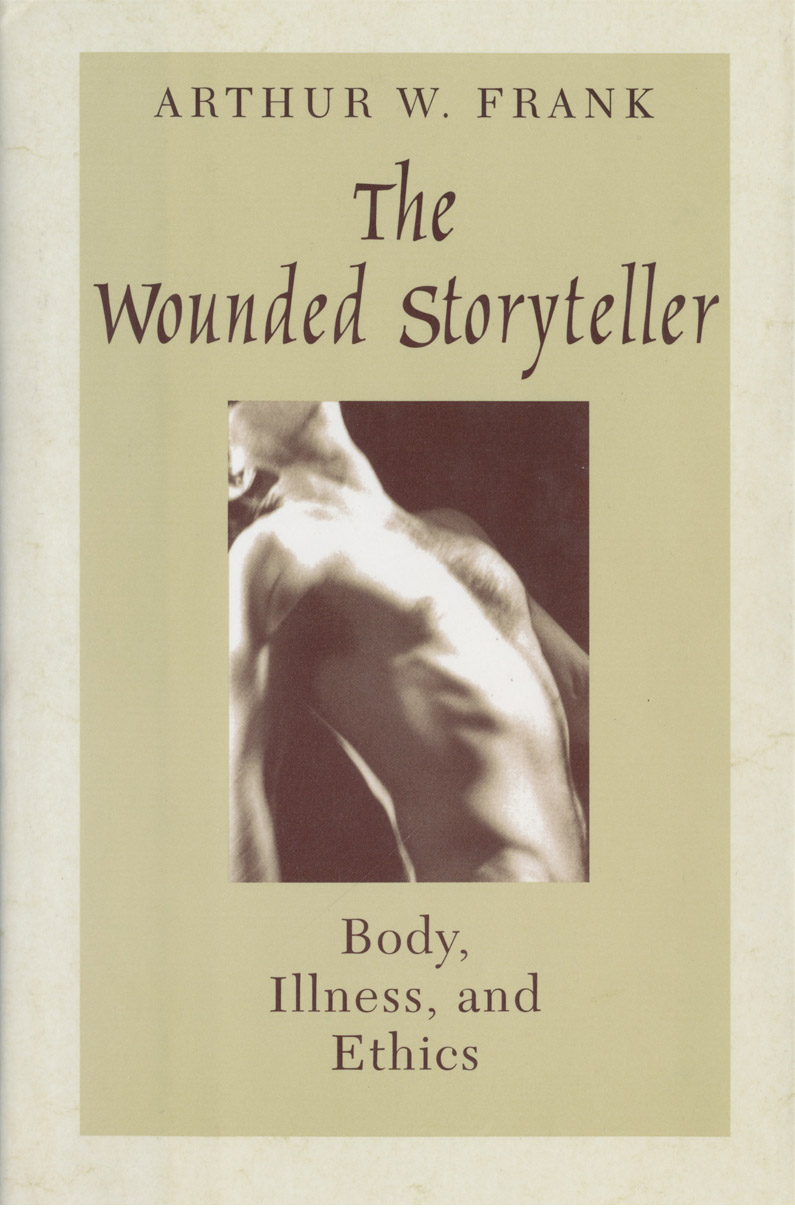


 A Better NHS