This weekend I went to a ‘nine-night’, a memorial for a Caribbean patient I had known for almost 20 years. I remember vividly the first time we met. She walked into my consulting room and stood right in front of me just as I sat down. Almost six-foot tall and considerably more than a hundred kilos, she leaned over me and banged her walking stick wrapped in silver lamé on the floor, “I don’t know you and I don’t like doctors, especially doctors I don’t know. What you need to know is that I need a doctor who can be comfortable in front of me,” I looked up to see her frowning down at me and I was about to say, “I think I can do that,” when she cracked into a grin and slapped me hard on my shoulder and said, “I’m only kidding! Dr Fuller said I should see you and I trust him! But he’s left. You had better not leave, because if you’re not staying, I’m going somewhere else.” She wasn’t kidding, especially about needing a doctor that could remain comfortable in her considerable presence. Philosopher Julia Kristeva wrote ‘Powers of Horror: an essay on abjection’ in which she described abjection as having both visceral and symbolic powers. Visceral powers relate to its ability to disgust and repel, forcing people in its presence to recoil, repel or escape. The symbolic powers relate to the ways that abjection transgresses boundaries between life and death, clean and contaminated, what is permitted and what is not. Janet crossed a boundary by ignoring the patient seat in my room and leaning over me. Her body made huge by binge eating and scarred by surgical procedures and self-harm was a battleground where she was both victim and perpetrator, abject even to her. She had met too many doctors who recoiled in her presence, but having been assured by her previous GP that I would be up to the task she wasted no time before testing me. Looking back through her medical record I can see that it wasn’t long after our first meeting that she told me about some of the abject horror of her childhood that helped make sense of her present situation. In recent years when she was housebound she would insist on cooking for me when ever I came to visit. if she was unwell she might postpone the visit for a day or two until she had mustered the strength to prepare something. She bought a portable hob and electric wok so that she could sit on the side of her bed in the lounge and cook up Caribbean fusion dishes with meat, fish, chicken, rice, past and vegetables and always with hot pepper sauce on the side. She was impressed and amused by how much I enjoyed the spices. I would always be sure to skip breakfast and do a training session before work on days when I was due to visit because she would be disappointed if I didn’t eat A LOT. While I was eating, I couldn’t interrupt her and she had my full attention. My mouth was full and my ears were open. We would catch up on her hospital visits and her precarious health, and she would cry and try desperately to get me to understand how she felt, especially after her son died. Empathy came more from shared feeling than from words. I never saw her eat anything herself. After she died I looked through the dozens of consultations that I had recorded and wondered how many people knew as much as I did about her life.
“When you [a GP] are so poor that you cannot afford to refuse eighteenpence from a man who is too poor to pay you any more, it is useless to tell him that what he or his sick child needs is not medicine, but more leisure, better clothes, better food, and a better drained and ventilated house. It is kinder to give him a bottle of something almost as cheap as water, and tell him to come again with another eighteenpence if it does not cure him. When you have done that over and over again every day for a week, how much scientific conscience have you left? If you are weak-minded enough to cling desperately to your eighteenpence as denoting a certain social superiority to the sixpenny doctor, you will be miserably poor all your life; whilst the sixpenny doctor, with his low prices and quick turnover of patients, visibly makes much more than you do and kills no more people.
A doctor’s character can no more stand out against such conditions than the lungs of his patients can stand out against bad ventilation. The only way in which he can preserve his self-respect is by forgetting all he ever learnt of science, and clinging to such help as he can give without cost merely by being less ignorant and more accustomed to sick-beds than his patients. Finally, he acquires a certain skill at nursing cases under poverty-stricken domestic conditions.”
George Bernard Shaw, The Doctor’s Dilemma 1909
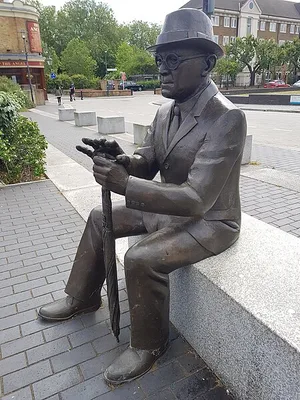
Dr Alfred Slater was a GP who worked in Bermondsey at that time and may have been an inspiration. He charged six pence for consultations if patients could afford it and nothing if they could not and in spite of this he was soon able to recruit four more doctors to the practice. He worked with his wife Ada all their lives to try to alleviate the effects of poverty in the area. He upset other doctors because of his low fees, and his popularity with patients. Unlike easily manipulated and faked Google reviews that are a proxy for GP popularity today, Dr Slater earned his status by the quality of his care, his political advocacy, and his physical presence. Unlike GPs today who rarely or never visit patients at home and consult remotely, he chose to live in the heart of the community where he practiced and was, and still is, held in high esteem by the community.
I have worked for twenty-five years in a practice that actively supports continuity of care and doctors and nurses do home visits every week. Even as we have expanded from four to ten GPs and from seven thousand to seventeen thousand patients, we have kept the same philosophy of relationship centred care. Our social standing and the confidence and trust on which we and our patients depend, is sustained by this.
This is not just a philosophical or moral issue, but there is an abundance of research supporting my view that the more distant GPs are from their patients, the lower the confidence and trust patients will have in us. Our ability to contain anxiety, manage uncertainty, diagnose promptly, and take care of patients depends on the strength of our relationships with patients and the community.
The Royal College of GPs curriculum for GP training states that ‘Continuity of care, along with generalism is a fundamental feature of general practice,’ and yet continuity is vanishing and patients are increasingly viewing GPs as gatekeepers, shopkeepers, dealers and travel agents. And a lot of GPs are quietly slipping into these roles, some passively and some actively. The emphasis on work-life balance has come about because meaning and purpose is intrinsic to a working practice bound up in relationships with patients and community, but is entirely lacking from the transactional model which alienates GPs from their patients, their work and themselves.
Just have my patients have taught me the value of continuity of care, my trainees have shown me that if they are given the chance to experience some of the satisfaction and pride that comes from investing in relationships with patients they will want more of it. This way we can build a better future for general practice. Where there is a will there is a way. I want to be proved wrong, and the 2025 GP patient survey suggests that I may be, But I think that the truth is that the status of our profession like Wile E. Coyte who has run off the edge of a cliff but doesn’t realise it and hangs briefly in the air before plummeting down to the canyon before. We only have ourselves to blame.
At his interview for a position at a law firm, a friend was asked what he would arrange for the partners’ away day. With barely a pause he said that he would take them to a mortuary, and they would look at dead bodies and afterwards they would gather to reflect on their confrontation with death. He persuaded them that our morality is constrained because we are too removed from death, and too fearful of our own mortality. He got the job, but never actually took them to the mortuary.
A few years later I happened to pass by St Pancras Public mortuary with my teenage sons and was reminded of my friend and suggested that we go inside. They recoiled at the idea and vehemently refused. The strength of their response surprised me, their disgust and their refusal. Teenagers are exposed to more horror than most parents can imagine. My sons tell me of a day this February when all the usual social media filters failed and their Instagram and Tiktck feeds were full of graphic videos of acts of extreme violence, far worse than the usual day to day horror that intrudes on their music, fashion and skate-boarding feeds. Younger children dare each-other to watch videos of extreme violence, but by the time they are twelve or thirteen (my sons tell me) some lose interest, and choose to avoid it, partly because of the human suffering, but also part because it’s intrusive and tedious.
Horror is tolerable when it is in its place and accompanied by rituals – in the mortuary, the dissecting room, the operating theatre, on the battlefield, in hospitals and nursing homes, in art, in religion, in therapy and in the consulting room. Even in the right places with the right rituals, there are limits to how much horror can be tolerated. Few people who are unmoved by dead bodies on the news or in movies would want to see a body in a mortuary or at the scene of an accident. Some doctors cannot stomach the sight of blood and choose specialties where tears are the bodily fluid more frequently encountered. Other doctors choose to practice in affluent areas or to do private medicine where they do not have to encounter the scents of poverty, so vividly described by Dr Jens Foell,
What exactly is this smell of poverty? It is so pervasive. I recognise it in an instant. This perfume should be called ‘Deep End’, and it gives every encounter with poverty a visceral olfactory dimension. It is described as the ‘smell of rotten fruit’ in the beginning of the Akira Kurosawa’s film, Red Beard, which features Toshirô Mifune as a doctor treating the poor.[i]
My recent round of home visits for long-term housebound patients included a psychotic woman who keeps dozens of birds in her flat that fly around everywhere. Every surface is covered in faeces and the whole has an overwhelming scent that is partly ammonia but otherwise wholly unfamiliar. Another patient stacks towels soaked in urine on the arm of her chair until the carers come in the evening, and the air in her flat is suffocating. Neiter patient ever opens their windows. My stomach tightens whenever I am asked to visit. I am glad that I have a shower and change of clothes at work.
Philosopher Julia Kristeva wrote about confrontations like this in Powers of Horror: an essay on abjection. The abject has symbolic and somatic effects. The somatic is sensory, anything that evokes disgust like foul smells, death, decay, infected wounds, skin diseases and infections, bodily fluids – mucous, pus and faeces. These provoke physiological sympathetic nervous system reflexes like nausea, sweating, palpitations, feeling faint, and desire to escape (flight), or defend oneself (fight), to recoil, to avoid and end the experience as soon as possible. Horror’s symbolic power comes from boundaries being broken, the symbolic order disrupted. Being too close to death, we are confronted with our own mortality, too close to madness we are confronted with the limits of our own sanity. When boundaries are intact, we can cope because there are clear lines separating us from what we are not. Philosopher and novelist John Berger wrote,
“The poor live with wind, with dampness, flying dust, silence, unbearable noise (sometimes with both, yes, that’s possible), with ants, with large animals, with smells coming from the earth, rats, smoke, rain, vibrations from elsewhere, rumours, nightfall, and with each other. Between the inhabitants and these presences there are no clear marking lines. Inexorably confounded, they together make up the place’s life.” John Berger, Hold Everything Dear 2007
Confronted with abject patients, doctors may may to defend themselves by saying that it’s not their job, that they don’t have enough time, that they aren’t trained or suitably qualified, that these kinds of abject patients and these kinds of abject problems do not belong with them.
“The rich force the poor into abjectness and then complain that they are abject” Percy Shelly 1812
Doctors choose their profession because they believe that they can make a difference. For a trauma surgeon, confrontation with appalling injuries is made tolerable by their ability to act, to repair the damage. The symbolic order is preserved because they are performing their role and the patient as victim is performing theirs. The symbolic order is upset when the doctor is unable to perform in their accustomed role, and their identity is threatened.
A group of medical students were sent to visit a patient at home. Compared to many, his situation was not so abject, but a mix of animals, incontinence and smoking generated a familiar ‘Deep End’ scent that clung to their clothes. The students were unhappy, they protested that it was unreasonable and inappropriate, and they did not want to do any more visits. Their tutor, a GP with decades of ‘Deep End’ experience was shocked, she had hoped for empathy, compassion, and curiosity. The abject crossed the boundary between the students and the patient by finding a home in their clothes and in their noses, following them around even after the visit was over. It was revolting and out of place. Unlike me, they couldn’t change their clothes, and unlike the trauma-surgeon, they were powerless to intervene in any meaningful way.
In her essay, The Art of Doing Nothing, Iona Heath explains that in medicine, “the art of doing nothing is active, considered, and deliberate. It is an antidote to the pressure to do and it takes many forms.” She quotes Arthur Kleinman, the American anthropologist and psychiatrist, who says:
… empathic witnessing … is the existential commitment to be with the sick person and to facilitate his or her building of an illness narrative that will make sense of and give value to the experience. … This I take to be the moral core of doctoring and of the experience of illness.
Many patients are exquisitely sensitive to their doctor’s actual or perceived judgement. It is very common for patients to refuse a visit or postpone an appointment so that they can clean their home or make themselves presentable so that they won’t be judged. They can see disgust in their doctor’s eyes. Whenever I ask patients questions about their lifestyle they are almost always drinking less, exercising more, eating less junk, getting out more. Far from exaggerating their symptoms, most patients hate to disappoint their doctors, and they reassure us that they are taking their tablets and that they are getting better even when they are not. As a GP with 25 years of continuity of care, I know my patients disclose the horror of their lives very slowly and frequently apologies for overburdening me. They know implicitly that there’s only so much that even a doctor can bear. This is most frequently the case when there are histories of abuse. Shame is intensified if the doctor recoils, refuses to listen and pushes them away into the purgatory of a waiting list for psychotherapy.
Abjection collapses the distinction between subject and object and leads to an intersubjectivity rooted in extremes of difference: life vs death, comfort vs squalor, privilege vs powerlessness, safe vs violated, flourishing vs decaying etc. Work with the abject is emotional labour because the intersubjectivity means that like the smells that linger, experiences linger after the work is done. It is easy to criticise the hours worked by junior doctors in the time before I qualified, but the benefits of camaraderie and down time in the doctors’ mess where experiences could be processed with peers have been all but forgotten [ii]. Soldiers returning from active service need the company of others who can relate to their experiences to help them transition back into family life just as survivors of natural and man-made disasters need the company of other survivors. Post Traumatic Stress Disorder (PTSD) is much more likely without this among fellow survivors. In the years since I qualified, almost all doctors have become more isolated and are seeking greater work-life balance, in other words, clearer boundaries. Without appreciating that any meaningful work worth doing is part of life, and that personal healing has to happen as part of work. We need liminal zones between work and leisure to process and reflect on our experiences.
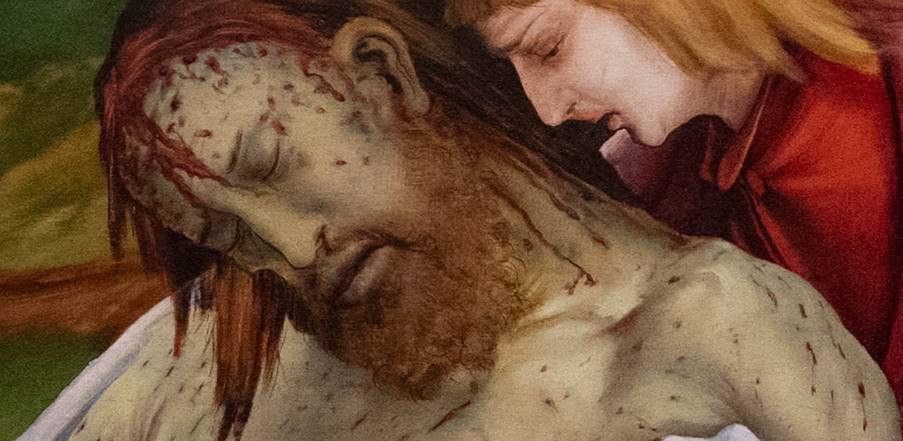
Doctors and other health professionals deal with the abject and as educators we can help them prepare for this, but few have even considered what it means or how to do this. Fortunately, since the abject is part of what it is to be human, we have evolved ways to cope. Kristeva believed we have always used art and religion, and I believe that that the more familiar doctors are with each of these, the better they can cope with the abject in their work. The Eisenheim Altarpiece from 1512 depicts Christ covered with open sores. It was painted for a monastery where monks cared for people afflicted by the plague and other awful skin diseases [iii] The symbolic power of Christ covered in sores, would have helped them see the body of Christ in those the cared for.
For Kristeva and GP Iona Heath, literature is the place where the abject is best explored and Iona’s writing tackles the places where meaning in medical practice and is examined with a rich tapestry of literary references. [iv] Her William Pickles Lecture from 1999 uses the poems of Zbigniew Herbert and Michael Frayn’s play ‘Copenhagen’ to explore uncertainty and hope,
Herbert requires us not to delude ourselves about the nature of the reality we inhabit and witness. Seamus Heaney describes Herbert’s: unblindable stare at the facts of pain, the recurrence of injustice and catastrophe.
She goes on to emphasize the need to invite intersubjectivity and frequent theme in her writing,
Without the ability to oscillate between the subjective and the objective, medicine is powerless: The first diagnostic step rests on intersubjectivity, and the second on a striving for objectivity.
Recent popular novels like A Little Life, Shuggie Bain, and Demon Copperhead have given medical readers a safe space for intersubjectivity, and with it, ways to think about and be more curious about the abject lives of their patients. Most patients, especially those dealing with abjection – pain, despair, death, shame, incontinence, and so on, don’t just (or even) want scientific explanations for their symptoms but for their doctors to have a better understanding and appreciation of what life is like for them. In Regarding the Pain of Others, philosopher Susan Sontag examined our relationship with images of suffering and was concerned by the ways in which ever more shocking photographs were used to attract attention and drive consumption without demanding understanding or action. Extreme abjection in art has been used to provoke and draw attention to political and historic horror that people have been unable or unwilling to deal with like complicity with Nazism. The Vienna Actionists – a group of artists active in the1960s gave obscene and shocking performances involving bodily fluids and violent sexual acts transgressing physical boundaries between artists and audiences including unsuspecting passers-by [v].
Abjection breaks moral and sometimes legal boundaries which has led to the artists being arrested [vi] American Artist Paul McCarthy working from the 1970s onwards used liquid food stuffs in lieu of bodily fluids in several works including Class Fool 1976 in which he covered himself in ketchup and thew himself around a classroom until dazed and then vomited several times and stuck a Barbie Doll up his arse [vii]. The show ended when the audience couldn’t stand it any longer. Although he distanced himself from the Vienna Actionists on the grounds that he didn’t share their cultural history, like them he wanted to confront audiences with their hypocrisy and complicity in mindless consumerism, violence and oppression. Movie directors have also used the abject to confront similar themes. Pier Paolo Pasolini’s1975 film Salo: 120 days of Sodom remains banned in several countries and was described by Time Out Magazine as the most controversial film of all time [viii]. He used themes of extreme sexual violence, coprophagia and torture to attack fascism and consumerism.
Zombie movies are a favourite trope for criticising consumerism and consumer culture, from George Romero’s 1868 classic Night of the Living Dead, to Peter Jackson’s 1996 Brainsead [ix]. Brain Dead remains banned in several countries and has a scene that echoes Kristeva’s idea that an infant develops a sense of self as separate from their mother at the point in their development when they experience abjection. Infants are not born with a sense of the abject; they are content to play with shit and are unperturbed by vomit. Near the end of Braindead a sixty-foot zombie woman shoves her adult son back into her womb shouting, “You will always be my little boy!” He then cuts himself out of her stomach and she collapses into a burning house. Zombies are a classic abject trope because their power lies in our not knowing whether they are alive or dead, our fear is the undead, the unknown, it is apprehension and uncertainty, themes that presently preoccupy medical educationalists, few (or even none) of whom refer to abjection.
An inability to tolerate uncertainty, especially moral uncertainty or ambiguity is associated with more conservative and extreme political views [x]. Clearly defined boundaries between right and wrong, good and bad, acceptable and unacceptable, are hallmarks of political intolerance, populism and nationalism, in short, fascism, which is why so much abject art and cinema are anti-fascist. My colleague’s medical students who were disgusted by what they encountered on their home visit were unable to see beyond the state of the patient and their home to the political and economic decisions that led to such an abject situation. For Susan Sontag, abject encounters have an ethical value, “Such images … [are] an invitation to pay attention, to reflect, to learn, to examine the rationalizations for mass suffering offered by established powers. Who caused what the picture shows? Who is responsible?” [xi] As Sontag noted, they are an invitation that may be ignored, rejected, or not noticed. In the fruit-machine meets TV world of social media, a surfeit of abject images streams past demanding consumption without reflection.
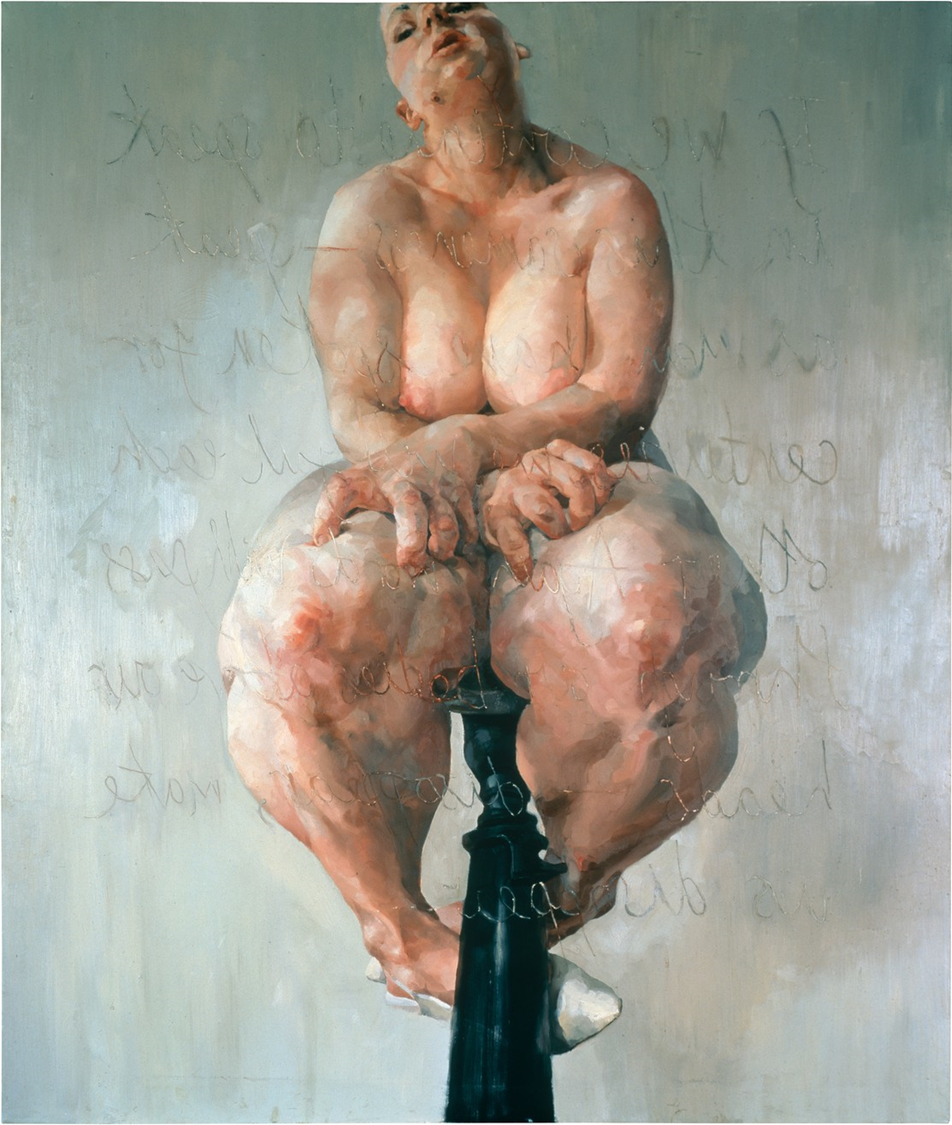
Artist Jenny Saville’s pictures, “..may be painful to see, while the painting of it, if not quite pleasurable to see, is so extremely compelling of our attention that we do not want to look away…” She wrote her final college dissertation on Kristeva and her influence shows in works across her career which began with her final show in 1992. Her most famous piece from that show, Propped is a huge self-portrait of a huge woman, sat naked on a stool, with her ankles and arms crossed and her fingers digging into her soft, fleshy thighs. The viewer’s perspective is from the level of her enormous knees, so that they must look up at her while she peers down at them over her nose with her head tilted back. She dominates the viewer.
Jenny Saville, Propped 1992
Etched into the painting are words by feminist author Luce Irirgaray, which translated reads, “If we speak to each other as men have been doing for centuries, as we have been taught to speak, we will fail each other. Again… Words will pass through our bodies, above our heads, disappear, make us disappear”. Saville paints women in ways men do not.
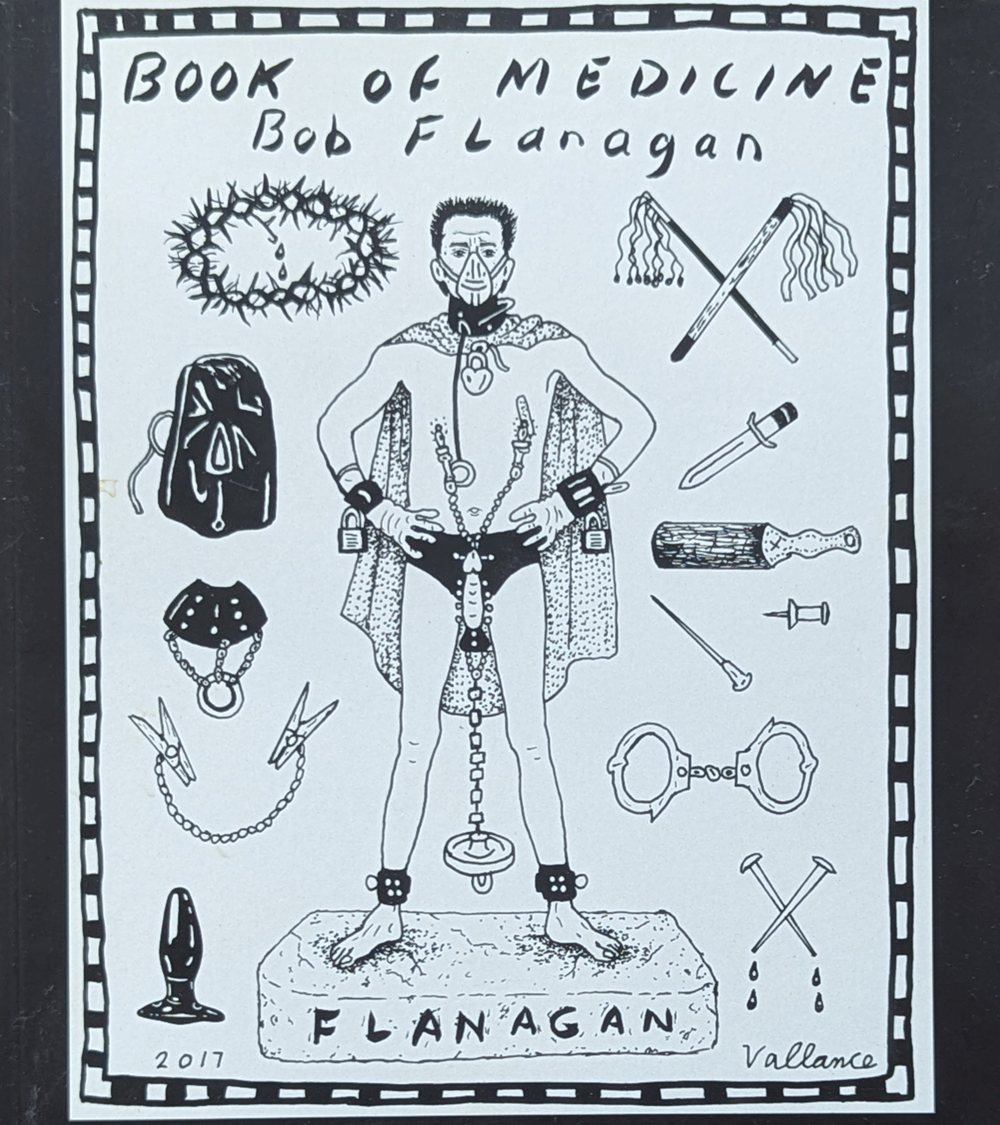
In later works she fills enormous canvases with flesh that cannot be contained by bodies but blends in with everything and everyone around it. The abject is matter out of place, and she paints the flesh of mothers mixed with their babies, lovers blended with one another and groups who seem to share limbs and torsos. Recent portraits are like mirages that appear out of big, bright abstract brush strokes, splashes, and lumps of paint. Artists who work with abject ideas are concerned with the many ways of being in the world and show us what is socially or psychologically taboo. Bob Flannagan was another artist who used himself as his abject art. He suffered with Cystic Fibrosis, a condition that caused his lungs to fill with pus, leading to frequent infections and hospitalizations, he had diarrhoea and frequent, foul, mucousy stools, chronic pain and depended on medication, nutritional supplements, oxygen therapy and physiotherapy. His art centred on his body, his disease and masochistic body mutilations, presented as visual art, performance poetry and physical theatre. The chosen pain of masochism and masochistic sex overwhelmed the pain he was forced to endure because of his illness.
Physical presence demands more and is one reason why in-person medical care is challenging to medical professionals who are retreating to do only virtual consulting. They are spared multisensory experiences and can escape a consultation that makes them feel uncomfortable almost as easily as they can swipe away an unpleasant image on their phone. For those of us who remain in consulting rooms and communities, home visits are where we have the most immersive experiences.
Clive speaks eloquently with a clipped English accent and assures me everything is fine at home which seems out of place given the sweet, soured milk smell that seeps out of several layers of dirty clothes. He has dreadlocks piled up and matted on his head and a huge woollen jumper in Jamaican colours unravelling in several places. A fistful of cuffs at wrists and ankles suggests that examining him might require a lot of undressing. His smell is so pungent that I am hoping that might not be necessary. Without this assault on my senses, I would not have sensed that behind his reassuring words, all was not ok. I asked whether he had hot water to bathe or shower at home, and he looked embarrassed and fiddled with loose threads. He finally admitted that his water and electricity had been cut off a couple years ago and he was going to a homeless centre every couple of weeks to wash and was a bit overdue. I examined him, conscious of the time in my youth when Princess Diana shook hands with people who were dying from AIDS while the nation looked on, astonished at her bravery and compassion, and I eschewed gloves. His smell lingered heavily in my room and my clothes, or at least my consciousness, for the rest of the day.
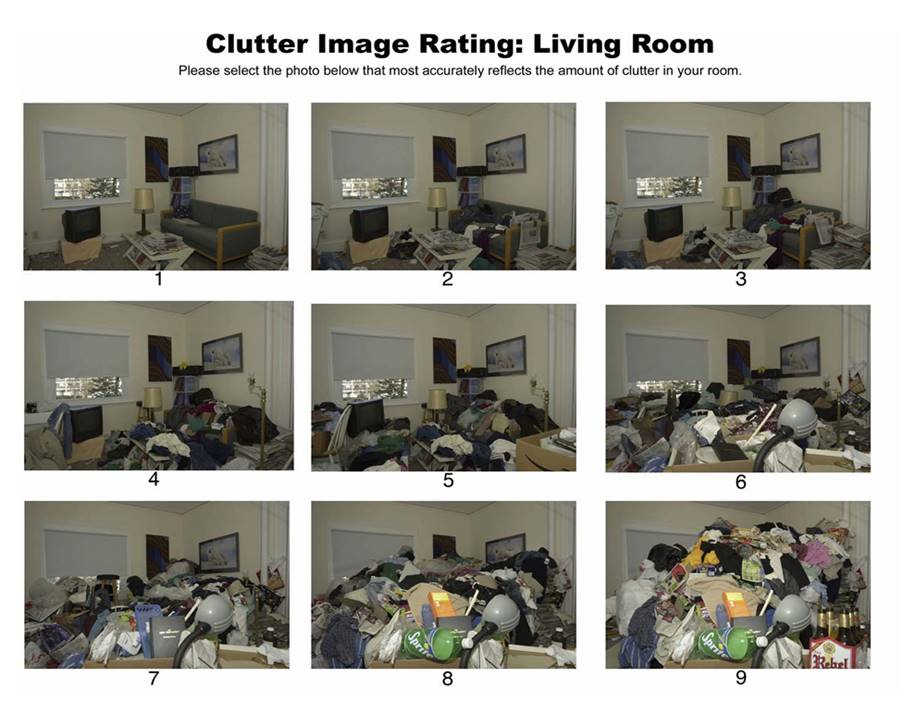
A few days later I visited him at home, he was a hoarder, level 9 on the Cluster Image Rating (2008) “This level of hoarding constitutes a Safeguarding alert due to the significant risk to health of the householders, surrounding properties and residents.” [xii] Boxes, bags and miscellaneous detritus were piled from floor to ceiling, with only narrow paths allowing access to his bed and a single seat in the living room. Without water or electricity, the bathroom and kitchen were redundant, and access was impossible. I wondered whether I would ever have known about his situation were it not for our first, face-to-face, multi-sensory encounter.[xiii]
The classic Kurosawa movie Redbeard is about a GP trainer and his trainee, set in 19th century Japan. When the outgoing trainee hands over to his replacement Yasumoto, he warns him, “the patients are slum-dwellers, flea and lice-ridden, they stink!” Yasumoto aspires to be physician to the Shogun, not a GP to impoverished villagers and is disgusted and reluctant to have anything to do with them. Abjection confronts the young doctor, and the movie has several abject themes including squalor, child abuse and suicide. Redbeard teaches by example and by giving Yasumoto responsibility for taking care of a girl he rescued from a brothel. Care-giving is the most profound and intimate way in which we can encounter the abject. In her review of Kindness in Healthcare, Iona Heath writes, “it is easy to forget the appalling nature of some of the jobs carried out by NHS staff day in, day out—the damage, the pain, the mess they encounter, the sheer stench of diseased human flesh and its waste products.”In Labours of Love, by Madeline Bunting, a book about the nature and crisis of caring she quotes a palliative care consultant who describes caring as, ‘the art of not running away, also the title of an essay I have written about care-giving’[xiv].
A better appreciation of abjection teaches us to be present with what instinctively repels us, whether by assaulting our senses or shocking us with narratives of trauma. Patients need doctors (and other healthcare professionals) who can remain present when the instinctive urge is to run away. We must learn how to suffer, and in so doing learn how to become more compassionate, because compassion means being with suffering and being moved to do something about it. Being fully present may be the most therapeutic gift a practitioner can offer and caring in situations of abjection may be the best way that we can do that[xv][xvi]
This is the first in a series of essays about art, abjection, self-representation and medicine.Please contact me, Jonathon Tomlinson echothx at gmail dot com. I am available for teaching sessions and workshops for health and social care professionals and anyone working at the interfaces of medicine, culture and society. I work with FlyingChild to do side-by-side professional and survivor education for health professionals.
[x] Inbar, Y., Pizarro, D., Iyer, R., & Haidt, J. (2011). Disgust Sensitivity, Political Conservatism, and Voting. Social Psychological and Personality Science, 3(5), 537-544. https://doi.org/10.1177/1948550611429024 (Original work published 2012)
[xi] Sontag, Susan: Regarding the Pain of Others 2004 Penguin
My name is Alice Kumari, I am a 49-year-old GP who works in West London. The following is an account of a day at work at the end of November 2023.
I arrived at work shortly after 6.30am, unlocked the practice and put on the coffee, before Anu, our head receptionist arrived a few minutes later. By 7, my first coffee was on my desk, and I was working through the results that had come in over the weekend. I checked the ‘Global Tasks’ to see which results had come in for other doctors – Dr Overton had 149 results in his inbox, results he was sitting on, unable or unwilling to do anything about them. I wasn’t sure if it was burnout, or the fact that he was nearing retirement or both. I really ought to speak to him I thought. As senior partner, this kind of thing usually came down to me, even though I suppose now at least, that it ought to have been a partnership issue. I cleared other doctors’ inboxes too, because we were under huge pressure as a practice, and I’d had two doctors in my room crying on Friday and a trainee had complained to her supervisor about the workload. After going through the results, I signed off the prescriptions and worked through most of the documents. Before starting on my emails, I got another cup of coffee and said hello to reception team and Dr Jain. “You’re early again, I thought I’d be the first one here!” he said cheerfully. He was due to go away on leave and had come in early to make sure his admin was clear before he left. “I’ve cleared your results and scripts for you, so it’s just the documents” I said. “You’re so kind Alice, I would have done it”. Yes, he would have done, but it was easy enough when I was on a roll. I noticed that my coffee cup was nearly empty, and hesitated wondering if it was too soon for more.
Sophie, my first patient arrived 30 minutes before my surgery was due to start. She was very anxious and was trying to escape an abusive relationship. She didn’t want her husband to know that she was coming to see me, so she would come in on her way to work, and I would let her in before the practice opened for appointments. Sometimes I would see her after my evening clinic or fit her in at lunchtimes. We had known each other for nearly twenty-four years, and I had even looked after her mother when she was pregnant with Sophie. Not long before I started work, GPs would deliver their patients babies at home, and sometimes I wondered what it would have been like if I’d delivered Sophie too. I don’t remember her smelling of alcohol. I’d gone out of the room to get a third cup of coffee but when I came back, Charlie my trainee was waiting to start his tutorial and said that my room smelled like an espresso-martini. “Well, it wasn’t me!” I exclaimed, perhaps a little too urgently and earnestly. Charlie, embarrassed apologised and I apologised for embarrassing him. I explained about Sophie and then used her story to illustrate the role of trauma and adverse childhood experiences in attachment difficulties and the recreation of violent relationships in adulthood. I realised suddenly that I had meant to have a formal case-based discussion for his educational portfolio and stopped myself just in time. “I don’t know how you do it” he said at the end of the tutorial, “I can’t believe you were here at six thirty and you’re going to do evening surgery as well today”. “Actually,” I said, smiling, “I’m finishing early today because it’s my 25th wedding anniversary and Stuart is taking me out for dinner”. My heart skipped a beat as I checked to make sure that my evening clinic had been moved – it had. Dinner was on.
As far as I can remember it was a typical Monday morning. In other words, Hellish. There must have been at least 200 patients on the triage list for me to work through, trying to allocate them to about 30 GP appointments on the day, perhaps as many somewhere in the coming weeks, and a scattering of nursing, trainee, student, physiotherapist, pharmacist and other options for allocation. It’s like Whack-a-mole. As fast as you allocate one patient, another two are added to the list. By 9.30 there were already a hundred. My future appointments were all booked up so any patients on the list that were mine, I added a note underneath to say I would call them later. I did two visits and skipped lunch and postponed (again) a meeting with the accountants and then debriefed Charlie before starting afternoon surgery. I’d added several extra patients from the morning’s duty, but today I felt relatively relaxed about it. Stuart hadn’t booked the table until 9 and I was planning to go straight from work anyway, so I’d have time. I messaged my mum about half-way through the afternoon surgery, “Are you still OK to baby-sit the girls this evening?” I didn’t hear back immediately which put me into a mild panic so the next couple of patients were a bit of blur. I called her and it went straight to answerphone. I tried to hide the worry / irritation behind my cheery, “Hi mum! Just me, just checking” message. One effect of our total triage system was that every obviously straightforward patient is filtered off to a student, a trainee, a nurse or someone/ anyone other than their usual GP. The only patients that can get through to us have reached a point of crisis or complexity that the person in charge of triage on the day they call has made the decision that only the patient’s usual doctor can deal with it. Our clinics are busier, more complex and more emotionally fraught than ever before. It’s important to say that when it goes well, as it quite often does (or rather, did), you feel like you’re doing the best job in the world, working at the top of your grade, using all your skills and experience to help people that really need you. On other days, it sucks everything out of you and your family are left with an irritable husk of a human being. In the weeks running up to this day, most days seemed like that. It was easy to blame it on external factors – winter pressures, work being dumped from hospitals and every other public service you can think of. Everything seemed to end up ‘Back to GP and ‘Get al Letter from your GP’ seemed to be the answer to every problem humanity faced.
At around 6pm I got a screen message from reception, “Clarissa is on line 1, shall I put her through?” Clarissa is my mum, and there was a patient in the room with me, a young woman from Sierre Leone who was pregnant after being raped at home. She was living in a hostel, and I was speaking to her through a telephone interpreter. She was crying and the consultation was taking a long time, I messaged back, “Tell her I’ll call her back in 5”. I switched the screen off because I didn’t want to be interrupted any more or for my patient to think I wasn’t listening. But the truth was that after that I wasn’t really listening. I was worried about why my mum had called. I started catastrophising about her not being able to baby-sit and the possible reasons. It took a concerted effort to get back on track and the consultation drifted before I could reassemble a state of presence. My phone buzzed at least twice before the end of the consultation, and I checked it as soon as my patient’s back was turned to leave the room. My heart stopped. I knew it. I knew it! How could she?!
My mother is a (relatively) famous professor of public health. She rose to some fame during Covid with TV and radio interviews, but things really took off because at the same time she was diagnosed with breast cancer and then wrote a book about her experiences. It had just been published and she was going around doing events and interviews. She was messaging to say that celebrity / author/ podcaster GP Rangan Chatterjee was doing a live event in Cambridge this evening and at the last minute, possibly because someone else couldn’t make it, he had asked if he could interview her. I called her straight back. “Mum, seriously, not Rangan?” We had been at medical school together and had even dated briefly. I thought he was a dick, although I couldn’t quite discern my judgements from professional jealousy, the way he dumped me, his constant virtue-signalling getting up at 4am to do naked yoga and meditate, self-care smugness’, fake vulnerability, trauma blah. And as for all the health product advertising crap. I fantasised about heckling him on stage in the middle of his interview with my mum. Neither of us were listening to each other. I didn’t care about Rangan, I didn’t give a damn about how much it mattered to her, I didn’t listen to her say she would pay for Stuart and me to go away for a weekend with her first royalty cheque. I wanted to argue with her when she said that it wasn’t as if we were doing anything that special by going to a local restaurant on a Monday night. Instead, I said, “Mum, seriously, that’s incredible, I don’t believe it, The. One. And. Only. Doctor Rangan Chatterjee. You’re basically up there with Bessel Van de Kolk and Gabor Mate now. Next thing you’ll be on the New York Times best seller list, and we’ll all be going to Dubai for Christmas!” We laughed at this because neither of us could imagine anything worse than Christmas in Dubai. “Seriously though, that’s fine. Really, you’re right, we weren’t doing anything all that special other than it being our 25th anniversary, but honestly, you’re probably doing us a favour, I’ll basically be completely shattered, and we’ll probably only talk about the kids and they’re probably at the age where we should be able to leave them alone anyway. You should go, it’ll be amazing, I’m so proud of you!” I hung up a little too abruptly while she blathered on about how much she knew I’d understand and how much she loves me blah blah blah. At least my patients give a shit I thought as I turned my screen back on and realised how late I was and what a selection of seriously troubled souls I’d lined up at the end of a long day.
I always teach students that patients like this are hidden in plain sight. They’re all around us, every second or third patient on a normal day of any GP in a deprived area. Survivor-victims hiding self-harm and suicidality, addiction, eating disorders, and more behind walls of shame and masks of coping. As a female GP working in the same practice for over 20 years, the walls were down and the masks were off as often as they were on and the trauma was not hidden, but plain to see and painfully apparent. Like Marley’s ghost in A Christmas Carol, Mankind was my business. And the more messed up they were, the more I drew them in. Finally at around 7.30, I got another sceen message from reception to say that Sophie wanted to see me. I went out to call her in, but she wasn’t there. I checked with the receptionists, but they said that they’d sent the message an hour ago, but Sophie said she couldn’t wait. The computers do that sometimes, losing or delaying messages at random. I vented at the software, the unaccountable ghost in the machine that disrupts my work innumerable times every day. “She looked really bad” the receptionist said, as I went back to my room. Suddenly I realised I’d forgotten to call Stuart to let him know that dinner was off. It was 7.45, not too late to cancel hopefully. Maybe I can call him after Sophie in that case, I thought. I called Sophie but her phone went straight to answerphone, and I left a voicemail. I sent a text in case that was easier for her, and then checked my admin – there was even more than there had been in the morning. I longed for a glass of wine. It was definitely wine-O-clock. No, I must finish this. So I got on with it. The next thing I knew my phone was ringing and it was 8.30 and Stuart was calling to say that he was just heading to the restaurant and would be a bit early if I wanted to join him for a cocktail. Oh no, no-no-no-no-no-no, Oh no-no-no-no, I don’t believe it. “Your mum said she be at ours by 9 and I left the girls finishing their homework, so they’ll be fine” he said cheerfully. It’s too awful to recall the rest of the conversation. It didn’t go well. I remember thinking I really, really need a glass of wine and then remembered that I actually had a bottle in my bottom drawer that a patient had given me the week before. Genius, you star.
Honestly I’d never done this before, even if I’d imagined it many times. I opened it and poured a little into my coffee mug to rinse it out. It would be a shame to waste it I thought and so drank it quicky before pouring a decent amount in and breathing a big sigh before turning back to my computer. Another screen message. “London Ambulance on line 1” “What?” I was incensed. I was just about to enjoy finishing my admin for the first time ever, it was 8.25 on a Monday evening, and I was the last doctor left in the practice, it was my wedding anniversary and I had wine. Why me, why now? Why is it always me? Why is it never in the middle of the day?” I picked up the phone. “Is that the GP of Sophie Wright?” “Yes”, I answered, ”Why, has something happened?”
I got home some time around 10pm. Somehow, I’d managed to finish the wine at work. I’d meant to tip the last mug-full down the sink, but disgusting though it was I couldn’t bare to waste it and I told myself that the only thing worse than a full bottle of wine in my work desk was half a bottle. Even without the wine, I was in a very ‘fuck-it’ frame of mind and so I drove home. Stuart was drunk when I got back watching Inside Out with the girls and half a bottle of whiskey in one hand. There were pizza boxes on the floor. “Well, who’s this?” he said sarcastically when I walked in. “Aren’t we lucky?” I went straight to bed in the spare room, hissing at him to sort everything out, including himself. I got up at around 1.30 and went downstairs, Stuart was asleep on the sofa and the house was a mess. I tidied up in silence until I couldn’t keep my eyes open and then went back upstairs.
The next few weeks I described as my breakdown or n professional terms, burnout. I prefer not to think of them too much. Looking back, they were a tragic inevitability in a story that began long ago. My dad met my mum shortly after he came to London from Uganda, chased out by Idi Amin in 1974. He escaped after his family were murdered by soldiers, something I didn’t discover until very recently. I never knew him because he left us when we were very young. My mum bought my younger brother and me up with help from her mother, a severe Irish Catholic disciplinarian, and our childhood flipped between boarding school and home with my mother being mostly absent. Her work involved a lot of conferences and long working days, and she would always promise to make it up to us, but she never did, and we stopped believing she would to protect ourselves from the disappointment. They say that if you find a partner, chances are they’re as messed up as you are, and it was as true for my parents as it was for Stuart and me. In our 20s we felt invincible, and our lives revolved around parties and clubbing with the amazing powers of recovery that meant we could dance all night and study or work all day. It was ideal preparation for life as a junior doctor, and for Stuart who worked for City Bank. With time his work continued to encourage hedonism while mine required a calmer disposition and gradually our relationship, that was tied together with our states of mind, began to become more … difficult. Sorities paradox describes perfectly the impossibility of identifying when drinking alcohol becomes alcoholism. The myriad medical definitions of heavy/ hazardous/ problematic/ dependent alcohol use are of little use when the person you’re trying to apply them to is your partner. Like boiling a frog, you don’t notice until you’re out of your depth. Perhaps if I’d known that my own father who I never knew, was an alcoholic, or if I studied Greek tragedies alongside science, I would have been more alert to the possibility that subconsciously I’d find myself married to one.
A few months later, thanks to support from my own GP and an excellent therapist, I found myself listening to an interview with Mellody Beattie, who described her marriage to an alcoholic who concealed his drinking until she discovered a bottle of vodka hidden in the toilet cistern the day her first child was born. Listening to the entire interview, I discovered for the first time, the concept of Co-dependency and I realised that it’s always been a defining feature of my life and the people around me. It took the pressures of work and marriage for co-dependency in my personal and professional relationships to reach breaking point, as it inevitably does. And like Rumpelstiltskin, I needed to name it to break its power over me. Co-dependency is a concept that originated in alcoholic treatment /AA communities where people realised that alcoholics were frequently in relationship with people who couldn’t find any reason to live beyond helping other people. Co-dependents become obsessed with or controlled by other people’s behaviour. Their Our identity becomes lost except in relation to the people with whom we are co-dependent, and we have no self-esteem except in taking care of others. We’re outwardly highly effective and popular because we’re always the first to volunteer, the first to arrive and the last to leave, we rarely ever say ‘no’, we’re extremely organised, and we’re outwardly cheerful and in control, but hide a seething resentment and perpetual anxiety. Co-dependency begins in trauma, specifically in insecure attachment in childhood and is often intergenerational. I can see it all around me, especially because so many of my friends are other women who as children needed to care for parents or siblings because their own parents for whatever reason were unable to do it themselves. At work, we fall into the trap of believing that we’re the only one who can help the most vulnerable and needy patients and our boundaries, because we never learned about them when we were growing up, are all over the place. A good friend said, “we set fire to ourselves to keep our patients warm”.
I was out of work for nearly a year. I’m not ready to describe how bad things got during my absence, but it’s sobering to think how thin the veneer of coping was during the months before I had to stop. I recently started back at work, although strictly part time and I still see my therapist and my GP regularly. Stuart and I are both sober and we go to our own separate CoDA meetings. We went together very briefly, that was a bad decision. It’s not couples therapy. We’ve introduced clinical supervision at work and every day we take turns to debrief, and we’ve invited a therapist to run monthly Balint groups. I still arrive early, run late, fit patients in all over the place, and specialise in looking after the people whose lives are full of intractable trauma. Actually, specialise is too grandiose a label, I don’t have any extra training or qualifications, I just see a lot of really damaged patients, but I do it with less resentment, more awareness, and more patience. I’m still a husk of a human being at the end of my long days, but they are only once or twice a week instead of every day. I’ve joined a bimonthly narrative supervision group, a gym and a book club. I wonder whether this is an excess of self-care and another aspect of co-dependency I need to work on, but it’s better than self-destruction. it seems normal among my friends. Perhaps we’re all a bit co-dependent. The Rumpelstiltskin effect didn’t break the spell, like in the fairy tale where naming him frees the princess. Knowing why you’re screwed up doesn’t stop you being screwed up, but it does help. I’m on my recovery journey and I want to say it feels good, but that’s hard. Honestly it feels precarious and provisional, and knowing how unwell I could become makes me apprehensive. Trauma and co-dependency are unavoidable aspects of being human, and this awareness enables empathy. Compassion for patients seems to come easily, but turning it inwards, that’s the hardest part.
References:
Mellody Beattie interview where she talks about her childhood and marriage
London Health Emergency
Founded in the autumn of 1983, London Health Emergency is the country’s biggest and longest-running pressure group in defence of the NHS.