Tag Archives: health

Why does it hurt so much? Existential suffering – the missing dimension

Suffering, Pain, and Anguish 

John Berger distinguished pain from anguish, the latter was painful suffering, whilst the former reminds us of our powers of healing and recovery. Last year I cycled into a tree and fractured eleven ribs and my shoulder and punctured my lung. I knew what Berger meant, especially when he said that pain without anguish can reinforce a sense of invulnerability. I began to look forward to my rehabilitation almost as soon as arrived at hospital and last week I cycled past the tree I’d crashed into, defiantly, back to full fitness. Recently fingers on my right hand flared with my first painful episode of osteoarthritis, and I experienced anguish at this reminder of ageing and bodily decay. My fingers caused me more pain than the fractured ribs and shoulder had done. 

Freud claimed that people fear death, the reality of having to live with other people, the indifference of the natural world, and the inevitability of bodily frailty and decay. Philosopher and psychiatrist Irvin Yalom said that people fear death, isolation, meaninglessness, and uncertainty. Fundamentally, we all know that existential fears are what make suffering so hard to bear, and yet medicine is strangely wedded to the utopian belief that suffering can be medicated or cut away.   

After several years of neuroscientists claiming salience over interpretations of the mind, perhaps it is time to re-evaluate philosophical and psychoanalytical ideas about causes of and ways out of suffering.  

I have begun asking my patients whose physical pain or mental distress I cannot relieve, and they cannot bear, about existential suffering. Almost all of them greatly fear their bodies and the world around them and dread the uncertainty of not knowing if they will ever get better. Many of them cannot identify meaning or purpose when I ask them what gives them a reason to live, let alone happiness or joy. Most of them are socially isolated and struggle to cope with other people and fear being a burden, emotionally or physically. Few spend time in nature. The existential fears both precede and follow on from the mental and physical suffering. Illness amplifies anguish.  

I think I’ve always known this but haven’t until recently been able to describe it and I’m still trying to figure out how to put it into practice. 

Like Freud, I have witnessed in my consulting room over the last 25 years, that most people who suffer like this have endured significant adverse childhood experiences (ACEs) including sexual abuse, violence, and neglect. Many of them found ways of coping, often for decades, before ending up seeking help from a doctor, and even then, take a long while before disclosing their past traumas. It takes an average of twenty-six years for survivors of child sexual abuse to disclose. Like Freud, I am accustomed to people outside the consulting room contradicting my experiences and telling me that it’s much less to do with childhood experiences than I claim.  

If only that were true. 

Faced with having to cope with shame and anguish many people shut themselves off from the world or try to numb the pain with intoxicants which is why addiction is so often a solution to a problem. Doctors become co-dependents and supply the obliviogenic pharmacopeia of opiods, benzodiazepines, psychotropics, and gabapentinoids their patients crave. Patients have high thresholds for pleasure and seek high-risk, high-stakes sexual, recreational, and employment activities, raising the bar and increasing the dose to get the same effects. Freud recommended substitution or sublimation – replacing Eros/ Thanatos, the libidinal and violent drives with lower intensity activities, like Voltaire’s Candide tending his garden. Becoming a Hermit was another of Freud’s suggestions, perhaps not entirely seriously, but monasteries and spiritual retreats are full of young people escaping lives of destructive hedonism. Artistic and scientific pursuits are recommended too, and while I have little experience, friends who are professional musicians, dancers, and artists affirm that their world is full of survivors who channel their suffering into their creative work. Is therapy the answer? Mark Solms, a neuroscientist, has written a book making the bold claim that psychotherapy is The Only Cure, but fails to acknowledge that it is practically impossible to find the right therapist at the right time, at the right price, for long enough to make a lasting difference.  

A GP, so long as they still care about continuity enough to make it achievable for their patients, can be the right person at the right time, for long enough, at no charge. We might protest that we’re not therapists, but perhaps, that’s inevitably the position we’re put in. People come to us with the acknowledgement that they don’t fully know their bodies or minds, and they want our help to understand them better. We can find plenty in Freud to disagree with, but it’s self-evident that it’s not just our anatomy and physiology that are out of sight and out of mind, but also a great many other things that drive our behaviour. Our conscious selves are not the only hands on the wheel. If therapy isn’t part of our skill set and or if we’re dogmatic about separating bodies and minds, the least we can do is adhere to the maxim ‘Primum non nocere’, first do no harm. Quaternary prevention* is preventing harm due to medical interventions. Failure to recognise the existential dimensions of suffering is a medical misdiagnosis and leads to the wrong treatment. Psychotherapist Gary Greenberg wrote about Freud’s attitude towards doctors, 

In 1926, less than two decades after Freud’s visit, the doctors of the New York Psychoanalytic Society declared their independence from their European forebears by decreeing that only physicians could practice psychoanalysis. Back in Vienna, Freud was livid. Medical education was exactly the wrong preparation for a psychoanalyst, he wrote, as it abandoned study of “the history of civilization and sociology” for anatomy and biology, culture for science. A psychoanalyst trained this way was bound to have the wrong idea about psychic suffering: that it was an illness to be isolated and cured by the doctor. This was a form of piety that Freud could not tolerate. “As long as I live,” he wrote, “I shall balk at having psychoanalysis swallowed by medicine.” 

It is self-evident to any doctor who has treated patients with mental illness or chronic pain, or almost any kinds of functional disorders, that the patients suffer at least as much from over-zealous prescribing and medical meddling as they do from whatever it was that they first presented with. Our medical interventions are not just futile, but harmful. They’re dangerous, addictive, and trap patients in dependency After a while their symptoms have as much or more to do with the treatments they’ve been given as with the problems they started with.  

Paediatrician and psychoanalyst Donald Winnacott, reflecting on his career wrote, 

“It appals me to think how much deep change I have prevented or delayed in patients in a certain classification category by my personal need to interpret. If only we can wait, the patient arrives at understanding creatively and with immense joy, and now i enjoy this joy more than I used to enjoy the sense of having been clever. I think I interpret mainly to let the patient know the limits of my understanding. The principle is that it is the patient and only the patent who has the answers. We may or may not enable him or her to encompass what is known or become aware of it with acceptance.”  

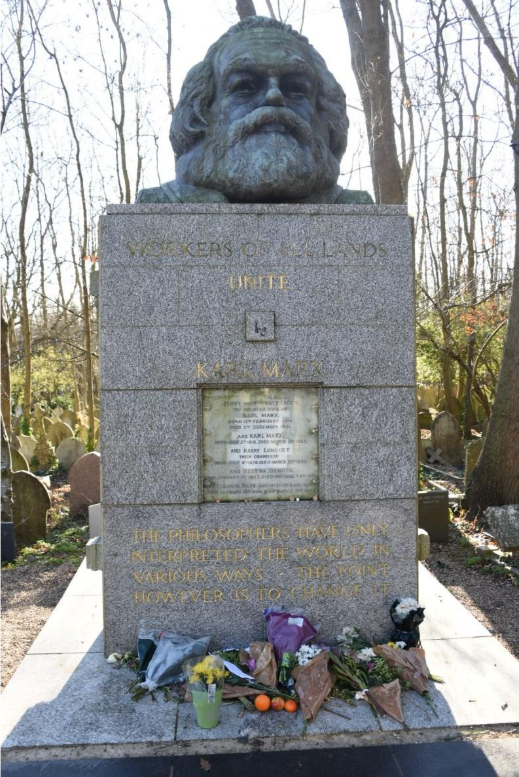
Notwithstanding the fact that patients also experience therapy as futile and sometimes even harmful, a better appreciation and understanding of existential suffering among medical practitioners is surely needed. Palliative care clinicians may understand this best of all, but they are exceptional in not being caught in the bind that ties the rest of us which is the need for restitution. Patients don’t come to doctors for therapy; they come for a diagnosis and a cure. Karl Max summed up Winnacot’s dilemma, and that of doctors and analysts who want to fix their patients when he wrote, 

“Philosophers have only interpreted the world in various ways; the task however is to change it” 

GPs may well object that they barely have sufficient time to address the medical causes of suffering, never mind the all too conscious suffering due to precarity, violence, and politics to be probing their patients’ unconscious. I would argue that existential dimensions cannot be managed separately because they are integral to what makes suffering so hard to bear.  

Some patients too will resist, after all they have come for a medical diagnosis. John Berger wrote in A Fortunate Man about the importance of a medical diagnosis. Illness creates a sense of unease, a sense that something is happening to the patient and threatening to become part of the patient. When that thing is given a name and diagnosed by a doctor, it can be held at bay and treated as an entity apart, extrinsic to the patient’s self. The advent of online consultations means that every patient completes a short section to say what they think is wrong and what they think they need. It’s striking how many want all their hormones, vitamins and minerals tested, and how many want to be tested for ADHD and Autism. They hope that the cause of their symptoms can be explained in ways that can relieve them of the burden of having to change themselves or learn to live better with suffering. 

Illness diagnosed is something that can be treated; existential suffering must be endured. As Buddhists know, life is suffering, and we must learn to suffer better. For Freud the aim of therapy was to help patients move from pathological misery to ordinary unhappiness.   

The answer then, cannot be a dichotomy between analyse or cure, but what many most patients need is a doctor who can do both. And as with Winnacott’s concept of ‘the good enough mother’ doctors need only to be good enough therapists, which is still a heady aspiration. We can begin by prioritising continuity of care so that relationships and trust between doctors and patients can develop over time. We need to broaden training to include psychoanalytic and psychological insights. Bad therapy can be harmful, but in my experience it’s considerably less harmful than unnecessary medical drugs and procedures. Patients need someone who can make a diagnosis that accounts for suffering that can be treated medically, and existential suffering that is not an illness that can be isolated and cured. Anatole Broyard wanted a doctor that could feel his prostate and his soul, and I think that is what most patients need. 

Further reading: 

Sigmund Freud: Civilization and its Discontents 

Ami Srinivasan: The Impossible Patient, London Review of Books, Dec. 2025  

Mark Solms: The Only Cure – review https://www.theguardian.com/books/2026/jan/12/the-only-cure-by-mark-solms-review-a-bold-attempt-to-rehabilitate-freud  

Longing for ground in a ground(less) world: a qualitative inquiry of existential suffering 

Suffering a Healthy Life—On the Existential Dimension of Health 

Anatole Broyard: Intoxicated by my Illness  

  • Primary prevention should be the duty of every political department apart from Health and Social Care. It is about preventing illness and suffering due to the conditions in which people are born, grow up, live, work and age. These are the social determinants of health. Secondary prevention is the early detection of disease through screening. Tertiary prevention is the main work of the NHS – taking care of people who are sick and/or have long-term conditions, to reduce suffering and avoid or minimise complications. Quaternary prevention is the avoidance of harm due to medical interventions including medical errors and excessive interventions.  

Confidence and trust in GPs.

Confidence and trust in GPs.

This weekend I went to a ‘nine-night’, a memorial for a Caribbean patient I had known for almost 20 years. I remember vividly the first time we met. She walked into my consulting room and stood right in front of me just as I sat down. Almost six-foot tall and considerably more than a hundred kilos, she leaned over me and banged her walking stick wrapped in silver lamé on the floor, “I don’t know you and I don’t like doctors, especially doctors I don’t know. What you need to know is that I need a doctor who can be comfortable in front of me,” I looked up to see her frowning down at me and I was about to say, “I think I can do that,” when she cracked into a grin and slapped me hard on my shoulder and said, “I’m only kidding! Dr Fuller said I should see you and I trust him! But he’s left. You had better not leave, because if you’re not staying, I’m going somewhere else.”  She wasn’t kidding, especially about needing a doctor that could remain comfortable in her considerable presence. Philosopher Julia Kristeva wrote ‘Powers of Horror: an essay on abjection’ in which she described abjection as having both visceral and symbolic powers. Visceral powers relate to its ability to disgust and repel, forcing people in its presence to recoil, repel or escape. The symbolic powers relate to the ways that abjection transgresses boundaries between life and death, clean and contaminated, what is permitted and what is not. Janet crossed a boundary by ignoring the patient seat in my room and leaning over me. Her body made huge by binge eating and scarred by surgical procedures and self-harm was a battleground where she was both victim and perpetrator, abject even to her. She had met too many doctors who recoiled in her presence, but having been assured by her previous GP that I would be up to the task she wasted no time before testing me. Looking back through her medical record I can see that it wasn’t long after our first meeting that she told me about some of the abject horror of her childhood that helped make sense of her present situation. In recent years when she was housebound she would insist on cooking for me when ever I came to visit. if she was unwell she might postpone the visit for a day or two until she had mustered the strength to prepare something. She bought a portable hob and electric wok so that she could sit on the side of her bed in the lounge and cook up Caribbean fusion dishes with meat, fish, chicken, rice, past and vegetables and always with hot pepper sauce on the side. She was impressed and amused by how much I enjoyed the spices. I would always be sure to skip breakfast and do a training session before work on days when I was due to visit because she would be disappointed if I didn’t eat A LOT. While I was eating, I couldn’t interrupt her and she had my full attention. My mouth was full and my ears were open. We would catch up on her hospital visits and her precarious health, and she would cry and try desperately to get me to understand how she felt, especially after her son died. Empathy came more from shared feeling than from words. I never saw her eat anything herself. After she died I looked through the dozens of consultations that I had recorded and wondered how many people knew as much as I did about her life.

“When you [a GP] are so poor that you cannot afford to refuse eighteenpence from a man who is too poor to pay you any more, it is useless to tell him that what he or his sick child needs is not medicine, but more leisure, better clothes, better food, and a better drained and ventilated house. It is kinder to give him a bottle of something almost as cheap as water, and tell him to come again with another eighteenpence if it does not cure him. When you have done that over and over again every day for a week, how much scientific conscience have you left? If you are weak-minded enough to cling desperately to your eighteenpence as denoting a certain social superiority to the sixpenny doctor, you will be miserably poor all your life; whilst the sixpenny doctor, with his low prices and quick turnover of patients, visibly makes much more than you do and kills no more people.

A doctor’s character can no more stand out against such conditions than the lungs of his patients can stand out against bad ventilation. The only way in which he can preserve his self-respect is by forgetting all he ever learnt of science, and clinging to such help as he can give without cost merely by being less ignorant and more accustomed to sick-beds than his patients. Finally, he acquires a certain skill at nursing cases under poverty-stricken domestic conditions.”

George Bernard Shaw, The Doctor’s Dilemma 1909

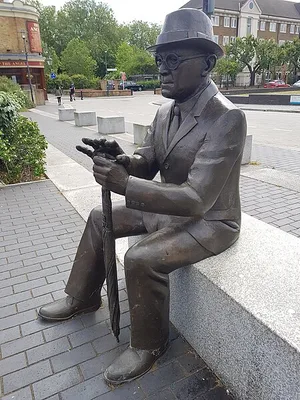
Dr Alfred Slater was a GP who worked in Bermondsey at that time and may have been an inspiration. He charged six pence for consultations if patients could afford it and nothing if they could not and in spite of this he was soon able to recruit four more doctors to the practice. He worked with his wife Ada all their lives to try to alleviate the effects of poverty in the area. He upset other doctors because of his low fees, and his popularity with patients. Unlike easily manipulated and faked Google reviews that are a proxy for GP popularity today, Dr Slater earned his status by the quality of his care, his political advocacy, and his physical presence. Unlike GPs today who rarely or never visit patients at home and consult remotely, he chose to live in the heart of the community where he practiced and was, and still is, held in high esteem by the community.

https://www.atlasobscura.com/places/dr-salters-daydream

I have worked for twenty-five years in a practice that actively supports continuity of care and doctors and nurses do home visits every week. Even as we have expanded from four to ten GPs and from seven thousand to seventeen thousand patients, we have kept the same philosophy of relationship centred care. Our social standing and the confidence and trust on which we and our patients depend, is sustained by this.

This is not just a philosophical or moral issue, but there is an abundance of research supporting my view that the more distant GPs are from their patients, the lower the confidence and trust patients will have in us. Our ability to contain anxiety, manage uncertainty, diagnose promptly, and take care of patients depends on the strength of our relationships with patients and the community.

The Royal College of GPs curriculum for GP training states that ‘Continuity of care, along with generalism is a fundamental feature of general practice,’ and yet continuity is vanishing and patients are increasingly viewing GPs as gatekeepers, shopkeepers, dealers and travel agents. And a lot of GPs are quietly slipping into these roles, some passively and some actively. The emphasis on work-life balance has come about because meaning and purpose is intrinsic to a working practice bound up in relationships with patients and community, but is entirely lacking from the transactional model which alienates GPs from their patients, their work and themselves.

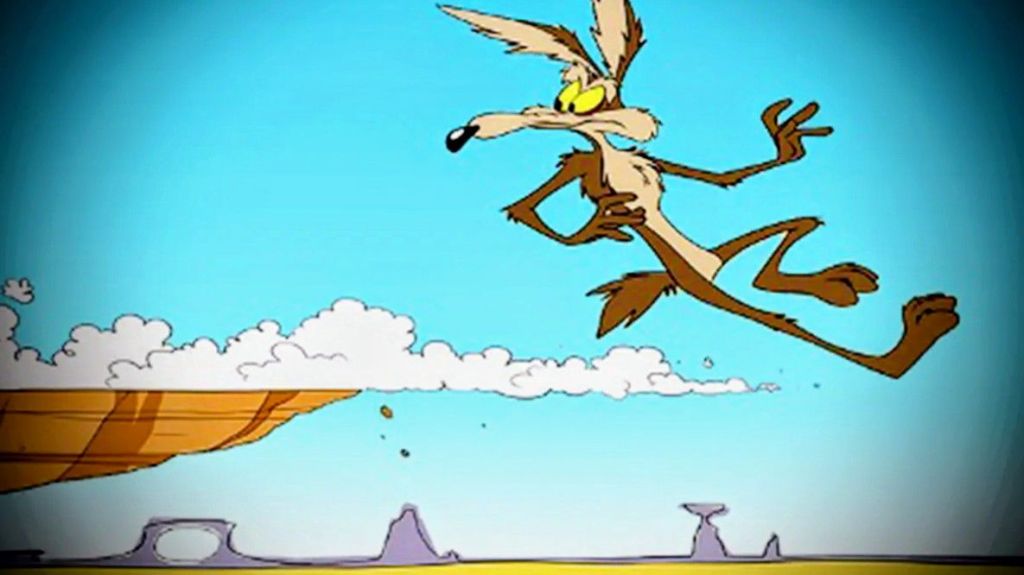
Just have my patients have taught me the value of continuity of care, my trainees have shown me that if they are given the chance to experience some of the satisfaction and pride that comes from investing in relationships with patients they will want more of it. This way we can build a better future for general practice. Where there is a will there is a way. I want to be proved wrong, and the 2025 GP patient survey suggests that I may be, But I think that the truth is that the status of our profession like Wile E. Coyte who has run off the edge of a cliff but doesn’t realise it and hangs briefly in the air before plummeting down to the canyon before. We only have ourselves to blame.

References:

List of Critically Endangered Crafts in which General Practice will soon be included: https://www.heritagecrafts.org.uk/skills/crafts/

The Doctor’s Dilemma, Preface on Doctors by George Bernard Shaw https://www.gutenberg.org/files/5069/5069-h/5069-h.htm#link2H_4_0008

Dr Alfred Slater, the man who created an NHS before the NHS was created https://stephenliddell.co.uk/2017/11/30/dr-alfred-salter-the-man-who-created-an-nhs-before-the-nhs-was-created/

Man in the Arena speech by Theodore Roosevelt https://www.worldfuturefund.org/Documents/maninarena.htm

Alienation and the Crisis of NHS Morale https://abetternhs.net/2023/08/28/alienation-and-the-crisis-of-nhs-staff-morale/

Factors influencing confidence and trust in health professionals: A cross-sectional study of English general practices https://bjgp.org/content/early/2025/10/03/BJGP.2025.0154

The GP Patient Survey 2025 https://www.bma.org.uk/news-and-opinion/the-results-are-in-gps-do-an-amazing-job

We need to talk about codependency

We need to talk about co-dependency

My name is Alice Kumari, I am a 49-year-old GP who works in West London. The following is an account of a day at work at the end of November 2023.

I arrived at work shortly after 6.30am, unlocked the practice and put on the coffee, before Anu, our head receptionist arrived a few minutes later. By 7, my first coffee was on my desk, and I was working through the results that had come in over the weekend. I checked the ‘Global Tasks’ to see which results had come in for other doctors – Dr Overton had 149 results in his inbox, results he was sitting on, unable or unwilling to do anything about them. I wasn’t sure if it was burnout, or the fact that he was nearing retirement or both. I really ought to speak to him I thought. As senior partner, this kind of thing usually came down to me, even though I suppose now at least, that it ought to have been a partnership issue. I cleared other doctors’ inboxes too, because we were under huge pressure as a practice, and I’d had two doctors in my room crying on Friday and a trainee had complained to her supervisor about the workload. After going through the results, I signed off the prescriptions and worked through most of the documents. Before starting on my emails, I got another cup of coffee and said hello to reception team and Dr Jain. “You’re early again, I thought I’d be the first one here!” he said cheerfully. He was due to go away on leave and had come in early to make sure his admin was clear before he left. “I’ve cleared your results and scripts for you, so it’s just the documents” I said. “You’re so kind Alice, I would have done it”. Yes, he would have done, but it was easy enough when I was on a roll. I noticed that my coffee cup was nearly empty, and hesitated wondering if it was too soon for more.

Sophie, my first patient arrived 30 minutes before my surgery was due to start. She was very anxious and was trying to escape an abusive relationship. She didn’t want her husband to know that she was coming to see me, so she would come in on her way to work, and I would let her in before the practice opened for appointments. Sometimes I would see her after my evening clinic or fit her in at lunchtimes. We had known each other for nearly twenty-four years, and I had even looked after her mother when she was pregnant with Sophie.  Not long before I started work, GPs would deliver their patients babies at home, and sometimes I wondered what it would have been like if I’d delivered Sophie too. I don’t remember her smelling of alcohol. I’d gone out of the room to get a third cup of coffee but when I came back, Charlie my trainee was waiting to start his tutorial and said that my room smelled like an espresso-martini. “Well, it  wasn’t me!” I exclaimed, perhaps a little too urgently and earnestly. Charlie, embarrassed apologised and I apologised for embarrassing him. I explained about Sophie and then used her story to illustrate the role of trauma and adverse childhood experiences in attachment difficulties and the recreation of violent relationships in adulthood. I realised suddenly that I had meant to have a formal case-based discussion for his educational portfolio and stopped myself just in time. “I don’t know how you do it” he said at the end of the tutorial, “I can’t believe you were here at six thirty and you’re going to do evening surgery as well today”. “Actually,” I said, smiling, “I’m finishing early today because it’s my 25th wedding anniversary and Stuart is taking me out for dinner”. My heart skipped a beat as I checked to make sure that my evening clinic had been moved – it had. Dinner was on.

As far as I can remember it was a typical Monday morning. In other words, Hellish. There must have been at least 200 patients on the triage list for me to work through, trying to allocate them to about 30 GP appointments on the day, perhaps as many somewhere in the coming weeks, and a scattering of nursing, trainee, student, physiotherapist, pharmacist and other options for allocation. It’s like Whack-a-mole. As fast as you allocate one patient, another two are added to the list. By 9.30 there were already a hundred. My future appointments were all booked up so any patients on the list that were mine, I added a note underneath to say I would call them later. I did two visits and skipped lunch and postponed (again) a meeting with the accountants and then debriefed Charlie before starting afternoon surgery. I’d added several extra patients from the morning’s duty, but today I felt relatively relaxed about it. Stuart hadn’t booked the table until 9 and I was planning to go straight from work anyway, so I’d have time. I messaged my mum about half-way through the afternoon surgery, “Are you still OK to baby-sit the girls this evening?” I didn’t hear back immediately which put me into a mild panic so the next couple of patients were a bit of blur. I called her and it went straight to answerphone. I tried to hide the worry / irritation behind my cheery, “Hi mum! Just me, just checking” message. One effect of our total triage system was that every obviously straightforward patient is filtered off to a student, a trainee, a nurse or someone/ anyone other than their usual GP. The only patients that can get through to us have reached a point of crisis or complexity that the person in charge of triage on the day they call has made the decision that only the patient’s usual doctor can deal with it. Our clinics are busier, more complex and more emotionally fraught than ever before. It’s important to say that when it goes well, as it quite often does (or rather, did), you feel like you’re doing the best job in the world, working at the top of your grade, using all your skills and experience to help people that really need you.  On other days, it sucks everything out of you and your family are left with an irritable husk of a human being. In the weeks running up to this day, most days seemed like that. It was easy to blame it on external factors – winter pressures, work being dumped from hospitals and every other public service you can think of. Everything seemed to end up ‘Back to GP and ‘Get al Letter from your GP’ seemed to be the answer to every problem humanity faced.

At around 6pm I got a screen message from reception, “Clarissa is on line 1, shall I put her through?” Clarissa is my mum, and there was a patient in the room with me, a young woman from Sierre Leone who was pregnant after being raped at home. She was living in a hostel, and I was speaking to her through a telephone interpreter. She was crying and the consultation was taking a long time, I messaged back, “Tell her I’ll call her back in 5”. I switched the screen off because I didn’t want to be interrupted any more or for my patient to think I wasn’t listening. But the truth was that after that I wasn’t really listening. I was worried about why my mum had called. I started catastrophising about her not being able to baby-sit and the possible reasons. It took a concerted effort to get back on track and the consultation drifted before I could reassemble a state of presence. My phone buzzed at least twice before the end of the consultation, and I checked it as soon as my patient’s back was turned to leave the room. My heart stopped. I knew it. I knew it! How could she?!

My mother is a (relatively) famous professor of public health. She rose to some fame during Covid with TV and radio interviews, but things really took off because at the same time she was diagnosed with breast cancer and then wrote a book about her experiences. It had just been published and she was going around doing events and interviews. She was messaging to say that celebrity / author/ podcaster GP Rangan Chatterjee was doing a live event in Cambridge this evening and at the last minute, possibly because someone else couldn’t make it, he had asked if he could interview her. I called her straight back. “Mum, seriously, not Rangan?” We had been at medical school together and had even dated briefly. I thought he was a dick, although I couldn’t quite discern my judgements from professional jealousy, the way he dumped me, his  constant virtue-signalling getting up at 4am to do naked yoga and meditate, self-care smugness’, fake vulnerability, trauma blah. And as for all the health product advertising crap. I fantasised about heckling him on stage in the middle of his interview with my mum. Neither of us were listening to each other. I didn’t care about Rangan, I didn’t give a damn about how much it mattered to her, I didn’t listen to her say she would pay for Stuart and me to go away for a weekend with her first royalty cheque. I wanted to argue with her when she said that it wasn’t as if we were doing anything that special by going to a local restaurant on a Monday night. Instead, I said, “Mum, seriously, that’s incredible, I don’t believe it, The. One. And. Only. Doctor Rangan Chatterjee. You’re basically up there with Bessel Van de Kolk and Gabor Mate now. Next thing you’ll be on the New York Times best seller list, and we’ll all be going to Dubai for Christmas!” We laughed at this because neither of us could imagine anything worse than Christmas in Dubai. “Seriously though, that’s fine. Really, you’re right, we weren’t doing anything all that special other than it being our 25th anniversary, but honestly, you’re probably doing us a favour, I’ll basically be completely shattered, and we’ll probably only talk about the kids and they’re probably at the age where we should be able to leave them alone anyway. You should go, it’ll be amazing, I’m so proud of you!”  I hung up a little too abruptly while she blathered on about how much she knew I’d understand and how much she loves me blah blah blah.  At least my patients give a shit I thought as I turned my screen back on and realised how late I was and what a selection of seriously troubled souls I’d lined up at the end of a long day.

I always teach students that patients like this are hidden in plain sight. They’re all around us, every second or third patient on a normal day of any GP in a deprived area. Survivor-victims hiding self-harm and suicidality, addiction, eating disorders, and more behind walls of shame and masks of coping. As a female GP working in the same practice for over 20 years, the walls were down and the masks were off as often as they were on and the trauma was not hidden, but plain to see and painfully apparent. Like Marley’s ghost in A Christmas Carol, Mankind was my business. And the more messed up they were, the more I drew them in. Finally at around 7.30, I got another sceen message from reception to say that Sophie wanted to see me. I went out to call her in, but she wasn’t there. I checked with the receptionists, but they said that they’d sent the message an hour ago, but Sophie said she couldn’t wait. The computers do that sometimes, losing or delaying messages at random. I vented at the software, the unaccountable ghost in the machine that disrupts my work innumerable times every day. “She looked really bad” the receptionist said, as I went back to my room. Suddenly I realised I’d forgotten to call Stuart to let him know that dinner was off. It was 7.45, not too late to cancel hopefully. Maybe I can call him after Sophie in that case, I thought. I called Sophie but her phone went straight to answerphone, and I left a voicemail. I sent a text in case that was easier for her, and then checked my admin – there was even more than there had been in the morning. I longed for a glass of wine. It was definitely wine-O-clock. No, I must finish this. So I got on with it. The next thing I knew my phone was ringing and it was 8.30 and Stuart was calling to say that he was just heading to the restaurant and would be a bit early if I wanted to join him for a cocktail. Oh no, no-no-no-no-no-no, Oh no-no-no-no, I don’t believe it. “Your mum said she be at ours by 9 and I left the girls finishing their homework, so they’ll be fine” he said cheerfully. It’s too awful to recall the rest of the conversation. It didn’t go well. I remember thinking I really, really need a glass of wine and then remembered that I actually had a bottle in my bottom drawer that a patient had given me the week before. Genius, you star.

Honestly I’d never done this before, even if I’d imagined it many times. I opened it and poured a little into my coffee mug to rinse it out. It would be a shame to waste it I thought and so drank it quicky before pouring a decent amount in and breathing a big sigh before turning back to my computer. Another screen message. “London Ambulance on line 1” “What?” I was incensed. I was just about to enjoy finishing my admin for the first time ever, it was 8.25 on a Monday evening, and I was the last doctor left in the practice, it was my wedding anniversary and I had wine. Why me, why now? Why is it always me? Why is it never in the middle of the day?” I picked up the phone. “Is that the GP of Sophie Wright?” “Yes”, I answered, ”Why, has something happened?”

I got home some time around 10pm. Somehow, I’d managed to finish the wine at work. I’d meant to tip the last mug-full down the sink, but disgusting though it was I couldn’t bare to waste it and I told myself that the only thing worse than a full bottle of wine in my work desk was half a bottle. Even without the wine, I was in a very ‘fuck-it’ frame of mind and so I drove home. Stuart was drunk when I got back watching Inside Out with the girls and half a bottle of whiskey in one hand. There were pizza boxes on the floor.  “Well, who’s this?” he said sarcastically when I walked in. “Aren’t we lucky?” I went straight to bed in the spare room, hissing at him to sort everything out, including himself. I got up at around 1.30 and went downstairs, Stuart was asleep on the sofa and the house was a mess. I tidied up in silence until I couldn’t keep my eyes open and then went back upstairs.

The next few weeks I described as my breakdown or n professional terms, burnout. I prefer not to think of them too much. Looking back, they were a tragic inevitability in a story that began long ago. My dad met my mum shortly after he came to London from Uganda, chased out by Idi Amin in 1974. He escaped after his family were murdered by soldiers, something I didn’t discover until very recently. I never knew him because he left us when we were very young. My mum bought my younger brother and me up with help from her mother, a severe Irish Catholic disciplinarian, and our childhood flipped between boarding school and home with my mother being mostly absent. Her work involved a lot of conferences and long working days, and she would always promise to make it up to us, but she never did, and we stopped believing she would to protect ourselves from the disappointment. They say that if you find a partner, chances are they’re as messed up as you are, and it was as true for my parents as it was for Stuart and me. In our 20s we felt invincible, and our lives revolved around parties and clubbing with the amazing powers of recovery that meant we could dance all night and study or work all day. It was ideal preparation for life as a junior doctor, and for Stuart who worked for City Bank. With time his work continued to encourage hedonism while mine required a calmer disposition and gradually our relationship, that was tied together with our states of mind, began to become more … difficult. Sorities paradox describes perfectly the impossibility of identifying when drinking alcohol becomes alcoholism. The myriad medical definitions of heavy/ hazardous/ problematic/ dependent alcohol use are of little use when the person you’re trying to apply them to is your partner. Like boiling a frog, you don’t notice until you’re out of your depth. Perhaps if I’d known that my own father who I never knew, was an alcoholic, or if I studied Greek tragedies alongside science, I would have been more alert to the possibility that subconsciously I’d find myself married to one.

 A few months later, thanks to support from my own GP and an excellent therapist, I found myself listening to an interview with Mellody Beattie, who described her marriage to an alcoholic who concealed his drinking until she discovered a bottle of vodka hidden in the toilet cistern the day her first child was born. Listening to the entire interview, I discovered for the first time, the concept of Co-dependency and I realised that it’s always been a defining feature of my life and the people around me. It took the pressures of work and marriage for co-dependency in my personal and professional relationships to reach breaking point, as it inevitably does. And like Rumpelstiltskin, I needed to name it to break its power over me. Co-dependency is a concept that originated in alcoholic treatment /AA communities where people realised that alcoholics were frequently in relationship with people who couldn’t find any reason to live beyond helping other people. Co-dependents become obsessed with or controlled by other people’s behaviour. Their Our identity becomes lost except in relation to the people with whom we are co-dependent, and we have no self-esteem except in taking care of others. We’re outwardly highly effective and popular because we’re always the first to volunteer, the first to arrive and the last to leave, we rarely ever say ‘no’, we’re extremely organised, and we’re outwardly cheerful and in control, but hide a seething resentment and perpetual anxiety.  Co-dependency begins in trauma, specifically in insecure attachment in childhood and is often intergenerational. I can see it all around me, especially because so many of my friends are other women who as children needed to care for parents or siblings because their own parents for whatever reason were unable to do it themselves. At work, we fall into the trap of believing that we’re the only one who can help the most vulnerable and needy patients and our boundaries, because we never learned about them when we were growing up, are all over the place. A good friend said, “we set fire to ourselves to keep our patients warm”.

I was out of work for nearly a year. I’m not ready to describe how bad things got during my absence, but it’s sobering to think how thin the veneer of coping was during the months before I had to stop. I recently started back at work, although strictly part time and I still see my therapist and my GP regularly. Stuart and I are both sober and we go to our own separate CoDA meetings. We went together very briefly, that was a bad decision. It’s not couples therapy.  We’ve introduced clinical supervision at work and every day we take turns to debrief, and we’ve invited a therapist to run monthly Balint groups. I still arrive early, run late, fit patients in all over the place, and specialise in looking after the people whose lives are full of intractable trauma. Actually, specialise is too grandiose a label, I don’t have any extra training or qualifications, I just see a lot of really damaged patients, but I do it with less resentment, more awareness, and more patience. I’m still a husk of a human being at the end of my long days, but they are only once or twice a week instead of every day. I’ve joined a bimonthly narrative supervision group, a gym and a book club. I wonder whether this is an excess of self-care and another aspect of co-dependency I need to work on, but it’s better than self-destruction. it seems normal among my friends. Perhaps we’re all a bit co-dependent. The Rumpelstiltskin effect didn’t break the spell, like in the fairy tale where naming him frees the princess. Knowing why you’re screwed up doesn’t stop you being screwed up, but it does help. I’m on my recovery journey and I want to say it feels good, but that’s hard. Honestly it feels precarious and provisional, and knowing how unwell I could become makes me apprehensive. Trauma and co-dependency are unavoidable aspects of being human, and this awareness enables empathy. Compassion for patients seems to come easily, but turning it inwards, that’s the hardest part.

References:

Mellody Beattie interview where she talks about her childhood and marriage

The Rumplestiltskin Effect

Co-dependency Anonymous

https://codauk.org/meetings/

The Balint Society

https://balintsociety.org.uk/balint-groups-and-balint-method

Further reading:

Mellody Beattie author of Beyond Co-dependency https://www.melodybeattie.com/

Pia Mellody author of Overcoming Co-dependency https://beyondtheorypodcast.com/pia-mellody-on-the-meadows-model/