What’s in a name? Patients, clients and consumers

Patient

“suffering or sick person,” late 14c., from O.Fr. pacient (n.), from the adj., from L. patientem

Alternatives to the term ‘patient’ like ‘clients’, ‘service users’ and ‘consumers’ have come about as a result of attempts to empower patients by changing their relationships with illness, society and the medical professions.

Calling patients ‘consumers’ is not the same as empowering them. It is very unlikely to change the prejudices associated with illness and disease because these are too deeply historically and socially embedded. The relationships between patients and medical professionals have evolved throughout history as traditional hierarchies have changed, patients have become better educated and medical professionals have been taught to be more patient-centred.

Whatever term we use to replace ‘patients’ is embedded in its own web of contexts. What we understand by ‘consumer’ or ‘client’ has changed in time, responding to pressure and criticism about the balance of power in the constituent relationships.

I believe that ‘patient’ is broad and evolutionary and the criticisms and attempts to replace it with other terms reveal important details about social attitudes. Rather than replace ‘patient’ with another term, it is vital that we understand and challenge what we mean by it.

The patient in a historical context.

Extract from ‘Disease and Social Life’ Henry Sigerist, Civilization and Disease 1943

The attitude of society to the sick man and its valuation of health and disease have changed a great deal in the course of history. … The present position of the sick man in society is very complex, the result of historical developments we must analyse briefly if we are to come to a clear view of the subject.

There are very few truly primitive tribes left in the world. Among them the Kubu of Sumatra seem to merit close study … minor diseases, skin eruptions wounds and similar ailments are frequent with them. People suffering from such diseases are not considered different from other tribesmen for their criterion is social not physical. As long as a man is able to live the life of his tribe his condition does not cause any reaction on the part of the individual or of society.

Things are different in the case of serious illnesses more especially those consisting of a fever such as smallpox … Such a patient finds himself unable to take part in the life of the tribe, he is incapacitated and there is a sharp reaction which leads to his abandonment by both the tribe and by his own kin … The sufferer is dead socially long before physical death has overtaken him.

In the case of tribes living in a higher state of civilisation however… the sick man is considered a victim, unable to live like other people because someone has worked upon him. An enemy has done something to him, has bewitched him … Thus the sick man has a special position in society, claiming the regard of his fellow men as well as their help. He is the guiltless victim of secret powers which are recognised and warded off by the medicine man.

…In the ancient Orient … the sick man was by no means an innocent victim but rather one who through his pain is making atonement for his sins. Disease then becomes a punishment for sin [and] we encounter his view in Babylonia and the Old Testament.

Where such a view prevailed the sick man found he burdened with a certain amount of odium. He suffered, but it was believed he suffered deservedly. His disease proclaimed his sin for all to see. He was branded and socially isolated in a particularly severe way. Disease however, was not only a punishment; it was also atonement for guilt, and thus redemption.

To the Greek of the 5th century and long thereafter, health appeared as the highest good. Disease therefore was a great curse … and by removing [man] from this plane of perfection, made him an inferior being. The sick man, the cripple and the weakling could only expect consideration from society so long as their condition was capable of improvement. The most practical course to take with a weakling was to destroy him, and this was done frequently enough. … The Greek physician would have considered it unethical to attend a hopeless case. Thus the sick man in Greek society also found himself burdened with an odium, not that of sin but of inferiority.

Christianity came into the world as the religion of healing… It addressed itself to the disinherited to the sick and afflicted and promised them healing, a restoration both spiritual and physical. Disease is no disgrace, is not a punishment for the sin of the sufferer or of others, nor does it render the patient inferior. On the contrary, suffering means purification and becomes grace. Illness is suffering and suffering perfects the sufferer; it is a friend of the soul…

The social position of the sick man thus became fundamentally different from what it had been before. He assumed a preferential position which has been his ever since.

The attitudes of society towards the sick that prevailed before the Christian era were never entirely overcome. In the Middle Ages and the Renaissance epidemics were very frequently considered visitations inflicted by God .. Until very recently there were still people who considered mental diseases a punishment for a disorderly life and venereal disease a singularly appropriate chastisement because the manifested themselves in the organs with which people had sinned. The old retributive view of disease is also expressed in the outraged feelings of patients who consider their sufferings as undeserved.

Sigerist brings his historical review of the role of the sick man up to the present day,

The sick man, because of his preferential position, finds himself released from many duties. … The more pronounced [this became] the more obvious was the inclination to escape from the struggle of life and to take refuge in the condition of illness.

This introduction is to give a taste, but by no means the full menu, of what it means to be a sick, and by extension a patient. What is striking is that as time goes by, like layers of paint on an old door, new meanings replace old ones, but the old ones remain underneath, coming to the surface through the cracks, often where and when we are not expecting them.

Brian’s old paper notes take up almost half a rack in the filing cabinet, filling the space taken up by the notes of at least half a dozen patients filed alongside. It makes me wonder about the concealment of complexity in the neat electronic patient records we use almost exclusively now, a full life’s history condensed into a front screen. Considering the weight of his records, he treads lightly and looks well. At least he does as he walks across the waiting room. Usually we talk about his latest trips to the dental hospital, the pain specialist and the neurologist, the physiotherapist and the psychologist; whichever he has seen recently. Most of them have been seeing him for years, helping him with his facial pain, muscle weakness and headaches. It wasn’t long ago that I invited him in to talk to my medical students about living with pain. Our consultations had included many discussions about the functional aspects of his symptoms -how they affect his ability to manage his daily activities, his relationships and his emotions and I felt I knew him very well. Nevertheless I had never asked Brian what the pain meant to him; he said he wasn’t sure what I meant, so I said, “some people believe that they are meant to suffer, that it is a punishment for something they have done, do you ever feel like that?”

“Oh yes”, he replied, immediately and confidently, “I know why I’m like this, and I know it’s not going to get better” He alluded to something long ago, but respectfully I didn’t press for details and he made it clear that we had gone far enough at that time. Since then we have discussed on many occasions the guilt that he struggles to resolve since his wife’s unexpected death many years ago. Though he is still in pain, he has stopped seeing two of his specialists and has halved the dose of his medications.

Illnesses have meanings that are imposed by history and culture. As patients we may find that we are unprepared for the meanings our illnesses take on. The writer and philosopher Susan Sontag wrote about this in relation to her experience of breast cancer in her book, ‘Illness as a metaphor’.

She is particularly concerned with the metaphorical issue of tuberculosis in the 19th century and cancer in the 20th. Most of these metaphors are lurid, and they turn each disease into a mythology. Until 1882, when tuberculosis was discovered to be a bacterial infection, the symptoms were regarded as constituting not merely a disease but a stage of being, a mystery of nature. Those who suffered from the disease were thought to embody a special type of humanity. The corresponding typology featured not bodily symptoms but spiritual and moral attributes: nobility of soul, creative fire, the melancholy of Romanticism, desire and its excess. Today, if Miss Sontag’s account is accurate, there is a corresponding stereotype of the cancer victim: someone emotionally inert, a loser, slow, bourgeois, someone who has steadily repressed his natural feelings, especially of rage. Such a person is thought to be cancer-prone. New York Times review 1978

Shortly after her book was published, AIDS was discovered and proved (as if there was any doubt) that illness was still a metaphor. Though the prejudices are fading I still have patients for whom the social and psychological burdens of being diagnosed with HIV or cancer cause far more suffering than the medical effects. Obesity, in being treated as an illness has been medicalised and carries the additional burden of being mythologised as a punishment for the twin sins of gluttony and sloth. By being medicalised it has gained the metaphor of an epidemic. But the most enduring discrimination and weighty metaphors remain for mental illnesses. The continued political rhetoric about the deserving and undeserving sick, the pressure to force people back to work and the fitness to work assessments by private IT company ATOS that pay scant attention to psychological factors add fresh layers to a long history of prejudice. Underpinning many of these metaphors is one of illness as psychological vulnerability; fearful of being or becoming vulnerable ourselves – we have a natural tendency to locate it in other people – it is he, not me, who is in need, it is she, not me, who is vulnerable.

A 2007 British Medical Journal article about illness and metaphor echoed Sontag, asking journalists and medical professionals ‘to collaborate in developing sets of metaphors that are factually informative and enhance communication between doctors and their patients’. Whilst well intended I suspect it is not only futile for elites to try to control metaphors which are socially and historically embedded, but there is something disturbing about the idea that elites might try or be able to control the metaphors we use.

Maureen looked after her mother for the last 2 years of her life. She had advanced dementia, renal failure and damage to the nerves in her feet – a consequence of her diabetes. She was in terrible pain … when she died Maureen was shattered, emotionally and physically. I referred her to a psychiatrist to for assessment to see if her memory loss was a sign of her own dementia or a consequence of her depression, but she did not attend the appointment, afraid of the answer whatever it might be. When a few months later she developed the first symptoms of diabetes we both knew that she was terrified of following in her mother’s footsteps. Within a few weeks she had developed pain in her feet, she described it exactly as her mother had -when she still had the ability to express herself. I knew that damage to the nerves happens only gradually after years of high blood sugar levels due to diabetes. For Maureen however the pain served to confirm her worst fears. ….

The relationship between patients and suffering and the labels that stick to them is so complex that it is not surprising that people refuse or are reluctant to be called patients.

In her recent lecture, the 2011 Harveian Oration, GP Iona Heath writes,

Words used in diagnosis as a kind of biomedical revelation, are fixed in time; words used in narrative, as a revelation of the human condition, stretch across time.
‘we find that labelling is always a dangerous process … because it connotes problems as fixed or invariant.’

The relationship that many doctors like myself have with our patients is continuous and the ongoing narrative prevents our patients and ourselves becoming trapped within the words and the language that we use or that surrounds us. This is a theme I have written about before in, A world without health professionals and What is the role of a GP today? …  that of a doctor who ‘bears witness’, acts as friend and comforter, confidant and counsellor. As Iona Heath explains in her book, A Mystery of General Practice,

… the key roles of a General Practitioner are firstly to stand as interpreter and guardian at the interface between illness and disease; and secondly to serve as a witness to a patients illness and disease.

By standing guard at the interface between illness and disease we are manning the gates between human suffering and a biomedical label.

Doctors and patients

The relationship between doctors and patients is integral to the term ‘patient’; the act of engaging with a medical professional transforms the person who is seeking help into a patient.

This transformation is centred in the consultation,

The real work of a doctor is only faintly realized by many lay people.
It is not an affair of health centres, or public clinics, or operating theatres, or laboratories, or hospital beds. These techniques have their place in medicine, but they are not medicine. The essential unit of medical practice is the occasion when, in the intimacy of the consulting room or sick room, a person who is ill, or believes himself to be ill, seeks the advice of a doctor whom he trusts. This is a consultation and all else in the practice of medicine derives from it.

Sir James Spence, quoted in, Doctors, Patients and Relationships Tony Dixon

Just as the attitude of society to the sick man has changed over time, so has the relationship between doctors and patients,

The rapid growth of science in the 18th and 19th centuries led to the development of the physician as expert engineer of the body as machine. This state of affairs favoured principally, as we know, developments in microbiology and surgery. Concurrently, patterns of the doctor-patient relationship stressed the latter’s dependency and inferiority. … In treatment, the activity-passivity or at most the guidance-cooperation type of doctor-patient relationship prevailed. Szasz: The Doctor Patient Relationship and its historical context

This kind of medical paternalism is seen as distinctly old-fashioned and the last 30 years or more of medical education at the same time as,

‘the steady drift of social relations, toward increasing acceptance of, and often insistence upon ‘democratic’ or ‘socialistic’ (equalitarian) patterns of behaviour exerts -we assume- a pressure on medical relations to conform to a similar pattern wherever possible. (ibid)

These days patients are rightly seen as experts who have valuable lessons to teach the professionals. The relationship between doctors and patients has been the subject of considerable study, criticism and debate. Retired GP Dr Julian Tudor Hart sums up the situation we general practitioners (family doctors/ primary care doctors) in particular, have been working towards in his book The Political Economy of Healthcare,

Progress in health care depends on developing professionals as sceptical producers of health gain rather than salesmen of process, and on developing patients as sceptical co-producers, rather than consumers searching for bargains.  Productivity in health care depends on complex decisions about complex problems, involving innumerable unstable and unpredictable variables.  These decisions require increasingly labour-intensive production methods, with ever deeper, more trusting and more continuous relationships between professionals and patients.

The relationship between myself and my patients varies considerably from the idealised one of equal partnership and co-production. Many patients are unwilling or incapable of maintaining this kind of relationship, for example when they are severely demented or very young, acutely psychotic or critically unwell, addicted to drugs or intoxicated. At other times, my patients take the lead, guiding me and teaching me about their conditions. Recent examples have been patients with motor-neurone disease and adrenal insufficiency. Factors such as personality, psychology, disease status (unknown, deteriorating, recovering, recovered etc.) wealth, education, sex and social status, all influence the balance of knowledge, power and responsibility.

The ethical principle underpinning the doctor-patient relationship is ‘respect for patient autonomy’ where autonomy, literally means, ‘self government’ or the capacity to make decisions regarding one’s care. We must be careful here not to conflate ‘individual autonomy’ with ‘relational autonomy’, which is capacity that arises from the relationship rather than the individual. I have explored it in more detail in another post about patients and consumers. The social trend and a powerful myth of our time is one of increasing individualism, whereby we are lead to believe in the possibility of ever-increasing personal (not social) freedom and individual (not relational) autonomy.

One consequence of this myth is that there has been a shift in the situation of health prevention from the societal level to the level of the individual. If politicians and medical professionals were interested in evidence-based public health measures they would be tackling the food, alcohol and cigarette industries, increasing the possibilities for exercise by making streets safer and reducing social and economic inequality. But instead, we are forced to deal with the consequences of social problems in our consulting rooms and operating theatres; handing out expensive, ineffective and frequently dangerous prescriptions for addictions and obesity. My patients are admonished for not taking more responsibility for their health at the same time as I am told that I need give my patients more responsibility.

The aim of government today, of all parties, is to shift the burden of responsibility as far downstream as possible. But in a time of widening inequalities, while the responsibility for change is being shifted downstream, power is being shifted up. Responsibility without power or resources with which to act leads to helplessness and is disempowering.

The idea behind this is that health is individually, not socially determined and the role of the doctor is not so much about sharing responsibility as handing it back to patients. Part of this motivation is to diminish the role of the GP so that anyone or anything (smartphone?) can take over (see The Myth of the Trivial consultation) The reductionism of the doctor-patient relationship is part of a wider process of ‘atomisation’ in which the steady politically motivated criticism of human interdependency is leading to increasing individual isolation. In health care this is seen as shift away from a GP of your own towards triage and nurse-practitioners, walk-in centres and telehealth. In hospital care towards mega-hospitals, increasing specialisation, and ‘Assembly line efficiency’. In nursing towards minimally trained nursing assistants and the denigration of the role of personal care. In every job, this leads an ideological point of view, that health care is like any other industry and each job can be compartmentalised and professionals with a holistic approach to the whole patient may be replaced by technicians.

The doctor-patient relationship has in and of itself a powerful therapeutic dimension and I think that is what Sir James Spence meant when he said, The real work of a doctor is only faintly realized by many lay people (ibid).  This is faintly realised and under acknowledged because we live in a technophiliac society, enthralled by the possibility of a dehumanised, de-socialised, de-politicised technical or chemical solution to our problems. Human relationships are demeaned and undervalued, in part because medicine has become subjugated to the market and human relationships are harder to commodify than technical interventions or sedative drugs. The trivialisation of relationships is not new. The word Trivia stems from the word for the three arts of communication; rhetoric, grammar and logic. These were worthy of lesser respect than the ‘quadrivia’; arithmetic, geometry, music and astronomy, the skills of science. The split harks back ancient Rome, and the trivia were the lower arts, ‘only of interest to the undergraduate.’ The continuing hammer and tongs barney between the evidentiologists and the social scientists is a dangerous distraction from the political motives.

Rejecting the patient label.

The idea of the sovereign individual is so powerful that one reason for rejecting the label patient is to prove that we don’t need others. Just as refusing to be called a diabetic is a refusal to be defined in terms of an illness, refusing to be called a patient is a refusal to be defined in terms of a relationship, particularly one that implies dependency.

Psychotherapists and psychologists who have almost universally ditched the term patient in favour of client. Their rationale is that ‘client’ does not have the historical baggage of medical paternalism. It is also about affirming their difference from psychiatrists (medically trained doctors who prescribe drugs to patients rather engage clients in talking therapies)

There are other reasons for rejecting the patient label. In recent decades there has been an ever-widening of disease categories to include the ‘not yet sick’, such as those with hypertension, high cholesterol etc. driven by a medical-industrial complex that profits from defining ever-higher proportions of ever-healthier populations as in need of medication. They are not in any reasonable sense, suffering, though the drugs can cause unpleasant and rarely fatal complications.

We also care for those with chronic conditions such as diabetes, heart disease or even cancer or mental illnesses that are quiescent or in remission. They have no symptoms of illness and are not in any obvious way suffering or sick and yet we call them ‘patients’. We are much less inclined to define patients by their illnesses with labels like ‘diabetics’ or ‘schizophrenics’ because it is clear that the individual experience of living with a condition is so variable as to make this kind of label an insult to the holistic (whole person) care we strive to provide.

Patient and consumers

In many situations, patients do act as consumers; they research, demand and negotiate the care they want, seek second (or more) opinions, try treatments, reject them and try others, pay for preferential treatment, demand refunds or other recompense, have rights and so on. But there are important differences. There is a differential in knowledge and responsibility. My patients are free to harm themselves by consuming cigarettes and alcohol, junk-food and crack cocaine, but if they demand medical treatment that I believe to be harmful, or even ineffective I am not obliged like the shop-owner or drug-dealer to concede to their demands. Since I only see NHS patients, no amount of money will persuade me to treat the rich man better than the poor woman. This is one reason why the NHS is so cherished and trust in doctors is so high; patients believe that they are treated fairly. I am trained to recognise my patients’ unmet needs; when they come in wanting something to help them settle their stomach, by virtue of my expertise I can recommend self care, a tablet, an enema, a scan or a referral for emergency surgery depending on their signs and symptoms. I am not obliged to consider them as an opportunity for profit or loss. Perhaps the simplest way to describe the difference is that with a consumer one asks, ‘what can I do for you?’ and with a patient one asks the question, ‘what’s going on?’

“I always projected my worries onto my thyroid or physical problems, I knew deep down that it was my husband and his drinking, my mother who had suffered panic attacks all her life, who basically I’ve always had to be a mother to … but it was much easier to talk [to my GP] about physical problems, and then they say, that yes they can help with the symptoms and I thought, well maybe I don’t need to bring up all the other stuff, because there’s nothing I or the doctor can do about it anyway”

A consultation is never trivial. Every interaction is an opportunity to build up a relationship of trust and mutual respect so that when serious illness strikes, we are faced with someone we know.

When Jenny came in to see me with a rash on her stomach all she wanted was a different cream from the one she had been using, something stronger to clear it up. She looked pale even though her face was flushed. The ‘rash’ consisted of swollen veins, like small purple worms just under the skin; her liver was enlarged and irregular. All the signs suggested disseminated cancer. Jenny the woman with a rash, became Jenny, my patient.

Whilst patients clearly act as consumers in many ways, there are many ways in which they do not. And one important function of the NHS is that it means that we do not pay for the care we need. This is vitally important because the poorer you are the more likely you are to suffer from illnesses. And yet in a crucial development the Health and Social Care Bill will change that with the introduction of Personal Health Budgets.

The Department of Health reports:

People receiving continuing healthcare support from the NHS will have the right to ask for a personal health budget, by April 2014 Health Secretary Andrew Lansley announced today. … The announcement follows the independent NHS Future Forum report which recommended action to promote personal budgets and implement them within five years to give patients access to tailored services.

Personal Health Budgets are designed for patients with long-term conditions and include all aspects of care except GP and emergency visits. They may be spent on a manicure, laptop, fruit and veg or gym-membership. Clearly patient’s with their own financial resources will be paying for these things already and not relying on a money from the cash-strapped NHS whereas patients with much less money have to choose between these items and physiotherapy, speech  therapy, personal care or medical equipment. Given this responsibility there is now for the first time in the history of the NHS, the possibility that a patient will have to pay for essential care when their personal budget has run out. Bloggers Richardblogger and Kate Thomson have discussed PHB in more detail.

The government are in no doubt that patients should act more like consumers. The Office of Fair Trading said,

“It is important that patient demand and choice are able to drive competition and innovation in this market with a view to better value for all patients” John Fingleton, chief executive of the OFT

This report from the NHS Competition and Cooperation Panel states,

The over-arching theme was the belief that choice and information were the key drivers of competition and innovation in healthcare markets, improving patient outcomes and efficiency in patient care.

What happens when patients become consumers?

When patients are treated as consumers rather than patients to whom we have a duty to work with, we risk a return to the days before the NHS described by George Bernard Shaw over a century ago:

… as doctors they pay unnecessary visits; they write prescriptions that are as absurd as the rub of chalk with which an Irish tailor once charmed away a wart from my father’s finger; they conspire with surgeons to promote operations; they nurse the delusions of the malade imaginaire (who is always really ill because, as there is no such thing as perfect health, nobody is ever really well); they exploit human folly, vanity, and fear of death as ruthlessly as their own health, strength, and patience are exploited by selfish hypochondriacs. They must do all these things or else run pecuniary risks that no man can fairly be asked to run. And the healthier the world becomes, the more they are compelled to live by imposture and the less by that really helpful activity of which all doctors get enough to preserve them from utter corruption. For even the most hardened humbug who ever prescribed ether tonics to ladies whose need for tonics is of precisely the same character as the need of poorer women for a glass of gin, has to help a mother through child-bearing often enough to feel that he is not living wholly in vain.

Treating patients as consumers shifts the paradigm from healthcare as a public good to healthcare as a commodity. Furthermore, when I think about patients, I think about ‘my patients’. This is because I have a list of patients for whom I am responsible. I know how many patients I have with diabetes, cancer, depression, heart disease and so on. I know which ones need to be visited at home and who is expected to die. I know who is due to give birth and who has just been born. When I see my patients I do not have to think about how much I could earn or save from each one, by arranging or refusing a referral. Time spent exploring a problem is at least as valuable as time spent arranging a referral.

In summary.

Patient is a term that is loaded with historical, sociological and political significance in terms of its relationship with disease, society and health professionals. Rejecting it is in part an attempt to tackle the associated disempowerment and balance unequal relationships.

Whilst well-intentioned this rejection has been co-opted by modern neo-liberal capitalist ideology. This dis-empowers individuals by devolving responsibility at the same time as widening economic inequality and undermining social solidarity. True patient empowerment comes from the process of co-production within a respectful therapeutic relationship. The term ‘patient’ is both flexible and resilient enough to stand above all the alternatives. It allows patients to be clients and consumers, to teach and be taught, to refuse care and be cared for. It recognises that doctors and patients are stronger when they work together and it confers on doctors a duty of care that is a vital part of the doctor-patient relationship.

IDEAS

  • Patients (the sick) have always been socially excluded in some way, and the label ‘patient'(in contrast to client/ consumer/ customer etc.) identifies the person as being sick. Refusing the label is both a denial and a way to insist on inclusion
  • Conditions such as infectious diseases e.g. TB, and STIs, Cancer and in particular mental illnesses are the most socially stigmatising. Psychiatry / psychology are the most resistant to ‘patient’ preferring client/ service user/ etc.
  • Alternatives client/ service user/ customer/ consumer have even more baggage than patient

The relationship with doctors

  • Paradoxically, the social trend is one of increasing individualism, whereby we insist on personal (not social) freedom and individual (not relational) autonomy. The consequence is that we are expected to stand on our own two feet, unaided by others or society. Rejection of the label patient is an insistence that we don’t need others.
  • Another social trend is the widening of disease categories to include the ‘not yet sick’, those with hypertension, high cholesterol etc. And also those with chronic conditions such as diabetes who have no symptoms of illness and do not in any way feel sick.
  • When doctors treat patients as consumers they may treat them as a means to an end.
  • The relationship between patients and carers is bound up in social and historical matricies and so is constantly in flux
  • The term patient is flexible enough to cope with these different contexts
  • The only fixed concept with patient is one of a relationship with a care-giver
  • Trivia is rhetoric, grammar and logic, the skills of communication, contrasting with quadrivia, arithmetic, geometry, music and atrostonomy, the skills of science. The split happened in ancient Rome, and the trivia were the lower arts, ‘only of interest to the undergraduate.’ This split is enduring, and increasingly we live in a technophiliac society, enthralled by the possibility of a technical solution to all our problems. Human relationships are demeaned and undervalued, in part because as medicine becomes more subjugated to the market, relationships are harder to commodify than technical interventions.

References:

How American Healthcare turned Patients into Consumers. 2015

Patients are not consumers: Krugman NY Times 2011

The trouble with treating patients as consumers. Harvard Business Review. 2012

Why patients are not consumers. Medpage today 2012

Anatomy of an excellent doctor: When a patient is simply a consumer, a doctor is simply a service provider, interchangeable with any other service provider. That might be convenient for an insurance company, or a managed care group, but it’s dissatisfying for the rest of us. Gone is the relationship. nd without the relationship, in my eyes, true quality care disappears. Huff post March 2014

4 linguistic reasons to leave the term ‘patient’ alone. Kevin MD

What’s in a Name: ‘Client’, ‘Patient’, ‘Customer’, ‘Consumer’, ‘Expert by Experience’, ‘Service User’—What’s Next? British Journal of Social Work . Dr Hugh McLaughlin 2007

Pharmeceutical Marketing and the Invention of the Medical Consumer. Kalman Applbaum

The problem of treating patients as consumers Harvard Business Review blog

Harveian oration: Divided we fail. Iona Heath

Patients and Consumers Great comment by David from e3intelligence.com

Wellcome collection, history of pain

What’s in a name: ‘Client’, ‘Patient’, ‘Customer’, ‘Consumer’, ‘Expert by experience’, ‘Service user’, What’s next? Brit J. Social Work

Patient, client or service user? A survey of patient preferences of dress, address of six mental health professions. The Psychiatrist

Patient, client or service user? Therapy works (psychotherapy)

What’s in a name? Brit journal of developmental studies

Psychiatry in limbo New ways of talking Brit J med professionals

Do we need a new word for patients? Julia Neuberger & Raymond Tallis Letter

The Doctor-Patient Relationship, A review J Hughes

Doctors, Patients and Relationships Tony Dixon Can Fam Phys 1989

Patients and doctors, The evolution of a relationship: NEJM

Susan Sontag. Illness as a metaphor

Direct-to-consumer pharmaceutical advertising is the fastest growing form of marketing, rising 330 percent from 1996-2005. About $4.3 billion was spent in the United States in 2009 on drug ads, and companies have expanded their marketing efforts to social media http://sciencelife.uchospitals.edu/2012/02/16/filtering-the-flood-of-medical-social-media/

Share decision making, the pinnacle of patient-centred care: NEJM

Goal oriented patient care NEJM

Defining patient-centred medicine NEJM

What Is the Heart of Health Care? Advocating for and Defining the Clinical Relationship in Patient-Centered Care J. Participatory Medicine.

Clarke, John; Newman, Janet and Westmarland, Louise (2007). Creating citizen-consumers? Public service reform and (un)willing selves. In: Maasen, Sabine and Sutter, Barbara eds. On Willing Selves: Neoliberal Politics and the Challenge of Neuroscience. Basingstoke: Palgrave Macmillan, pp. 125–145.

Be a user, not a consumer: how capitalism has changed our language. Raymond Williams Guardian. August 2013

Confessions

Ara Darzi (Saturday Interview, December 29) gives an example of a patient who develops abdominal pain and, like all patients in Darzi’s isolated surgical world, is merely a scan away from a diagnosis and a cut away from a cure.

Giving Darzi the job of reorganising London’s primary care services is like asking Lewis Hamilton to sort out public transport. He may be a brilliant surgeon, but he has a naively medicalised view of health in which patients suffer from a single pathology. The art of medicine lies in the challenge of trying to understand patients and their symptoms holistically in the context of their complex social and cultural history. The kind of medicine he proposes is designed to suit private insurance companies who pay for scanning and cutting.

Good, scientific, evidenced-based healthcare which is needed to diagnose the cause of suffering and avoid unnecessary procedures depends on expert clinician time. At the core is the doctor-patient relationship. We agree that continuity of care is vital, but anyone with an interest in primary care should be extremely wary of his proposals.
Dr Jonathon Tomlinson, Dr Helen Andrewes, Dr Mel Sayer, Dr Ruth Silverman, Dr Alison Gibb, Dr Jens Ruhbach
London Guardian Letters: Health is about a lot more than scans and scalpels

The Guardian, Wednesday 2 January 2008 Article history

Meryl had come to say that she hadn’t received her hospital gynaecology appointment. She wanted me to find out what was going on. The last clinic letter sent by the nurse specialist said, ‘your patient was unable to cooperate with the exercises and so I have referred her for surgery’. She was complaining of urinary incontinence thought to be a consequence of a difficult delivery almost 20 years ago. I could have explained that the hospital was going to write and send her an appointment, ended the consultation early and moved on to the next patient. She wasn’t one of my usual patients, but she said she was very worried about the hospital appointment and couldn’t wait until the end of the week to see her usual doctor, so the receptionists had fitted her in to my surgery.

Just then I remembered when I had last seen her. She had been standing at the reception screaming and swearing at the receptionists when they tried to explain that her doctor was running late because she had been called out on a urgent home visit. Our patients are exceptionally anxious due to a toxic mix of social insecurity, deprivation, lack of education and so on, so we are used to abuse, but this was beyond the usual degree.  I had come out at that time and tried to reassure her that her doctor would be back soon, but she screamed at me that she was too sick to wait and if somebody didn’t do something soon she would call an ambulance. I couldn’t calm her down in the waiting room and so I had to see her myself, keeping my own patients waiting, who then complained to the receptionists that if they started screaming would they be seen sooner?

With this in mind, I asked her how badly the her health was affecting her. She burst into tears, and I handed over the tissues, always on my desk between myself and my patients because this happens at least once a day. It was almost 2 minutes before she could speak. Her life was ruined she said. Her husband was beating her because she didn’t want to have sex with him, she sat at home all day crying, she had no friends, no family apart from her children, and without them she had no reason to live, if she could she would kill herself. I asked how long she had felt like this, as I handed over some fresh tissues.

Since 1997 she said.

Why then, I asked, what happened?

In 1997 she gave birth to her second child. She had just separated from her violent partner and was suffering from depression. Because of her depression she hadn’t had any antenatal care and she gave birth alone at home. She had a severe tear and a haemorrhage during delivery that almost killed her. After that she developed septicaemia and was in hospital for 3 weeks unable to care for her baby. Exhausted, alone and vulnerable she let her partner move back in with her. She could not, did not want to have sex with him. After the traumatic delivery her vagina had changed, it was bigger, uglier and numb. She cried for years at what had happened to her body, but could tell nobody what was wrong.

She had seen psychiatrists and psychologists, been prescribed antidepressent and antipsychotic drugs. She had been addicted to sleeping tablets and referred to a pain clinic for chronic back pain. They prescribed opiates and anti-epileptic drugs for her pain. She had suffered years of beatings from her husband and her children were on the child protection register.

But she had never talked about what happened when she gave birth. Until now. We talked about what in the world might make her feel better. “I just want to be normal, I want them (the gynaecologists) to make me normal again. It’s not the urine (the incontinence), it’s how it looks, it how I can’t feel anything. I want my husband to love me again, I want to be able to make love to him. I just want to be normal”

The gynaecologists run a highly efficient urinary incontince service. The nurse specialist was following protocol and so would the surgeons. They would treat her incontinence professionally and efficiently with a standard surgical procedure. If she explained her problem to them, an unnecessary procedure might be avoided, but she would still be far from having the care she really needs to deal with the psychological trauma of that lonely birth 15 years ago.

Confessions like this are an almost daily occurence in general practice. Straightforward requests from patients can be accepted at face value or explored in depth. I think few people realise how often a diagnosis is made or a treatment carried out which fails to deal with the underlying problem. In general practice the patients keep coming back.

The idea that skilled clinicians should be replaced by protocol-competent nurses or technicians is popular amongst the health policy fraternity. Objections are usually met with predictable cliches about ‘vested interests’ or ‘professionalism is a conspiracy against the laity’ (Bernard Shaw, Doctor’s dilemma)

The art of medicine relies on our empathy and communication, in the trust we share with our patients, in the cooperative endeavour to find out what is going on. How different it is from the scan to diagnosis, cut and cure model of protocol-led industrial medicine.

I have condensed the conversation and changed many details to protect the identity of the patient.

See also:

The Myth of the trivial consultation

Iona Heath: Harvian Oration, Divided we Fall

Trisha Greenhalgh: Why do we always end up here?

Association between low functional health literacy and mortality in older adults: longitudinal cohort study BMJ Important article because over 30% of older adults have low health literacy, which explains why the emphasis on ‘patient choice’ threatens to increase health inequalities

The economics of choice. Lessons from the US healthcare market. The risks to patients with low health literacy.

Patients need a doctor, not someone whose primary consideration is to satisfy them. Nuanced look at the difference between the care we want & the care we need. Science based medicine.

Old blog posts:

Patients and individual responsibility

What’s the point of patient choice?

“Liberating the NHS”: have they thought this through at all?

To: Liberal Democrat MPs

Cc: Everyone

Re:  From: The Health Policy Trust

Date: 19 March 2012

Despite seemingly detailed scrutiny, it is only now that many of the flaws in the Health and Social Care Bill are becoming apparent. It has been belatedly realised that one of the main advantages cited in favour of CCGs as a means of cost control, the treatment of minor ailments within the CCG’s member practices, would in fact be illegal under EU competition law. A CCG can be interpreted to be, under EU law, “an association of undertakings”, and EU rules prohibit such entities from commissioning services from themselves.

We sought clarification from EU competition expert Michael Lloyd, who told us that such services would have to be tendered out. Tendering is a time-consuming and costly process at the best of times, but this would make it more complex still, due to the need to ensure the “level playing field” between bidders that is at the heart of competition law, especially when those judging the competition between providers are so strongly connected to one of the competitors. He said

“It’s going to be pretty much impossible to do. It would require the creation of “Chinese walls” between the CCG’s provider and commissioner roles to make it legal, but in practice this arrangement would create strong grounds for external challenge by other potential providers.”

So GPs who do as instructed and self-refer work may be required by Monitor to compensate their private sector competitors under EU competition rules, with this being enforced by the NHS Cooperation and Competition Panel (CCP).

The Bill will merge the CCP with Monitor, whose other role is the privatisation of NHS hospitals. The CCP enforces rules which subordinate cooperation to competition with the rationale of protecting patient choice as the overriding priority. It assumes that competition is always in patients’ interest, and requires proof of benefit to patients for any reduction in competition. It is chaired (for about £80 per hour) by Lord Carter of Coles, who is also chairman of US private health giant McKesson UK (at more than $500 per hour) and of a private equity firm registered in a tax-haven with major investments in healthcare [1] .

He excludes himself from decisions directly affecting his other employers, but he is responsible for enforcing and promoting a regime which strongly favours private sector entrants into NHS-funded care, to create a mixed competitive market, meaning an influx of such profit-led transnationals and asset-strippers such as Lord Coles’ other employers. The CCP’s governing Principles and Rules for Cooperation and Competition have been described by a more moderate economist from the Kings’ Fund think-tank as “written by a neoliberal economist on speed”[2] . It summarises itself thus:

This document sets out the principles and rules which the Department of Health expects commissioners and providers of NHS services to follow to ensure cooperation, while protecting competition, in NHS services. It includes obligations regarding fair commissioning, requirements to cooperate, prohibitions of anti-competitive behaviour and rules on approval of mergers.

It prioritises protecting and encouraging competition with the justification that the increase in choice for patients that this creates is always beneficial. This is the benefit to patients that the White Paper speaks of. All the rest is downside.

McKesson has been forced to pay hundreds of millions of dollars in compensation for defrauding the US government, and its former Chief Executive swindled its shareholders out of $8.6 billion, suggesting that its corporate culture is unlikely to enhance NHS care. McKesson UK’s new Operations Vice-President (who will oversee the company’s bids for new contracts as well as its ongoing NHS IT contracts) was formerly the CCP’s Chief Executive. There he assisted a group of private firms in demanding a public investigation into commissioner discrimination against them. This is an option available whenever a public sector provider wins a tender for providing NHS services. He also advised them to petition the government to strengthen competition regulation when the Bill passes into law[1].

In the Netherlands, the Competition Authority recently fined the national GP association £6.4 million (€7.7 million) for trying to ensure that everyone in the country had access to a local GP by preventing over-provision of services in more desirable areas, leaving some places unserved [3].

Andrew Lansley’s promises that commissioning by CCGs will be more responsive to patients and cheaper are shown to be quite wrong, founded on wishful thinking and lobbyist’s demands to open up the NHS budget to the private sector. Part of the reason why he keeps making these mistakes seems to be that he doesn’t fully understand the reform, and has no real idea how it could work in practice. When challenged on why he will give no detail of how the reforms will work in practice, he recently said that the details would be worked out in partnership with doctors. That approach seems likely to land the GPs with a lot of fines for contravening competition rules.

There is going to be chaos in the NHS.

It’s also going to be expensive.

This is due to the introduction of several extra layers of profit extraction (for every referral, commissioning support organisation, hospital or other secondary care provider, and another for any facilities that any of them outsource), creation and maintenance of multiple commissioning (market) administrations, competition regulation, and the redundant capacity required to support a market. The idea of self-referrals was one of the few mechanisms suggested by which the new system could deliver better value, and now it emerges that it won’t work.

The government’s solution to cover this extra cost is to bring in “private sector funding”. This means individuals and possibly employers, as in the USA and Germany. There will be a core package of NHS funded services, delivered increasingly (and in five years or so almost entirely) by the private healthcare industry, much of it based in the USA. We will be required to pay directly or to purchase private health care insurance individually to secure any care beyond the minimum NHS-funded package [4].

This is plainly an electoral disaster in waiting for both parties in the Coalition, but it is far worse than that: there may be no way back. If a service is taken back into the NHS and private providers are excluded, they can sue under competition law: this threatens the reversal of the gradual denationalisation that this Bill sets in train.


[1] Rose D. NHS fairness tsar urged to quit by doctors over ‘conflict of interest’ following £799,000 payment for U.S. private health giant. 4 march 2012  http://www.dailymail.co.uk/news/article-2109907/NHS-fairness-tsar-urged-quit-doctors-conflict-following-799-000-payment-U-S-private-health-giant.html

[2] Gainsbury S. Chris Ham slams anti-competition guidance: Agreements between hospitals over the provision of specialist services could be seen as a criminal breach of competition rules. 5 March 2009. http://www.hsj.co.uk/chris-ham-slams-anti-competition-guidance/2000921.article

[3] Sheldon T. Dutch GP association is fined €7.7m for anticompetitive behaviour. BMJ 16 January 2012;344:e439 http://www.bmj.com/content/344/bmj.e439.short

[4] 2012 Health Policy Summit 29 February -1 March 2012 http://www.nuffieldtrust.org.uk/summit/2012

“Liberating the NHS”: a public relations car crash

It is something of an understatement to say that the Health and Social Care Bill is highly controversial. Substantial and growing opposition has emerged from the country’s medical professionals and policy analysts, based on evidence and theory as well as on principle. Our Prime Minister has not reacted by tackling the problems they identify for patients and taxpayers, which involve loss of service quality at much higher cost.  Rather he intensified his public relations campaign.  From this choice alone we have the measure of this government.

The implementation of his PR strategy has generated some revealing incidents which have had little coverage in the mainstream media. 

On Wednesday 16 February, a series of hospital visits by the Prime Minister to the North-East to highlight health issues surrounding alcohol was announced, for instance here[1],[2] and elsewhere in the Murdoch press. In the event, however, only one visit was made, and the only coverage which emerged initially was a ninety second clip of our Prime Minister speaking direct to camera in a back corridor of the Royal Victoria Infirmary in Newcastle, and a still of the matron walking him around with his police escorts. 

Despite the problems of drunk and disorderly patients that that the PM intended to highlight, the RVI normally only has one police officer on duty, and that only on Friday and Saturday nights.  David Cameron brought at least two police escorts, and his security was reinforced by confining patients to bed for the duration of his visit.  It has been reported by those present that the staff were not informed of his visit (because his previous visit had attracted organised protests, according to a local journalist).  One staff member told him that the Coalition’s NHS reform will be bad for patients and was then hustled away. Staff reported that no-one else was willing to speak to Mr Cameron. The journalists he arrived at the hospital with were locked in a room for most of the visit[3]

It would appear from the lack of further news that the other hospital visits on the PM’s itinerary have been cancelled. Presumably the spin doctors felt they might after all not ease the Bill’s passage.

Mr Lansley’s trip to the Royal Free Hospital in Hampstead soon after involved an entourage including at least four police officers and multiple security guards.  The visit culminated in an irate doctor chasing the Secretary of State down a corridor.

A YouGov poll taken four days after Mr Cameron’s Newcastle humiliation records that 60% trust health professionals’ organisations to tell them the truth about the likely effects of the NHS reforms. Only 10% trust David Cameron and Andrew Lansley[4]. A further 16% believe neither source, reflecting a surfeit of spin, disinformation and media confusion concerning the changes, and especially the Coalition’s persistence in accusing health professionals of pursuing their own self-interest in opposing the Bill. Extraordinarily, they argue both that the reform will benefit GPs and that GP opposition derives from self-interest.

In accusing those trying to prevent the commercialisation of our health service of party-political bias or “producer interests”, they ignore all the concerned patients and members of the public, of all political persuasions and none, who value and seek to defend the NHS.

 Simultaneously, they deflect attention from the self-interest of the private health industry, private equity, and financial services firms, all of which stand to gain handsomely from the commercialisation and commoditisation of patient care[5].

The agenda does not include discussion of the influence of corporate interests which have been lobbying and funding Coalition politicians, such as those which have captured leadership positions in Monitor, the body which will regulate the NHS: McKinsey [6],[7], McKesson[8] and KPMG[9].

The Conservatives have many donors and other financial interests which will profit from NHS privatisation[10], while the Liberal Democrats have fewer. Just the before the Liberal Democrat annual conference the Deputy PM made an extraordinary statement that whatever his membership decided via its internal democratic process at the Newcastle conference, he was determined that the Bill shall pass.  Last week’s Sunday Mirror[11] may shed light on this stance: the Liberal Democrats’ second largest donor is a family-owned group of care home companies.  They stepped up the size of their donations last year after giving around £1 million in total between 2004 and 2010. A new UK office has been established following the exposure of the dubious legality of past donations because the donor company was based in a tax haven rather than in the UK. Resumed donations from group company C & C Alpha provided the Liberal Democrats with a further £320,000 in 2011.  The Times earlier said about this[12]:

The Liberal Democrats’ main corporate backer is a care home business that has been giving the party nearly half its profits and whose ultimate ownership is secret.

Other major donors to the Liberal Democrats[13]:

  • Brompton Capital Ltd[14], dealer in development land: £250,000 in 2010 and the same amount in 2011. The NHS has been instructed to hand over unused land to Andrew Lansley’s “PropCo”, as provided in Clauses 300-302 and Schedule 22 of the Bill, a move welcomed in the construction industry.
  • £59,000 was given by Christopher Nicholson, a KPMG partner and a “key advisor to the NHS executive”[15]. He appears to be closely connected with the development of commissioning in the
  • Simon B Ruddick gave £25,000. He is a hedge fund manager with private equity interests[16].

Companies require a return on political donations, and businessmen may too. This story implies urgent need for reform of political campaign finance. The NHS is being sold out by the present system.

Last month a second hospital (George Eliot Hospital in Nuneaton) was put up for privatisation through outsourcing, despite previous assurances that the transfer of Hinchingbrooke Hospital to Circle Health was a one-off. Bidders for the Nuneaton contract include Circle Health, Serco, and CareUK, whose chairman and his wife between them allegedly gave £203,500 to the Conservatives over the last five years[17]; his wife gave Andrew Lansley’s office £21,000 just before the last election[18]

Perhaps it’s time to commission new spin doctors. None of this looks good.


[6] Rose D. The firm that hijacked the NHS: MoS investigation reveals extraordinary extent of international management consultant’s role in Lansley’s health reforms. 12 February 2012

http://www.dailymail.co.uk/news/article-2099940/NHS-health-reforms-Extent-McKinsey–Companys-role-Andrew-Lansleys-proposals.html

[7] As announced in HSJ:

http://www.hsj.co.uk/news/two-new-monitor-non-executive-directors-appointed/5040249.article

 And on a UK privatisation website: http://www.investinuk.net/investmentuk/?p=1380

 Keith Palmer’s ex-King’s Fund, ex-Nuffield, ex-Rothschild’s privatisation unit, ex-IMF and ex-World Bank.

http://www.keithpalmer.org/bio.php

http://www.infracoasia.com/about-boardmembers.asp

http://www.cepa.co.uk/staff_profiles/keith_palmer.php

 He’s also a proponent of PFI via the economic think-tank he started (CEPA):

Click to access FinalcontractissuesandfinancinginPPP-PFI.pdf

Sigurd Reinton’s ex-Nuffield, and is a former McKinsey director and senior partner.

http://www.debretts.com/people/biographies/browse/r/19638/Sigurd%20E+REINTON.aspx

He is a director of the National Air Traffic Services (NATS) team which is now being completely privatised

http://business.highbeam.com/4873/article-1G1-241530707/bank-america-review-options-nats-privatisation

http://www.theyworkforyou.com/wrans/?id=2011-01-25a.33415.h

He’s also been active in the NHS Confederation: http://www.mbaworld.com/aboutus/ourpatron1

They join Monitor CEO David Bennett, also a former Director and Senior partner at McKinsey, and a former advisor to Tony Blair: http://herinst.org/BusinessManagedDemocracy/government/national/McKinsey.html

[8] Rose D. NHS fairness tsar urged to quit by doctors over ‘conflict of interest’ following £799,000 payment for U.S. private health giant. 4 march 2012  http://www.dailymail.co.uk/news/article-2109907/NHS-fairness-tsar-urged-quit-doctors-conflict-following-799-000-payment-U-S-private-health-giant.html

[9] Toynbee P. The only purpose of this upheaval is to bring the market into virtually every aspect of the NHS. The Guardian 17 March 2012.

[10] Lyons J. Lords with links to private healthcare firms come under fire as peers are handed last chance to torpedo David Cameron’s NHS reforms: Private firms are set to profit if the Tory shake-up of the health service goes ahead. 19 March 2012 http://www.mirror.co.uk/news/uk-news/nhs-reforms-face-lords-vote-765804

[11] Owens N. Private Health Firm & £1m in gifts to Lib Dems. Sunday Mirror 11 March 2012

Questions for Nick Clegg

Dear Mr. Clegg

  1. You have stated that the 1,000 plus amendments to the bill mean that it is a very different one, to that originally presented to Parliament.  Why is it that the number of  Royal colleges (of doctors, nurses and allied health professionals) who are in opposition to the bill has increased exponentially with the number of amendments?
  1. I have been told that never in the history of any country, have so many respected doctors, nurses and allied health professionals stood shoulder to shoulder, in opposition to political restructuring of a health care system.  The public holds the NHS and those who work in it in high esteem – why do you feel that so many health professionals are wrong?
  1. Why did you and the conservative party state that you would not inflict a top down reorganization of the NHS in the manifesto, coalition agreement and last Queen’s speech and then do the complete opposite?
  1. Having not been open and honest with us about your intentions for the NHS, how do you expect us to believe that you are now telling us the truth about the Bill or anything else?
  1. Do you think that a successful company like Apple or Microsoft or Google would ever contemplate a reorganization on this scale, if their most prized work force warned them that the changes would result in poor quality products only available to a minority of the rich?
  1. Do you really think the people of this country will ever forgive you for undermining the core values that have been enshrined in the NHS for the last 60 years?
  1. Do you know what it feels like to be sick or have a sick child and not know if your health policy will pay for the best available treatment?
  1. Have you ever lived and worked in a country where health care is based on a market economy and people choose their jobs based on the healthcare package that is attached to the job?
  1. Your grass-roots party members have made their feelings clear at your recent Spring Conference.  Do you plan to ignore them?
  1. Is it true that the Lib Dem party has recently received at least one very large donation from a company that stands to gain from the changes imposed by the Health and Social Care Bill?
  1. Have you personally ever received funding from a Heath Care organization?
  1. If GPs are to be empowered to make clinical and commissioning decisions by the bill why do they want the bill to be stopped?
  1. Why do you (still) show greater loyalty to Andrew Lansley (who has consitently ‘missold’ the HSC bill and concealed the ‘risk register’ from the public) than to both the NHS (valued by the nation and described independently by OECD as one of the most effective and efficient health services in the world) and your own party, that has voted against these radical ‘reforms’ at two annual conferences?

Questions courtesy of Dr Maggie Ireland MBBS MRCP MSc MD FFPH Public Health Geneticist and Fellow of the Faculty of Public Health

And Public Health For the NHS

Please add your own questions in the comments below

See also:

Lib Dems blow chance to save the NHS Mirror

The Battle to Save the NHS: Tomorrow’s Doctors Write to Prime Minister

MEDSIN Media Release For Immediate Use: Thursday 15th March 2012

On Tuesday 13th March four medical students from different medical schools across the UK got together online. They agreed to write an open letter to David Cameron to tell him why they don’t trust his NHS reforms. The letter, which originated from students at Bart’s and the London Medical School, tells Mr Cameron why medical students from across the country are very concerned about the healthcare system they will qualify into if the Health and Social Care bill is passed next week. Within 36 hours, the letter has accumulated over 2000 signatures.

The letter will be delivered to No 10 at 1pm on Thursday afternoon by the medical students themselves.

The letter is written from the perspective of “Tomorrow’s Doctors”, a term which, in medical student circles, has come to stand for teaching of professional conduct and ethical standards on medical curriculums. It also refers to legislation regarding medical education. The legislation urges medical students to ‘raise concerns about patient safety’, and that is exactly what Vita Sinclair, Anya Gopfert, Joy Clarke and Cameron Stocks say they are doing, adding their voices to the dozens of professional bodies that have already spoken out against the reforms.

The four medical students all belong to the national student-led organisation, Medsin. Medsin is in its 15th year of campaigning on issues of health inequality and its philosophy ‘think global, act local’ has often meant tackling international issues. Over the past year however, Medsin has put increased effort into a campaign in the UK, campaigning against the Health Bill, which threatens a health system known to be the most efficient and equitable health service in the world.

The letter asks Mr Cameron not to ‘gamble with our shared right to comprehensive health care’, says it is ‘not too late’to drop the Bill’ , and calls on the Prime Minister to help make sure that medical students qualify into an NHS where they are able to collaborate for greater efficiency, greater equality and better outcomes for all their patients.

Anya Gopfert, Medsin national policy and advocacy director said,

“My main concern is that the Health Bill will cause greater variation in the quality and a widening of inequalities in access to healthcare between different Clinical Commissioning Groups. This new postcode lottery will also mean that patients could be treated differently and poorer communities and more vulnerable people may get a worse service. Patients could even be charged for care that is currently free, depending on the private company that their healthcare is contracted to.”

Vita Sinclair from King’s College London added:

‘The Health Bill is dangerous because it is so complicated that people struggle to understand what is happening to their NHS. If the Bill is passed , we will see gradual changes leaving vulnerable populations like the homeless or simply those with a complicated medical history at high risk of being treated unfairly or not treated at all. We want Mr Cameron and the Government to drop the Bill”


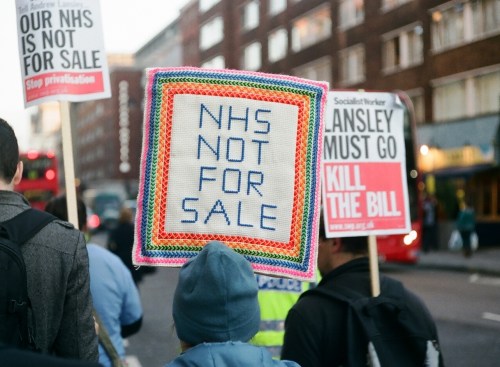
NHS not for sale

What happened to patient power?

March 13th 2012

Dear Mr Cameron,

I am writing to register my strong objections to the government’s major policy change on Healthwatch – specifically your decision to abandon plans to establish statutory Local Healthwatch bodies. Healthwatch was intended to ensure that users of NHS and social care were at the centre of plans to improve services, but the Department of Health’s new plan for public involvement is confusing, vague, inconsistent, and lacks coherence.

Instead of creating independent statutory bodies led by local people who can monitor, influence, involve the public, hold the local authority and NHS to account; the government plan to create weak bodies that will not be independent, but will be funded by and accountable to the local authority they are monitoring. There will be no genuine accountability to the public. This is betrayal of public trust and an appalling waste of public money. Plans for a statutory Healthwatch body were probably the only part of the Health and Social Care Bill that had any public support.

Your government’s ambition to establish independent, statutory Healthwatch organisations that would help achieve equity and empowerment in relation to access to NHS and social care services, has been diminished to such a degree, that Healthwatch will have little impact. A sensible, popular plan for publicly led, statutory public involvement, has been replaced by a confusing plan to commission a plethora of contractors and sub-contractors in the voluntary and private sector to carry out the role.

The aspiration to achieve equity and excellence in public involvement in health and social care, especially for the most vulnerable people, been replaced by a model that has lost its central purpose of building effective patient and user led bodies that can influence the planning of health and social care.

In our discussions with the Earl Howe and DH colleagues over the past year, we were led to believe that LINks would evolve and go through a transition into Healthwatch.  It is incomprehensible to us that the plans that were developing for Healthwatch have been replaced, at very short notice, by a highly confusing set of amendments to the Health and Social Care Bill that are very unlikely to achieve the objectives of the Transition Plan and will be very poor VfM.

It was the stated policy of the Coalition that patients and users of social care must be at the heart of everything that is done – not just as beneficiaries of care, but as participants, in shared decision-making. Andrew Lansley has continuously said, “there should be no decision about us, without us”. Why has this promise and aspiration been abandoned and why is the government planning to abolish plans for an effective statutory model of local Healthwatch and replacing it with one that will be chaotic, diffuse and weak with no leadership role for patients and the public?

Instead of engaged and empowered patients and users of social services taking a leading role – many volunteers who have led LINks are feeling disempowered, demoralised and demotivated. We had hoped and believed that at last Healthwatch would genuinely empower through being populated by ordinary people in the community. This hope is now lost.

Andrew Lansley committed himself to creating a society that espouses health and well-being and reduces inequalities in health. Disempowering patients and the public in health and social care runs counter to these ends and denies people the exercise of greater control over their care. The SoS’s  promise to focus on his first priority – to put patients at the heart of all that the DH does – has been abandoned , as evidenced  by the outcome of the House of Lords Healthwatch debate on March 8th 2012.

Andrew Lansley has often said that he believes that we must see everything that we do in the NHS through the eyes of patients and put patients first; yet he now plans to replace user-led organisations, by contractors and sub-contractors. This is not localism – it is abuse and abrogation of patient involvement and power.

The government planned to abolish LINks.  It now abandons the statutory status of Local Healthwatch. Yet its mantra remains ‘see the service from the patients’ point of view, listen to patients, shift power down through the system – and, empower patients’. The disconnect between pronouncements and policy is now massive and we know that in these tough financial times, many local authorities will not properly fund a LHW and will find an easy way out of meeting their statutory duties, by making a token arrangement, which they will call LHW.

Countless volunteers have worked hard to build effective public involvement organisations to monitor local services, involve the public, and influence commissioners and providers to improve service quality and access. The abolition CHCs and PPIFs over the past few years has twice led to the collapse of effective public involvement and you are about to preside over yet another collapse.

A major principle for government should be to ‘do no harm’, but the DH repeatedly emasculates public involvement organisations it has established, even though, in this case, Healthwatch was intended to achieve the following principles; which we understood were your principles:

  • Putting patients and users of social care in the driving seat.
  • Developing a culture of active responsibility so that LINKs will be empowered to ask, to challenge and to intervene.
  • Listening to patients.
  • Asking, reporting, and learning from patient experience – will be of great importance in designing and improving services, including achieving greater efficiency.
  • Empowering patients and empowering health professionals.
  • Action to empower patients collectively in thinking about what quality standards and commissioning guidelines should look like.
  • Patients and the public locally, impacting on decisions about access and design of local services to meet local needs.
  • Collectively, driving improvements in standards and outcomes.
  • Services answerable to informed and engaged patients.

We request an immediate review by your team into the jettisoning of plans for a genuinely effective system of patients and public involvement in health and social care. We strongly believe your current plans are fundamentally flawed and will not achieve the objectives above.

If you are not willing to review this matter, I would be grateful if you would accept this letter as a formal complaint to you against Andrew Lansley, for amending the Health and Social Care Bill in a way that wholly undermines the model of patient and public involvement in health and social care we were promised across England.

Yours sincerely

Malcolm Alexander

Chair NALM

Member of the DH Healthwatch Programme Board

See also:

Patient Power

What patients can do: NHS Activism NHS vault

What do we do now the NHS bill looks like becoming law? Ian Greener

A response to the Lib Dem “40 points” document

Statement  in response to the Lib Dem “40 points” document by Professor Allyson Pollock, David Price and Peter Roderick
9th March 2012 PDF version

A detailed response to Baroness Williams’ letter is here.

Liberal Democrat peers have circulated a document, summarising “more than 40 key changes already secured by Liberal Democrats” to the Health and Social Care Bill.

There is no doubt that Liberal Democrat peers have succeeded in making the Health and Social Care Bill less bad. However, the fundamental policy behind the Bill remains intact – to abolish the National Health Service – and introduce mixed financing and greater commercialisation and commercial control over the scope and allocation of government funded health care.

Legal duty of Secretary of State to provide is abolished

The legal duty of the Secretary of State to provide a National Health Service has been abolished, replaced by a political declaration and a duty on list-based clinical commissioning groups (CCGs) whose GP members are permitted to use and will have to use commercial organisations such as McKinsey and KPMG to enter into thousands of contracts on behalf of the CCGs – all subject to commercial confidentiality.

Competition chapter has not been dropped

Competition will increase, and competition rules will increasingly apply. Far from deleting the competition chapter as called for by Shirley Williams in her Guardian article on 13th February, this week Liberal Democrat peers:

  • agreed to delete only three of the eleven clauses of that chapter;
  • voted against their own amendment aimed at preventing competition rules from obstructing the NHS, and
  • voted against an amendment to require Monitor to treat competition and collaboration equally.

Cherry picking by providers is not outlawed

Of particular concern is the statement in the “40 point” document that the Bill outlaws cherry-picking – repeating what Earl Howe said in the House of Lords this week, and what Baroness Jolly writes in her Guardian letter on 9th March. This is not only wrong, but the opposite of what the Bill says.

Clause 103 of the Bill requires all providers to decide whether and how to cherry-pick, in that they must set and apply eligibility and selection criteria. Those criteria must be transparent, and must be applied transparently. As the Explanatory Notes to the Bill state, that is intended to “enable Monitor to minimise the scope for providers to make extra profits by ‘cherry picking’- i.e. delivering a service only in less complex cases – by requiring them to be transparent about their patient eligibility and selection criteria”. The government and Liberal Democrat peers are misrepresenting Clause 103: transparent eligibility criteria transparently applied is not outlawing cherry-picking, it is expressly providing the framework for it and intending openness to minimise it.

The Bill legalises fewer services for fewer people, for introducing charges for services currently free, and for excluding people

This Bill would establish the legal basis:

  • for providing fewer services than those commissioned by Primary Care Trusts (PCTs) under their duty to provide, by proposing to give local authorities only discretionary powers to commission 20 categories of services
  • for providing fewer services that are currently part of the NHS, by giving the power to clinical CCGs to decide if provision is appropriate as part of the health service – namely for pregnant women, women who are breastfeeding, young children, the prevention of illness, the care of persons suffering from illness, and the after-care of persons who have suffered from illness – thus permitting commercial considerations to influence what would be regarded as appropriate as part of the health service;
  • for introducing charges for services that are currently free under the NHS, including charges on individuals for public health services provided through the local authority; and
  • for excluding people from health services, through secondary legislation.

The government has no mandate for this Bill from the electorate or in the coalition agreement.

Open letter to Mr Clegg: Reawaken the Spirit of Beveridge

The National Health Service is the jewel in the crown of great Liberal ideas. In the midst of your Spring conference, I urge you to be reawakened by the spirit of Beveridge and return our NHS from the precipice to which your partners in government are pushing it.

‘We should regard want, idleness, ignorance, squalor and disease as enemies of us all …..That is the meaning a social conscience, that we refuse to make a separate peace with evil.’  Quite so. Beveridge’s vision of a welfare state should still say it all for the party you lead.  The proposals in the Health and Social Care Bill will lead to the break up of the greatest statement of Liberal aspiration for fairness and free health care for all, based on need, not on ability to pay.  The current proposals lay open our most cherished public service to the perversity of European Competition Law – a licence for private companies to challenge state provision, dip in, and duck out of services depending on how much they might make from them.  The public purse will be emptied by privatised health commissioners, buying services from privatised health service providers. Those who cannot afford to take themselves out of  reliance on our vestigial health services will be left to suffer and  die as  are one fifth of the Americans now. We will need a new Beveridge  to remind us of what we have lost and what we must recreate.

‘“Ignorance is an evil weed, which dictators may cultivate among their dupes, but which no democracy can afford among its citizens.’ The combined ranks of health workers, trade unions, Royal Colleges, patient interests groups and large numbers of your party cannot all be accused of ignorance about the true intentions of the Health and Social Care Bill.  The evil weed is being cultivated by your partners in government- you can grow it with them, or chop it down.

‘The object of government in peace and in war is not the glory of rulers or of races, but the happiness of common man.’ Please do not sacrifice the principles of why you wish to govern for the attractions of office- power for its own sake, instead of power for good.  You have it in your power to call for the withdrawal of this poisonous bill.

Do not let the darker words of Beveridge come to haunt your office. The trouble in modern democracy is that men do not approach to leadership until they have lost the desire to lead anyone.’

John  Middleton  Public Health  Physician

The Lib Dem conference and the NHS Bill

Here are some resources for the Lib Dem conference written by journalists, academics and doctors.

Media: Please contact: Ian Willmore (media)              07887 641344             willmorei@live.co.uk
AN ANALYSIS OF THE LETTER SENT BY NICK CLEGG AND BARONESS WILLIAMS TO LIBERAL DEMOCRAT MEMBERS (27/2/12)

PDF version: LDconf letter

(The full letter is printed in italics, followed by responses to the points raised)

Dear Colleague,
The health bill currently in the House of Lords is now undoubtedly a better bill because of the Liberal Democrats. A number of people deserve credit for improving this bill. Firstly, and most important, are our party members who made it clear at our conference in Sheffield in March last year that we would not accept a bill that puts profits before patients. We secured a “pause” in the legislation, which led to a number of substantial changes to the bill,

  • None of the changes in the Bill could be described as “substantial”. Some were meaningless, such as the renaming of “Any Willing Provider” as “Any Qualified Provider”, without any change in the procedures concerned. This is because the AWP process set out in EU law must be followed in its entirety and so the promised extra qualifications have not been and cannot be added.

for instance that competition could only be on quality and not on price.

  • Under EU procurement law one of two procedures must be used whenever public sector procurement is carried out through competitive tendering. One is purely on cost, and the other (the “Most Economically Advantageous Tender”) combines cost and quality. So any statement that procurement in the NHS will be only on quality is wrong.
  • Furthermore, procurement on the basis of ‘quality’ from a market of providers who are incentivised to maximise their income is extremely difficult because of information asymmetries and other forms of market failure that are common in health care markets.

Since the “pause”, there have been further changes, which owe a great deal to the hard work of our health minister, Paul Burstow, and our parliamentary health committee led by co-chairs John Pugh and John Alderdice. Second, our Liberal Democrat peers in the House of Lords, led superbly by Judith Jolly, have done an outstanding job scrutinising the bill line by line. With the help of the House of Lords constitution committee, several eminent Conservative peers, Labour’s Lords team led by Baroness Thornton and Lord Hunt, and a determined group of crossbenchers, many members of the medical professions, an all-party consensus has now ensured that the Secretary of State will remain responsible and accountable for a comprehensive health service financed by taxpayers, accessible to all and free at the point of need.

  • All the parties may indeed have reached such a consensus, but if so, all are misinformed: this is not the case in law. The duty of the Secretary of State has, as preferred by the private healthcare lobby, been much reduced.
  • The Bill as it now stands still reduces the duty of the Secretary of State in relation to providing free and comprehensive healthcare; Clause 1 has been reworded several times, but while every version effectively cuts the accountability of the Secretary of State no explanation of the insistence on change has ever been given. Why does the government neither agree to retain the 2006 wording for the Secretary of State‟s responsibility nor cease to claim that the change is at once too unimportant to explain and too essential to concede on?
  • This removal of accountability fits with the new arrangement that the market will set the amount and type of health care services made available, and the fact that any intervention in such a market by the Secretary of State could be penalised as an abuse of a dominant market position. Retaining responsibility by removing Clause 1 could see large fines levied against the government under competition law.
  • Preventing the application of competition law is not achievable by declaring that it will not apply. It also cannot be achieved by trying to remove the sector competition regulator Monitor, which is like trying to prevent crime by abolishing the police. Competition law must be applied whenever competitive tendering or AQP are used; the triggers in the Bill for the application of these processes are section 73 plus use of the term “patient choice”, as in competition law this is a synonym for competition.
  • Clinical Commissioning Groups are not accountable to the Secretary of State, and they have no duty to secure comprehensive health services, nor mechanisms to enable them to do so. Providers may offer whatever services they please, and the economic regulator similarly has no duty to ensure a comprehensive health service,
  • The Secretary of State will not be responsible for a comprehensive health service, and it is not to be expected that the competitive markets that will shape provision will generate a comprehensive service that optimally addresses the medical needs of the population. Indeed such an outcome would be surprising, since the market allocates service provision by profit opportunity, with more providers entering profitable fields, while activities where profits are not forthcoming will be abandoned by potential providers. In particular people with multiple chronic medical conditions tend to be challenging and expensive to treat, and it will be they who are least well served by the new arrangements.
  • Together these arrangements bring to an end comprehensive health care in England and an end to the principle of health care available on the basis of need alone, a core principle of the NHS since 1948.
  • Almost all the medical associations have declared outright opposition as the implications of the bill have become clearer. Even the surgeons assert that the Bill, if passed, will damage the NHS and widen healthcare inequalities, with detrimental effects on education, training and patient care in England. This is despite the fact that surgeons have by far the most to gain from the changes: they dominate existing private medical practice, and senior surgeons have been integral to the NHS privatisation plans right back to Professor Ian McColl in 1987 and Lord Ara Darzi during New Labour‟s tenure.

This should guarantee the future of the NHS, one of Britain’s greatest social achievements. In addition, led by Phil Willis and others, arrangements have been put in place to make the UK a world leader in medical research,

  • These research arrangements exclude any mechanism to recoup for the NHS any of the costs of collecting and sharing the data with the pharmaceutical industry once it manages to commercialise any fruits of this research. This amounts to a subsidy from a cash-starved NHS to big business.

to raise the status and protect the independence of the Public Health service,

  • While the government has laid claim to having strengthened the Public Health service, a more thorough analysis of the new arrangements reveal that Public Health has in fact been weakened, compromised and made unsafe. The independent voice of PH specialists has been weakened. Many public health functions and services are being transferred to local government but without adequate legal safeguards to ensure that they are adequately funded or even continued at all. The fragmentation of services and the damage to the country‟s health information system – caused by competition and privatisation – will undermine critical public health programmes such as infectious disease control, as well as the ability to respond to public health emergencies effectively and rapidly.
  • Some parts of the public health remit have already been privatised. Examples include much of the health promotion budget, which has been tendered out to public relations companies, and the “health care in public health” tasks which are being outsourced as part of the commissioning tasks reserved for the private sector “Commissioning Support Organisations”, most of whose work was formerly carried out by public sector staff.

and to ensure that all profits from the treatment of private patients in Foundation Trust hospitals must benefit the NHS.

  • Foundation Trust hospitals have not-for-profit status, so to do anything else would be illegal.

The Bill has now undergone more than 200 hours of scrutiny and had more than 1,000 amendments made to it, amendments that have put patients and the people who know them best at the very heart of the legislation. This is not the bill that we debated as a party last March. Crucially, some elements of Labour’s 2006 Health Act, which opened up the possibility of a US-style market in the NHS, have been radically changed, such as the gold-plated contracts for the private sector, which allowed a Labour government to pay private providers a total of £250m for operations that weren’t even performed. We can also take pride in the fact that it was the Liberal Democrats who changed this bill to ensure that no government will once again be able to favour the private sector over the public sector like the last Labour government.

  • This is certainly a welcome change but did not require a Bill. However, it is simply untrue that the perverse favouritism of the current and last government for private providers will be ceasing. The most recent version of the Department of Health documentation shows that 14% more will be paid to private sector providers than for public sector providers carrying out the same tasks, as explained below.

The bill also now has in place safeguards to stop private providers “cherry picking” profitable, easy cases from the NHS, and we have made sure that private providers can only offer their services where patients say they want them.

  • Cherry picking has not been eliminated. Providers are required to set out transparently the eligibility criteria determining which patients they are prepared to treat. This however does not prevent cherry picking, it merely documents it.
  • Despite any reassurances they may give, the Government will not eliminate cherry picking by providers because the process we call by that name is one of the fundamental mechanisms of the market model. Providers shift their efforts to the activities most profitable to them and abandon other service provision. This, in the market model, is supposed to result in optimisation, as consumers pay more for scarcer services, and fail to pay for services they do not value.
  • In the real world of health care, service provision should respond to medical need not to profit maximisation, and the outcome of profit-driven healthcare is far from optimal medically. We know from countries which arrange their healthcare in this way that it results in untreated disease, unnecessary suffering and mortality, exploitation of patients who are provided unneeded and sometimes harmful interventions, and in some cases the spread of infection.

We are also clear that no one should be allowed to spend public money without telling us how they are going to use it. That is why we have insisted that decisions about patient services and taxpayers’ money must be made in an open, transparent and accountable way.

  • In that case the Bill should be amended to include obligations for private sector providers to disclose full information about their patient intakes and outcomes. At the moment they have no obligation to supply or even collect this information. Where the public sector holds this information it uses the “commercial sensitivity” provisions in the Freedom of Information Act to block exactly the kind of information that patients require for a properly informed choice of provider.

We now have a bill that delivers on the issues that Liberal Democrats have campaigned on for years. For the first time, there will be real democratic accountability in the NHS through new Health and Wellbeing Boards that will give councils a real role in shaping local health services. Public health will finally be returned to its rightful place in local government. Integration between health and social care will become the norm rather than the exception.

  • Health and Wellbeing boards have a minimal elected element, and no right to do more than write letters of complaint.
  • Provisions for local HealthWatch in the Bill were never strong and have recently been significantly weakened. Not only is HealthWatch England being set up without any effective way to influence events, but it is being set up as a subunit of the scandal-hit Care Quality Commission. Many HealthWatch complaints about care provision would implicate the CQC for failing to address the problem, thereby creating a conflict of interest for the CQC.

However, given how precious the NHS is, we want to rule out beyond doubt any threat of a US-style market in the NHS. That is why we want to see changes made to this bill that have been put forward by our Liberal Democrat team in the House of Lords to make sure that the NHS can never be treated like the gas, electricity, or water industry. First, we propose removing the reviews by the Competition Commission from the bill to make sure that the NHS is never treated like a private industry.

  • This change is positive but is not in itself of much benefit. It will not stop the NHS being “treated like a private industry”. This will happen because the Government intends to pass the Bill, and that will subject the whole NHS to the EU requirement to enforce competition law.
  • Unfortunately current Liberal Democrat attempts to tinker with regulators and make declarations about applicability of bodies of law to the NHS are meaningless and ineffective.

Second, we want to keep the independent regulator of foundation trusts, Monitor, to make sure hospitals always serve NHS patients first and foremost.

  • Monitor, the economic regulator, will try to fulfil this task through enforcing competition law in the NHS. The Government is required to ensure this is done wherever AQP or competitive tendering are used in commissioning. If there is no sector-specific regulator like Monitor then this duty defaults to the Office of Fair Trading.
  • Significantly, it is never patients which take advantage of these “rights” in either England or the Netherlands, where national health care provision was turned over to competitive markets last year. Indeed the Patients Associations in both countries are protesting about the effect of these “patient rights” on healthcare delivery. The “patient rights” to provider choice are frequently used, however, against the public sector by corporate providers: see for example the current case in which Assura has brought a competition complaint to the health authorities in Yorkshire.

Third, we will introduce measures to protect the NHS from any threat of takeover from US-style healthcare providers by insulating the NHS from the full force of competition law.

  • Competition law applies whenever AQP or competitive tendering are used. According to the published guidance from the Department of Health, their use will be compulsory in securing all NHS services (except for contract renewals).
  • If it is the Liberal Democrats intention to protect NHS hospitals from takeover, then the only way to achieve it is to call for the immediate abandonment of the Bill, as the outcome of passing it will create exactly this vulnerability. It should be noted that there has been intensive lobbying of Ministers by US healthcare corporations, and it is plain from the detailed content of the Bill that their requests have been encoded into the reform. It is to be expected that such corporations will be among the biggest winners from the Bill. Elderly people, the chronically ill, and the families of disabled children are expected to be the biggest losers.
  • Incidentally although we are switching to US-style care (with all the problems showcased in Sicko) it is not just US-based companies which will be taking over our healthcare provision: a German company has been awarded a contract to run 20 hospitals, a South African company which has been implicated in organ trafficking is slated for new NHS contracts, and every single contract tendered out will have to be advertised throughout the EU.
  • The opportunities for these transnational corporations to provide NHS-funded services will mainly come from the shutting of Foundation Trust hospitals which cannot consistently make surpluses. The Bill creates new arrangements for these financially-triggered shut-downs; there is no provision for communities to prevent the loss of valued, busy hospitals in this way.

We will also insist that anyone involved with a commissioning group is required to declare their own financial interests, so that the integrity of clinical commissioning groups is maintained.

  • Declaring such interests is essential but inadequate. GP leaders have repeatedly requested the government to block conflicts of interest that could damage the relationship between doctors and patients, but these calls have been ignored, because the new US-style system relies on a tension between conflicts of interest at primary care level (GPs) and opposing conflicts at secondary care level (hospitals) to control the soaring cost inflation that otherwise results from paying providers for all the services they can sell. None of this serves any function except to facilitate market entry for the healthcare corporations which have been lobbying the government for profit opportunities.
  • “Quality premiums” will be awarded to GPs who cooperate fully with the rationing of care that will be a feature of the new system. In other words, GPs who are willing to deny care that would benefit their patients will make more money by so doing. GPs are right to fear that public knowledge of this information will engender mistrust between doctor and patient.
  • There are also no blocks on other inappropriate transactions to allow GPs to profit by either making or refusing referrals to patients. Some of the “entrepreneurial” GPs that Andrew Lansley has set up as leaders in his reform have already profited from opportunities of this kind.
  • The Liberal Democrat leadership accepts that conflicts of interest will occur. A register is to exist but there will be no sanctions. This is an inadequate response; as well as the aforementioned, multiple conflicts of interest are embedded in the system including the following:
  1. The National Commissioning Board has twin roles, running what is left of the public sector NHS while at the same overseeing the privatisation through outsourcing GP commissioning to a group of preferred providers including McKinsey, KPMG, McKesson and several insurance companies.
  2. The interim Chief Executive of Monitor and its two new non-Executive directors all have senior experience in privatisation of public services.
  3. The Chair of the Competition and Competition Panel, which will handle competition issues within the NHS, receives a £800,000 a year salary from McKesson Inc, which is already a major outsourcing service provider to the NHS and which stands to gain more business. He is also linked to two other major investors poised to benefit from passage of the NHS Bill(i).
  4. Two of the four economic studies being cited by the Government to support their assertion that the organisation of NHS service provision through competitive markets will not damage quality of care were written by anti-trust members of the advisory panel to the Cooperation and Competition panel.

Finally, we will put in place additional safeguards to the private income cap to make sure that foundation trusts cannot focus on private profits before patients. These changes are needed, not just because of this bill, but also to plug the holes left by Labour’s 2006 Health Act that allowed private providers to make profits at the NHS’s and taxpayers’ expense. It was that act that started the process of the marketisation of the NHS by allowing private providers to be paid on average 11% more than the NHS.

  • Despite the claim of a “level playing field” for the mixed public-private competitive market, in fact it will be operated at a 14% advantage in favour of the private sector. This calculation is reported in the Combined Impact Assessments of the reform, last issued at the end of 2011, and was carried out by KPMG, which is among the private organisations expected to gain most from the passage of the Bill. It awards compensation to the private sector for their exposure to corporation tax and VAT-exempt supply status and for more generous public sector pensions. It also penalises the public sector for the “advantage” of access to “cheap” funding through PFI. None of the cost advantages to the private sector are included in this calculation.
  • Items that should outweigh the tax adjustments suggested by KPMG include the sizeable costs of training medical students. It would also seem reasonable to include the substantial extra costs to the NHS of the “blue light specials”, the ambulances which leave from the back doors of private hospitals which have no critical care facilities. They take patients put in life-threatening condition by medical errors to nearby NHS hospitals so that staff there can save them.

These changes will ensure that competition and diversity in the NHS will always be done in the interests of patients and not profits.

  • This will only be the case from the perspective of the competition authorities, who consider act on the basis that the only important patient right is that of choice of provider, a right of limited utility to patients but used in practice by corporate providers trying to break into new markets. The competition authorities accordingly never require any proof that competition is beneficial, but require that patient benefit be proved for any increase in cooperation.
  • Both patients and the taxpayer are expected to lose very heavily from the forcing of “competition and diversity” into the NHS.
  • The Department of Health has set an explicit target (PHF09 in the 2012/3 Operating Framework) to increase the proportion of non-public sector provision purchased with NHS funding. This creates a systematic bias in commissioning that may often conflict with patients‟ wishes: surveys all show that patients prioritise access to a good local service.

Next month we will return to where this process all began a year ago when we meet at our party’s spring conference. Once these final changes have been agreed, we believe conference can be reassured that it has finished the job it started last March and the bill should be allowed to proceed. We believe these changes will appeal to those in the House of Lords and the House of Commons who share our commitment to the NHS, and believe it can now embark on the reforms that matter: putting patients at the centre, working with local communities, and responding to the financial challenges of an ageing population.
That will demand a united effort not only from the NHS but from all of us who cherish it.
Then the essential work will begin to ensure that the necessary changes are introduced as smoothly as possible in full collaboration with everyone who works in the NHS. The real test will be to demonstrate tangible benefits to patients. After all, in the end, it is the interests of patients which should count most of all.
Best wishes Nick Clegg Baroness Shirley Williams
Analysis by:
Dr Lucy Reynolds, London School of Hygiene and Tropical Medicine
Dr Sally Ruane, Health Policy Research Unit, De Montfort University
Dr David McCoy, University College, London

(i) Rose D. NHS fairness tsar urged to quit by doctors over ‘conflict of interest’ following £799,000 payment for U.S. private health giant. 4 march 2012 http://www.dailymail.co.uk/news/article-2109907/NHS-fairness-tsar-urged-quit-doctors-conflict-following-799-000-payment-U-S-private-health-giant.html

6 posts about the Libdems and the Health bill:

1. Statement by Professor Allyson Pollock, David Price and Peter Roderick in response to the Lib Dem “40 points” document

2. Poll Tax Max: “The Commons arithmetic means that if Lib Dem MPs, following a kick up the back-side from their conference this weekend, decide to vote with Labour, then the bill can be defeated. To Dr No, the decision is a no-brainer. The bill has been called the Poll Tax Mark Two. It isn’t – it is Poll-Tax-Max – and those who vote for the bill will, if it succeeds, be sullied with the death-blood of the NHS for generations to come” Badmed

3. Libdem phantasy world. Socialist Health

4. Holding liberal democrats to account at their spring conference. Bevan’s Run

5. A bullshitometer reading of the Clegg-Williams letter to Lib Dems in Parliament. Health Policy Insight

6. The LibDems must wake up and smell the cyanide. BadMed

When healthcare is a commodity

True story, as told to me by a patient this week of what happens when healthcare is treated as a commodity and patients are treated as consumers.

Phone rings:

Patient: “Hello?”

Caller: “Good morning Mr Smith, how are you today?”

P: “I’m alright, who are you?”

C: “My name’s Jenny and I’m calling to tell you about a new treatment for your arthritis”

P: “How do you know about my arthritis?”

C: “Over 20% of people over the age of 60 suffer from arthritis Mr Smith, and I’m calling to tell you about our new Rosehip capsules”

P: “How did you get my number, who are you?”

C: “I’m calling from the arthritis clinic”

P: “I don’t go to any arthritis clinic, I see my GP”

C: “Patients who have taken our Rosehip capsules have felt so much better that many of them have been able to stop taking their painkillers, wouldn’t you like that?”

P: “Well, yes of course”

C: “We can supply you with 3 months supply and you get the first month free for only £15.99”

P: “I get my prescriptions for free, couldn’t I just get them from my GP?”

C: “Unfortunately these aren’t available from your GP, but we can set up a regular order and send them to you every 3 months. How would you like to pay?”

P: “I don’t want to pay, I don’t even know who you are”

C: “My name is Jenny, and I’m calling from the arthritis clinic. It’s easy to set up payment Mr Smith, I can help you with that right away and send the Rosehip to you by the end of the week”

P: “I’m sorry, but I don’t know anything about any arthritis clinic”

C: “One of our customers hadn’t been able to walk up her stairs for over 6 months and was taking nearly 20 prescribed painkilling tablets a day, but now she has stopped all her prescribed drugs and is walking up and down her stairs every day. They can change your life”

P: “Well that does sound good, but I’m not sure”

C: “Why don’t you give it a go, it’s only £15.99 for 3 months supply, how would you like to pay?”

I’ve written the conversation as Mr Smith reported it to me. He said that he felt really pressured and had to hang up in the end. I don’t think my retelling makes that clear. If a company cold-called a thousand people over the age of 60, they could guarantee that about 20% were suffering from some form of arthritis, that they were taking pain-killers and were probably fed up with taking them.

If one patient says they felt pressured, no doubt many do, and enough are accepting the offer for the company to continue cold calling. The assumption we are making with the NHS bill is that healthcare is a commodity to be traded and patients are savvy, sceptical consumers.

Contrast the relationship between the caller and the patient with that of my patient and myself. Even though I haven’t known him long, I have taken time to examine his joints, read his medical records, inject his arthritic shoulder, discuss the impact of his arthritis on his mood and his ability to care for his wife. Together we have discussed his attitude to doctors and medicines, exercise and diet, his levels of independence and support, his family, his hopes and fears. Because of this we trust eachother, I trust that he will share his concerns, and he trusts that I will act in his best interests. It is a relationship un-tainted by commerce, one in which a discussion is more valuable than a transaction, shared understanding more important than a prescription or a referral.

This precious relationship has been under increasing threat for years as the NHS has become increasingly commercialised. The Healthbill commercialises the NHS more than ever before and this will pollute every intimate consultation between doctors and their patients. When this trust is lost, we will have lost our integrity and humanity.

“Medical professionalism cannot survive in the current commercialized health care market. The continued privatization of health care and the continued prevalence and intrusion of market forces in the practice of medicine will not only bankrupt the health care system, but also will inevitably undermine the ethical foundations of medical practice and dissolve the moral precepts that have historically defined the medical profession.” Dr Arnold Relman, Professor Emeritus of Medicine and Social Medicine at Harvard Medical School ccjm 2008

Vital Public Health Work Threatened by Health Bill

The Health and Social Care Bill threatens the future of vital Public Health work across England, according to a new report from the network “Public Health for the NHS” published today. The network includes former Presidents of the Faculty of Public Health, more than fifty Directors of Public Health and the country’s leading experts in health policy and health systems analysis.

The areas of work threatened by the Bill include: public health services for children and young people aged 5-19; public mental health services; dental public health services; tobacco control and smoking cessation services; alcohol and drug misuse services; cancer screening and immunisation services and sexual health services.

Public Health practitioners carry out a range of key functions in the NHS, including:

  • ensuring health protection for the public (covering areas such as infectious diseases, environmental hazards and public health emergencies)
  • promoting efficient and effective evidence-based medicine and clinical care
  • promoting preventive population-based medicine (e.g. screening and immunisation programmes);
  • improving public knowledge about health and promote healthy behaviour
  • identifying and tackling the social and environmental determinants of illness and health inequalities (e.g. unemployment, poor housing and pollution)
  • health and health services surveillance, monitoring, evaluation and research.

The report gives four principal reasons why this vital work will be damaged if the Bill becomes law.

First, the transfer of many Public Health functions and services from the NHS to local government is unsafe. Local authorities should certainly have a stronger duty and mandate to promote health. But the Bill provides no safeguards or guarantees that these public health services will be provided as a universal entitlement to all, as under the existing NHS [1]. Local authorities are facing large cuts in the Government’s revenue support grant, an average of around 25% by 2015 and as much as 40% for some authorities.

Second, core Public Heath functions, which are important for health services planning and which improve the overall cost effectiveness of clinical care, may be devastated by the Bill. The Government’s intention appears to be to commercialise and privatise these functions.

Public Health practitioners provide expertise in: what services would best meet the needs of whole populations; monitoring and evaluating accessibility, quality, cost, safety and outcomes of health care services and facilities; and providing evidence and information to clinical practitioners, commissioners and the public about what is cost effective and safe.

Until the Bill, this work was done within Primary Care Trusts and other key organisations such as the National Institute of Clinical Excellence. The Bill gives (much) commissioning responsibility to Clinical Commissioning Groups mostly comprised of GPs who are not formally trained in population based commissioning or health services evaluation, and who wll be required to rely on commercial actors for support such as management consultants and healthcare companies.

Third, by imposing a market based structure on the health system, the Bill will weaken the ability of Public Health to perform crucial functions including: improving the uptake of cancer screening and immunisation programmes; coordinating multi-agency responses to prevent and respond to public health issues; and population based health surveillance and the monitoring of health outcomes.

Fourth, the Bill will weaken the duty and function of Public Health specialists to speak out in the public interest, especially on behalf of ordinary citizens and marginalised groups, and often against powerful or vested interests.

Some changes have been made to the Bill to improve the status and role of Directors of Public Health in local authorities, but it still means a reduction in their independence and public interest function. Public health leaders and specialists at the national level will also lose independence because future employees of Public Health England (PHE) will be subject to the employment rules of the civil service, reducing their independence and ability to speak out on matters of public interest.

The report therefore calls for the Bill to be dropped, and a stabilisation plan for the NHS to be put in place, including a moratorium on the transfer of Public Health functions and services to local government; the incorporation of CCG members into PCT clusters to enable clinically-led commissioning and planning of local health services within a single authority; and a requirement for GPs and Public Health specialists to work together to address the financial and clinical challenges facing the health system.

Commenting, Dr David McCoy said:

“Health professionals and the general public already know that the Health Bill threatens to do terrible damage to the National Health Service. But until now, the extent of the potential damage to vital public health work has not received the attention it deserves.


Public Health work is vital to tackling some of the biggest health problems we face, including diabetes and heart disease caused by obesity, lung cancer and many other illnesses caused by smoking, and AIDS and other diseases and conditions related to sexual health. But the Government’s “reforms” will lead to increasing health inequality, and make it more difficult for us to address these health challenges.”

Contacts      

Dr David Mccoy                     07952 597244             d.mccoy@ucl.ac.uk

Professor Martin McKee        07973 832576

Ian Willmore (media)              07887 641344             willmorei@live.co.uk

Notes to Editors


[1] In December 2011 the Department of Health listed in its fact sheet “Public Health in Local Government” a range of services for which local authorities will have commissioning responsibility, including public health services for children and young people aged 5-19; public mental health services; dental public health services; tobacco control and smoking cessation services; alcohol and drug misuse services; and sexual health services. The fact sheet said that: “Only some of the above services are to be mandated. The commissioning of other services will be discretionary, guided by the Public Health Outcomes Framework, the local joint strategic needs assessment and the joint health and wellbeing strategy”. See legal analysis of the Bill at http://bit.ly/yYUCGD

“Public Health for the NHS” is a group of more than 500 medical professionals, legal and academic experts, formed to defend the principle of a National Health Service free at the point of need and providing comprehensive and equitable healthcare to all.

123 Fellows Call for Royal College of Physicians to Take Clear Stance on Health Bill

Lancet Letter:

123 Fellows Call for Royal College of Physicians to Take Clear Stance on Health Bill

123 Fellows of the Royal College of Physicians (RCP) have written to the Lancet calling on the College to make a clear and timely policy statement opposing the Health and Social Care Bill. The letter follows the RCP Extraordinary General Meeting on 27th February 2012 where an overwhelming majority voted for the RCP publicly to oppose the Government on the Health and Social Care Bill. [1]

The RCP is currently surveying all Fellows, including those living abroad, and says that it hopes to announce the results on 16th March. The experience of all other Colleges opposing the Bill was that EGMs voting overwhelmingly against it were followed by similarly overwhelming votes against in the wider survey.

The letter says that: “the RCP must issue a definitive public statement regarding support or opposition based on this ballot on that date. Given that debate on this Bill ends on 19th March, we must have assurance that the results will be publicly released before then, otherwise all this effort will have been wasted with significant reputational damage to our College”.

Apart from supporting a survey of Fellows, those attending the EGM voted on four additional non-binding motions. The results were as follows:

The RCP

1. considers that the Health and Social Care Bill, if passed, will damage the NHS and the health of the public in England (89% in favour)

2. should call publicly for complete withdrawal of the Health and Social Care Bill (79% in favour)

3. should seek an alliance with other willing Royal Colleges and NHS stakeholder organisations to call collectively for the withdrawal of the Health and Social Care Bill (81% in favour)

4. should hold a joint press conference with the BMA and other willing Royal Colleges and NHS stakeholder organisations, to make a joint public statement calling for the Bill to be withdrawn (69% in favour)

The letter also states that: “on 2nd March 2012, a senior officer of the RCP emailed stating `What we need to do is keep our links with government open’ and distancing the RCP from what he called the `overtly political step’ of demanding withdrawal of the Bill”. This does not reflect the voting and discussion at the EGM, which stressed that this is no time for the RCP to sit on the fence”.

The letter calls on the “President and RCP Council to make clear and timely public statements reflecting the views and motions expressed at the EGM and the ongoing ballot before this dangerous Bill becomes Law”.

RCP Fellow Professor Trisha Greenhalgh commented:

“We quite understand that in normal times the RCP needs to keep its lines of communication and discussion open with Government. But these are not normal times. The Health Bill will do terrible damage to the National Health Service and to our patients. And I am confident that will be the verdict of the great majority of College Fellows when the survey result is announced. It would be absolutely unacceptable for attempts to be made to water down this opinion, or to keep quiet about it until it is too late to influence the debate on the Bill. We hope and trust that the President and College will recognise the strength of feeling on this issue that the survey is likely to show, and move quickly and decisively to take an active public stance against the Bill.”

– ENDS –

Contact Professor Trisha Greenhalgh 07775 101635 (m) p.greenhalgh@qmul.ac.uk

Notes

[1] Full copy of the letter at http://download.thelancet.com/flatcontentassets/pdfs/S014067361260364X.pdf Two Fellows have added their support since publication making a final total of 123.

A wholesome society

Runner at the end of Bevan’s run; 190 miles from Nye Bevan’s statue in Cardif to Richmond House, Department of Health, London. Run in 6 days by doctors Clive Peedell and David Wilson between 10th and 15th January 2012 to raise awareness of our coalition government’s privatisation of the National Health Service http://bevansrun.blogspot.com/

Bevan’s Run 2 – “The Bevan-Beveridge run”

 
Middlesbrough to Newcastle, 42 miles in under 17hours, March 9th-10th, 2012
On Friday 9th of March, Dr David Wilson and myself (Clive Peedell) will be heading off on another long distance run to continue our protests against the Health and Social Care Bill. This time we are aiming our protest at the Liberal Democrat Spring Conference in Newcastle, by running 42 miles in under 17 hours (Middlesbrough to Newcastle). Three posts explaining why you cannot trust the libdems with the NHS.
 
We will be starting our run at approximately 6pm outside our place of work, James Cook University Hospital, in Middlesbrough. We will be running to Durham, where we will bed down for a few hours, before getting up and starting the second leg at 7am to head to Wesley Square, Newcastle, to join the Keep Our NHS Public rally at 11am. There will then be a march to Baltic Square, Gateshead for a 12.30pm demo against the LibDems involvement in the dismantling of the NHS.
 
Details of the rally are HERE, so please come along to demonstrate against the NHS reforms   

City & Hackney CCG calls for withdrawal of the Health Bill


CITY & HACKNEY

PATHFINDER CLINICAL COMMISSIONING GROUP

City & Hackney Clinical Commissioning Group


Second Floor

The Lawson Practice


85 Nuttall Street


London


Thursday, 1 March 2012 N1 5LZ


Dear Prime Minister,

The Board of City & Hackney Clinical Commissioning Group (CCG) join Tower Hamlets and most other GPs and nurses and ask you to withdraw the Health and Social Care Bill.

We strongly support the benefits of involving clinicians in commissioning, but do not support the Bill. We have been involved as GPs in commissioning for the last five years and have brought about many improvements for our patients. We have done this through a social enterprise with public members, without your Bill. We believe the Bill will hamper future improvements, not help us.

We have:

Streamlined clinical care across twenty four pathways, improving quality and reducing waits for our patients while saving money;

Used the power and enthusiasm of clinicians working together to change care for older people;

Introduced an integrated Chronic Obstructive Pulmonary Disease team;

Designed and implemented a Primary Care Psychotherapy Team service;

Created a Practice Based Diabetes Specialist Team which has led the Audit Commission to award us ‘most improved’ status.

We are now having to go through huge disruption and a very bureaucratic process to be authorised as a CCG. This is already taking us away from working on clinical pathways with our local hospital, mental health and other services. Our NHS Primary Care Trust managers are also distracted by having to form a ‘business’ commissioning support organisation with us as their ‘customers’.

As GPs we care deeply about our local NHS and the quality of care we are able to offer our patients. We object to you using our willingness to be elected onto our CCGs by our peers to improve patient care as evidence that we support your Bill. Like most NHS staff, we are afraid the NHS will be damaged beyond recognition in a few years if the Bill is passed.

We are pleased to add our voice to the call for the Bill to be withdrawn.

Yours sincerely,

Dr Clare Highton and Dr Haren Patel

Chairs, City & Hackney Clinical Commissioning Group

Competition and choice: Media briefing from Public Health for the NHS

Tuesday 28th February 2012

Contact: Dr Lucy Reynolds             (Health Services Researcher:  07905279777)

Ian Willmore  (Media:  07887 641344)

The Importance of Competition

  1. Tomorrow (Wednesday 29th February) the House of Lords will begin discussing Part 3 of the Health Bill, which deals with the attempt to introduce market “competition” into the NHS.  This briefing note examines what is proposed and sets out why the competition provisions of the Bill will damage the NHS.
  2. The briefing is set out as follows:
  • Paragraphs 3 – 4 look at the policy background
  • Paragraphs 5 – 6 look at the relationship between competition and choice
  • Paragraphs 7 – 25 look at problems with competition in healthcare: inequality in information between provider and patient (paragraphs 8 – 10); waste of money (paragraphs 11 – 14); the creation of perverse incentives (paragraph 15); the poor evidence base for the alleged benefits of market reform (paragraph 16 – 20); why claims that competition will be based on quality not price are wrong (paragraphs 21 – 23); and how the US model of healthcare offers a warning of how competitive markets will damage health outcomes (paragraphs 24 – 26)

Background

  1. On 9th July 2005, then Shadow Health Secretary Andrew Lansley made a speech to the NHS Confederation, in which he said:

“So the first guiding principle is this: maximise competition. There are, of course, potential benefits from privatisation in terms of access to capital, flexibility, and creating new markets; but private sector ownership is a secondary consideration to competition, which is the primary objective.”

“Government proposals envisage limited competition in supply of elective surgical operations from the end of 2005 and, by 2008, in theory, full competition for those services. However, it is not full competition. There is no right to supply for new and independent providers.

This makes clear that creating a right to supply for new private sector providers through “full competition” is a critical element of the Health and Social Care Bill.

  1. Under competition and trade law private sector market participants have legal rights to maintain that access on equal terms with all other providers, including the public sector. Such rights are enforceable in the UK and EU courts and through World Trade Organisation arbitration.  The Bill as it stands would introduce a system creating such rights for any “qualified” for-profit provider of healthcare services, in a market of providers offered to patients as options for their health provision.

In the 2005 speech, Mr Lansley also said

“Much of what I have described is like the EU’s developing framework for services of a general economic interest. I recognise this and I welcome it. A vital aspect of our relationship with Europe should be to encourage the EU to be concerned with promoting competitive markets.”  

The process of creating such a market in healthcare provision has already begun: the 2012/13 Operating Framework for the NHS set explicit targets for NHS funds to flow to providers outside the public sector. [1]

Choice and Competition
  1. Liberal Democrat politicians have claimed that under the Bill competition would not be permitted unless it “is in the interests of patients”. We have looked at UK competition rules, as currently practised in the NHS by the “Cooperation and Competition Panel”, which will merge with Monitor after the Bill passes.  This body has principles that set out the importance of “choice” for patients. Because of this, it acts always to “protect patient interests” through increasing competition, which is assumed to be good for “consumers” of healthcare. The Panel insists that any decrease in competition must be proved to benefit patients, but they merely assume without proof that competition is good for patients.
  2. This is not the view of many patients. In a survey by the Future Forum last year, 580 of the 597 respondents who commented on the kind of choice offered by the Bill were opposed to it.  Quotes included:

“Unfortunately, choice and competition are mutually exclusive in the long run. If your local hospital isn’t “chosen” by lots of patients, it will lose income and close down (in the unlikely event of politicians allowing these reforms to reach their logical conclusion). It follows that you will no longer be able to “choose” that hospital, any more than you can choose to watch Premiership football live on the BBC.”

“I don’t want choice. I want a good hospital within reasonable distance from my home. Nationally, hospitals sharing best practice rather than competing with each other.”

“For the majority of people, in the most cases ‘choice’ is a myth. The main difference is between the rich and the relatively wealthy that choose private health and the rest who cannot afford to do this. Competition within the NHS may drive down costs for a temporary period but in the long term costs more and delivers a poorer service – ask any NHS manager or politician to be honest about this.”

“The problem with “choice and competition” is that private sector providers will compete for the choice services; the services that will generate the most profit. Typically, this means they’ll choose the kind of services like hip replacement or cataracts, that are quick and profitable to deliver, leaving the NHS saddled with the complex, difficult services which are difficult to turn into revenue, thus exacerbating the NHS’s financial difficulties and creating a two-tier system.”

“Choice & Competition is a means to having services provided by third parties, leading to privatisation with massive cost increases as with British Rail. More effort should be given to retaining NHS as a public run non-private/non-mutual/non-partnership organisation run by NHS employees not ‘carpet baggers’”.

Problems with Market Competition in Healthcare

  1. There are a number of critical reasons why market competition in healthcare will not produce the beneficial effects that characterise other markets.
  2. There is an obvious inequality in information and expertise between the “buyer” (the patient) and the “seller” (the doctor or other healthcare provider). Patients commonly have no medical training and simply may not know enough to judge whether a healthcare professional’s recommended course of treatment is in their interests, or is influenced by the need for the provider to make money or balance its books.
  3. As in other countries where healthcare is subject to market competition (for example the United States) the new system would give a direct financial incentive to health care providers to exploit their superior medical knowledge to over-provide and also to overcharge. This is known as “supplier-induced demand”: the treatments given to a patient may be more extensive than the patient’s medical condition warrants, and the charges per item also get pushed as high as the market will bear. The NHS budget, already facing a severe financial squeeze, would have to meet this unnecessary cost.
  4. There is also the severe danger that the relationship of trust between doctor and patient will be damaged. This is a particular problem, for example, if GPs are to be both primary healthcare providers and commissioners.
  5. The competitive market model requires that there always be a choice of provider offered.  The new NHS operating framework sets targets for the proportion of non-NHS providers, in order to provide this choice.  Before the Bill, waiting lists were both relatively stable and short, suggesting that the health system had sufficient capacity to meet demand.  Extra providers add unneeded capacity: this is required if patients are always to be offered the required choice of at least three providers.
  6. The existence of unused capacity in a market system will leave many providers cash-starved, with persistent difficulty in covering their overheads and paying their staff. This will give them a strong incentive to create supplier-induced demand, which tends to damage rather than heal patients. The NHS budget must cover such costs of having this redundant capacity provided only so that the market model may function.
  7. A competitive market model would require that every transaction involving a patient must be billed, a heavy and unnecessary cost burden on the NHS. Research shows that extra costs attributable to marketisation in the English NHS already amount to around 14% [2], This figure can only rise if further market reforms are introduced in order to create opportunities for the private sector to provide NHS care.
  8. Economic competition also requires advertising and marketing. This is expensive – it requires the use of agencies, purchase of media space etc. These costs will also have to be met by the NHS.
  9. When competition-based management and fee-for-service payment (payment by results: PBR) is used, there are financial incentives for overstating the severity of cases on admission, known as upcoding. Allocating codes indicating more serious conditions than are in fact present will raise the hospital’s income, and where bonus-linked targets are in place as part of a competition-based management policy, may also increase the doctor’s income. In 2006, when PBR was introduced, the Audit Commission found 11% of codes were incorrect, with some undercoding, but also “evidence of trusts actively working to optimise their income” [3]. In 2010, again 11% of codes were found to be wrong [4]. A GP practice in London found that patients choosing one particular PFI-burdened hospital were resulting in PBR bills overall 30% in excess of what they should have been[5]. In the USA, a study by Silverman and Skinner found twice as much upcoding in for-profit hospitals as in non-profits, with upcoding by non-profits increasing with the intensity of competition [6].
  10. In 2010 and 2011, three UK-based studies were published which purport to the benefits of competition, of which two are authored by economists from the Cooperation and Competition Panel. Advocates of the Health Bill have relied on them to make the case for the competitive “advantages” of the Bill. But all three have serious weaknesses, making them unsuitable evidence on which to base such a major change.
  11. All used standard outcome data for heart attack mortality (30-day survival figures) as the measure of service quality, and all overlooked the possibility of upcoding.  All treat geographical density of hospitals as a proxy for the level of competition from other NHS hospitals.
  12. This gives rise to fundamental problems. First, the hospitals were not in fact competing to treat heart attack patients at all, since the accident and emergency departments were not part of the competition-based incentive scheme, which at the time only applied to planned surgery. Secondly, the choice of hospital was generally made not by the afflicted patient but by the ambulance driver, on the basis of proximity to the patient. The ambulance drivers were not part of any competition-based incentive system run by the hospitals
  13. Many other studies have not found a positive association (as explained in a review by the Canadian Health care Association[7]).
  14. In conclusion, none of these three papers provide good evidence that the market competition reform proposed will improve the NHS. The fact that they are persistently cited as the best proof available (even after their over-claims have been exposed in the BMJ and the Lancet) is significant.
  15. Although the Government has declared that competition is to be on quality rather than price, in fact either a pure cost-based procedure, or the “Most Economically Advantageous Tender” (MEAT) arrangement is to be used[8]. MEAT is recommended as combining quality and price, with contracts chosen at lowest price for some acceptable pre-declared level of quality. In other words despite repeated Government assurances that the Bill would not mean cost-based competition, no purely quality-based procedure would be allowed.
  16. There is clear evidence to show that in healthcare, price-based competition produces a race to the bottom on quality of provision. [9] Competition to cut overall bid prices to win tenders pushes the amount that can be spent on services down to levels which inevitably compromise their quality.
  17. In 2011, medical negligence QC John Whitting [10] has written that he expects negligence cases to soar as a result of the roll-out of competitive commissioning. He stated that in a competitive model: “fewer doctors and fewer nurses will have to work longer shifts: in other words, the very environment in which mistakes are most likely to happen……  These proposals are patently driven by commercial imperatives rather than by consideration of patient wellbeing.”
  18. Internationally, the healthcare system with the most developed competitive market is in the United States.
  19. According to the World Health Organisation, in 2008 the United States spent 15.2% of GDP on healthcare, the highest spend per head of any country, while the UK spent 8.7%, ranking it 19th. [11] Studies ranking quality of care and efficiency across different national health systems always list the UK system as giving better outcomes at under half the cost of the US system; they routinely find that the NHS is top or near the top on outcomes and is near unbeatable for value for money. [12]
  20. The British Medical Journal recently published “Competition in a publicly funded healthcare system: are the UK and other countries right to adopt a market based model for improving their health services?”  Harvard academics Steffie Woolhandler and David Himmelstein concluded that the appropriate response to the US experience with such policies is “quarantine, not replication”. [13]
  21. The competition-based reform of the NHS constitutes a reckless and dangerous gamble with the NHS, and with the health of this nation. The Bill is a chaotic muddle, based on a model that the evidence shows to be more expensive than the current system while producing inferior outcomes. It should be dropped.

Information and Power

Waste of Money

Perverse Incentives

Studies Showing Market Benefits are Weak or Misleading

Competition on Quality or Price?

Heading Down the American Road

Conclusion


[2] Government Response to the Health Select Committee on Commissioning. Presented to Parliament by the Secretary of State for Health by Command of Her Majesty. July 2010 Cm 7877 Crown Copyright. Her Majesty’s Stationery Office.

[3] Audit Commission. Payment By Results Assurance Framework: pilot results and recommendations Final Report to the Department of Health. November 2006. http: //www.bipsolutions.com/docstore/pdf/15168.pdf

[4] Audit Commission. Improving data quality at trusts for PCTs Payment By Results Data Assurance Framework 2010/11 Programme July 2010 http://www.audit-commission.gov.uk/SiteCollectionDocuments/Downloads/20100709improvingdataqualityattrustsforpcts201011report.pdf

[6] Skinner E, Skinner J. Medicare upcoding and hospital ownership. Journal of Health Economics 23(2004), p369-89 http://www.dartmouth.edu/~jskinner/documents/silvermanskinner.pdf

[7] The Private-Public Mix in the Funding and Delivery of Health Services in Canada: Challenges and Opportunities. Policy Brief.  Canadian Healthcare Association. 2001 CHA Press

[8] ACEVO Procurement and Commissioning p3 http://www.acevo.org.uk/document.doc?id=51

[9] Dranove, D., & Satterthwaite, M.A., (1998) The Industrial Organisation of Health Care

markets, Handbook of Health Economics.

Royal College of Physicians EGM strongly opposed to Health Bill

Today’s Extraordinary General Meeting of the Royal College of Physicians saw heavy criticism of the foundering Health and Social Care Bill.
 
186 Fellows of the College attended the EGM, which passed the following motions.  Only the first is binding on the College, as the papers for the EGM were sent out before the other motions could be added to the agenda papers.
 
1.       80% voted in favour of the College surveying its membership about the Health and Social Care Bill; 16% voted against, with 4% abstaining.

2.       89% agreed that the Health and Social Care Bill will harm the health and healthcare of the population (8% voted against, 3% abstained)

3.       79% agreed that the College should publicly oppose the Health and Social Care Bill (18% voted against, 2% abstained)
 
At the EGM, consultant neurologist Dr David Nicholl announced the results of an informal online survey of members and fellows of the College. 

Over 92% of 878 fellows and members who responded to the survey said they believed the RCP should publicly call for the withdrawal of the Health and Social Care Bill.
 
Dr David Nicholl commented:

“I’m delighted at the result of today’s EGM. The College has made major efforts to improve this deeply flawed Bill, but the time has come to state publicly that overall the Bill will do damage to the NHS and the health of our patients.  College Officers now realise the strength of feeling among members and fellows.”

Dr David Cohen, Consultant Stroke Physician, London, added:

“Today’s EGM recognised the huge gap between the spin that Ministers have tried to give to the Bill and what the Bill actually says.  “The proposed “reforms” will actually deliver less care at a higher unit cost.  Asking  consultancy companies, that have to make a profit for shareholders, to commission healthcare and manage the chaos of contracts that the Bill would create is  going to cost far more than the current system, and waste enormous amounts of taxpayers’  money that should be used to improve the health of our patients..”-

ENDS – Notes to Editors      

Some of the speeches made at the EGM are available from willmorei@liveco.uk or p.greenhalgh@qmul.ac.uk
Contacts

Dr David Nicholl, Consultant neurologist, West Midlands, 07562 720142

Dr David Cohen, Consultant stroke physician, London 07774 900504

Ian Willmore (media)                07887 641344

Statement from Dr Richard Horton, Editor of The Lancet

Dr David Nicholl Guardian Comment is Free. “we did not arrive at this position quickly or lightly. But after scrutiny and debate, our conclusion is that the bill is incoherent, damaging to the NHS and beyond rescue.”

Healthcare as a luxury good

“The strong correlation between GDP and spend on health care [has led] to some observing that health care behaves rather like a luxury good which delivers value for individuals and populations and contributes to economic wealth” Jennifer Dixon, Nuffield Trust. Political Quarterly Feb. 2012


I think this is important. Luxury goods are traded at a price that is considerably more than their value. Adam Smith recognized that commodities such as diamonds may have an exchange-value but may satisfy no use-value, while a commodity such as water with a very high use-value may have a very low exchange-value .

In health care provided by the NHS, by minimising markets and the profit motive and by using NICE to ensure that healthcare is supplied according to need and according to use-value, we keep costs under control by minimising the  exchange-value.

Converting healthcare into a luxury good changes it into a commodity. Ccommodities have exchange values. These are completely independent of use-value and are inflated by various market mechanisms such as restricting supply (regulated markets/ professionalism), stimulating demand (advertising, fear-mongering, healthism) and the invention of new markets (disease-mongering; redefining health and illness) Luxury goods also derive some of their value by being exclusive and restricted to wealthy people.  Defenders of markets in healthcare believe that by a combination of decreased regulation, increasing supply, and increased competition, overall costs can be reduced. But they fail to mention the need for markets to stimulate demand and maximise profits, which is why costs increase, and is why healthcare is so expensive and so inequitable in the US.

The healthcare myths of our time are that physical health is the same as physical beauty and mental health equals happiness.  The World Health Organisation definition, Health is a state of complete physical, mental, and social well-being and not merely the absence of disease or infirmity, supports this utopian view and leads to the possiblity of open-ended, insatiable demand for health care. The consequence of this way of thinking is that our minds and bodies are projects to be worked on for the whole of our lives, like endlessly tinkering with a classic car. Unlike classic cars we have to grow old and die and so the ‘human body as classic car’ project is futile. So we need a different definition, or definitions, of health.

One adverse consequence of the health bill that ought to worry people of every political persuasion is the certaintly that if healthcare is treated as a luxury good, costs will rapidly increase.

See also:

Healthism parts 1 and 2. The Healthculture

Managed competition for Medicare, sobering lessons from the Netherlands. NEJM

The Value of Nothing. Raj Patel

The risks of competition in healthcare

Children and their families will be worse-off because of the Health and Social Care Bill.

Paediatricians oppose Health and Social Care Bill

We are writing as paediatricians and members of the UK’s Royal College of Paediatrics and Child Health to call for England’s Health and Social Care Bill to be withdrawn. If passed, we believe that the Bill will have an extremely damaging effect on the health care of children and their families and their access to high-quality, effective services. We see no prospect for improvement to the Bill sufficient to safeguard the rights of access to health care by children and their families. In our view, no adequate justification for the Bill has been made. The costs of dismantling existing National Health Service (NHS) structures are enormous and, at a time of financial austerity for all public services, have resulted in precious resources being diverted to private management firms and away from front-line patient care.

We believe that the Bill will undermine choice, quality, safety, equity, and integration of care for children and their families. The NHS outperforms most other health systems internationally and is highly efficient. The 2010 Commonwealth Fund report on seven nations ranks the UK second overall and best in terms of efficiency and effective health care.1 Competition-based systems are not only more expensive and less efficient but are associated with gross inequality in perinatal and child health outcomes, including child safeguarding.2,3 Far from enabling clinicians to control and determine local services, the new commissioning proposals are more likely to lead to increased power for private management organisations attracted to this lucrative opportunity to manage small Clinical Commissioning Groups.

Multiple private providers will make it difficult to innovate, cooperate, plan, and improve the quality in children’s services for which collaboration and integration are fundamental and the cornerstone to adequate safeguarding of our children. The Bill will be detrimental to the goal of integrating care for the most vulnerable children across health, education, social care, and the criminal justice systems in order to deliver good outcomes.

Care will become more fragmented, and families and clinicians will struggle to organise services for these children. Children with chronic disease and disability will particularly suffer, since most have more than one condition and need a range of different clinicians. A family with a disabled child will find it more difficult and complicated to organise a complex package of care, because integrated working between the NHS and local authorities will become much harder to achieve.

If different services are commissioned from separate providers, this risks the breakdown of the relationships that underpin good communication and coordination, particularly where different aspects of service are provided from different budgets. This will happen because individual local authorities will relate to several Clinical Commissioning Groups, and vice versa, meaning that contracts will have to be negotiated between multiple providers, multiple commissioners, and multiple local authorities.

Safeguarding of children will become even more difficult when services are put out to competitive tender and organisations compete instead of cooperate. Children who are vulnerable, neglected, or abused will inevitably slip through the net.

The Bill is misrepresented by the UK Government as being necessary and as the only way to support greater patient choice and control. On both counts that claim does not stand up to scrutiny.4 Far from increasing choice, there is plenty of evidence amassing that these proposed reforms will in fact limit choice for all children and their families, increase inequalities, and harm those who are most vulnerable. Continuous quality improvement in our already high-quality NHS does not require this legislation.

Children and their families will be worse-off because of the Health and Social Care Bill. Our training, clinical expertise, and professional commitment to securing health and wellbeing for all children leads us to join with many others working to protect the interests of families and their children to call on the Government to drop this Bill.

Published Online
February 17, 2012
DOI:10.1016/S0140-6736(12)60270-0
See Online for webappendix

SL and the 154 signatories (see webappendix) are all members of the Royal College of Paediatrics and Child Health, London, UK. We declare that we have no conflicts of interest. The views expressed in this letter are those of the authors and not of the Royal College of Paediatrics and Child Health.
Stuart Logan on behalf of 154 signatories
stuart.logan@pms.ac.uk
Institute of Health Service Research, Peninsula College of Medicine and Dentistry, University of Exeter, Exeter EX2 4SG, UK
1 Davis K, Schoen C, Stremikis K. Mirror, mirror on the wall: how the performance of the US health care system compares internationally: 2010 update. London: The Commonwealth Fund, 2010.
2 Murray CJ, Frenk J. Ranking 37th—measuring the performance of the US health care system. N Engl J Med 2010; 362: 98–99.
3 Starfield B. Is US health really the best in the world? JAMA 2000; 284: 483–84.
4 Pollock AM, Price D, Roderick P, et al. How the Health and Social Care Bill 2011 would end entitlement to comprehensive health care in England. Lancet 2012; 379: 387–89.

Link