
Pages
Tweets from mellojonny
Tweets by mellojonnyabetternhs blog
-
Recent Posts
- AI and the NHS
- Why does it hurt so much? Existential suffering – the missing dimension
- Confidence and trust in GPs.
- Medicine, Art and Abjection
- We need to talk about codependency
- Labour’s plans for the NHS: Ideas, Concerns and Expectations
- Epistemic justice and trauma
- Diagnosis, identity, Power and transformation
- Alienation and the crisis of NHS staff morale
- In Pain’s Presence: how doctors respond to patients with chronic pain
- How to save NHS General Practice
- Expert Generalists
- On being present: Emotions are contagious
- Sleeping Beauties: functional symptoms, ecology and trauma
- The Pain Free Mindset book review
- Trauma and Chronic Pain
- The Art of Not Running Away
- The good-enough doctor
- Where are the Patient feedback ethics?
- Empathy, Education and Respect: A Prescription for Racism in Medicine
- Finding fairhealth podcast Episode 14
- Consulting during Covid
- A month in primary care with Coronavirus: sudden death, end of life discussions, lockdown and inequalities.
- New kinds of heroes
- Trauma informed care in General Practice
Blogroll
- Artists for the NHS The aesthetic attack
- Atul Gawande US Surgeon and brilliant writer. Start with ‘The Cost Conundrum’
- Ben Goldacre. Badscience.
- Bevan's Run Clive Peedell. Co-Chair of the NHS consultants association. In depth analysis of the politics behind NHS reform
- David Loxterkamp: Essays about primary care. Inspirational writing from a primary care physician in the US
- Dr Grumble A real doctor writes. Clear and pertinent.
- Dr No Almost certainly the best writing by a blogging doctor. Spot on politics as well.
- Essential reading: The NHS after 60 by John Lister
- Health Policy Insight Detailed and pithy expert analysis
- Health Professionals document repository for NHS reform
- Ian Greener's academic blog Excellent consise analysis of health policy
- Julian Tudor Hart. GP, writer, campaigner and legend. Link to his website with essays and publications
- Keep Our NHS Public Keep Our NHS for Patients, not profits
- London Health Emergency Founded in the autumn of 1983, London Health Emergency is the country’s biggest and longest-running pressure group in defence of the NHS.
- Margaret McCartney's forum on healthcare policy Glasgow GP Margaret GP blogs about medicine and politics
- NHS 'Myths' debunked. The facts straightend out about the Future NHS by Richard blogger
- NHS Consultants association blog. Excellent support from NHS Consultants Clive Peedell and Jacky Davis
- NHS Support Federation An umbrella organisation of health professionals campaigning for a public NHS
- NHS vault Excellent analysis of NHS policy proposals from Richardblogger
- Ray Moynihan Selling Sickness: How industrial health care makes you sicker
- Reading list. A selection of recommended books about medicine, society, science and politics. Interesting books about medicine and society
- Sound advice for saving the NHS £10billion a year Salaried doctor Judith Harvey has some good ideas
- Subscribe to Roy Lilly's blog.
- The Cockroach Catcher Retired child psychiatrist, Am Ang Zhang believes passionately in a public NHS
- The Equality Trust. Exploring the links between equality and health.
- Unite 4 our NHS UNITE union campaign
- World Health Organisation Supports Publicly funded healthcare Public Vs Private healthcare
GPs and private businesses
A very short letter from a Tory MP in response to a detailed and serious letter from a constituent raising concerns about the government’s proposed NHS reforms:
Thank you.
Are GPs private contractors?
Should they be nationalised and made salaried state employees?
Sir Peter Bottomley MP
To answer a constituent’s seriously considered letter of concern with a rhetorical question is bad enough, two rhetorical questions borders on contempt.
Nevertheless the first ‘question’ pops up quite frequently, though usually as a statement, “GPs are private providers! (ah ha, I bet you never thought of that, all your arguments against privatisation are now null and void!”) Usually that is the breadth and depth of their contribution to the debate.
The first ‘question’. Yes GPs are private business, but …
A GP working in private practice sees private (non NHS) patients. That is people who prefer to have a different service (longer appointments, unusual hours) or do not qualify for NHS care, eg. diplomatic staff, etc. The majority of GPs work to NHS contracts, follow NHS guidelines and see NHS patients. They do not compete for patients, or profit in the way competitive providers of healthcare do.
GPs services are increasingly being run on APMS (Alternative Provider of Medical Services) contracts. The ‘traditional contract’ is GMS (General Medical Services). GMS terms are set nationally and renegotiated from time to time with GPs. APMS contracts were introduced in 2004 by New Labour to allow some ‘constructive discomfort’ for existing providers by encouraging ‘any willing providers’ to run primary care services. The ‘privatisation of the NHS‘ was started years before the present government, hence the reforms are ‘evolutionary’. The pace, the restructuring and the cuts mean that they are also ‘revolutionary’.
There have been two main consequences of opening up general practice via APMS.
The first was the introduction of ‘alternative providers’. These are the private health companies who had been lobbying the department of health, private equity companies looking for new profits, and entrepreneurial GPs. They include Richard Branson’s Virgin group who operate at least 350 GP surgeries and Sainsburys who have 6 GP ‘surgeries’ and are planning to open more in-store surgeries. Opening up the NHS also helps MPs with private healthcare business interests. These are described in detail in the book, The Plot Against the NHS.
The second was to allow practices, including all their patients, to be treated as commodities to be bought and sold for profit. Chilvers McCrea was set up in 2003 by GP Rory McCrea and Nurse Sarah Chilvers. The company began with the management of a failing GP practice in Chelmsford, Essex and by 2009 had APMS contracts for over 35 GP surgeries and three walk-in centres. They were bought by another private company, The Practice in 2010, thanks to investment from venture capitalists, MMC Ventures. They have been criticised for their staff contracts and for closing a practice in Camden this year. This year the UK branch of US health insurance giant UnitedHealth, UnitedHealthUK sold its six practices to The Practice.
Traditional general practice is a cottage industry. The old system of independent GP surgeries allowed GPs to provide a long-term stable service to a community and over the years build up a detailed knowledge of their patients and the local area. In my own practice, the retiring partner has been here for 28 years and there are over 100 years of combined experience amongst the other 5 partners. We have personally invested in the practice and the community. General practice for us is a ‘labour of love’ more than it is a business opportunity.
Comparing traditional general practice with the new private players may be like comparing Arthur’s cafe with Starbucks. It may not matter if your barista changes every couple of months, but for people with long-term conditions, a long term relationship with a GP is vital. There are already examples in general practice. International IT company, Atos origin won a tender for a GP practice in East London after bidding against established local surgeries. They lost the tender only 3 years into a 10year contract because they could not provide the service needed at the unrealistically low price they had bid. Too much emphasis was placed on cost and too little on local knowledge. Patients complained that there was a high turnover of salaried doctors and continuity of care was very poor. Atos have also had severe criticism for their work capability assessments.
Reasons to support ‘alternative providers’.
One reason supporters of NHS reform give for ‘alternative providers’ is that they want to introduce competition and break up the NHS monopoly. There is no monopoly in General Practice. Or at least there was not until the APMS contracts started. Now The Practice are running nearly 60 surgeries. This is unprecedented in the history of the NHS. Private company Care UK run 13 GP surgeries. They were bought by private equity company Bridgepoint last year. Very soon there will be more consolidations and fewer independent GP practices as this report from the NHS federation details. Before long, your local GP with a long-term committment will be replaced with the part-time salaried employee of a global giant and there will be very limited or no choice at all. This will be a disaster for continuity of care on which our most vulnerable patients depend.
It is very uncommon for a traditional GP surgery to go bust and be forced to close, but large corporations do so with alarming frequency. Circle Health is Europe’s largest healthcare partnership and has been given the contract to run Hitchinbrook hospital. Uncritical journalists and politicians fall over themselves to laud it as the saviour of the NHS, but as an article published today reveals, it is in dire financial straights. Richardblogger goes further with his analysis. Southern Cross runs 752 elderly care homes with 31000 residents, and is in a desperate bid to avoid administration.
The consequence of ‘alternative providers’ is that some will become ‘too big to fail’, raising the ugly spectre of massive multinational corporations having to be bailed out with taxpayers money. All over again. The alternative is that they will be ‘too big to save’.
The second reason supporters of the government’s NHS reforms give for allowing ‘alternative providers’ is to allow entrepeurism. One such entrepreneur is Dr Paul Charlson. According to Spinwatch,
Dr Paul Charlson, is indeed a GP in favour of Lansley’s reforms. He also runs a private centre which specialises in cosmetic anti aging treatments (Botox), not typical of most GPs. Charlson is also spokesperson for a lobby group called Doctors for Reform, which is supported by the free-market think tank, Reform. Funding for Reform has come from the UK’s largest private hospital group, General Healthcare Group and other private health companies set to benefit from Lansley’s reforms.
Dr Charlson and I both spoke to the Health Committee last year,
Dr Tomlinson: I don’t believe that it is in patients’ interests to have lots of people competing to do your blood test. Why do not all of my patients have it in my surgery? Why have somebody open up, next door, for instance, saying, “Blood tests. Come here and get them done even quicker than Dr Tomlinson”? What’s the point of that?
Dr Paul Charlson: It is innovation. That’s the point. It is encouraging innovation. That’s what you need because that’s why we have been stuck …Okay, but the fact is we have been stuck, for years and years and years, not being able to innovate. I am a real innovator and I have been incredibly frustrated by the restraint of what we have at the moment. We just cannot innovate and provide better services for patients. That’s what it is about.
For Dr Charlson and others, entrepreneurism means profiting. It has nothing to do with addressing the needs of vulnerable people. Private companies are not queuing up to provide drug and alcohol rehab or psychological treatment to people around here. I know a lot of innovative GPs who are not ‘incredibly frustrated’. Many GMS surgeries already offer a wide range of services that patients need that were previously only available in hospital, like physiotherapy, psychotherapy, minor surgery, blood tests, heart tracings and so on. None of the GPs I know would consider replicating or cherry picking a perfectly good service just because they could make some money. None of them believe that patients are consumers or that health and healthcare should be treated like commodities to be traded for profit. All of them are committed to improving patient care.
In answer to Sir Peter Bottomley MP’s second question, I would say, ‘possibly’. The advantages of a cottage industry of independent GPs is most eloquently argued in this essay by an American GP (Family Practitioner) David Loxterkamp, The Dream of Home Ownership. He contrasts the traditional model with the corporate model where GP surgeries are owned by large corporations or hospital networks. This is what we should be comparing, because whether I believe that nationalised, salaried general practice is preferable to the traditional model or not, it is not the choice we have, or are likely to have in the near future.
Updates
US study finds smaller, physician-owned practices have lower rates of hospital admissions. (link to study) 19/08/2014
When the privatisation of GP practices goes wrong Guardian 19.12.2012
The Rise of the Corporate Physician, and the “Metastasis of Big Corporations”
Healthcare renewal blog, “Public discussion has raised more questions over the last few months about physicians taking care of patients as corporate employees”
08.02.2012
Private firm closes flagship GP practice in north London Camden New Jounal
GP practices in north London have been told they must absorb 4,700 patients in the next two months after the leading private health provider The Practice Plc announced it will close a high-profile GP practice less than a year after taking over the service. The Camden Road Surgery – a long-standing GP practice which has been at the centre of the NHS privatisation debate ever since it was taken over by US health giant UnitedHealth in 2008 – will close its doors in April, with plans in place for a ‘mutual termination’ of its APMS contract with NHS North Central London.
No plans to open new surgery Camden New Journal Feb 16th 2012
Dr Douglas Russell, medical director of the North Central London sector NHS trust, was speaking at an emergency debate at the Town Hall last Thursday about the closure of the Camden Road Practice.
Its private operators, The Practice Plc, announced last week that the surgery will close in April leaving 4,700 patients astounded.
Dr Russell said that under government reforms the NHS could no longer employ its own doctors or buy new premises for a new surgery in the area.
He added that tendering for a replacement would simply invite more private firms looking to profit from the NHS in Camden.
Dr Russell said: “I am struggling to understand what the alternative action is. We don’t provide services directly, we are not allowed to any more.
“A few years ago, we would have been able to take the practice over ourselves and directly employ staff and doctors. We are no longer allowed to do that. Surely you are not asking us to go through another tendering exercise – are you? Be careful what you wish for.
“My experience is that other providers find it incredibly difficult to make a success of general practice.”
It’s is very rare indeed that a ‘traditional’ GP surgery closes.
Patient protest at troubled surgery run by Concordia Health Isle of Thanet Gazette June 22nd 2012
Posted in Uncategorized
Patients and consumers
To my surprise, Sam, the young man with diabetes I discussed in my recent post about individual responsibility came back to see me. I was surprised because the previous times I had asked him to come back he failed to attend. Some advocates of individual responsibility would have me fine him for that, but I believe that doing so would not only be almost impossible to administer, but would carry the risk that he would be less likely to return.
This time, he brought in a piece of paper in which he had written down his blood sugar results 2 or 3 times a day for the last 2 weeks. I only have 12 minutes for each appointment, but given his circumstances and how infrequently he comes in, I spent nearly 25 minutes listening to his concerns and trying to build on our relationship sufficiently to feel that he trusted me to the point where he would come back for a longer appointment to discuss things in more detail. It was a difficult consultation in which I felt sure that there were a lot of issues he wanted to discuss, but he was guarded and tense much of the time. A patient responding to my previous post about Sam pointed out that doctors can make patients feel uncomfortable when they ‘try to get to know them’. There is a fine balance to be struck between helping by exploring Sam’s underlying problems and intruding. Nevertheless, it seemed as though we was discussing the diabetes for my benefit, not his, and his real concerns were destined, this time at least to remain hidden. Patients are often keen to please and are rewarded by doctors congratulating them on their blood results, blood pressure or improved personal habits. In Sam’s case he could see I was relieved and happy that he had come back.
So often this is the case. The doctor’s agenda is driven by the desire to improve patients’ health, prevent complications, tick boxes and collect data (upon which our pay and hence ability to look after our patients depends). My patients’ agenda is very often different. Strange as it may seem, their primary aim may not be getting better control of their diabetes or reducing their risk of another heart attack or cancer.They may want reassurance or an explanation rather than treatment, very often they want relief from symptoms that are far less clinically significant than the impending kidney failure that I am worried about. They may wish to discuss problems that are embarrassing such as incontinence, sexual dysfunction, domestic violence, panic attacks or suicidal thoughts while I am trying to discuss their chest x-ray result or their recent hemoglobin level. To fail to uncover the patient’s agenda, no matter how excellent my management of the presenting disease will leave the patient dissatisfied and still suffering. The relationship between doctors and patient is too complex for patients to be treated merely as consumers of healthcare.
The relationship between doctors and patients is complex, but ultimately it is one in which health gain is the aim and co-production the method. Retired GP Julian Tudor Hart and discussed the issue of patients as co-producers of health in detail in his essential book, The Political Economy of Healthcare,
Progress in health care depends on developing professionals as sceptical producers of health gain rather than salesmen of process, and on developing patients as sceptical co-producers, rather than consumers searching for bargains. Productivity in health care depends on complex decisions about complex problems, involving innumerable unstable and unpredictable variables. These decisions require increasingly labour-intensive production methods, with ever deeper, more trusting and more continuous relationships between professionals and patients.
This relationship is a partnership. Quite frequently I learn about new medical evidence while researching a patient’s problem. Although the information is often freely available online, it is difficult for most people to judge the merits or interpret trials. It needs interpreting and applying to both my own and my patients’ contexts. This is a highly effective way of learning. Because of the way my searches are recorded and my evidence has to be presented for my annual appraisal, I can see that this happened over 50 times last year.
Kim, a young woman in her 20’s came to see me with severe bladder pain. She had been diagnosed by a colleague as having ‘interstitial cystitis’, a condition for which the treatment is frequently unsatisfactory. She had been reading on internet chat rooms about the effects of ketamine and wanted to know what I thought. We spent a few minutes together looking at the information she had discovered and then looking for any published medical papers about ketamine. I was able to confirm that her fears were justified and that ketamine can cause serious bladder damage. She could have found the same information, but there is a significant difference between reading something and having it confirmed from a trusted fellow human. She was very concerned about confidentiality and wanted help with her addiction, but did not want to see a specialist. We arranged to meet again to monitor her symptoms, discuss the risks again in more detail, and refer her to a psychologist.
I am unsure where the demand to convert patients into consumers comes from although I suspect that it is commercial pressure to sell medical care to an anxious public. This is often presented differently.
Humana is an international health insurance company. They are now working in the UK to develop commissioning support for the department of health. In a paper, Where Patients become Consumers they say, “What will happen when, instead of being passive consumers patients become informed choosers?”
This is disingenuous bullshit. Patients have never been passive consumers. Even in the dark old days of medical paternalism patients have been informed. I have 2 nineteenth century home guides to medicine on my bookshelf and patients have combined physician advice with their own beliefs and customs from the earliest recorded times. In the last 30 years at least the medical profession has taught not only that it is important to involve patients in decision making, but has taught doctors how to involve patients.
When I help my patients I am professionally obliged to take an active role in which I explore my patients ideas, concerns and expectations. It may be because we have not been successful enough that Humana can claim the idea as their own. By emphasising repeatedly their stated aim to empower individuals they are using exactly the same marketing techniques used for consumer electronics, hair products and ready meals: the promise of greater individual freedom.
But lurking behind medical consumerism is a blatant profit motive. The consumerism being advocated is one in which the medical profession is expected to take an increasingly passive role, accepting at face value patients’ demands and acquiescing with a minimum of questioning. The model will be to replace doctors as far as possible with people not trained to explore patients minds, but trained to signpost, refer, issue a prescription, hand over information, perform a procedure and so on.
Patients, for whom anxiety is a powerful driver of behaviour when health is at stake, will be easily duped into believing that they need more health care than they do. There is an enormous amount of healthcare advertising encouraging exactly that. When patients are consumers, there will be no ‘watchful waiting’, no commitment to work on difficult relationships like mine with Sam, no meaningful co-production.
Further reading:
I explain what happens to Sam next in an article for the London Review of Books.
‘Health for me’ a sociocultural analysis of healthism in the middle classes.
Michael Keaney, (1999) “Are patients really consumers?“, International Journal of Social Economics, Vol. 26 Iss: 5, pp.695 – 707
Ryan Madanick,What do your patients fear?
Tudor Hart, The Political Economy of Healthcare. 2nd ed.
Shared Mind: Communication, decision making and autonomy in serious illness. Ronald M. Epstein, MD1 and Richard L. Street, Jr, PhD2
Posted in Uncategorized
More Tory NHS myths
Thanks to John Lister for this.
Reproduced below is what looks very much like a form letter from Tory Central office in response to a journalist’s letter on the 38 Degrees campaign.
The letter obviously has a local element (the reference to Oxfordshire), but consists largely of national-level lies and evasions presented as a series of ‘myths’.
I thought it might be useful to circulate the letter in case campaigners receive similar replies from other Tory MPs, and the response which I have drafted.
The letter from the Tory MP
Thank you for contacting me about the NHS.
The changes we want to see are simple ones.
• first, where patients have greater choice and control over how and where to be treated;
• secondly, where the NHS is left free from political interference to focus on what really matters – i.e. that patients get the best possible care;
• thirdly, where doctors and nurses are driving improvements in patient care, and are supported by high-quality management.
The Health and Social Care Bill sets out how, in legislative terms, we will meet these aims.
We all recognise that there are concerns; change of any sort always brings concerns. But, many of these concerns are based on myth, which the 38 degrees campaign reiterates and promotes. I know it may be an inconvenient truth that the claims made about our reforms are myth; but myth they still are. This is not the first time that a 38 degrees campaign has been wrong. Its campaign on forests was also inaccurate and highly misleading and I am genuinely surprised that constituents continue to put their trust in them.
Let me set out what those myths are:
Myth 1: Our reforms amount to privatisation of the NHS
There is no privatisation of the NHS being proposed and it will not be proposed by this Government. Nothing in our plans undermines the fundamental principle of the NHS: that it delivers care free to all, funded from general taxation, and based on need and not ability to pay.
But that does not mean the NHS does not need to change. First, we want the NHS to be even better than it is, saving even more lives every day and giving more patients the best chance of living well with a long-term condition. Secondly, the pressures on our NHS – caused by an ageing population and more expensive treatments – are rising all the time.
Myth 2 The Government wants to break up the NHS
It does not.
Myth 3 Doctors and nurses are against our plans.
They are not. GPs in over 6,500 practices covering 45 million people have come forward to test the new arrangements. Doctors and nurses at the frontline are already making our proposals work for patients. Today, GPs are already taking responsibility for local NHS resources, free from interference from Whitehall.
Here in Oxfordshire you may have missed the comments from Dr Stephen Richards who will lead the county through these reforms and who has publicly discounted suggestions he would be overseeing the end of the NHS in Oxfordshire.
He had no doubts about the benefit of doctors being involved in key decision making: “There is general agreement that getting more clinical leadership in the health service is a good thing. But people should remember doctors will not be doing all this on their own. For two years we will have the benefit of working with PCT managers.”
Seventy-one of the county’s 83 practices voted in the election for Dr Richards.
Myth 4 The Government is not testing the changes
It is. Proposals to put GPs at the forefront of NHS decision-making have been tried and tested over two decades, including under the Labour Governments of Tony Blair and Gordon Brown. Secondly, plans to make every NHS Trust an NHS Foundation Trust were introduced by the previous Government in 2003. Thirdly proposals to allow patients to choose wherever they want to be treated have similarly been tried and tested over the last decade – and were supported by all three main parties at the last General Election.
Myth 5 Frontline care is not being protected: the Government
The Government is increasing the NHS budget by £11.5 billion. All the evidence shows that the NHS is delivering more for patients, with low waiting times. MRSA is at its lowest level since records began. More than 2,000 patients have access to new cancer drugs that would previously have been denied them. Those with symptoms of cancer now see a specialist more quickly than before. There is more transparency about hospital performance. .Since the General Election there are 3,000 fewer managers and 2,500 more doctors and 90% of the country will be covered by new Health and Well-being Boards.
Of course some concerns are genuine, and the Government hears those concerns. So, now that the Health and Social Care Bill has successfully completed its first stages in the Commons, the Government is going to take the opportunity of a natural break in the legislative process to reflect on how the plans might be improved. This is a genuine listening exercise. Where there are good suggestions to improve the legislation and the implementation of these plans, changes can be made.
However, whilst I do not believe playing the numbers game is at all relevant, the number of constituents who have contacted me about the NHS is only around 0.15% of the constituency population. The idea that there is a mass protest against these reforms is therefore also another myth.
If I am to write to Nick Clegg, David Cameron and Andrew Lansley as some have asked me to do I can see no reason why I would not want to urge them to stick to the principles of these reforms which are in the interests of the NHS, the patient and the taxpayer.
Regards
XXXX MP
Member of Parliament
House of Commons
London, SW1A 0AA
The reply, courtesy of John Lister, London Health Emergency, Keep Our NHS Public
Dear Sir
Everything about your letter replying on the Health and Social Care Bill, the way it is constructed, and the issues it evades, demonstrate that you have not read the Bill and have no detailed awareness of its content.
It appears that you have just parroted briefings from your own party Central Office, and passed on a series of assertions that are not even shared by your coalition partners the Liberal Democrats.
You begin with three “principles”, none of which can seem to flow from the bill:
1. Improved “patient choice”: yet we already know that one in eight referrals from GPs are currently being bounced back by “referral management’ bodies staffed by bureaucrats and accountants. Many patients will be denied their first choice of high quality, local services as NHS trusts are destabilised and services run down and closed as a result of the Bill and the accompanying so-called “efficiency savings”.
Nor will GPs be able to exercise any choice over which “willing providers” are included on the list which they’re compelled to offer as “choices” to their patients: the register of approved companies will be drawn up nationally by Monitor, with no mechanism for local input or scrutiny.
2. You look to an NHS “free from political interference”: yet the Bill itself is massive political interference: the biggest ever top-down reform of the NHS, and imposed with no mandate by your party in government, with no public consultation on the merits of Mr Lansley’s contentious proposals.
Worse, Clause 1 part one of the Bill deletes the existing duty of the Secretary of State to provide comprehensive and universal services free of charge. All duties are instead now devolved to the new NHS Commissioning Board – which the Bill makes clear will itself clearly be under the thumb of Mr Lansley and his successors, but in no way accountable to the wider or local public affected by its decisions.
So “freedom from political interference” actually means an end to political accountability in the House of Commons for the NHS, and opens the way for the NHS to be turned into a fund, purchasing from a competitive market in services, with much greater private sector involvement, presided over by the NHS Commissioning Board and Monitor.
One consequence is that local MPs like yourself will no longer be able to demand answers on NHS issues from ministers in Parliament. Do you regard this as a good thing?
3. You say “doctors and nurses” would be given more freedom and control: but this too is a myth. Nurses are given no significant control at all by the Bill, and nor are hospital doctors: GPs are given the illusion of control, while in reality being constrained by a rigid cash limits on each consortium, and each consortium will be policed from above by the NHS Commissioning Board. Under these conditions the consortia will be turned effectively into rationing boards deciding on local cuts, closures, and which services for their patients will no longer be available under the NHS.
While each of your principles turn out to be myths, each of the issues you brand as a “myth” turns out to be based on real sections and proposals in the Bill or flowing directly from the Bill and the drive for £20-£30 billion of so-called “efficiency savings” by 2014.
· “Myth one”. On privatisation, you argue that this is a myth by narrowly defining privatisation as requiring patients to pay for treatment.
But you should be aware that the core of Lansley’s bill is the proposal to open all clinical services to competitive bids from “any willing provider”, including for-profit private companies.
Monitor will have the primary role of enforcing competition, and is opening up space for new private sector providers, whether they be profit-seeking multinationals or non-profit social enterprises whose surpluses are not retained rather than given to shareholders. Read the Bill: this is what’s proposed.
So more private providers would be paid from taxpayer’s money, taking a growing slice of the NHS budget. That is privatisation.
To make matters worse, Monitor has already warned foundation trusts they should focus only on services that make a surplus – running like private businesses. But if the Bill goes through, neither Monitor nor the Secretary of State would have any responsibility to prevent gaps opening up in the provision of services which neither the foundation trusts nor private sector providers would see as profitable.
So we will have a free market in health care provision, with no real safety net for services, and few if any public sector providers if Mr Lansley gets his way and Foundation Trusts are moved “off the NHS balance sheet” to become social enterprises.
You add in two irrelevant asides on improving the quality of NHS treatment and caring for the ageing population. Had you read the Bill you would know that it offers no significant proposals that would address either issue.
Instead it formalises the abolition of waiting time targets, and this measure has already begun to push waiting times sharply upwards and will clearly do so even more as the spending cuts take their toll each year to 2014.
Nobody regards longer waiting times as an improvement in the quality of care.
· “Myth two”. You deny that the objective is to break up the NHS: yet this is precisely the effect of Lansley’s Bill, which by scrapping the existing wider management structures of the NHS – PCTs and SHAs – threatens to hand commissioning powers to a chaotic and random collection of GP consortia varying in size from 14,000 catchment population to 670,000.
GP consortia are not required by the Bill even to have a board structure, to meet in public, or to publish any board papers: nor are they even required to cooperate with their neighbouring consortia, or to consult on their plans.
If this is not fragmentation of the NHS, what is?
This loss of local strategic planning will inevitably worsen the tendency towards an unfair and arbitrary “postcode lottery” as various consortia take different decisions on the mix of services that should be offered to their patients.
With just one NHS Commissioning Board at national level overseeing the work of the consortia it seems impossible to ensure any equality in access to services from one part of the country to another. In other words, as some professional bodies have pointed out, the Bill takes the ‘National’ out of the National Health Service.
Nor is this loss of coordination compensated by any genuine local accountability: not one of the Pathfinder consortia that have been set up so far was established through public consultation, and none of them are required by the bill to consult local people on any of their proposals and changed provision of services.
· “Myth three”: Laughably in the aftermath of the recent 99% vote of no confidence in Mr Lansley and his plans by the Royal College of Nursing, the mounting criticisms voiced by the BMA, the Royal College of General Practitioners and other professional bodies and the total opposition from all of the health unions, the letter clings to the illusion that Mr Lansley’s plans are not opposed by the majority of doctors and nurses.
At no point has more than one third of even the GPs who are supposed to benefit from his reforms shown support for Lansley’s plans in opinion polls.
Recent polls show that over 70% of GPs feel morale among GPs had been set back by the bill, and huge numbers of GPs planning to retire rather than implement Lansley’s plans.
It’s true that some GPs leading Pathfinder consortia argue that they will be given increased powers, and that they can use these powers to improve care for patients. But these GPs are either kidding themselves or wilfully deceiving local people: once the full impact of the growing spending restraints are felt by consortia, they will indeed be forced into cutting rather than expanding or improving local services.
Nor is there the slightest indication that the GPs who have led Pathfinder consortia enjoy any significant level of public support: local people were not asked, and those who are aware of these changes are in many cases extremely angry at what is being done to their National Health Service by unrepresentative GPs.
There is a further concern that in large consortia the needs of local groups of patients in more deprived areas are likely to be overlooked as the leading role is taken by GPs based in larger and better resourced practices in more wealthy areas. There is no mechanism to ensure that the Bill will not in this way widen rather than tackle inequalities. Instead we seem set for an escalating “postcode lottery” with the availability of services depending on where a patient lives.
· “Myth four”: the letter denies these policies are untested. But they are. It suggests you are unaware of the extent to which Lansley’s plan radically departs from this small scale and relatively marginal changes implemented – with no great success – under Labour since 2001.
The Bill is a huge, unprecedented experiment in marketisation of a system on a scale never attempted before anywhere in the world.
The King’s Fund, the NHS Confederation and the Commons Public Accounts Committee have among many others warned of the potential hidden costs of the Bill and the dangers in terms of loss of control of health spending in a time of massive financial constraint.
You obviously know that the proposals in Lansley’s Bill were very deliberately NOT put to the test of the electorate in May 2010. They were in neither Tory nor Liberal Democrat manifestoes. Only now are they being forced through, with no mandate, by the coalition – despite the fact that one party in the coalition is now strongly arguing that key proposals are mistaken and must be dropped through amendments to the Bill.
· “Myth five”: The letter denies that cuts are taking place in frontline care, despite the headlines in national and local newspapers almost every day itemising closures of beds, staff numbers being cut (many of them quite obviously “front line” rather than “back office” staff) and restrictions on local services available to patients.
George Osborne’s budget gave the NHS just 0.2% additional funding per year in theoretical terms after inflation: but with rising inflation this so-called increase amounts to a real terms cut every year until 2014.
In addition inflation is pushing up the cost of many PFI hospitals, bringing further real terms cuts to many NHS trusts would have to foot the bill. On top of this the so-called “efficiency savings” are set to reduce the tariff of fees that hospitals are paid for delivering services to patients: this means that less and less money will be flowing in to trusts while levels of patient need are unlikely to be reduced by a similar amount.
The constraints on NHS trust budgets is also important because Lansley’s Bill would remove the cap on the amount of money that foundation trusts are allowed to earn from treating private patients. So under the Bill while the amount of money available to treat NHS patients is squeezed and reduced, it becomes more and more attractive for foundation trusts to focus instead on bring in profitable paying customers from home and abroad, making NHS patients into second-class citizens in hospitals paid for through their own taxes.
It will be interesting to see your comments on this aspect of Mr Lansley’s Bill, which again it appears you have not read.
· “Myth six”: the letter raises what appears to be a sixth “myth”: that there is public anger at the Bill.
It’s true that many of the public know as little about the Bill as you and many other MPs. It passed through two readings and the committee stage at the House of Commons without more than a handful of MPs noticing many of the issues which have now been raised by the Commons public accounts committee.
But you should not misread public ignorance and silence on the bill as support for the proposals. The public had been lied to and fed PR spin like your letter in order to mislead them on its content.
You should take note of the overwhelmingly critical points raised by a large majority of the Lib Dem conference, and the warnings raised by think tanks, the public accounts committee and others pointing to serious and fundamental problems with the bill.
Even the man hand-picked by David Cameron to lead the so-called “listening exercise” on the bill, Prof Steve Field, has now come out and described it as unworkable, and potentially destabilising the NHS.
As the public wakes up to the threat that is posed to their NHS, to their right to know about plans for the NHS, and to the key principles of equity and access which were brought about by the NHS in 1948, you can expect more and more vocal protests at local and national level.
It would be helpful if you would look in detail at the Bill in the light of these points and maybe reconsider your uncritical support for plans which serve to discredit your own party and government, and which would undermine the foundations of our most popular and universal public service.
Perhaps you could also direct the authors of the PR material included in your letter towards the facts of the Bill which they find it necessary to avoid and misrepresent.
After all the years of work done by David Cameron to detoxify the image of the Conservative party on the issue of health, and separate himself from the Thatcherite legacy of the 1980s, it would seem sensible for his Parliamentary colleagues to point out that this Bill would set back that progress and confirm public fears that this is another instalment of privatisation.
I welcome your comments on the points above, and on your likely future stance on these issues in Parliament.
Yours sincerely
Posted in Uncategorized
The cost of chronic disease and the lack of NHS reform
The irony is that the healthier Western society becomes, the more medicine it craves … Immense pressures are created – by the medical profession, by the media, by the high pressure advertising of pharmaceutical companies to expand the diagnosis of treatable illnesses. Scares are created, people are bamboozled into lab tests, often of dubious reliability. Thanks to diagnostic creep or leap, ever more disorders are revealed, extensive and expensive treatments are then urged … [This] is endemic to a system in which an expanding medical establishment, faced with a healthier population, is driven to medicalising normal events, converting risks into diseases and treating trivial complaints with fancy procedures … The law of diminishing returns necessarily applies. Extending life becomes feasible, but it may be a life exposed to degrading neglect as resources grow overstretched. What an ignominious destiny if the future of medicine turns into bestowing meagre increments of unenjoyed life?*
The burden of chronic diseases, also called ‘non-communicable diseases’ or NCD, is increasing nationally and globally because of changing demographics – populations are increasing in number, people are living longer and more people are becoming obese. The biggest cost of the NHS (indeed of healthcare in any developed country) is looking after people with chronic diseases such as high blood pressure (hypertension), vascular diseases like heart disease and strokes, lung diseases like asthma and COPD, endocrine diseases like diabetes and so on. Many previously acute illnesses like HIV and cancer have now reached the stage where treatments have advanced sufficiently that people can survive for many years with often expensive treatment and so they too are defined as chronic diseases or NCDs. Globally, NCDs account for more than 60% of deaths and the proportion is expected to rise significantly.
The shifting sands of governmental justification for NHS reforms have moved on. After critics pointed out that their claims about heart disease and cancer outcomes lacked any evidence, they have now started talking about the undeniable rising costs of modern medicine and an aging population. They propose a one-size fits all approach to solving the problems: open the NHS up to competition and rely on the innovation and dynamism of the market to come up with solutions.
But the increased costs of preventing and treating NCD are not only a consequence of demographics and technology, they are also due to:
- Increased identification of NCD due to public awareness and screening programmes
- Increased treatment for those already affected (many are identified but undertreated)
- Reduced thresholds for diagnosis
- New diseases and disease definitions
- New treatments including drugs and procedures
- Reduced thresholds for treatment
- Perverse incentives: the medical industrial complex
- Increasingly sedentary work and leisure activities
- Increasing consumption of high sugar/ fat/ salt processed foods
- Increasing inequality
It should be immediately clear the plans for the NHS will do very little to reduce the cost of NCDs. The general scope of the reforms – greater commercialisation and a lack of action on social determinants of health – will further the wholesale medicalisation of populations by situating preventative interventions at the level of the individual rather than at a societal or global level. Consequently healthcare in the UK (and anywhere else for that matter) will be unsustainable.
The hidden NCDs.
Huge numbers of people have NCDs but have not been diagnosed, for example up to half a million people in the UK are thought to have diabetes without knowing it. There are plans to increase screening programmes to identify people with undiagnosed high blood pressure and high cholesterol, as well as different cancers. If successful they will increase the incidence of NCD far beyond demographic effects.These plans are not without controversy, especially for conditions with an uncertain prognosis when the impact of a diagnosis and subsequent treatment may be worse than doing nothing, like prostate cancer or certain types of breast cancer, but the trend is for more screening, not less. Commercial medicine is particularly sinister in this respect offering ‘full body MRI scans’ and other screening tests with no proven benefits and high risks of false positive findings which lead to further investigations and treatment.
The not yet NCDs.
Treatment involves not only managing the effects of the disease, but also in preventing their development by treating risk-factors such as high cholesterol and obesity. Even very small reductions in thresholds for treatment, at a population level capture enormous numbers of people for whom medication is indicated. In 2003 the European guidelines changed thresholds for treatment of hypertension and high cholesterol to a level that would include 90% of people over the age of 50 with little or no benefit. A study published this month went further suggesting that everyone over the age of 55 should take medication to lower their cholesterol.
New diagnostic thresholds amount in some cases to new diseases, such as ‘pre-hypertension’ and ‘pre-diabetes’. A 2010 revision of the diagnosis of ‘gestational diabetes’ lowered the threshold for diagnosis so far that it would include 20% of all pregnant women.
The new NCDs.
The case for psychiatry is excellently summarised by Mikkel Borch-Jacobsen in ‘Which came first, the condition or the drug?’
In the case of bipolar disorder, this conceptual gerrymandering has involved stretching and diluting the definition of what used to be called manic-depressive illness so that it might include depression and other mood disorders, thus creating a market for antipsychotic or anticonvulsant medications that were initially approved only for the treatment of manic states.
One of my patients described visiting his psychiatrist who doodled on his Seroquel branded note with his Seroquel pen, before prescribing … Seroquel. My personal memory of working as a hospital psychiatrist was that it was the most ‘branded’ of the 6 hospital specialities I worked in.
Disease mongering is the “selling of sickness” in order to promote drug sales, but it is only the more extreme end of a general tendency to reduce thresholds and expand diagnostic boundaries. The campaigning journalist, Ray Moynihan in the latest issue of British Medical Journal covers a lot of these issues.
On a more positive note, but one that will nevertheless increase the burden, is that improvements in treatment will increase the time that people can expect to live with a wide range of cancers and other chronic diseases. It will, however be very expensive.
The burden of medication.
The numbers of prescriptions issued are rising dramatically with the highest increase in drugs relating to the cardiovascular system. The elderly received the greatest increase in numbers of drugs issued: on average people over 60 received more than 42 prescription items per head in 2007 compared to an average only just over 22 in 1997. Hospital admissions for adverse drug reactions (ADR) are increasing substantially and particularly so in the elderly. Between 1999 and 2008 the annual number of ADRs increased by 76.8%, and in-hospital mortality rate increased by 10%. In 2008, there were 75,076 drug-related emergency hospital admissions. There has been a near 2-fold increase in kidney and cardiovascular consequences due to prescribed medications.The number of medications a patient takes is associated with the risk of an adverse drug reaction, with the mean rate increasing by 10% with each extra medication prescribed.
Quoted in the Telegraph today, Cameron says that the cost of medications for the NHS is rising by £600m a year, but he makes no indication of how this might be reigned in. In the UK GPs prescribe a higher proportion (over 80%) of generic drugs than in any other EU country, making significant savings over branded drugs, so there is not much room for savings here. For cancer drugs costs will increase significantly now the government has created a £200m cancer drug fund to pay for more drugs. As health journalist Andy Cowper points out,
the ridiculous National Cancer Drugs Fund offers the perfect example of how to waste over half a billion pounds over three years. It is even more ridiculous when considered in tandem with the Coalition pitch to move to value-based pricing of pharmaceuticals, when the only NHS scheme to attempt this at scale was evaluated by the BMJ as “a costly failure”.
Ageing and healthcare costs: there is no demographic timebomb.
See also, Does ageing really affect health expenditures? If so, why?
and Population ageing: the timebomb that isn’t? BMJ Nov. 2013 reported by the BBC An age old assumption
and The Medicare Myth that refuses to die (Canadian report 2008)
Over the last half century, life expectancy in the industrialised world has risen dramatically – and so has the healthcare bill. Is population ageing the main reason? This column argues that while ageing does affect health spending, it is far less important than many think. It adds that obsession with an ageing population is a dangerous red herring that prevents dealing with the real culprits of rising costs.
I had an exchange on Twitter in response to the article above with Professor John Appleby (Chief Economist at the King’s fund) and another NHS chief economist Dr David Parkin. They confirmed that ageing makes a very small difference to overall costs, as little as 1% real terms growth PA. The 2002 Wanless report and an EU report that confirm this. Prof Appleby questioned whether the NHS was really unaffordable in the BMJ 13.7.2011 and the government repeated their assertion that costs were rising because of the ageing population.
The biggest costs associated with ageing are care-home costs (graph)
The typical patient.
John, is a ‘typical’ patient with diabetes. He is 55 years old. For his diabetes he is prescribed 3 drugs. He also has hypertension and is prescribed another 3 drugs. He has high cholesterol and is prescribed a statin. He is depressed and is prescribed an anti-depressant, and for his chronic back pain takes 2 different analgesics 4 times a day. He has neuropathic pain in his feet and takes another drug 3 times a day, which also helps with his back pain. He takes one aspirin a day and a vitamin D supplement. He is allowed 4 Viagra a month for his impotence.
Because many of the medications have to be taken more than once a day, and he has to take more than one tablet to make up the correct dose, in total he ‘should be’ taking 28 tablets daily, with occasional additional use of viagra.
Many of my ‘typical’ patients with diabetes also have heart disease and/or lung disease each with their regime of medications to be added on. If John were to have a heart attack it is quite likely he would leave hospital with an additional three or 4 prescriptions.
I was careful to say that ‘John was prescribed’, rather than ‘John takes’ these medications. Estimates vary but roughly only 1 in 6 patients take medications exactly as prescribed and 20% of prescriptions are never cashed in the UK. There are a huge amount of wasted prescriptions, up to £300million a year. Reasons include side-effects, inconvenience, poor understanding, forgetfulness and so on. When patients with chronic diseases like John are prescribed such intimidating numbers of tablets it is no surprise that they simply do not bother to take some of them. We doctors need to ensure that our patients are only prescribed the medications that are going to be effective and that they are willing and able to take effectively. This is tremendously complicated and there is no simple solution, certainly none that will create the short-term savings the government are forcing on the NHS. For us (doctors) to add a set of new medications with every new disease is not in the interests of our patient or the NHS, but it is what we are presently doing, in part becasue we are paid to ensure we prescribe a recommended bundle of medications for each condition.We urgently need real world research to help rationalise prescribing in patients with multiple co-morbidities. Unfortunately NICE, which is best placed to make cost-effective recommendations is being cut by this government just when it is needed more than ever.
Inevitable consequences.
All of the points I have described will increase the financial burden of chronic diseases. There is nothing in the reforms to do anything about them. The NHS needs to increase funding by 6-8% a year to keep up with changing demographics, but funding has been frozen. Consequently,
Patients will have to start paying for their care.
What are the alternatives?
As recommended by the World Health Organisation and highlighted in the BMJ this week, the most cost-effective way to prevent many NCDs is to act ‘upstream’ on the social determinants of health rather than downstream at the level of individuals. This will involve serious and concerted efforts to tackle the effects of food markets globally, and the food and alcohol industry nationally. Sadly our government have shown no interest at all, instead opting for meaningless partnerships with industry and emphaising individual responsibility.
Another potential solution is to involve the public in a debate about how limited resources should be distributed. Satisfaction with the NHS is at an all time high even amongst Tory voters and is mirrored by enormous levels of opposition to the reforms. We are used to a health service that distributes care according to need. Indeed that is the point of the NHS. The British public are small c conservatives and suspicious of change, but we also pride ourselves on our sense of justice. Serious involvement of the public, rather than industry sponsored single interest groups, might help draw the line at medical interventions, especially intensive and degrading end-of life treatments, and increase the demand for social action. (I say ‘might’ because there is evidence that patients with cancer opt for more intensive chemotherapy than doctors.) Nevertheless patients are clearly not taking the vast amounts of drugs we are prescribing.
It is possible that infectious diseases will play a huge role in expanding costs as well. The massive industrial scale of food production, the rise in use of antibiotics and antivirals in animal feeds combined with the ability to mass-produce vaccines can lead to sudden, unpredictable and unprecidented healthcare costs.
NICE needs increased support and a greater remit to provide doctors and patients with clear advice about cost and clinical effectiveness about treatments in complex chronic conditions and co-morbidities.
But most of all commercial interests need to be removed from healthcare because the evidence that they increase demand and costs is overwhelming.
At a time when the government are forcing on the NHS the deepest and most sustained cuts it has ever experienced while the burden of chronic diseases is set to explode, we need to take control of our NHS.
Join Keep Our NHS Public today
*Roy Porter, The Greatest Benefit to Mankind: A Medical History of Humanity. Quoted in Le Fanu, The Rise and Fall of Modern Medicine. (this link is to a review in the New York Review of Books by Richard Horton. It reveals some of the flaws and prejudices in Le Fanu’s book)
A presentation by Wouter Bos, ex-Norweigan finance minister and now partner Performance & Technology Public Sector at KPMG, asks the question, “Is technology the answer to rising costs in healthcare?” The answer … “No”.
“The most important reasons for the uniquely high costs of the US health system are its commercialization and the effects of business incentives on the provision of care. The US has the only health system in the developed world that is so much owned by investors and in which medical care has become a commodity in trade rather than a right.”
Health Care: The Disquieting Truth Arnold Relman New York Review of Books
Update 24.01.2012 Rethinking NCD Chatham House 24.01.2012 Although the most effective interventions on tobacco, food and alcohol contain fiscal and regulatory threats for individual industries, these merit consideration given the positive economic effects for businesses in general
The reasons for increasing costs urgently need addressing, but they’re not to be found in this healthbill.
Posted in Uncategorized
Patients and individual responsiblity
One of the first questions I was asked by the Commons Health Committee was about personal resonsibility: “Shouldn’t people take more responsibility for their health?”
It is a dumb rhetorical question like, “shouldn’t we improve standards of care for people with diabetes?”
Clearly people should take more responsibility for their health, but considering the burden of illness falls disproportionately on the least autonomous (least educated/ wealthy/ powerful/ empowered/ able/ most old/ young) the burden of responsibility then is on those least capable of exercising it. Sir Michael Marmot’s book, Status Syndrome is a clear, succinct, accessible, evidence-based explanation of this phenomenon. The evidence base is vital in what is usually a hammer and tongs ding-dong between left and right.
The problem is that the conversation rarely moves on to the thorny question of how to make people take more responsibility. I criticised the ex-chair of the Royal College of General Practitioners and Future Forum ‘listener in chief’ Steve Field on this point a few months ago.
Sam has been my patient for the last 3 years. He has type 1 diabetes. Type 1 diabetes usually starts between childhood and early adulthood and accounts for between 5 and 15% of diabetes. The other is type 2 diabetes which starts later in life and can usually be managed in the early stages with diet and tablets. Control of type 1 diabetes requires insulin from the onset. For many people the diagnosis occurs just as they are beginning to discover their independence. Type 1 diabetes brings a catastrophic end to your independence. Suddenly you are struck with a condition that ties you down to regular meals, calorie counting, insulin injections 4 times a day and blood glucose testing, blood pressure and cholesterol tablets and regular check ups for your eyes, your feet and your kidneys, and blood tests … for the rest of your life. From independence to dependency overnight.
Poorly managed diabetes results in high blood glucose levels because there is insufficient insulin to transfer glucose from the bloodstream to the cells in the body where it is needed as fuel. Glucose is toxic to the lining of the blood vessels, especially the most delicate ones and so diabetic complications involve your eyes, kidneys, heart and extremities, especially your feet. Poor control results in blindness, kidney failure, heart disease, and painful nerve and circulation related damage to your feet, which in severe cases requires amputation. If the blood glucose is controlled you can avoid all of these complications. The higher the glucose levels the quicker the complications arise. I have seen all of these complications in a significant number of my type 1 and 2 diabetic patients far more often than I would like to.
The first time I met Sam he was a healthy looking 27 year old. Our practice nurse asked me to see him because his HbA1C blood test (the most important blood test for diabetic control) was 13.8. Good control is 6-7.5, fair control is 7.5-8.
13.8 is ‘terrible’. It heralds an impending series of catastrophes. Sam denied symptoms of excessive thirst, tiredness, weight loss or passing urine excessively. They are the classic presenting symptoms of diabetes before it is controlled. Sam said he felt fine. I could not tell if he was telling the truth or not. But I was surprised that he said he felt OK. Unlike the symptoms of diabetes, the complications develop over years and are have few symptoms of their own until they are advanced and mostly irreversible. Up to half of people with type 2 diabetes have evidence of complications at the time of diagnosis. That is why good control and regular monitoring are essential.
Looking back through Sam’s results I could see the control of his diabetes had been terrible since he was diagnosed 5 years before. A series of catastrophes were very likely. “Sam”, I implored and explained, “you know we can help you get control of this. You know that if we don’t you are going to go blind, your kidneys are going to fail, you’re going to have your legs amputated. You won’t live to your 50th birthday, you might not even make 40! It doesn’t have to be like that Sam, we can help you.”
There are a number of approaches in these situations. The “you are going to die young and horribly” approach, my experienced colleagues told me later, is usually only used once. Any more than that and the patients tend to stop coming back and they rarely change their behaviour. Sam knew about the risks. He had been thoroughly ‘educated’. More threats of horrendous complications and dying young were not going to make him ‘take responsibility’. Instead they add to feelings of guilt, depression, and self-loathing. I know that many of my patients with poorly controlled diabetes dread coming to their clinic appointments. They hate being judged on the basis of an HbA1C blood test, their cholesterol or the state of their feet, when their lives are so much more than that. They feel guilty about letting themselves and the nurses and doctors down. I have explored the sense of self-loathing that can be generated in aprevious post, Who is the NHS for? not me!
I tried other approaches. We discussed his insulin, were there any problems injecting, was he afraid of needles? No, none. And he demonstrated with no difficulty how he injected. How about side effects or low sugars (‘hypos’) which are horrible and cause a few of my patients run dangerously high sugars just avoid them. “No, no problems.”
Up to 50% of people with diabetes and other long term conditions are depressed. Depression causes people to neglect their health and I often see my patients’ diabetic control vary with their depressive symptoms. Sam was not forthcoming and it was difficult to find out much about how he felt. There are a lot of barriers between a doctor and a patient, even more between a white doctor and a young black man living in a Hoxton estate. I tried, but could not identify any signs of depression or other mental illness.
Sam had more education and better prospects than most of my patients. He was a teacher and responsible for a class of teenagers.
“What would you say to one of your students who developed diabetes, Sam?”
He shrugged his shoulders and responded exactly as one of his students might.
As hard as I tried I could not find out why a young, educated man with prospects might be prepared to die horribly and young when it was completely preventable. Clearly there are ‘things going on’ I don’t know about. If I am to help Sam we are going to have to get to know eachother.
Sam is not an exceptional case. I have seen my patients die ‘horribly and young’ from diabetes, alcoholic liver disease, smoking related lung disease, complications of surgery for obesity and infections due to injecting drugs. The price of ‘not taking individual responsiblity’ for these people was to die ‘horribly and young’.
Not taking responsibility is really complicated. There are reasons for it and they need to be understood. In yesterday’s Health Service Journal Mark Britnell, a former high-flyer in the Department of Health, now global head of health at KPMG, and recent appointee to David Cameron’s “kitchen cabinet” of health experts to advise on health service reform, proposed the NHS should take inspiration from Singapore, where healthcare is “anchored on the twin principles of individual responsibility and affordable health for all”.
I’ve responded on the HSJ website and Andy Cowper responded pithily on his HPI blog. Here are some details. Firstly Britnell compares apples and oranges. Singapore is a wealthy city state, culturally homogeneous and highly conservative. The UK is a heavily indepted country, culturally diverse, and politically liberal. Singapore had elections on May 7th this year and the People’s Action Party which has been in power since 1959 had its lowest ever majority due to a large extent to voter anger over high living costs and rising inequality. Healthcare costs play a significant role in causing this as explained in this very well written blog from Singaporemind. “The PAP government insists that Singaporeans shoulder as much of the burden for medical care as possible and they carried this idea to the extreme, making Singaporeans shoulder the highest % of medical expenses among citizens of developed countries, [even more than in the US]”. Cameron should be very wary about taking advice from someone who is advovating policy that is partly responsible for such unprecedented public discontent.
But more important than that is the right wing obsession with personal responsibility. Almost all the published evidence shows that the healthcare costs widen inequality and stop people accessing care they need. This paper, Medication Compliance, Adherence and Persistence: Current Status of Behavioral and Educational Interventions to Improve Outcomes gives an introduction. If people do not take responsibility and the threat of ‘dying horribly and young’ is not sufficient, then why do they insist that the threat of healthcare bills will improve behaviour?
I think there are 2 main reasons. The first is a medieval tendency to explain human behaviour in terms of moral values rather than complex social structures. According to this logic, ill health is on the whole a moral failing due to sloth, gluttony and so on, and if you get sick you deserve to pay for it yourself. It ignores the fact that the strongest determinants of ill health are genes and social deprivation. The second reason is their belief in idealised rational, self-interested consumers rather than complex, irrational, uncertain patients. This is the erroneous thinking that lead us to a global economic collapse. According to this logic people want to be healthy, and given sufficient freedom from a nannying state and a little nudge in the right direction will make healthy choices. This ignores the fact that a. people are not like that, and b. for a young diabetic it may be more important to assert your freedom and independence by eating what the hell you want, when you want, leaving your insulin at home and worrying about complications later.
What then are we to do?
In my experience, (11 years in General Practice) and that of my colleagues, some of whom have been doctors in the same surgery for over 25 years, if we are to help our patients who are suffering and at risk we need better continuity of care. We must try to understand our patients rather than judge them. We must remain accessible, so that they are not afraid to come back out of shame or fear of criticism or rejection. Above all we must be very patient. It can take a lifetime of practice for patients and doctors to understand eachother. By far the main part of our job as GPs is to look after our patients with long term conditions. Taking care of patients means getting to know them and sharing the burden of responsibility. It is profoundly different from a commercial relationship, founded on patient autonomy and choice. Sam’s diabetic complications – I met him 2 weeks ago, nearly blind, his diabetes control still catastrophic – are my burden and his. Other factors matter, diabetes control is far easier due to improvements in insulin pens and blood testing equipment, but in my experience, the biggest barrier to quailty of care is quality of relationships.
Shifting the burden of responsiblity onto individuals by taxing sickness is implicit in the ideology underpinning NHS reform. It flies in the face of clinical experience and all of the available evidence. What is more, it is more expensive than sharing the burden of care through general taxation.
It is morally repugnant.
***
For an excellent analysis of the difficulties caring for people with diabetes read, The Logic of Care: Health and the Problem of Patient Choice by Annmarie Mol.
Excellent 15min video about diabetes and individual responsibility. NB the 3rd most common reason for being removed from a US GP list is non-compliance with treatment (8mins)
Posted in Uncategorized
NHS future forum ‘listening’ events
On the 26 April Lansley said in Parliament that
“a total of 119 events have already been organised centrally, and the regional and local NHS will organise many more“.
The following 9 events appear to be the only ones being held. It took me a lot of ‘googling’ to find out where they were. Seasoned journalists like Andy Cowper, the tenacious Richardblogger and Paul Taylor for the London Review of Books blog also had a lot of trouble.
Eventally I found out via the blog of Stephen Bubb, one of the ‘listeners’. If you were wondering whether the ‘listeners’ were going to ‘listen’ or had already made up their minds, you should check his blog or this article from the FT. He only posted the dates on May 6th. He links to the Regional Voices website, which says they posted the dates on April 21st, five days before Lansley’s announcement.
To recap: The DH website does not link to Regional Voices, Lansley did not mention Regional Voices, the ‘blogging listener’ did not mention Regional Voices until May 6th.
It would appear that we may have been misled.
Dates are as follows:
North East 9th May 1-3pm
North West 23rd May 10:30-12:30
Yorkshire & Humber 13th May 10-12:30
East Midlands 18th May 10-12
West Midlands 16th May 10-1
East 13th May 10-12:15
London 13th May 2-4
South East 25th May 1-4
South West 26th May 11-1
To find out more or book a place check the ‘Regional Voices’ website.
Note that it says the post went up on April 21st, 5 days before Lansley’s announcement …
Commentary from the first ‘listening event’ here. Not very complimentary …
Posted in Uncategorized
Conflicts of interest and NHS reform
A conflict of interest (COI) occurs when an individual or organisation is involved in multiple interests, one of which could possibly corrupt the motivation for an act in the other. For the first part of this post, health professionals are the ones with COI and their duty to act in their patients’ interests is corrupted by their personal and institutional financial interests. Since there is considerable overlap between vested and conflicting interests, I will deal with them together. At the end of the post are examples, which I will keep updated, of conflicts of interests amongst policy makers.
Secretary of State for Health, Andrew Lansley and many others believe that breaking up a state monopoly on NHS provision will reduce vested interests.
I will argue that the NHS reforms will significantly increase conflicts of interest.
The increased use of market mechanisms with the threat of bankruptcy for hospitals and GP commissioners, combined with unprecedented financial pressures will force doctors to balance the interests of their patients with interests of their finances more than ever before. The loss of public accountability inherent in the reforms will make it much harder to prevent and then investigate cases of conflict of interest when they occur. The consequence will be a loss of trust in the medical profession and the loss of care for those whose need is greatest, but whose care is least profitable.
In public health, the government’s capitulation to junk food and alcohol manufacturers involves ‘fundamental conflicts of interest’, though I will not cover that here.
The Health and Social Care Bill converts the NHS, which at present is overwhelmingly a public service into a series of lightly regulated, competitive markets. The ‘purchaser-provider split’ gives hospitals a financial interest in over-treating some patients in order to generate a profit, and GPs a financial interest in restricting or refusing treatment.This has been a concern since the dawn of medicine until the present day and it is why the medical historian, Henry Sigerist (discussed in my last post) concluded,
“… that medicine must undergo an evolutionary process that ends–by necessity–in socialized medicine.” John Hopkins University
Dr Arnold Relman, Professor Emeritus of Medicine and Social Medicine at Harvard Medical School has written more about the subject of professionalism and conflicts of interest than most.
“Medical professionalism cannot survive in the current commercialized health care market. The continued privatization of health care and the continued prevalence and intrusion of market forces in the practice of medicine will not only bankrupt the health care system, but also will inevitably undermine the ethical foundations of medical practice and dissolve the moral precepts that have historically defined the medical profession.” ccjm 2008
General Practice and conflicts of interests.
There have always been conflicts of interest in General Practice, with, for example the possibility of profiting by providing a low-level of care to a large population. Almost all GPs agree that the reforms will worsen the scope for conflicts of interest.
Clare Gerada, the Chair of the Royal College of General Practitioners has raised concerns repeatedly since the health white paper came out last year, “My worry is that we are building in an inherent conflict of interest within GP commissioning.”
In a provocative article, the Kings Fund suggest that entrepreneurial GP commissioners could earn £1 million by setting up an Integrated Care Organisation and pocketing savings made by reducing referrals and cutting prescribing costs. For some people this is rewarding efficiency, but to others GPs will be profiting from rationing patient care. Since GPs are both commissioners (purchasers) and providers of care, it will be impossible to avoid conflicts of interests. Pulse magazine found one GP in 10 on the boards of new commissioning consortia also holding an executive-level position with a private provider. Last month, the UK division of US health insurance giant UnitedHealth sold its GP practices to The Practice, focusing instead on providing commissioning support to GP consortia. UnitedHealth also own a program called Script Switch, which automatically suggests cheaper alternatives when a GP types in a prescription. It can also be used to restrict the range of prescribable drugs. UnitedHealth have identified that commissioning, rather than general practice, is where the profits are. They have a history of restricting care in the US where they underpaid millions of people in New Jersey, Florida and California after determining insurance reimbursements for out-of-network care.
The NHS reforms propose abolishing GP practice boundaries and allowing GP commissioning consortia to set up wherever they like, cherry-picking profitable populations, leaving the potential for ‘sink practices’ or ‘sink consortia‘ to care for the most vulnerable patients and worsening the post-code lottery. This will result in the NHS resembling the Health Management Organisation (HMO) insurance model in the US, (see NHS unboundaried)
A GP can increase their income by refusing to register unprofitable patients, such as those who are housebound or have mental illness and chronic diseases, drug addicts and the homeless, in short, those who also happen to be the most vulnerable. In theory this is not allowed, and generous GP incomes and large risk pools meant that it rarely happened, but occasionally it does. Most of the arguments against competition in health care are based around the fact that caring for the most needy is not profitable and so markets are inappropriate for the provision of universal health care. This is the Inverse Care Law. The reforms will make patient selection much more likely as practices and consortia will be looking to save (and make) as much money as possible from a much reduced NHS budget.
A GP surgery in Horsham is opening its doors to a private company offering patients a full heart and stroke screening for £159. Park Surgery in Albion Way has sent its patients a letter offering them private health tests from Health Screen First for discounted prices. The same controversial service was offered four years ago. This is clear profiteering. If screening tests are recommended they are available on the NHS free of charge. This behaviour takes advantage of the trust that has been built up between the doctors and patients over years thanks to the gift economy of the NHS. It exploits patients who are anxious and has nothing to do with clinical need.
Hospitals, specialists and conflicts of interest
The excessive use of medical interventions for profit has been well documented by George Bernard Shaw in 1911,
“That any sane nation, having observed that you could provide for the supply of bread by giving bakers a pecuniary interest in baking for you, should go on to give a surgeon a pecuniary interest in cutting off your leg is enough to make one despair of political humanity.”
Ninety-eight years later, US surgeon Atul Gawande showed that the most expensive healthcare in the US was due to doctor-owned, for-profit hospitals that have financial incentives to investigate, medicate and dissect as many patients as much as possible. ‘The Cost Conundrum, what a Texas Town can teach us about healthcare‘. Shaw, Sigerist and Gawande all believe that doctors will serve their patients better if they are not profiting from them, and that they should be paid a salary rather than profit or loss according to clinical activity. Two years after Gawande wrote this article, ABC news revealed that enormous costs and blatant fraud was still continuing in the same Texas town.
The impact of financial pressure is to make the problems of conflicting interests much worse, as doctors seek to preserve their incomes and maintain the financial health of their hospitals and surgeries. With the pressure on hospitals to make unprecedented (6-7%) savings over the next 4 years (what ‘ringfence’?) they will need to take drastic action including shutting wards and sacking nurses and shedding unprofitable services. A hospital medical director this week told me he honestly didn’t know how his hospital could continue to provide care for the unprofitable. The unprofitable services for most hospitals are elderly care, mental health, paediatrics and maternity. The most vulnerable patients are the least profitable. Money can be made from services that are easily broken down into commodifiable parts and organised predictably (the Toyota production system) such as endoscopy, routine orthopedics, dermatology etc. The lower hospitals put their thresholds for investigations and procedures, the more they over-investigate and treat and the more money they can make. Personal care for the elderly is not profitable. Hospitals are being put in the appalling position of having to choose between being able to afford to keep patients alive or keep them clean. See previous posts about hospitals and perverse incentives and the neglect of the elderly.
There are concerns that not only hospitals, but also new (any willing) providers will cherry pick the profitable services, so that care is not planned according to need, but according to profitability. Research from Zack Cooper from the London School of Economics, frequently cited by advocates of competition in the NHS, showed that when private providers are competing with NHS hospitals they select lower risk patients, leaving the NHS with the more complex, costly cases. Ian Greener has discussed Cooper’s claims about the benefits of competition on his blog.
Conflicts of interest and the unions.
Despite this, it is the attitude of the Secretary of State for Health, shared by many others on the right, that the NHS needs to be broken up and markets introduced, in order to reduce conflicts of interest.
They believe that unions such as UNISON, UNITE, the BMA and the RCN have vested interests in the status quo and are afraid of competition. For an example, see this Telegraph opinion piece, “The RCN is a trade union, after all” published immediately after the Royal College of Nurses conference last month in which 98% of nurses carried a vote of no confidence in Andrew Lansley. The argument is that the workers want to protect their jobs and conditions, even though patients are suffering. The belief that competition will drive out poor quality staff and drive up clinical standards is not supported by any evidence from competition in health care.
In a recent interview with Total Politics, Lansley,
… put forward his opinion that the British Medical Association’s (BMA) opposition to his reforms was premeditated. “The BMA did this before the election. The ‘Keep the NHS public’ was a BMA campaign before the election, and they’ve just carried it on.”
The one exception that he identifies, in his view of the broadly consensual reception his bill has received, is that of the BMA and the trade unions. Lansley says they are against the idea of “any qualified provider”, under which the private sector would be able to bid to provide NHS services. He is dismissive of their view saying, “Basically, it’s a trade union monopoly thing.”
The BMA campaign he was referring to is called Look after our NHS (Keep Our NHS Public is the organisation you should join). Dr Julian Tudor Hart, no friend of the BMA and critical observer for 60 years pointed out that ‘Look after our NHS’ was the first campaign in the history of the BMA for the rights of patients rather than doctors.
The attitude of many on the right, quoted in Total Politics, sums up the depth of their thinking,
“You just want to tell the trade unions to piss off”
***
Update April 2013
Conflicts of Interest GPs’ Main Concern with CCGs. Commissioning GP website
March 2013
Doctors Hurry to Join NHS Gold Rush Sunday Times March 31st A third of GPs on CCG boards has financial interests in private providers
More than a third of GPs on the boards of CCGs has potential conflict of interest BMJ
List of MPs and Lords with interests in NHS privatisation. Social Investigations
Update December 2012
One in five CCG members has potential conflict of interest. Pulse Magazine 21.12.2012
Update 04.10.2011
The Haxby Group.
Picked up by Roy Lilley and followed up by the newspapers including the Guardian, this was the story of a GP practice who started advertising to their NHS patients a private minor surgery service for warts, cysts, ingrowing toenails etc. claiming these procedures were no longer available on the NHS. Here is the Haxby letter
In general the principles are that we are trained as providers of care, and furthermore we are generalists and enormously adaptable.
The consequence is that we ought to be designing and providing services rather than administrating a healthcare market. I accept that there are services that we will not be able or willing to design and/ or provide ourselves, but lines between primary care, secondary care and social care are indistinct and changing. For example in the last 20 years, the vast bulk of chronic disease management has moved out of hospitals, into GP surgeries. Out of almost 400 patients registered with type 2 diabetes only a handful are seen in hospital. More recently, blood tests, respiratory and cardiology investigations, specialist nurses, psychologists and physiotherapists have all started working within GP surgeries. As practices invest in larger premises and better trained staff, they will be in the ideal position to provide the services that GPs will be commissioning. The King’s Fund think that this COI can be avoided:
Where GPs want to provide a wider range of services that involve other staff or organisations, practices (or practice consortia) should be commissioned as principal contractors – rather than as commissioners in their own right. This would still allow GPs to innovate, and they would be free either to provide additional services themselves or to contract services from others. But such arrangements would be part of the contract and thus transparent. That would avoid the conflict of interest inherent in hidden ‘selfcommissioning’.
It should be the normal means of commissioning
practice-based services. The creation of the competition panel offers an appeal mechanism when a PCT rejects a good business
case unreasonably.King Fund, Making it Happen, Next steps in NHS reform 2008 (page 16)
I don’t get this myself. I don’t see how transparency makes it different, is COI not COI if it’s transparent? (see pages 13-16) I have asked the King’s Fund to explain and am awaiting their response.
The consequence is that faced with a patient who needs referral to a physiotherapist for their back pain, a podiatrist for their bunion, a diabetic specialist nurse and a psychotherapist, we will be unable to avoid being in the position of profiting for doing what we already do. That commissioning might incentive GPs to provide more services for their patients is no bad thing, though as Prof Alan Maynard keeps repeating, we stand accused of being paid extra for what we already do with QoF.
Update: 06.11.2011 McKinsey and the NHS.
This relationship is worthy of a blog-post of its own. But here are a couple of links for starters: Guardian. NHS reforms: American company McKinsey in conflicts of interest row, “McKinsey has long been a controversial figure in the health world, and has made millions of pounds as one of the key private providers of management and advisory services. A conglomerate including McKinsey, KPMG and PricewaterhouseCoopers last week sealed a £7.1m contract with 31 groups of GPs looking for advice on how to manage budgets under the system being introduced by the Lansley reforms” Guardian 06.11.2011
How the Dept Health, McKinsey and Dr Foster intelligence are linked by the govt’s new ‘Transparency Tsar Tim Kelsey. Tumbled logic.
Update 21.10.2011
Nurses raise concerns about commissioners private company links (HSJ)
Update 08.02.2012
A personal smear piece on Clare Gerada, the head of the Royal College of GPs by Oliver Wright, the Independent’s Whitehall Correspondent, claiming she stands to gain from halting the Health Bill. Rebuttal from Bengoldacre
In brief, Wright claims in the title of his article that Dr Gerada has a lot to lose if the Health bill goes ahead and then by the fourth sentance he says, There is no suggestion that the Hurley Group would lose NHS contracts in the face of greater competition, or that they do not provide effective and reasonably priced services. But senior Government sources have been keen to point out what they say is the irony of Dr Gerada’s position. Later on twitter he said, What were your objections to the piece exactly? For the record the Tories had nothing to do with it.
If the Tories had nothing to do with it, I asked, who were the senior Government sources? Of course he didn’t respond. I also directed him to this blog post.
More fundamentally, high quality general practices like Dr Gerada’s and my own could profit considerably from the Health Bill, as GP practice boundaries are abolished and we are able to attract patients from wherever we like. My own practice, a 20 minute walk (5min taxi ride) from Liverpool street has capacity for another 3000 patients, so we could easily set ourselves up to cater for commuters. But our priority, as I have explained throughout this blog, is to provide care for our local community, especially those who are least able to care for themselves. The Healthbill threatens the people who most need care, by allowing cherry-picking by GPs and commissioning groups. This is unacceptable.
Update 09.02.2012
Care home resident challenges PCT right to hand over services to a social enterprise without tendering. BMJ
Update 12.02.2012
McKinsey and the NHS. Amazing expose in the Mail on Sunday about ‘The firm that hijacked the NHS’ uncovered by Spinwatch. Here is a summary of the politics by Health Policy Insight.
Lord Carter of Coles. Chair of the government’s controversial Competition and Cooperation Panel urged to resign over £799 000 payment for US health insurance giant Mckesson. Mail on Sunday 04.03.2012 John Hammergren, the Chief Exec of the US parent company McKesson earned 145.3 million dollars last year. He was the US’s highest paid Chief Exec. Ref: http://www.cbsnews.com/8301-505123_162-57343611/highest-paid-ceos-top-earner-takes-home-$145-million/
Update 25.3.2012
How GPs are set to make a killing out of NHS reform. Independent.
28.05.2012
GP leaders demand right to charge for non-NHS services Pulse, “LMC leaders have called on the GPC to pave the way for a vast expansion in the private services that GPs are allowed to provide to their patients, by renegotiating the GMS contract to allow practices to charge for treatment not funded by the NHS”
Drug companies and GPs to work together on case-finding and care pathways. Pulse, “GPs will be expected to work with drug companies on commissioning screening services and designing care pathways, under a Government-backed plan to promote partnerships between CCGs and the pharmaceutical industry”
Further reading/watching:
Conflict of interest fears. Bureau of Investigative Journalism
Channel 4 news mini documentary (10mins)
Conflicts of interests and doctors:
- Medical Ethics and Education for Social Responsibility. Excellent history of private medicine and COI
- The New Medical Industrial Complex
- The impact of market forces on the physician-patient relationship
- Medical professionalism in a commercialized healthcare market
- Medical commerce, Physician entrepreneurialism, and conflicts of interest
- Cherry picking patients leaves sour taste (excellent article published on 18.4.2011 about selection of patients for profit)
- Managing conflicts of interest in clinical commissioning groups RCGP
- Greed and the medical profession BMJ 1993
Conflicts of interests and the government:
- The Plot against the NHS by Colin Leys and Stuart Player. New book detailing the relationships between the health industry and the NHS.
- Lobbying Transparency: We will have to shout louder for Lansley to hear us. Organisation exposing links between industry lobbying and politics.
- Big Society NHS: Money, money, money Blogpost summarsing industry links with the government.
- Spinwatch: The health industry lobbying tour Videos on you tube, part 1 & part 2
- Social Investigations: NHS privatisation. Compilation of financial and other vested interests
No Free Lunch: Healthcare providers who believe that pharmaceutical promotion should not guide clinical practice
Ray Moynihan: Campaignign journalist showing how doctors and the phamaceutical industry create diseases to make money
Too much medicine: Special edition of the BMJ from 2002
The Inverse Care Law: Essay on the evidence and the history of the Inverse Care Law
Posted in Uncategorized
Henry E Sigerist and NHS reform
“In the last seventy years medical science has advanced more than ever before in history. In order to acquire the prescribed minumum of knowledge and skills the student must spend almost ten years on studies in college, medical school, and hospital, and must invest a considerable capital in order to become a doctor. When at last he is qualified to practice, he must sell his services on the open market to a society that consists mostly of wage earners who have no security of income. He is not free to choose the place in which he wishes to practice. He cannot settle down where his services are needed most urgently, but must select a community that is able to support him and to provide for him the standard of living to which he feels himself entitled after so many years of study and such great sacrifices. We know that the distribution of physicians is not determined by need but by the per-capita spendable income of the population. Even when he has selected the economically right kind of community the young docor is often unable to apply all he has learned in medical school. Necessary examinations and treatments must be omitted becasue they are too costly to the patient. Many physicians try to solve the problem by investing more money in studies and spending a few more years in hospitals. They become specialists and this entitles them to higher fees. But in order to obtain them they must practice in the larger cities, with the result theat there are more specialists than are needed and they are bady distributed.
Under such a system large sections of the population have no medical care at all or certainly not enough. The technology of medicine has outrun its sociology. Many health problems have been solved medically but remain socially untouched, thus defeating the progress and wasting the grians of medical science.
There is only one solution to the problem. We are convinced that the people’s health is important and that it is a senseless waste of human happiness and wealth to have thousands of people needlessly sick and thousands dying prematurely. We no longer accept the Greek view that health is a privilege of the rich, but agree with the medieval idea that everybody, rich and poor, should have all the medical care that science can give. There is only one way of achieving this: the physician must be removed from the sphere of compeitive business. He must be liberated from the economic bonds that were forced on him by a system which is incompatible with the character of medical service as we conveive it today. We cannot thing of a minister of the church, a judge, or a professor selling his services on the open market. The physician is doing work of great social significance and must be guaranteed in exchange complete social security and the standard of living to which his education entitles him. He must be free from economic worries so that he can devote all his energy, intelligence and skill to his great task. It is not be accident that most progress in medicine has been achieved by physicians in salaried positions.
Private competitive medicine cannot satisfy the health needs of a nation. This was recognised long ago, and this is why public health services were established in every country and developed more rapidly as the nation became more conscious of health. This is why charity services had to be maintained although charity is a poor principle of organisation because it may fail in times of economic stress when help is most urgently needed. This is why special regulations had to be made to protect the worker and to guarantee him medical aid and compensation when he is the victim of industrial accidents and occupational diseases. But even so, private competitive medicine is left in charge of most of the nation’s health work, is responsible for it, and is facing a task which it is unable to solve.
History points out the direction in which medicine is moving. The physician’s knowledge is no lonoger based on theology or philopsophy but on science. Scientific research will therefore remain the rich source that supplies the physician with ever-improved views, methods and techniques for the protection of health and the fight against disease. Research must be promoted by all means available. But scientific knowledge alone is not enough. Physician and patient do not meet on a lone isand but are both members of a highly differentiated society. Hence scientific research must be supplemented by sociological research which studies the life cycle of man in his social environment and investigates factors favourable or detrimental to health and methods of social readjustment.
Medicine already is sufficiently advanced to give the physician the means necessary for the practice of preventive medicine on a large scale. Prevention of disease must become the goal of every physician whatever his status may be. The barriers between prevention and curative medicine must be broken down.
The general practitioner will remain the core of the medical profession , but alone, left to himself, he is lost and cannot possibly practice scientific medicine. He needs the backing of a health centre or hospital and a group of specialists whose help and advice he can seek. Practice tomorrow will of necessity be group pracice, organised around a health centre which will have health stations as outposts in strategic points of the district. The people need more than a family doctor; they need a family health center where physicians will not wait until a sick man calls on them but from where they will go out into the homes and working places in order to help the people before illness strikes. No longer will the doctor be economicaly dependent on his patient, forced to exploit their illness and suffering. Whether such a health center should be financed through axation or compulsory or voluntary insurance is a secondary consideration which will depend on circumstances.
I am convinced that medicine, like education, will ultimately become a public service in every civilised country. All trends are in that direction. Under such a system medicine can fully apply all scientific means at its disposal and can reach the entire population. Under it moreover, the risks are spread among the largest possible number of people and their resources are pooled.
At what time such a point will be reached in the various countries will depend on economic, social and political developments. It may be sooner than we commonly expect. The war which broke out in 1939 will destroy the laissez faire attitude once and for all and will force social adjustments that have been neglected in the past.
The scope of medicine has indeed broadened. There is today hardly a field of human endeavor that does not require the physician’s advice at some time or other. No longer a shaman, priest, craftsman, or cleric, he must be more than a mere scientist. We begin to perceive the outline of a new physician. Scientist and social worker, prepared to cooperate in teamwork and in close touch with the people he serves: a friend and leader, he will direct all his efforts towrd the prevention of disease and become a therapist when prevention has broken down – the social physician protecting the people and guiding them to a healthier and happier life.”
Medicine and Human Welfare By Henry E Sigerist, MD., D.Litt. William H. Welch Professor of History of Medicine in the Johns Hopkins University. New Haven. Yale University Press. 1941
These passages conclude Medicine and Human Welfare and predict many present and proposed features of the NHS. In the first passage he anticipates The Inverse Care Law, which states that, “The availability of good medical care tends to vary inversely with the need for it in the population served. This … operates more completely where medical care is most exposed to market forces, and less so where such exposure is reduced.” Hart 1971
Bernard Shaw wrote the Preface to the Doctor’s Dilema in 1911 and made the same point about removing all financial incentives (several times for emphasis),
“It is simply unscientific to allege or believe that doctors do not under existing circumstances perform unnecessary operations or manufacture and prolong lucrative illnesses”
Like Sigerist he believed that doctors would perform better if their earnings depended on health rather than sickness,
“Please do not class me as one who “doesn’t believe in doctors.” One of our most pressing social needs is a national staff of doctors whom we can believe in, and whose prosperity shall not depend on the nation’s sickness, but its health”
Sigerist believed passionately in science and knew the importance of research. The National Institue for Clinical Excellence, NICE has set internationally respected standards for collating and disseminating evidence based medicine, and I am sure Sigerist would have approved. I am equally sure that he would not have approved of our government’s curtailing of NICE, forcing them to stop work on nineteen public health projects and put on hold several others (BMJ 2010;341:c7306).
Sigerist explains the importance of integration and collaboration, which critics (and impartial observers) of the NHS reforms believe are seriously at risk by opening up healthcare provision to ‘any willing provider’. Evidence from the US Mayo clinic and others shows that when clinicians collaborate (rather than compete) costs and clinical errors are reduced and quality increases. Better collaboration is top of my list for alternative NHS reforms. When I gave evidence to the health select committee, I criticised the government’s plans for GP commissioning because they did not involve other healthcare professionals. Sigerist was right, and the committee have just recommended that GPs involve hospital and public health specialists.
Sigerist anticipates Atul Gawande‘s now famous article, ‘The Cost Conundrum’, written in 2009, by contrasting the costs of financial incentive driven care with the excellence of care given by salaried doctors, in articles he wrote for Time Magazine in 1939 and the Canadian Journal for Public health in 1944.
Sigerist’s ‘supplementation of scientific and sociological research’ calls for much better research and action on the social determinants of health. This is tied closely to enhancing the role of public health. According to one public health specialist writing the in the British Medical Journal last week, the reforms are not so much about fragmentation as the ‘obliteration of an entire [public health] profession.’
Sigerist’s next passage, about the necessity of group practice is not just about collaboration, but about health centres, landmarks like Finsbury Health Centre and Bromley by Bow Centre. Sigerist got his ideas from the Soviet Union. Lord Darzi did not credit the Soviet Union for his polyclinic proposals, known also as Darzi Centres. Many GPs were very supportive in principle, but objected to the way they were being imposed. Rather than look at other ways to set them up, the present government has shelved them at significant costs to local primary care trusts.
Finally Sigerist is convinced that health care will become a public service. He argued the case for socialised medicine in several of his books including Medicine and Human Welfare, Civilization and Disease, Man and Medicine and most [in]famously, Socialized Medicine in the Soviet Union (1937). This lecture from 1980 in his memory, Medical Ethics and Education for Social Responsibilty is a wonderful overview of his view of the medical profession and their responsibilty (or rather failure to take responsibility) for public health. He had a phenomenal intellect,
“A philologist, orientalist and medievalist, he was fluent in more than a dozen languages and preferred to read ancient medical texts in their original Greek, Chinese, Sanskrit, Latin, Persian, Arabic or Hebrew” (John Hopkins Medical News)
He was therefore able to see the relationship between medicine and society in a historical context that is noteably absent from present debates about healthcare reform.
“He had spent years conducting comparative studies of ancient and modern medical cultures, and eventually concluded that medicine must undergo an evolutionary process that ends–by necessity–in socialized medicine. As a society became more complex, contended Sigerist, the medical care of its citizens could not successfully be left up to the individual.” John Hopkins University
The arguments over healthcare reform, then as now are summed up well in the 1939 Time magazine feature,
Many a thoughtful U. S. physician opposes socialized medicine because, like a businessman, he dislikes the idea of government interference and fears the influence of politics
Then, as at the begining of the NHS the medical establishment were against socialised reform. Now in the UK the majority of medical professionals are against market based reforms.
The battle lines are between those of us who believe the NHS should be based on integration and cooperation like the model predicted by Henry Sigerist seventy years ago, or more like the one that actually existed at the time he was writing, based on choice and competition. That will be our future for the NHS if we do not continue to fight for its founding principles.
The arguments then and now are about ideology and principles. Eventually Sigerist lost the argument along with considerable respect, not becasue he was wrong about health care so much as his communist sympathies. He was unable to continue working in the US and left exhausted and demoralised saying, “there I am considered a crackpot”
Having read several of Sigerist’s books, I believe he has a great deal still to teach us today, not least that differences over NHS reform run deep.
Finally a reminder to all of us campaigning for a better NHS, from The Canadian Journal of Public Health in 1944
Health cannot be forced upon the people. It cannot be dispensed to the people. They must want it and must be prepared to do their share and to cooperate fully in whatever health program a country develops. No bill is perfect from the very beginning. If we had to wait until we had a perfect bill that would satisfy everybody and would solve every problem at once, we would never get anywhere. A beginning must be made and must be made soon, because in war as in peace the people’s health is one of the nation’s most valuable assets.
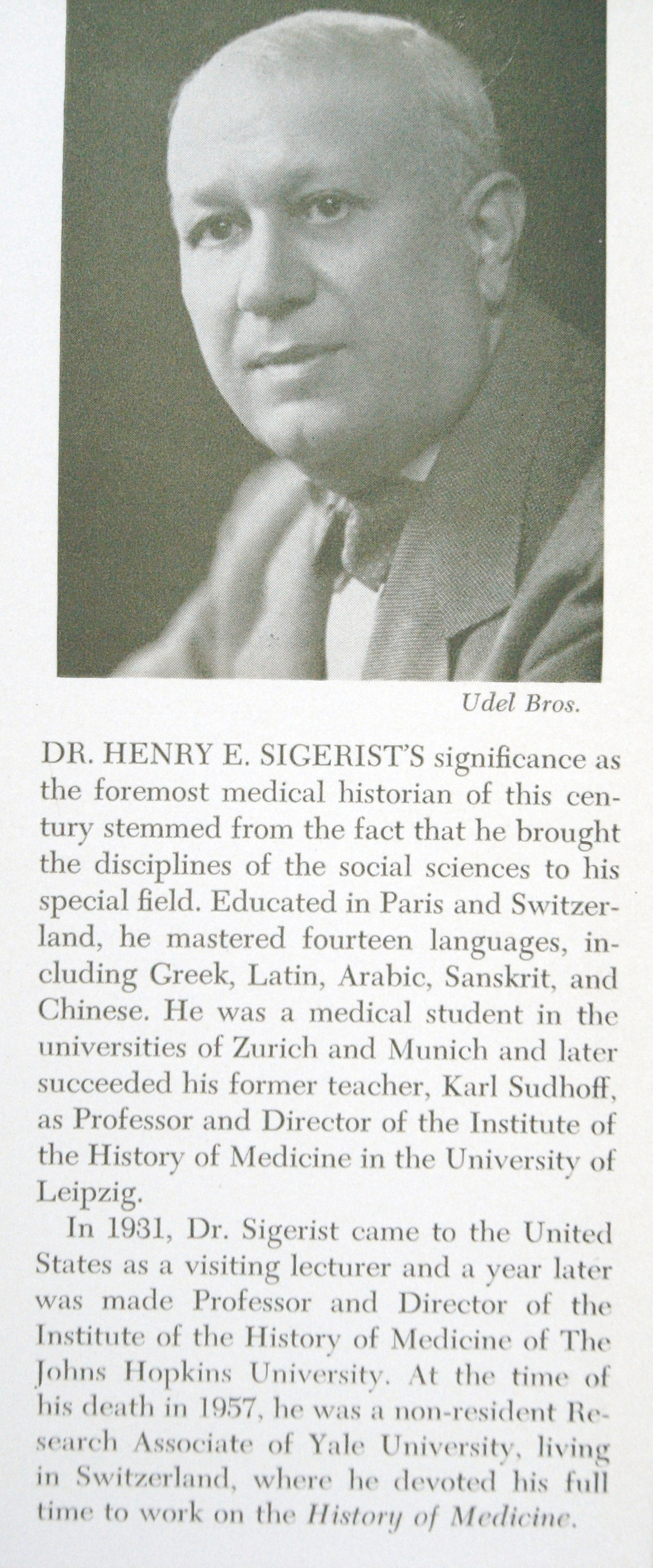

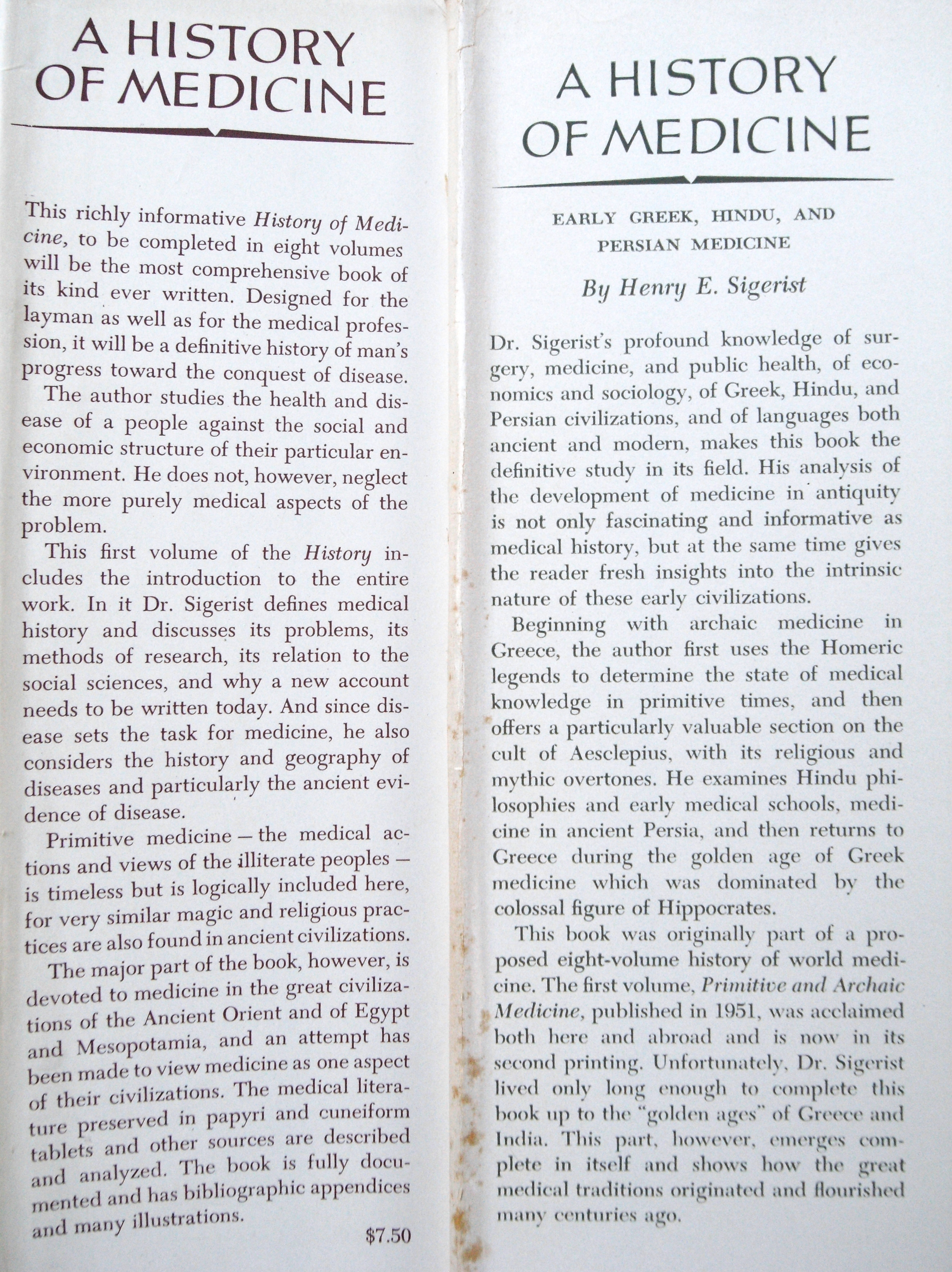
A History of Medicine, front flap
Further reading
Rudolf Virchow and Social Medicine in hisorical perspective pdf
Posted in Uncategorized
The Plot against the NHS

Buy it from Keep Our NHS Public
Book review here, lecture about the book by author Colin Leys here and articles by Colin Leys in the Redpepper here.

“A conspiracy is nothing but a secret agreement of a number of men for the pursuance of policies which they dare not admit in public”
Mark Twain.
This issues in this book, the unhealthy relationships between the government and the commercial health industry, will be familiar to some and shocking to most. Because it will be controversial, it meticulously references every claim, so that if you disagree or simply cannot believe what is says, you can check for yourself.
How different it is from the approach of the government who completely failed to reference their hugely controversial NHS reforms.
The Health White Paper, Equity and Excellence, was remarkable for its lack of references and so several months after it came out, the government produced some post-hoc justification in the form of a piece of PR on the No. 10 website: PM article on the Health and Social Care Bill. It was swiftly decimated by (most famously) Professor John Appleby (chief economist at the King’s Fund) and Ben Goldacre (Badscience blogger and columnist). The comprehensive deconstruction has been compiled by Richardblogger.
After the White Paper came the Health and Social Care bill. Again the government failed to add references or justification. So this time they ‘paused’ and produced another piece of PR called Working together for a Stronger NHS.
Ben Goldacre’s response was to say what most of us were thinking, ‘I’d expect this from UKIP or the Daily Mail, not a government leaflet’.
Labour have entered into a war of rebuttals and John Mcternan MP has complained to the Advertising Standards Authority.
Update: 07.11.2011
The Guardian reported, “The NHS in England and Wales has helped achieve the biggest drop in cancer deaths and displayed the most efficient use of resources among 10 leading countries worldwide, according to the study published in the British Journal of Cancer.” And in an extraordinary piece of doublespeak the Department of health responded, “There is a difference between achieving efficiency and the results patients receive. While it is good that NHS cancer treatment is relatively efficient, we know that the results patients actually get lag behind many other countries”
Most people with an emotional attachment to a point of view are unlikely to be swayed by evidence, so this book may not change minds, but evidence matters an awful lot in health. It is a vital resource for everyone who cares about the NHS, the health of our nation and the state of our democracy.
Be prepared to be filled with righteous anger and please use that anger to do something to help save our NHS.
If you buy the book from Keep Our NHS Public they get a small donation.
Posted in Uncategorized
Rational patients and irrational incentives
Proponents of markets in healthcare make several false claims, but at the top of the list is the claim that patients should be consumers. Consumers need to be rational. They need to be rational, because then they will make rational choices about their care based on clinical outcomes and about value for money for the NHS. This will drive up quality and drive down costs. But patients are not rational. People are not rational. Irrationality with regards to one’s health can lead to vulnerablity, but it doesn’t matter that people are not rational. In fact, I’m inclined to agree with the philosopher William James who thought that irrationality was what made people interesting and human. Doctors have a professional duty to be rational, but not patients. There are some people who get very upset about people not being rational. They are like the ‘vulnerability deniers’ I wrote about before. They need to get over it or they will remain angry and disappointed for a long time.
Martin (not his real name) has attended several different London hospital A&E departments repeatedly in the last 12 months. He called an emergency ambulance on several occasions and has been admitted for investigations and observation for up to a week at a time. He has had several abdominal ultrasound scans, about half a dozen abdominal CT scans and a chest scan. He has had upper and lower gastrointestinal tract endoscopies, gastric biopsies, and blood tests for conditions most doctors have never heard of. He is not a rational consumer of health care.
He is overwhelmingly anxious and convinced that there is something physically wrong with him. His anxiety is transferred to the admitting surgeons who keep repeating tests because they are anxious they might miss a seriously rare, serious problem. His problems actually stem from his childhood experiences and are worsened by his learning difficulties and his adverse social circumstances. There are a lot of people like Martin. Just ask a GP or an A&E nurse.
We collect regular reports about our patients who frequently attend A&E departments. Overwhelmingly, not surprisingly they are either very sick with conditions like end-stage heart failure, respiratory failure (COPD), asthma, ischaemic heart disease etc. or they are very anxious like Martin. A significant number are alcoholic, several abuse drugs and quite a few are regularly beaten up by their partners. Some have serious mental illnesses and personality disorders. Most have a mixture of the conditions I’ve listed. Very few are what I would call ‘timewasters’, people with colds, minor cuts and bruises and so on. Many, like Martin are overwhelmingly anxious. A&E departments, on the whole are not good at dealing with these patients. These patients are not rational consumers of health care. But there is something wrong with them. Unfortunately, we medical professionals are not very good at finding out what it is, or how serious it is. We do a lot of scoping of bodies but not much scoping of brains.
Last month we had a meeting to discuss the quality of care of our diabetic patients. We have about 400 patients with diabetes. Of these 18 have schizophrenia, about half suffer from depression, several abuse drugs, a couple are homeless, about 30 are illiterate or barely literate and about 20 have learning difficulties. We are paid according to how tightly we control our diabetic patients’ blood sugar, blood pressure and so on. Unfortunately because of a significant minority of patients we are losing a lot of money because their diabetes is not under control.
These are patients, not products in a factory. We are not controlling them. We work with them, we don’t control them. Healthcare depends on teamwork. If they do not want to take insulin or blood pressure tablets, if they do not come for their blood tests or fail to submit their feet or urine for inspection, that is either because they have chosen not to or because they are too disorganised or concerned with other problems to prioritise their diabetes. The biggest problem is that these patients fail to attend their appointments or pick up medication despite us spending over £20 000 a year writing, telephoning and texting patients to remind them about their appointments. And still about 20% of them do not come in for their diabetic check ups. They are at high risk of renal failure, blindness, heart disease and other horrendous diabetic complications. They are not making rational choices about their health care.
In 1974 a GP in the Welsh Valleys, Dr Julian Tudor Hart showed that if you called patients in regularly to monitor their blood pressure rather than waiting for them to come in when they felt unwell, you could reduce the risk of death by the complications of high blood pressure by 50%. This is because high blood pressure does not cause any symptoms. Chances are that the first thing you will feel is the crushing central chest pain of a heart attack or the sudden weakness of a stroke. If you wait until you ‘feel’ your diabetes there will be a high chance that you have damage to your eyes or kidneys. Because of this ‘planned care’ has become the ‘modus operandi’ for general practice. (What patients’ need. Julian Tudor Hart’s planned care law) This means that GPs have to take responsibility for their patients.
Whilst we have responsiblity, we have limited ‘control’ of our patients with diabetes and we have even less control of patients like Martin. They also threaten our financial viability because we are charged for every A&E attendance, hospital admission and scan. This is because of the ‘purchaser-provider split‘ which means that hospitals bill us for our patients and consequently have little incentive not to repeat investigations. It is impossible by counting attendances to tell if my patients are attending A&E frequently because they cannot get to see their GP, or because they are sick and anxious.
We pride ourselves not only on high standards of clinical care, but on our commitment to the most vulnerable patients. These people are usually the hardest to treat and the least profitable to care for. They are not rational consumers of health care.
In theory we could ask patients who threaten the financial viability of our practice to leave. We could remove them from our list. Some GPs do that. It is a dark secret. The Royal College of General Practitioners guidance says,
“Where a patient’s continued registration with the practice might be detrimental to the primary healthcare team as a whole, GPs retain the right to remove a patient from the practice list.”
Fortunately for patients it goes on to say that,
Patients’ should not usually be removed from a list for ‘failure to comply with therapeutic or other health advice’
The increasing use of financial incentives is going to make the problem much worse. I think that increasing use of market incentives in the NHS will pose serious problem for practices like ours who look after vulnerable patients and will put them at risk when others find ways to avoid taking responsibility. This is the Inverse Care Law. It is the main problem with private health insurance schemes.
How then can we stop Martin (and many others) from going to A&E, and how are we going to persuade 30 of our most vulnerable diabetic patients to start coming for their checks and start taking their medications?
Unfortunately because of the NHS cuts locally we have had 25% cuts to mental health psychology services and the hospital specialist drug and alcohol service has been cut by half, so we cannot expect too much help from the services best placed to help us meet their needs. This is what happens when a government takes on face value a superficial report that said they could make £20bn efficiency savings over 4 years and then makes cuts accordingly.
The Health Policy Journalist Andy Cowper suggested some alternatives for NHS reform after a challenge from a GP commissioning lead last week on Health Policy Insight. Perhaps the most controversial was:
… patients will get an emailed, itemised invoice following their treatment, which reads “Your treatment cost £TOTAL SUM HERE, paid for by the NHS out of your taxes”.
I will allow patients with long-term conditions to earn a smartphone such as the iPhone in return for regularly using software to monitor and manage their condition, including email and phone support from their care supervisor. The smartphone would be lost for non-compliance, and would not be replaced if mislaid.
These patients are not rational consumers of health care. I do not think they will respond to rational interventions like this. They need to be looked after.
I hope that my description of the patients who are in need has convinced you that fining them is unlikely to help. They are not rational consumers of health care. Whenever I challenge patients about missing appointments they usually have a plausible excuse that I have no way of validating and I have no desire to compromise a delicate therapeutic relationship with my patients by having to enforce a fine that I know they can barely afford.
Since I do not believe that for the most challenging patients financial incentives are apropriate nor that removing them from a GP list is acceptable, I have some alternative suggestions.
One is to improve continuity of care. Almost every serious study of general practice has shown that quality of care, medical errors, unecessary medical procedures, referrals, and patient satisfaction are all improved by better continuity of care. So we are introducing personal lists. Every patient will be registered with their own doctor. This includes our excellent, long-term, dedicated salaried GPs. Continuity helps doctors and patients to get to know eachother, to develop trust and to teach patients who are very anxious to cope with their anxiety and care for themselves. It helps ensure that each doctor knows who they are responsible for.
The second way is to study the problem in more detail and act on the results. Thanks to some excellent medical students I recently had the pleasure to teach, we are about to design a study to look at some of our most challenging patients and explore their reasons for not attending. We will also look at ways of being more proactive with our care. This could involve bringing patients into the surgery, perhaps with the assistance of other patients or taking ourselves out to the hostels where many of the most complicated ones live. The US surgeon Atul Gawande has described successful examples of treating patients just like ours in his article Hot Spotters. He has inspired me and my students.
I will write again about our results and hope to publish them formally in the future.
Posted in Uncategorized
The role of the NHS and the health of the nation
“Medicine is a social science and politics is nothing more than medicine on a large scale” Virchow, R.
It is profoundly paradoxical that, in a period when the importance of public policy as a determinant of health is routinely acknowledged, there remains a continuing absence of mainstream debate about the ways in which the politics, power and ideology, which underpin it influence people’s health. Alex Scott-Samuel Towards a Politics of Health
Socialism for the banks and capitalism for the poor has been the modus vivendi for the 2000s. Costas Douzinas and Slavoj Žižek The Idea of Communism Verso books 2010
The NHS reforms are aligned with the rest of Tory policy, which is to dismember the public realm and roll back the state. The Big Society’s architect Philip Blond said last year, “There is a distinction between the state as facilitator and the state as provider, and I think the state as provider really is now a bankrupt model”
The Health and Social Care Bill, currently ‘on pause’ for a ‘listening exercise’ proposes the following for the NHS:
- The secretary of state for health (Andrew Lansley) no longer has a duty to provide or secure the provision of health services. As one experienced doctor explains: “it will mean that there is no elected politician charged with a duty to provide a national health service. No one we can hold to account when the health service is sold off, chopped up and shredded in the Tory money making mills. No one we can hold to account when our local hospital is sold off, chopped and shredded.”
- Any willing/qualified provider can provide NHS services and NHS hospitals all have to become foundation trusts, meaning, effectively, private independent entities. They will then be subject to competition law and allowed to go bust so that essential services will close, not because they are no longer essential, but because they are unprofitable.
- In order to raise money hospitals will be able to provide as much private care as they like in order to raise money. This will result in entire wards being handed over to paying patients, opening up a 2 tier system within the same hospital.
- Commissioning consortia (otherwise known as GP commissioning consortia) will be given control of the majority of the NHS budget. This is the bit where the government say they are giving ‘control’ to the GPs. This is overwhelmingly unpopular amongst GPs. Most are agreeing to take on this role only in order to prevent private companies doing it. As the head of the British Medical Association GP committee said, ‘just because people climbed into lifeboats it doesn’t mean they approved of the Titanic sinking’. Some GPs have already handed responsibility to UnitedHealth, a subsidiary of one of the largest US health insurers whose parent company has a significant history of fraud. The consortia will control where GPs refer their patients and what services are available to patients. There will be considerable scope for conflicts of interests as commissioning organisations will frequently also be healthcare providers. Given that the NHS will be force to make £20bn ‘efficiency savings’ –based on a highly questionable assessment by accountants McKinsey their main purpose will be to ration care.
The reforms have been condemned by almost everyone qualified to understand them. Having watched very carefully the reporting for the last few months, I have seen no serious support for them from anyone. The British Medical Association were overwhelmingly opposed at their Special Representative Meeting in March and almost 99% of the Royal College of Nurses supported a motion of no confidence in Andrew Lansley at their conference today.
As ill-conceived and dangerous as these reforms are, the NHS plays but a part in the health of the nation.
According to Alex Scott Samuel, Senior Clinical Lecturer in the Division of Public Health at the University of Liverpool, and co-founder of the Politics of Health Group, the determinants of health can be understood in terms of upstream, midstream and downstream causes. Interventions are more effective at determining health outcomes the further up they are made. The NHS fits into the midstream.
Upstream: fundamental or root causes
- Inequalities in power, income and wealth, social status, knowledge, beneficial social connections. These things give people access to the resources they need to have a healthy and fulfilling life. Inequalities create a social gradient with consequences in health so that disease prevalence and mortality are higher in people from lower social classes.
Midstream: Social determinants
- Nutrition, shelter, education, transport. These include state funded housing, education and public transport as well more or less market dominated sources. For an example of the control of food by markets see the essential Stuffed and Starved by Raj Patel
- Public services including the welfare state and the NHS.
Downstream: Proximal causes
- Lifestyle factors such as diet, exercise, smoking and drinking.
The aim of this government is to shift the burden of responsibility as far downstream as possible. But while the responsibility for change is being shifted downstream there is no transfer of power. Responsibility without power or resources with which to act leads to helplessness and is disempowering.
The consequence or making people helpless and disempowered is increasing sickness, in particular mental illness including anxiety and depression. Many of my patients suffer from mental illnesses and they are exceptionally stressed in the present economic and social climate. Many of them who have never been able to work are having their benefits stopped after failing the new cursory Work Capability Assessment (WCA). They are coming to see me every week, distressed and anxious, sometimes psychotic or suicidal, asking for help with their appeals. The WCA has been criticised by GP Margaret McCartney in the BMJ and many others for failing to take sufficient time to do a full physical assessment or assess psychological disability.
Widening inequalities in wealth, increased costs for university education, a capitulation to fast food manufacturers on public health and savage cuts to social services and local councils all contribute to upstream and midstream causes of ill health.
As a consequence of increasingly sedentary lifestyles and the proliferation of very cheap, highly calorific convenience foods we are facing an epidemic of obesity and associated type 2 diabetes. An upstream response would be to address the power of the food industry, but instead the consequences are being treated by the NHS. For example, people admitted to hospital for conditions related to obesity rose by 30% last year.
In Denmark they are leading the world by taxing unhealthy food, while we are treating the consequences of obesity with surgery or treatments for diabetes. Treating medical consequences rather than dealing with the impact of deprivation is just one example. Creating smoke free environments is more effective at reducing the numbers of people smoking than informing (or nudging) smokers or prescribing nicotine substitutes or other pharmaceutical aids.
In December the government reneged on its responsibility to deal with upstream determinants when it told the National Institute for Clinical Excellence (NICE) to stop work on 6 projects and put on hold a further 13 including its guidance on preventing road injuries in children and young people; spatial planning for health (changing the physical environment to improve health) and policies for smoke free homes and cars. (BMJ)
Research from Aberdeen university showed that the top 30% of drinkers consumed 80% of alcohol in the UK. In other words, significant profits came from excessive consumption, and yet the government have refused to take the advice of their own advisory panel to increase the minimum unit price of alcohol to 50p, instead opting for 21pence, against the evidence of virtually the whole scientific and public health community. (see this article, Estimated effect of alcohol pricing from The Lancet)
At a time of unprecedented cuts the NHS will be under unprecedented pressure as it becomes the place of last resort for people who have nowhere else to turn. Cuts to social care, reported in several papers, mean that elderly patients have to stay in hospital wards designed for critically ill patients at a far greater cost than community care adding to the burden on the NHS and preventing the entry of other sick patients.
Efficiency gains will be nowhere near sufficient to meet the additional demand. The increase in workload will be combined with additional costs due to the exponential use of high tech equipment, new drugs, perverse market incentives, and the administration and transaction costs of operating markets. Rather than funding being increased in anticipation, resources are being cut further than ever before.
At the heart of the NHS reforms is the intention to convert patients into consumers and to shift the responsibility for health as far downstream as possible. The neoliberal project is to explain illness in terms of moral failure and the consequences of this are self loathing and social prejudice, directed overwhelmingly at the poor and vulnerable.
For more on this see: Who is the NHS for? Not me!
To fight the Health and Social Care Bill
- Join Keep Our NHS Public: http://www.keepournhspublic.com/signup.php
- Sign the 38 degrees petition: http://www.38degrees.org.uk/page/s/Protect_our_NHS_Petition
- Lobby your MP and your GP
- Watch the video below:
Posted in Uncategorized
Lansley’s lack of a plan for the NHS
Exposed by Richardblogger on the Channel 4 blog tonight. Richard is a hospital governor who has been meticulously dissecting NHS reform policy on his blog and on twitter @richardblogger.
He’s definitely one to follow.
There is a new comment on the post “Opponents of NHS reorganisation gather pace “.
http://blogs.channel4.com/gurublog/opponents-of-nhs-reorganisation-gather-pace/1042
Author: Richard Blogger
Comment:
It is too kind to Lansley to suggest that he knew exactly what the policy was going to be before the election, and so it is unlikely Cameron knew either. Journalists apply some kind of guru status on Lansley basically, because the journalists do not understand health policy and do not understand the nonsense coming out of Lansley’s mouth. Just because he’s spent 7 years in the position of health spokesman does not mean he actually knew what he was doing. Lansley does have an idea, but it is turning out to be the completely wrong idea and unworkable.
Take for example his idea of giving GPs more control. Nowhere in any of his policy documents before the election did he suggest commissioning consortia. Indeed, from what he was suggesting before the election it appeared he just wanted to go back to the bad old days of GP fundholding while retaining PCTs for doing commissioning that GPs really don’t want to, or shouldn’t do (midwives, for example, do not want to be commissioned by GPs, but then again it makes no sense to commission them on a national basis either).
Yet we find that in “late May, early June” Lansley suddenly found that his plans – remember, he had 7 years to work them out – could not work while keeping the PCTs. So then he decided to abolish them. That then presented a problem. GP practices are too small to do commissioning (as fundholding showed) so they had to be grouped into consortia. Where was that in Lansley’s plans? (It took him 7 years, remember…)
So what size should the consortia be? Lansley has not got a clue, he does not care. The pathfinders vary between 14k and 650k. International comparisons suggest that consortia should be no less than 300k. So Lansley has spent 7 years and never in this time has he come across the international studies of consortia sizes? Do you really think he is competent?
So what about the legal aspect? CIC, LLP, Ltd, or NHS body? Lansley initially refused to say, he did not care. Finally (a couple of weeks ago after much badgering from the journalist Andy Cowper) the DH have said that they will be NHS bodies. This is important, yet Lansley didn’t know and didn’t care. (He’s had 7 years to come up with this opinion.)
And what about the board of the consortia, who should sit on them? The Bill merely says that they have to have an accountable officer, but that was only put in because the Treasury insisted. If it was left to Lansley the boards would be stuffed full of business people, or scarecrows: Lansley did not know and did not care. (He’s had 7 years to come up with this opinion.) The Lib Dems want boards to be half Lib Dem councillors; Labour wants them to be stuffed full of clinicians and patient reps. Let’s hope we get the latter.
Lansley is quite clearly incompetent. His plan is full of holes and what remains of it he does not know how it will work. Its about time to get rid of him and his policy and start again.
Posted in Uncategorized
Choose me to be your GP!
I’ve noticed that the advocates of healthcare markets are very keen that patients ought to be free to choose their GP, so I’ve written an advert to help them choose:
I am a GP partner in a 5 partner, state of the art health centre in central London. I am passionate about family medicine and personal care and I see it as my duty to provide the highest quality medical care from maternal and child health to palliative home care. I work with a highly professional team of partners and associates to provide a fully comprehensive primary care service. I have excellent working relationships with the very best hospital specialists and we pride ourselves in our team work so that you have the best possible integrated care whenever necessary. I have special interests in musculo-skeletal medicine and neurology and I am an honorary lecturer and teach clinical skills to GPs and medical students.
Did I convince you?
Did you notice I said absolutely nothing about how I compare with other GPs on quality, productivity or efficiency? There’s no way of measuring these things, so I couldn’t tell you even if you asked. So if you were hoping to use market forces to drive up quality, you might run into some problems.
One thing I’ve noticed is that whenever someone is claiming that ‘people’ ought to be free, what they usually mean is that ‘they, personally’ ought to be free. They are not usually thinking about the alcoholic, drug-addicted, homeless, schizophrenic, diabetic amputee directing the traffic from their wheelchair. (He’s my patient)
Most of my ‘regular patients’ are not very choosey. They are elderly, illiterate, anxious, depressed, disabled, sick and in need of care. But they are not very good at choosing. They are not, on the whole, inclined to look online for reviews and consumer forums before buying a new iron or opening a bank account. In fact very few people change bank account even when they are dissatisfied with the one they have.
The problem with you, literate reader, choosing me, competent GP, is that because I can only provide a comprehensive service to a limited number of patients, the more of you that choose me, the less room there will be on my list for patients who really need me.
This is the Inverse Care Law.
As Marx (Groucho) might have said,
“I would refuse to register any patient who would choose me as their doctor”
Post script.
I do believe that patient choice is at the core of humane, patient-centred medicine. Every consultation I have with every patient involves careful discussions about important choices. I’ve written a lot about it. You could start here: The choices patients make.
Posted in Uncategorized
An unproductive doctor
Three of my patients came to see me because they were worried they might have cancer. There may have been more than three, because often patients are afraid or embarrassed to admit the real reason for coming to see their GP.
There was one lady with a headache who was worried about a brain tumour, a lady with breast pain worried about breast cancer and a man with a testicular lump worried that it might be cancerous.
By taking time to listen to their concerns, to take down a careful clinical history and perform an examination I was able to satisfy myself that the symptoms they were describing did not indicate cancer. With some more time and the aid of a basic anatomy atlas I keep on my desk, I was able to explain their symptoms and reassure them that they did not have cancer. I arranged for follow up in case of any change and explained what to look out for. I checked that they understood and answered their questions. I took a little longer than my alloted 12 minutes for each of them, but they left reassured, and I enjoyed my work as I very frequently do.
I’m tired of hearing politicians going on about NHS productivity without bothering to explain what they mean, which is almost certainly because they don’t know what they’re talking about. I suspect that most privilaged politicians, if they were worried about cancer would call up their private specialist. When I spoke at Civitas (the think tank dedicated to scraping the barrel of evidence to justify the introduction of markets into the NHS) the pin-striped audience could barely hide their contempt for GPs, and even went so far as to suggest that Google was going to replace GPs.
If I had been less competent or more rushed or less caring … I could have taken a cursory history and referred them to a specialist, or sent them for scans or other investigations, setting in motion a whole train of clinical events. This would have created a whole lot of ‘productivity’ leading perhaps, given the problems of defensive medicine, diagnostic uncertainty, false positive test results and eager surgeons to unnecessary surgery.
Next time a politician starts talking about NHS productivity, do ask them what they mean.
Posted in Uncategorized
The NHS needs reform, not amendments.
They do not know what they are doing nor have they any idea of the consequences of their action.
Lord Owen Independent April 3rd 2011 writing about the Government’s NHS reforms
The Health and Social Care bill is so flawed that it is not fit for amending.
Those parts of that may be of benefit, such as greater clinician involvement in decision making are too tightly hitched to the most damaging parts, such as the purchaser-provider split and the external market. The damaging parts of the bill are so dangerous that no amount of amending can make it safe.
The NHS is in need of reform. There are problems that urgently need to be improved.
1.Improve collaboration. Community, primary care and hospital specialists need to work together. At present shared care is on the whole poor to non-existant, though there are patchy exceptions. Hospital doctors need to know what they can expect from the GP once their patients are discharged so that they can confidently share responsiblity. They need quick access to the detailed clinical and personal information held by GPs. They need to be informed of problems and clinical complications in order to improve standards of care and help avoid unnecessary referrals and admissions. GPs need to have flexible access to hospital specialists for advice. For 40 years we could phone our local hospital and speak to a consultant, but now because of the purchaser-provider split, we have to set up a contract and pay for an advice line, which is far less convenient than the old infomal service. We need to know when our patients are admitted and discharged. Many times I’ve turned up to visit someone only to find they’ve been admitted to hospital and all too often there are long delays between discharge and my receipt of their records. Both hospital specialists and GPs are aware of huge variations in clinical practice, but without good communication and collaboration, little or nothing is done. Evidence from the US Mayo clinic and others shows that when clinicians collaborate (rather than compete) costs and clinical errors are reduced and quality increases.GPs and hospitals need to be able to feed back concerns about how their patients were treated, and patients need to be able to do the same, all with the knowledge that when appropriate, changes will be made.
The close collaboration that is needed cannot happen with a multitude of providers. It depends on GPs working with local specialists and getting to know them personally. At present we meet, personally with our local psychiatrist, psychologists, district nurses and health visitors, specialist diabetic and heart failure nurses and others. We know some of our local consultants well and have worked out several effective joint services. A multitude of providers will make close relationships impossible. For our most vulnerable, complex patients this is potentially dangerous.
2. All providers need to share responsiblity for the health of a defined population.We must abandon the purchaser-provider split. GPs are providers of health care. If GPs are purchasers there is no way to avoid the potential for conflict of interest. The purchaser-provider split damages relationships between GPs and specialists and hinders rather than facilitates joint responsiblity for patient care because GPs are trying to reduce medical interventions to save money at the same time as hospitals and others are trying to increase interventions to earn money. It is an absurd situation.
3. Continue to invest in NICE and improve the dissemination of and monitor the use of guidelines. There is a great deal to be gained from better adherence to clinical evidence. Guidlines are all too often not followed because of lack of familiarity rather than clinical reasoning.
4. Measure outcome data more effectively. The outcome of health care is health gain. It is very difficult to measure health gain because of the huge numbers of variables, the social determinants of health, the subjective nature of health, the variable time-lags between interventions and outcomes and more. If we are to become more efficient, then we need also to agree on how to measure efficiency.
5. Federate GPs in a geographical area so that they work collaboratively to share resources and take responsiblity for peer performance. The failure of PCTs and the GP profession to manage underperfoming GPs is inexcusable. It is part of the political justification for competition on the assumption that it will drive out poor quality despite there being no evidence that competition between GPs will do this. Because of their long history of independence GPs are not used to working with their peers. This situation is not sustainable and urgently needs to change. The Royal College of GPs has proposed this in the past. This is an excellent idea, but will need firm leadership, expert management and a range of incentives if it is to succeed.
6. Reduce health inequalities. Having worked in deprived and affluent areas I know that general practice in deprived areas is far more clinically challenging and less financially rewarding. There are serious inequalities in the resources available, the quality of care and the incentives for GPs. The govt has made a serious error in assuming that inequalities are not an issue. Proposed funding allocations will widen inequalities and threaten the financial viabilty of general practice in areas with the greatest health needs. Efficient care depends on efficient patients and the impact of markets on inefficient patients will result in the Inverse Care Law. The appalling capitulation to alcohol and junk-food manufacturers under the guise of public health policy is an indication of the government’s failure to take seriously the social determinants of health. Strong public health leadership and close collaboration is essential here. See the recent BMA recommendations for public health reform.
Other important areas for improvement are greater financial and clinical transparency and accountablity. Greater patient involvement. Improved multidisciplinary teamwork between doctors, nurses and other allied health professionals. Better management training: for managers and clinicians.
The proposed reforms will worsen the existing problems of poor communication and collaboration in the NHS. They will fail to address poor standards and they will widen inequalities.
Reform is desperately needed and it can address the major problems the NHS faces, but the health and social care bill needs to be rejected. Belief that it can be amended is naive and dangerous.
Posted in Uncategorized
The NHS: excellence and efficiency
The NHS is a world leader.
Update: 09.11.2011 Commonwealth Fund survey finds people in Britain have among the fastest access to GPs, the best co-ordinated care, and suffer from the among the fewest medical errors, of 11 high income countries surveyed. Reported in the Telegraph
Update 18.8.2011 UK healthcare system is one of the most efficient in rich countries. BMJ
As a system of universal healthcare it exceeds all others. Some have said that it is the worst of all systems of universal health care … apart from all the others that have been tried. It stands out in the following areas in particular. I want to highlight them because as the BMA pointed out at its SRM last week, the government are constantly denigrating its achievements to justify their reforms.
1.Inequalities: fewer adults went without recommended care, did not see a doctor when sick, or failed to fill prescriptions because of costs in the UK than in any of the other 11 countries surveyed by the Commonwealth Fund last year. They also found that:
adults in the United States are by far the most likely to go without care because of costs, have trouble paying medical bills, encounter high medical bills even when insured, and have disputes with insurers or payments denied.
We should be very concerned about the health bill because most people who understand the health bill believe that we are heading for an insurance scheme modelled on the American Health Management Organisations. See this excellent analysis by John Lister and straightforward explanation about the effect of abandoning practice boundaries on this blog.
2. We have the lowest inequity in the world for access to a GP or a specialist according to the OECD
This OECD graph shows that money is less of a barrier to access a specialist in the UK than in any of the seventeen OECD countries surveyed.
The point of the NHS is to provide care on the basis of need. Since health problems are more frequent and more severe among people from lower socio‐economic groups access to care should not be a privilege for the rich. In many countries inequitable access results in wealthier, healthier people having better access to GPs and specialists. This is an example of the Inverse Care Law, which states that “The availability of good medical care tends to vary inversely with the need for it in the population served. This … operates more completely where medical care is most exposed to market forces, and less so where such exposure is reduced.” (Hart, 1971)
The health bill hastens the conversion of a public service into a series of competitive markets and will widen inequity of access to care.
3.UK healthcare costs per capita are amongst the lowest in Europe. According to the OECD They are less than countries our politicians commonly compare us with, including France, Netherlands, Germany, Sweden, Belgium, Austria etc.
Given that our healthcare costs are so low, we ought to be asking on what basis the Government can claim that they are too high. We ought also to make sure that international comparisons of health outcomes take into account disparities in spending on health care. The government are fond of mentioning the differences in outcomes for heart attacks between England and France, but omit (amongst other confounders) to mention the huge disparity in health care spending. Nor do they mention the crisis the French are facing. More importantly we need to be aware that forcing one of the cheapest universal healthcare services in the world to make the deepest and most sustained cuts of any healthcare system in the world cannot occur without catastrophic effects.
4. Satisfaction has never been higher. Two-thirds of people are now either very or quite happy with the state-run health care, the largest proportion since the in-depth British Social Attitudes study began in 1983. The attempt by the government to suppress this data has been described, rightly, by health policy expert Andy Cowper as “suspect in the extreme”
5. Desire for change is the lowest in the world: Members of the public were surveyed from 11 countries; UK, Australia, Canada, France, Germany, the Netherlands, New Zealand, Norway, Sweden, Switzerland and the US.
They were asked that if they looked at the health system as a whole, do they think it needs minor changes in the system; fundamental changes; or do you think it should be rebuilt completely.
3% in the UK think the system needs to be rebuilt completely (the lowest in the world). 34% think there needs to be fundamental changes, and 62% think that only minor changes are needed. The UK public think their health care system needs changing less than any of the other countries surveyed.
The areas in which the NHS leads the world are highly specific for a system of health care. Health outcomes on the other hand, are to a significant degree a consequence of the social determinants of health, factors such as economic, environmental and lifestyle factors. Valid criticism of the NHS has to take this into account.
Efficiency of health care.
The first question Steven Dorrell asked me at the health select committee last year was how to make the NHS more efficient. According to the Commonwealth Fund 2010 report the UK comes out first for efficiency. The US, last. If Mr Dorrell or anyone else says the NHS needs to be more efficient, they need to firstly explain their basis for claiming the NHS is inefficient. They need to compare NHS efficiency with other systems of universal healthcare. They also they need to define efficiency.
To measure efficiency you need to measure for example, how much it costs us for each cancer diagnosis, or how much we spend preventing or treating each heart attack, or how much it costs to deliver or vaccinate each child. You need to do so for a whole population, it is harder to manage patients who behave inefficiently. There need to be internationally agreed ways to measure these processes so that valid comparisons can be made. We know that lack of comparable data is a problem in comparing outcomes for cancer for example.
Efficiency is not the same as productivity as Richard Blogger has explained.
There’s no point simply measuring how much stuff the NHS does. OECD data for MRI and CT scans shows that in the US they perform vastly more scans than any other country, suggesting one reason for their vastly higher healthcare costs. In my job as a GP one of the hardest parts is to explain to anxious patients why scans are unnecessary. One of the reasons healthcare is so cheap in the UK is because GPs are good at this.
The NHS excels in access to healthcare on the basis of need. It has controlled costs more than almost any comparable country and is probably therefore the most efficient system of universal healthcare in the world.
The denigration of the NHS by proponents of reform is not only inexcusable, but the motives are ‘suspect in the extreme’.
The aims of the reforms are to destroy a successful public service and replace it with a series of healthcare markets, risking the very core principles of equitable, needs based, cost-effective care for all.
Update 11.11.11
A few people have asked why this post is not about disease outcomes. The reason is because I wanted to focus on access, equity and efficiency. These are measures of a system of care rather outcomes which are significantly affected by social determinants such as deprivation, employment, childhood, diet, smoking, alcohol etc. Secondly there are significant differences in the ways different countries measure disease outcomes making comparisons very difficult. For a start …
… this blog, ‘Cancer Survival is complicated’ by an epidemiologist explains the difficulties of measuring and comparing outcomes for patients with cancer.
Latest OECD report december 2011 http://www.oecd.org/dataoecd/6/28/49105858.pdf
Surprising fact: only slightly above average increase in healthcare spending 2000-2009 (p.151)
Unsurprising fact: lowest levels of inequity for access to a specialist or a GP p.141
Inverse care law consideration: Could the NHS be more efficient if it cared less for inefficient patients?
Posted in Uncategorized
Lansley’s NHS privatisation bill: the movie
All the movies now on a new page
Posted in Uncategorized
Andrew Lansley rap
Chorus:
Andrew Lansley, greedy,
Andrew Lansley, tosser,
the NHS is not for sale you grey haired manky codger. (x4)
So the budget of the PCTs, he wants to hand to the GP’s,
Oh please. Dumb geeks are gonna buy from any willing provider,
get care from private companies.
They saw the pie and they want a piece;
Got their eyes on the P’s like mice for the cheese.
I talk truth when I ride the beat, you talk shite when you speak,
see money when you close your eyes to
sleep.
So fall back — your face looks like a shrivelled up ball sack.
The stuff that you chat is bull crap, I’m sure Andy Pandy snorts crack.
Health minister, I mean sinister.
You know your public will finish ya,
is your brain really that miniature?
You’re full of crap
Give yourself an enema.
Made filthy rich by those who represent Walkers Crisps,
Mars and Pizza Hut, proved your a health slut and your always talking shit.
A hundred and thirty four pound an hour every week, that’s quite a lot of quids;
and you came to the conclusion that the food industry should be a little less strict.
Scandal disclosed that you flipped your second home.
You said your claims were within the rules, filled your pockets, took us for jokes;
so how would you cope when broke folk get ill, injured and broke,
but don’t have the dough,
to get their life back on the road, so poor die slow, and the rich take control.
(Chorus x 4)
Lansley’s white paper: “Liberating the NHS”
sets out a plan where we’ll become more like the U.S.
and care will be farmed out to private companies,
who will sell their service to the NHS via the Gps,
who will have more to do with service purchase arrangements
than anything to do with seeing their patients.
He’s been given cash
by John Nash,
chairman of Care UK:
a private healthcare provider,
who, if they have their way,
will be the biggest beneficiaries
of conservative Lib Dem policies
to privatise healthcare and pull apart the welfare state.
These plans have been slagged by patient organisations,
charities and unions,
nursing and medical institutions.
The Royal College of GPs even joined the attack,
looked closely at the proposals
and said they were crap.
Say yes for the NHS, Andrew Lansley can suck on David Cameron’s breast.
His quest is for the rich to pay less, and the poor have to stress, it’ll be one big mess.
(Chorus x 4)
Posted in Uncategorized
Suggested ammendments to the health and social care bill
How the secretary of state for health proposes to abolish the NHS in England.
Allyson M Pollock, professor ,David Price, senior research fellow
BMJ 2011; 342:d1695 doi: 10.1136/bmj.d1695 (Published 22 March 2011)
Cite this as: BMJ 2011; 342:d1695
This is an absolutely essential article from the BMJ publised yesterday. You need to have an athens login or be a subscriber to access all of it.
The article explains how,
In order to create a commercial market the government has repealed the health secretary’s duty to provide or secure the provision of comprehensive care and has abolished the structures and mechanisms which follow from this duty. It has granted new powers and financial incentives to corporate commissioners and investors to redefine eligibility and entitlement for NHS funded care, select out profitable patients and services, and introduce regressive funding through patient charges and private healthcare.
The authors explain the processes and present the evidence. The part I have reproduced below is at the end of the article and is particulaly pertinent for politicians, many of whom are baffled by the details, but are concerned like all of us to ensure that the NHS continues to provide comprehensive, equitable, affordable health care for all of their constituents.
Amendments to ensure continuation of NHS comprehensive healthcare
-
Restore the duty of the secretary of state for health to provide or secure the provision of comprehensive healthcare throughout England to such extent as he or she considers necessary to meet all reasonable requirements
-
Impose a duty on general practice commissioning consortiums to provide comprehensive healthcare for all residents in geographically defined areas and fund them accordingly and on the basis of need
-
Impose a duty on the NHS Commissioning Board to retain and further develop a system of resource allocation based on the healthcare needs of all residents of geographically coterminous areas
-
Withdraw the power granted to commissioners to charge for healthcare services and reserve the power to the health secretary
-
Remove health services from jurisdiction of competition law
-
Require the health secretary to ensure continuity of patient care through administrative and financial integration of provider services under the jurisdiction of geographically defined consortiums (as in Scotland and Wales)
-
Impose a duty on the health secretary to protect professional autonomy and increase direct public accountability
-
Impose a duty on the health secretary to abolish financial incentives to create and distribute surpluses by underspending patient care budgets
Posted in Uncategorized
 A Better NHS